



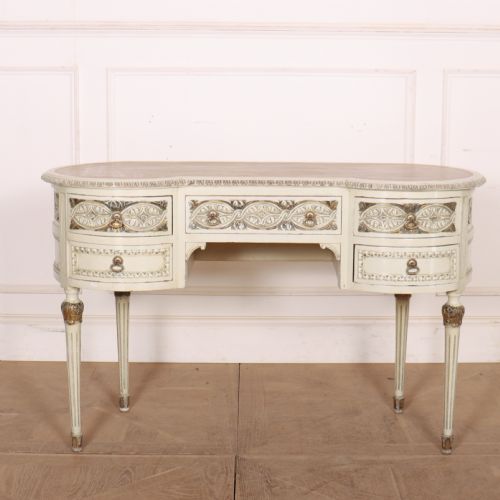
Edwardian Kidney Table
An edwardian kidney table offers a graceful, curved profile designed to hug the body, making these compact writing desks and side tables both practical and decorative.
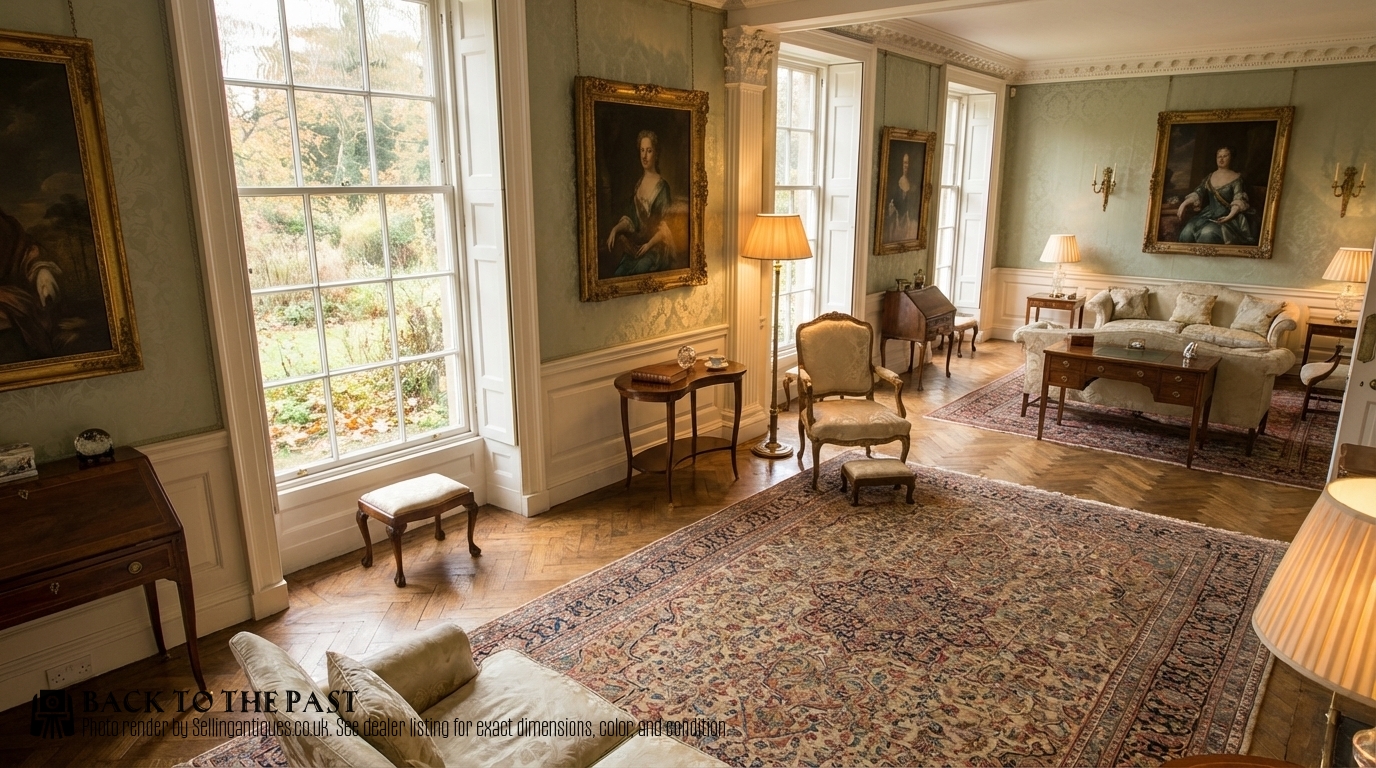
Edwardian Kidney Table
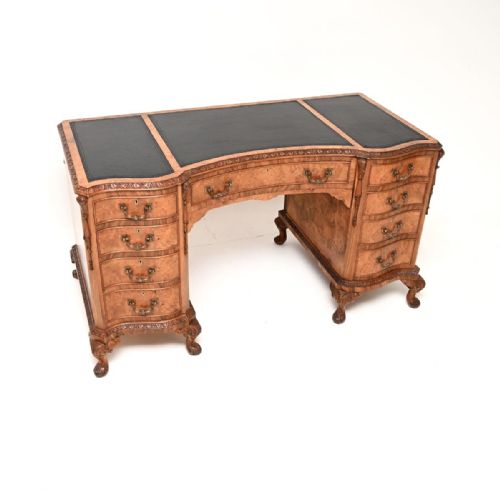
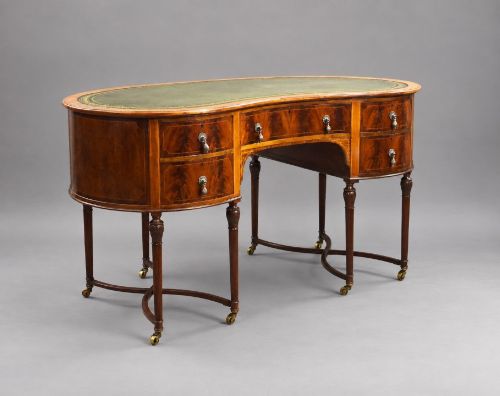
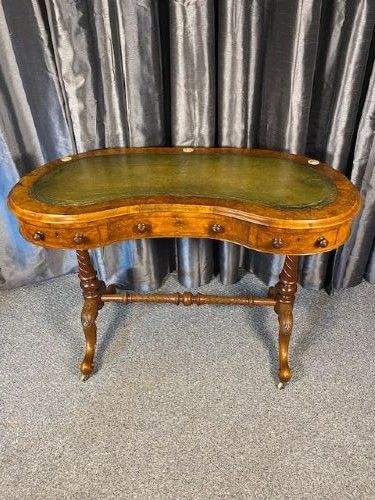
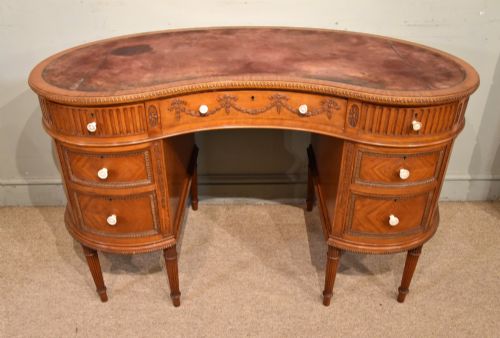
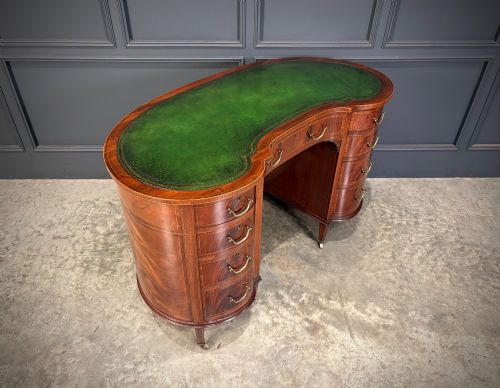
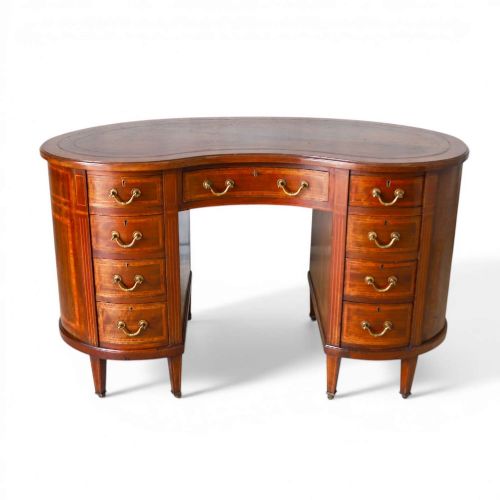
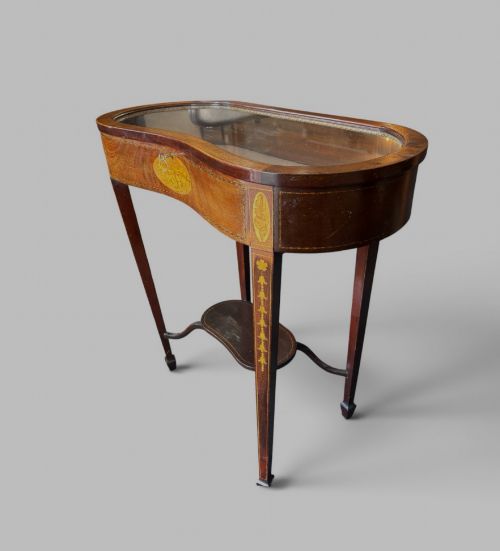
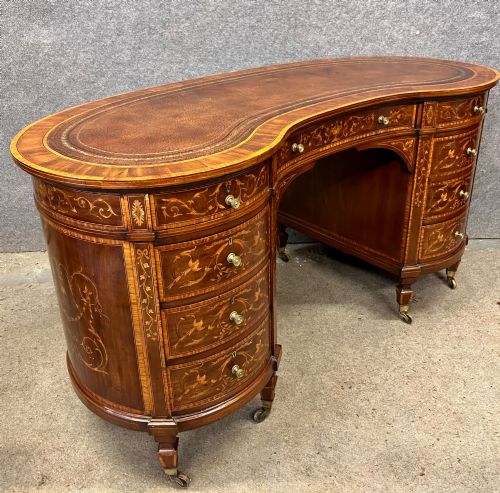
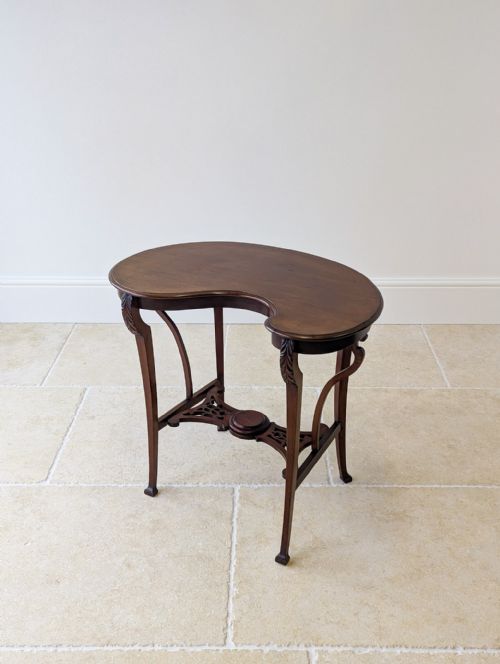
The edwardian kidney table primarily appears as a writing desk, occasional table, or display cabinet produced around the turn of the twentieth century. These pieces feature a distinctive concave front curve that allows the user to sit closer to the centre.
While many examples date from the Edwardian period and the late nineteenth century, Victorian precursors also surface alongside Sheraton Revival interpretations. They serve variously as writing desks, dressing tables, and bijouterie display pieces.
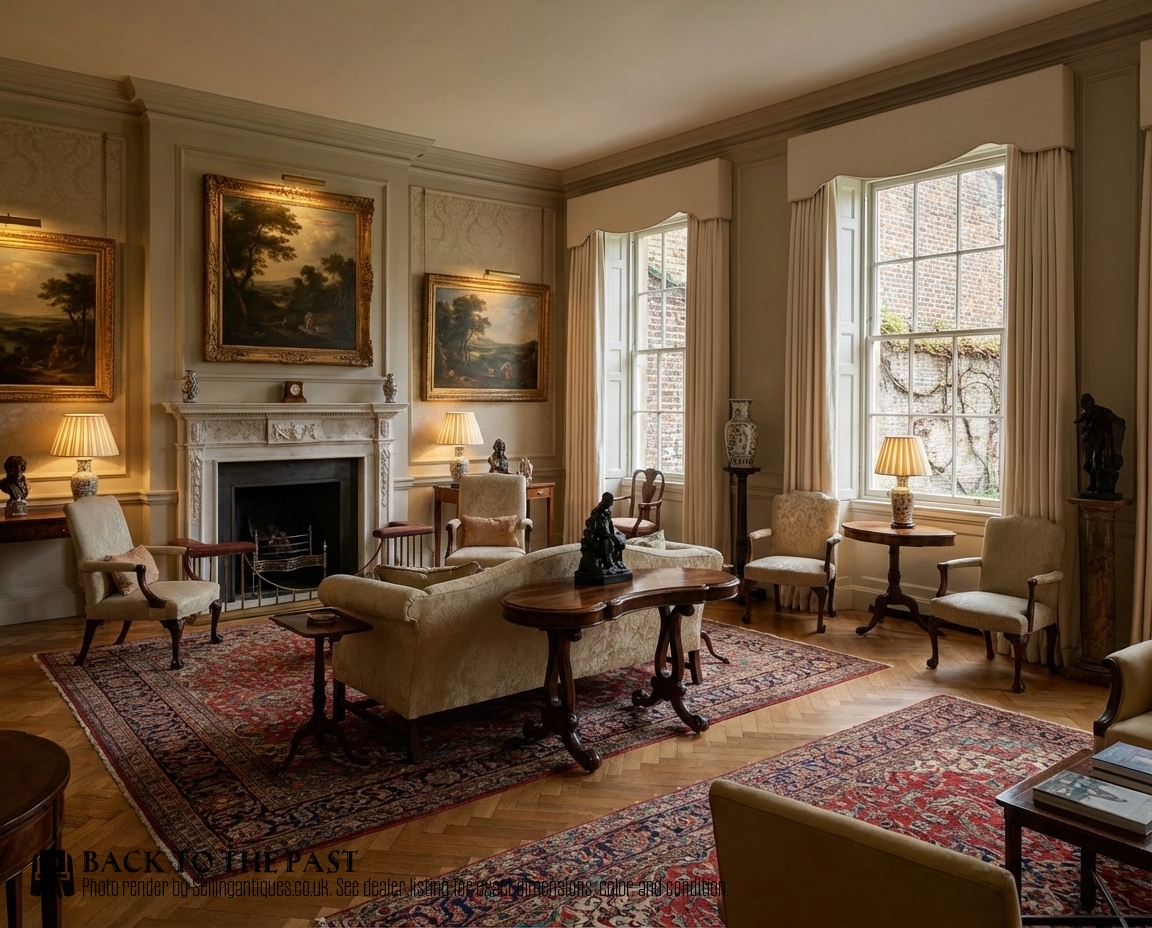
Materials and Construction
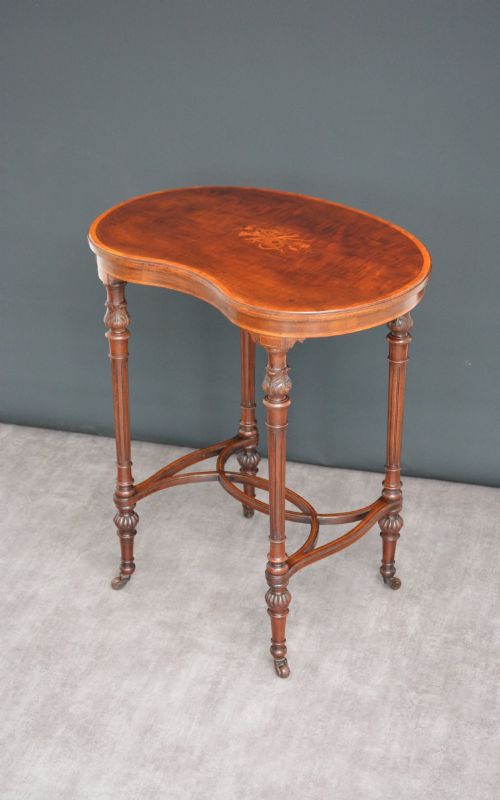
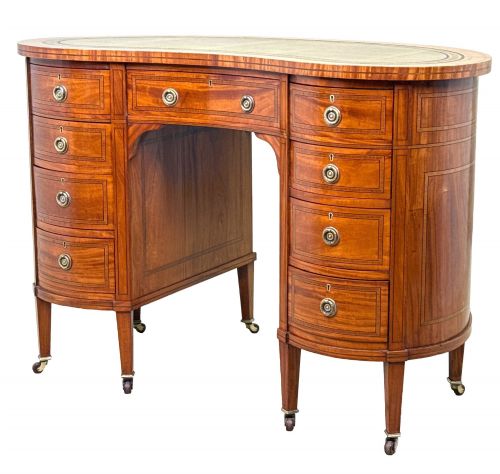
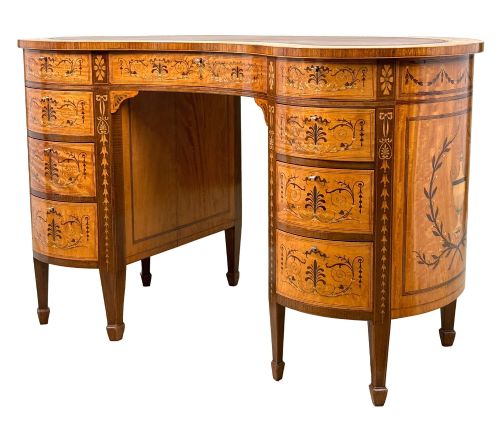
Cabinetmakers utilised solid and veneered timbers including mahogany, satinwood, burr walnut, and rosewood, often enhanced with contrasting stringing and marquetry inlays. Many writing surfaces retain their original fitted leather inserts too.
Detailing frequently incorporates brass mounts, glass panels for display variants, and slender tapered legs that support the curved framework without crowding the room.
Edwardian Kidney Table Retail Price Guide 2026
Typical asking prices for edwardian kidney table among the pieces listed under this phrase on Sellingantiques today, from the lower quarter to the upper quarter. They describe what is for sale here now, not the wider market.
Secret drawers tucked beneath curved friezes reward the curious buyer who checks behind every little pull.
Assessing Craftsmanship
Quality rests upon the crispness of the marquetry inlay, the choice of figured timber veneers, and the structural integrity of the curved framework. Superior examples display tight joints and finely carved mouldings.
The presence of original hardware, well-fitted drawers with secondary linings, and untouched leather writing surfaces further separate standard production pieces from exhibition quality output.
Maple & Co·Edwards & Roberts·Wolfe & Hollander·Shapland & Petter·Gillows
The Edwardian Kidney Table Glossary
- Kidney shape
- A curved furniture top resembling a kidney bean, designed to fit comfortably against the user. This contour requires specialised joinery to achieve the concave front edge.
- Marquetry
- Decorative patterns formed by fitting together small pieces of wood veneer of different colours and grains. Cabinetmakers applied this technique to tabletop surfaces and friezes.
- Bijouterie table
- A glass-topped display table designed to showcase small valuable items and curiosities. They often feature hinged lids lined with fabric.
- Crossbanding
- A border of veneer laid around the perimeter of a tabletop so the grain runs perpendicular to the centre panel. This provides a neat framing effect.
- Sheraton Revival
- A late nineteenth and early twentieth century design movement inspired by the neoclassical furniture of George Sheraton. It relies on satinwood, delicate painting, and restrained inlay.
Edwardian Kidney Table: Frequently Asked Questions
What was an edwardian kidney table used for?
These tables served primarily as writing desks, dressing tables, or occasional pieces in drawing rooms and boudoirs. The curved design allowed a person to sit comfortably at the centre while keeping stationery or cosmetics within easy reach.
Smaller variants functioned as display surfaces or side tables meant to hold lamps and decorative objects. Their finished backs also permitted them to stand away from the wall in the middle of a room.
How do I distinguish Edwardian from Victorian pieces?
Victorian examples tend to use heavier timbers such as rosewood and burr walnut, often featuring richer, darker finishes and bolder carving. They date from the mid to late nineteenth century.
Edwardian pieces generally favour lighter satinwood and mahogany veneers, frequently incorporating Sheraton Revival satinwood inlay and more slender proportions. The overall aesthetic leans toward brightness and refined neoclassical detailing.
Are these desks suitable for daily computer work?
Most antique kidney desks were built for handwritten correspondence rather than modern computing equipment. Their compact dimensions and shallow drawers mean legroom and surface depth can be limited.
They work well for occasional laptop use or writing letters, but buyers should check internal kneehole measurements carefully if intending to sit at them for long hours daily.
What is a bijouterie table?
A bijouterie table is a specialised display cabinet with glass top panels and sides designed to exhibit small collections of jewellery, medals, or curiosities. They often include a hinged top and a fabric-lined interior base.
In an Edwardian drawing room, these pieces functioned as conversation starters where hosts could display their treasured small objects safely away from dust.