


Edwardian Inlaid Centre Table
An edwardian inlaid centre table brings sophisticated surface pattern and rich cabinet woods to the middle of a room.
Edwardian Inlaid Centre Table
The edwardian inlaid centre table is a freestanding piece designed to be viewed from all sides within a room. These tables serve multiple functions, appearing as occasional, coffee, lamp, or library tables depending on their height and top configuration.
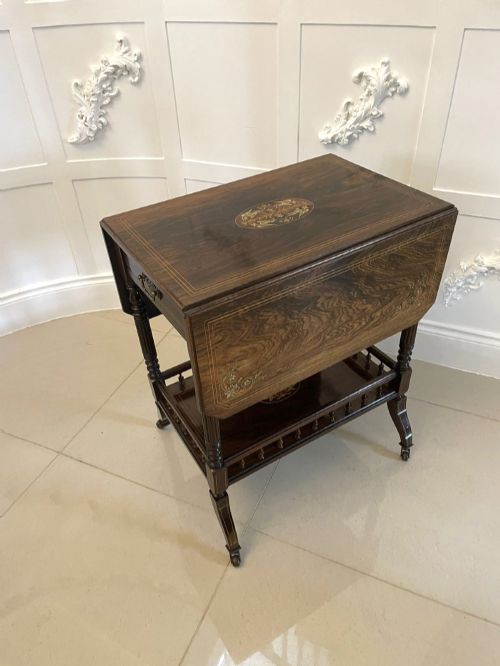
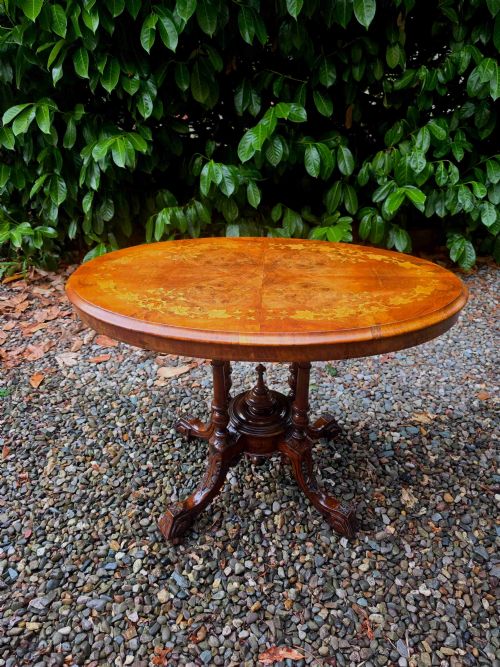
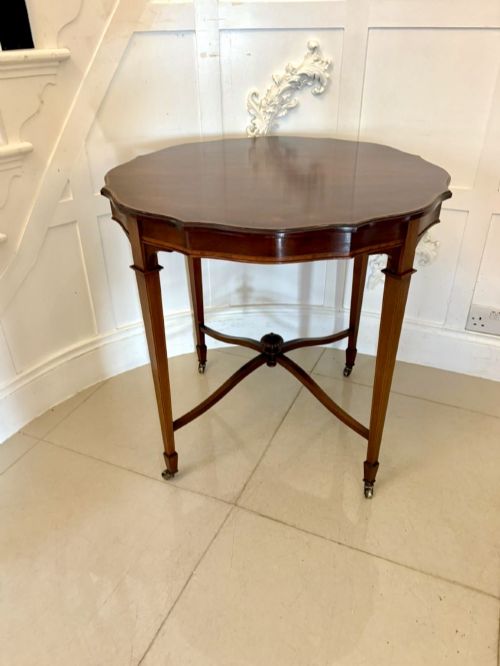
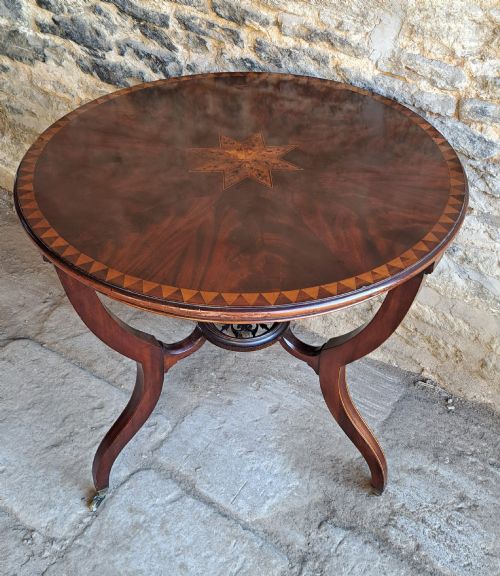
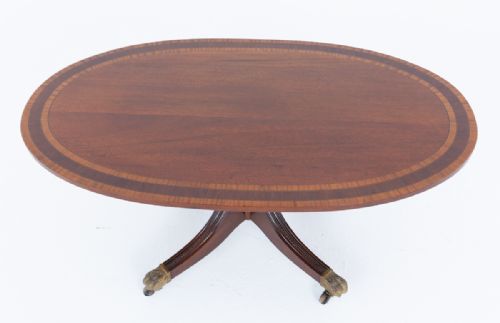
The versions most commonly found here date from the Edwardian period and the late Victorian era, often reflecting the Sheraton Revival style. They frequently feature mahogany or rosewood surfaces detailed with lighter wood inlays and geometric or floral motifs.
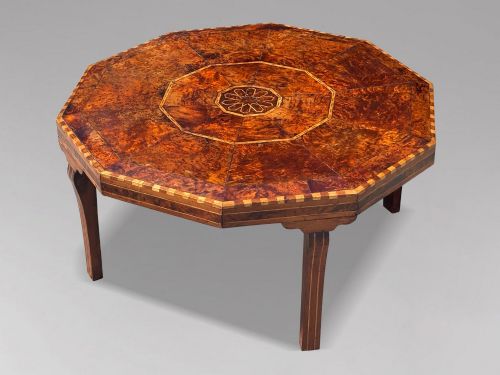
Makers of the period utilised classic shapes including circular, oval, octagonal, and drop-leaf formats. Their freestanding nature required finished undersides and detailed legs connected by stretchers or lower tiers.
Materials and Construction Techniques
Cabinetmakers built these tables using dense timbers such as mahogany, walnut, and rosewood as primary foundations. Contrasting light woods like satinwood, boxwood, and yew supplied the material for intricate surface decoration.
Wood inlay techniques included marquetry for pictorial or floral designs and parquetry for geometric patterns. Brass mounts and stringing lines frequently complemented the timber work to accentuate the edge profiles and borders.
Edwardian Inlaid Centre Table Retail Price Guide 2026
Typical asking prices for edwardian inlaid centre table among the pieces listed under this phrase on Sellingantiques today, from the lower quarter to the upper quarter. They describe what is for sale here now, not the wider market.
Some tables hide a zodiac map inside the timber top, turning a simple occasional piece into an astronomical conversation starter.
Distinctions in Quality
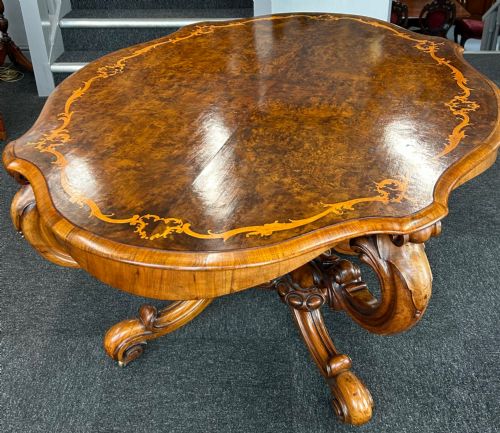
Quality rests on the precision of the timber selection and the crispness of the inlay work. Finer examples display carefully matched grain patterns, such as burr walnut or figured mahogany, paired with tightly fitted contrasting woods.
The complexity of the design and the stability of the structural frame also dictate the tier of the piece. Tables featuring secondary elements like brass mounts, shaped drop leaves, or specialised stretcher bases demonstrate higher craftsmanship.
Edwards & Roberts·Maples & Co
The Edwardian Inlaid Centre Table Glossary
- Centre table
- A freestanding table finished on all sides intended to stand away from the walls in the middle of a room.
- Marquetry
- Decorative woodwork where pieces of veneer are fitted into a ground to form floral or figurative patterns.
- Parquetry
- A geometric mosaic of wood pieces used for floors and tabletops, creating repeating angular patterns.
- Satinwood
- A durable, lustrous timber from tropical trees that yields a yellowish sheen and serves well for inlays.
- Sheraton Revival
- A late nineteenth and early twentieth-century style reviving the neoclassical furniture designs of Thomas Sheraton.
Edwardian Inlaid Centre Table: Frequently Asked Questions
Where should I place an edwardian inlaid centre table?
These tables belong in the middle of a room where their finished sides and detailed tops remain fully visible. They function effectively in larger hallways, libraries, or drawing rooms as central display surfaces.
Because they are designed for freestanding use, avoid pushing them flush against a wall. Positioning them centrally allows natural light to catch the contrasting wood inlays and polished timbers.
How do I clean and maintain inlaid wood?
Dust the surface regularly with a soft, dry cloth to prevent particulate buildup in the delicate recesses of the inlay. Avoid using silicone sprays, abrasive cleaners, or excessive water on antique veneers.
Apply a microcrystalline wax occasionally to nourish the timber and protect the finish. Keep the table away from direct heat sources and strong sunlight to prevent the wood from drying out or fading.
What is the difference between a centre table and an occasional table?
Centre tables are specifically constructed to stand independently in the open space of a room with decoration carried across all sides. Occasional tables are generally smaller and lighter, intended to be moved about as needed.
While both forms overlap in the Edwardian period, traditional centre tables often feature more elaborate underframes, stretchers, or drum configurations. Occasional tables lean towards simple pillar supports or slim legs.
How can I tell an Edwardian table from a Victorian one?
Edwardian tables generally exhibit lighter proportions, brighter satinwood highlights, and a strong revival of neoclassical Sheraton aesthetics. Victorian examples tend to use darker, heavier timbers like heavy rosewood or burr walnut with denser carving.
However, the transition around the turn of the century means late Victorian pieces often share stylistic traits with early Edwardian works. Examining the secondary woods and the specific geometry of the inlay helps clarify the date.