

Edwardian Hallway Furniture
Edwardian hallway furniture organises entrance spaces through practical oak and mahogany stands, seats, and racks.
Edwardian Hallway Furniture
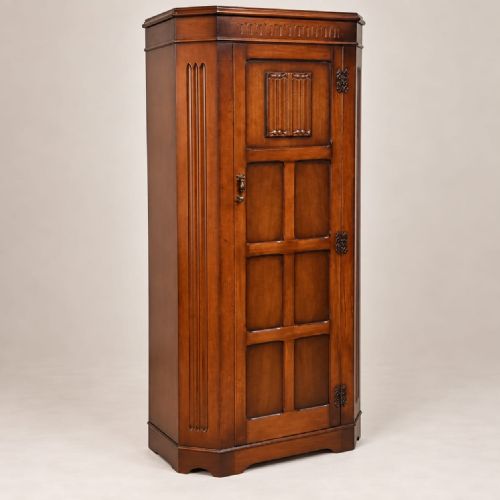
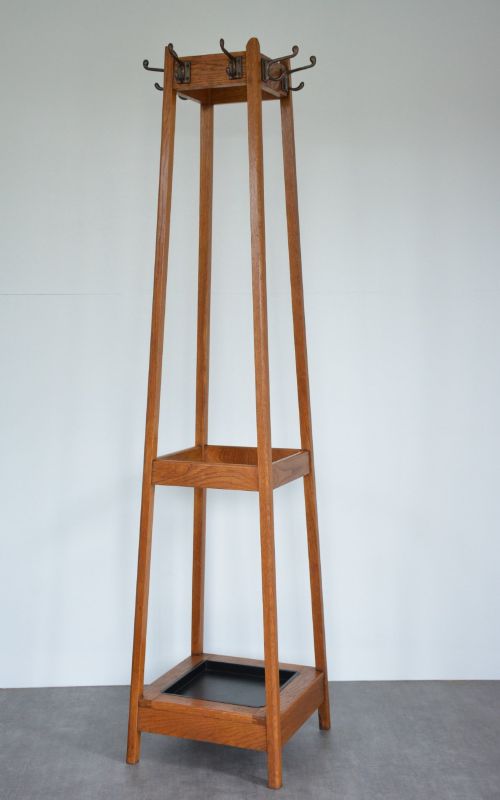
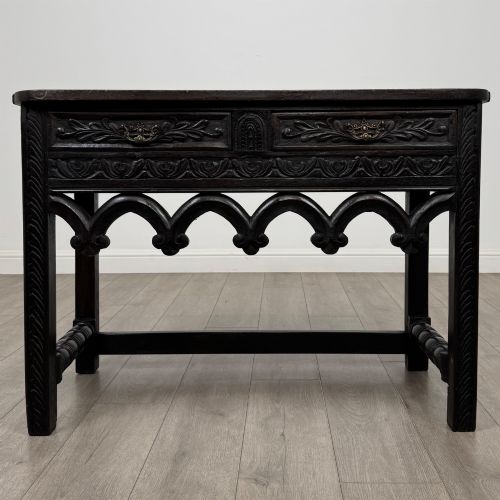
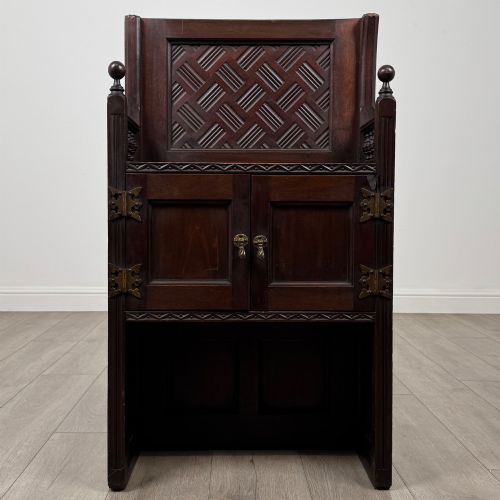
Edwardian hallway furniture encompasses practical pieces designed for entrance halls, combining utility with decorative presence. Buyers searching for edwardian hallway furniture typically encounter oak and mahogany umbrella stands, hall seats, and hat and coat stands.
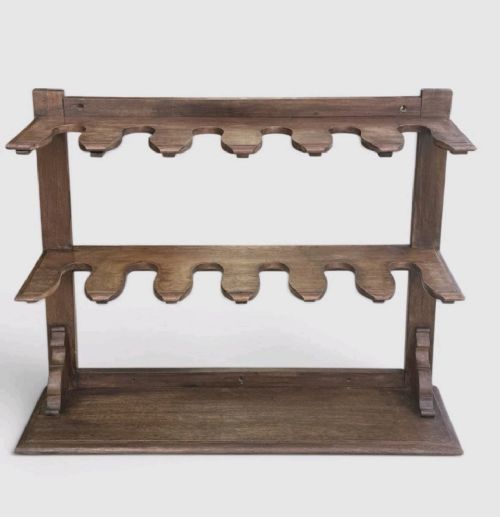
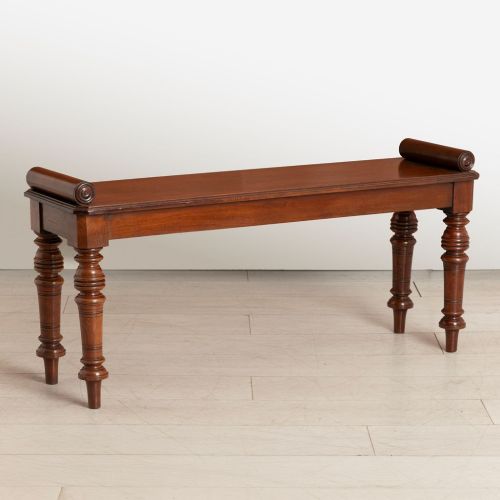
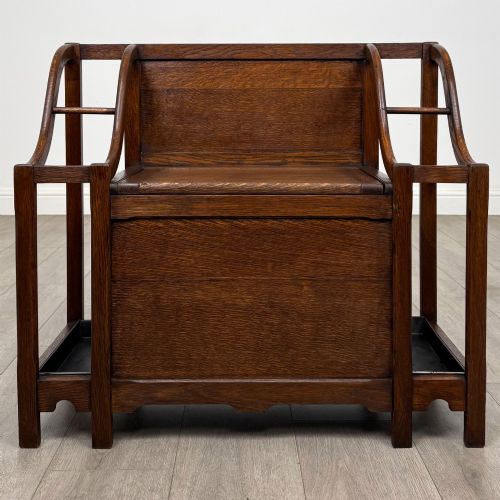
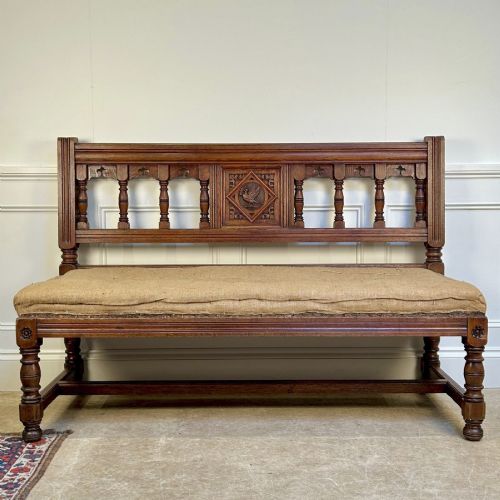
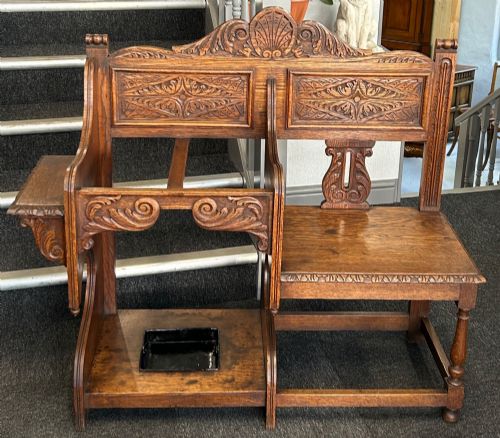
The pieces on this page span several forms, including boot racks, luggage stands, and carved benches with integrated stick holders. Oak predominates, frequently appearing alongside brass drip trays and mirrors.
While Edwardian examples form the core of this category, related pieces from the Victorian era and the Arts and Crafts movement also serve the hallway. These range from simple bentwood hatstands to large multi-functional hall seat stands.
Materials and construction
Construction relies heavily on solid oak and mahogany, shaped into sturdy frames capable of withstanding daily household use. Cabinetmakers utilised traditional joinery alongside carved ornamentation to finish hall stands and benches.
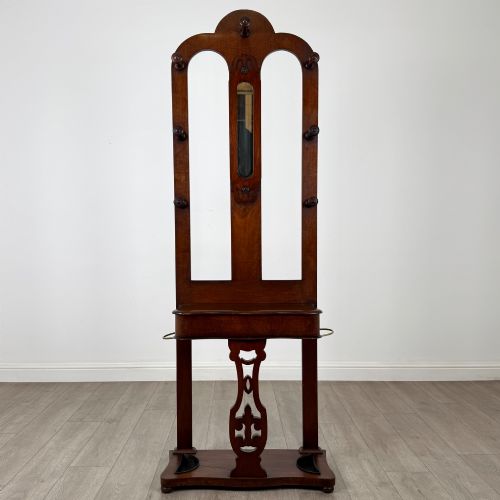
Metal components play a structural and functional role, particularly cast iron, brass, and general metalwork used for umbrella wells, hooks, and removable drip trays. Glass often appears as bevelled mirror plates set into the backboards of larger hall stands.
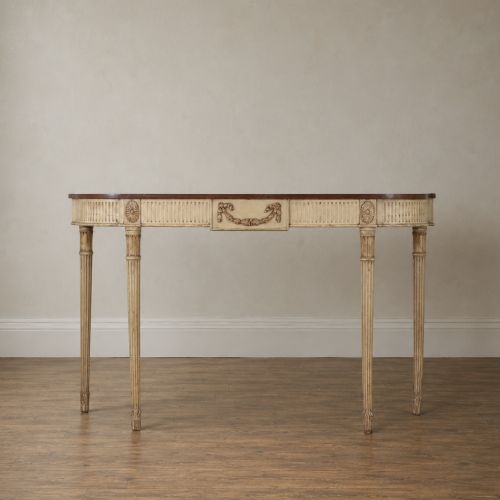
Surface treatments include polished wood finishes that highlight the natural grain of golden oak or dark mahogany, occasionally complemented by painted or gilt details on console tables and luggage racks.
Dog-tooth trays keep stray raindrops contained while the household answers the front door.
Judging quality and craft
Quality rests on the selection of timber and the execution of carved details, distinguishing mass-produced items from bespoke workshop pieces. Heavier framing and thoughtful integration of storage components indicate superior construction.
The retention of original hardware, such as brass coat hooks, handles, and metal drip trays, elevates a piece's integrity. Modifications or missing elements alter the original balance of utilitarian objects.
Design ambition separates basic utility from finer examples bearing stylistic traits of the Arts and Crafts or Art Nouveau movements. Integrated mirrors and complex panel carving reflect higher workshops.
Liberty Design·GIllows·Heals of London·M. D. Miller and Sons·Druce and Co·Shapland and Petter
The Edwardian Hallway Furniture Glossary
- Hall stand
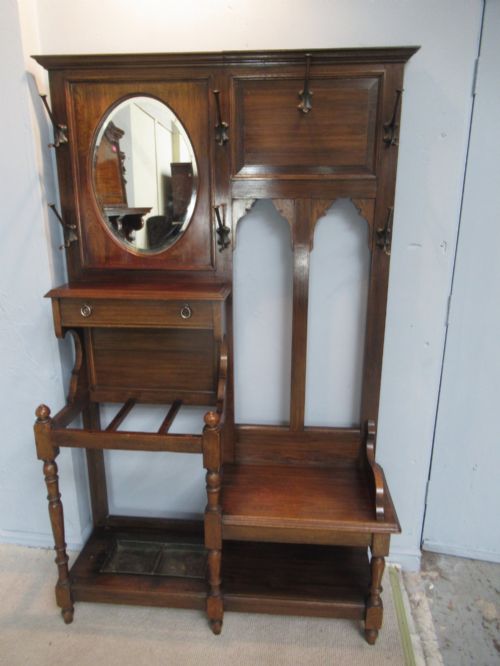
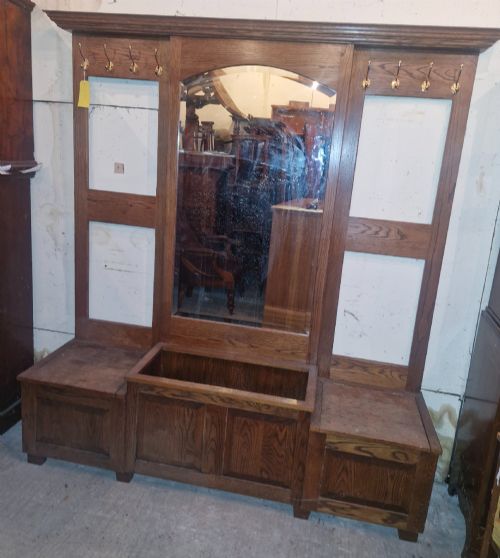
- A multi-purpose hall furniture piece incorporating a mirror, coat hooks, a glove drawer, and umbrella stands with drip trays. They dominated entrance spaces in the late nineteenth and early twentieth centuries.
- Umbrella stand
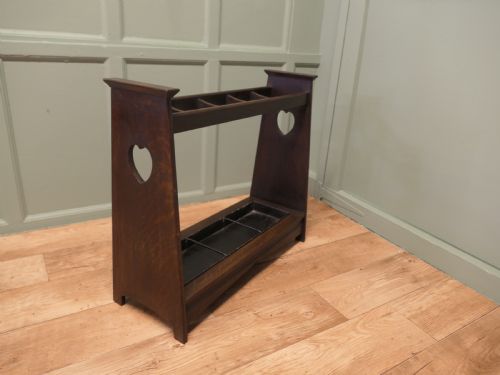
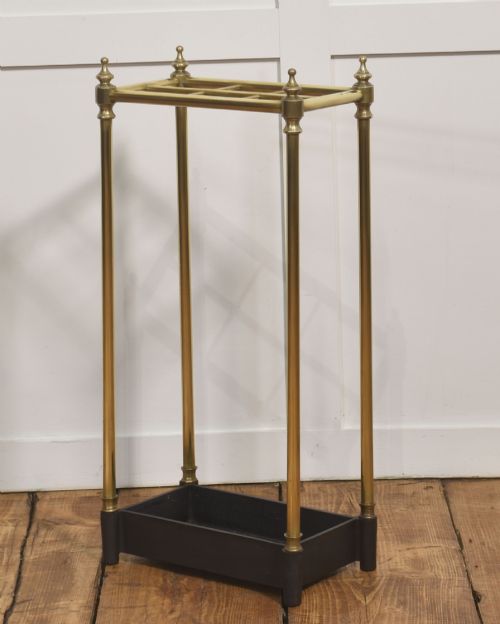
- A dedicated container or rack for wet umbrellas and walking sticks, frequently fitted with a metal tray at the base to catch water. They appear in brass, cast iron, and oak.
- Luggage rack
- A low bench with slats, used in entrance halls or guest bedrooms for resting bags and cases. Edwardian examples often feature turned wooden legs and slatted oak tops.
- Arts and Crafts
- A design movement prioritising honest construction, visible joinery, and natural materials. Pieces from this style often feature plain oak surfaces and hand-beaten metal fittings.
- Aesthetic Movement
- A late nineteenth-century design current that promoted beauty as the primary objective in furniture. Items from this movement sometimes utilise bamboo and lighter decorative forms.
Edwardian Hallway Furniture: Frequently Asked Questions
What is included in edwardian hallway furniture?
Edwardian hallway furniture covers items designed for entrance spaces, primarily oak and mahogany hall stands, umbrella racks, benches, and luggage stands. These pieces often combine multiple functions, such as coat hooks, mirrors, and seat storage.
Most examples date from the early twentieth century, though related Victorian and Arts and Crafts designs serve the same functional purpose in the hallway.
How were umbrella stands used?
Umbrella stands held walking sticks and wet umbrellas near the front door to keep hallways dry and tidy. They typically included a metal or brass drip tray at the bottom to catch moisture.
These stands were manufactured in cast iron, brass, and various woods like oak, often standing independently or forming part of a larger hall stand.
How do I identify an Edwardian hall stand?
Edwardian hall stands often feature golden oak or mahogany construction, bevelled mirrors, and brass coat hooks. They reflect the practical domestic requirements of the period around 1900 to 1910.
Compared to earlier Victorian designs, Edwardian pieces sometimes display lighter proportions and simpler carved motifs influenced by the Arts and Crafts movement.
Where should I place a luggage rack?
Luggage racks suit entrance halls, boot rooms, or guest bedrooms as a sturdy surface for bags and shoes. Their slatted wooden tops provide stable support.
These low benches fit well beneath wall-mounted coat hooks or near doorways where outdoor gear is stored.