


Victorian Brass Stick Stand
When you search for a victorian brass stick stand, you seek a functional hallway furnishing that organises walking canes and umbrellas with period character.
Victorian Brass Stick Stand
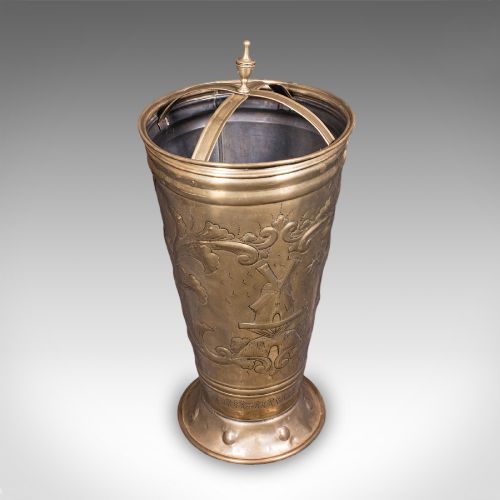
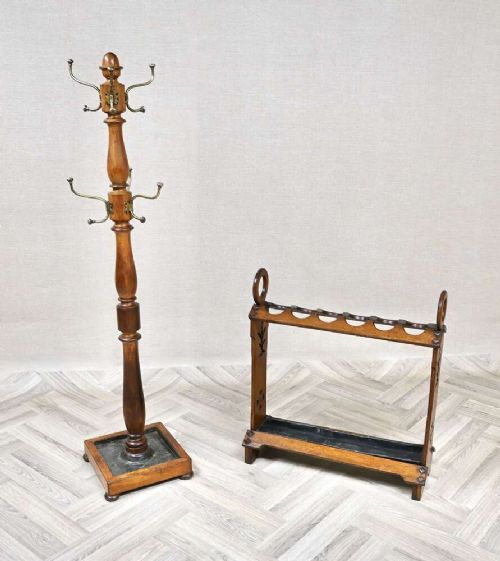
A victorian brass stick stand is a domestic accessory designed to hold umbrellas, walking sticks, and parasols in entrance halls and vestibules. These pieces emerge predominantly from the Victorian and Edwardian eras, spanning the nineteenth and early twentieth centuries.
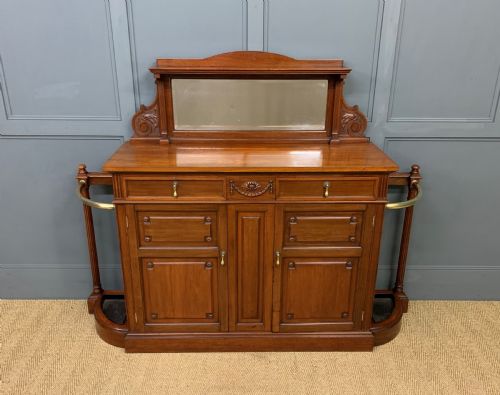
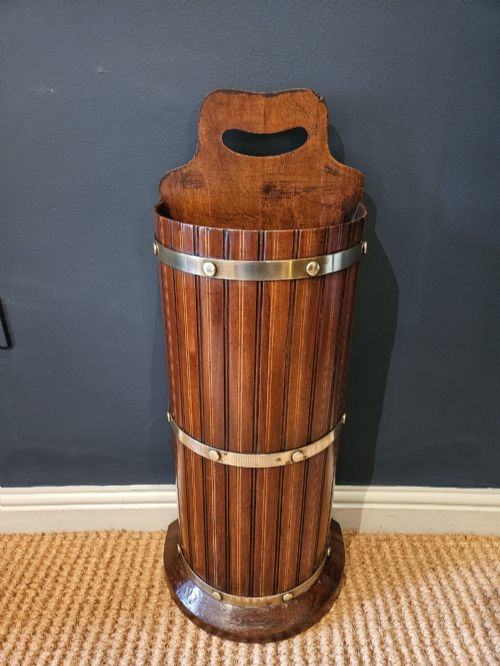
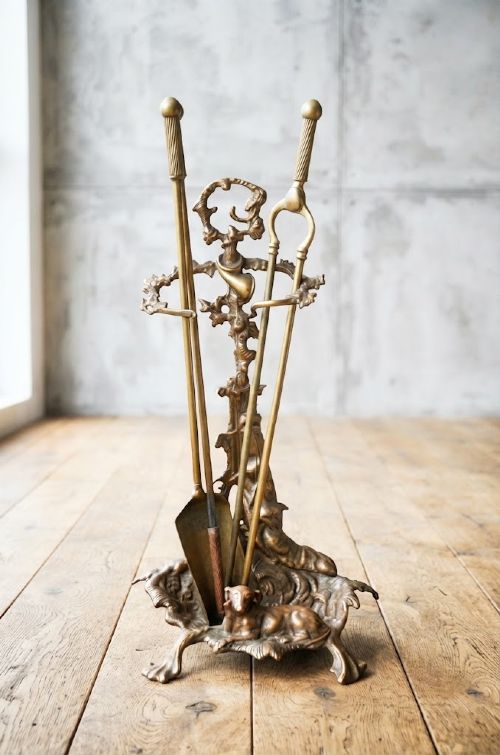
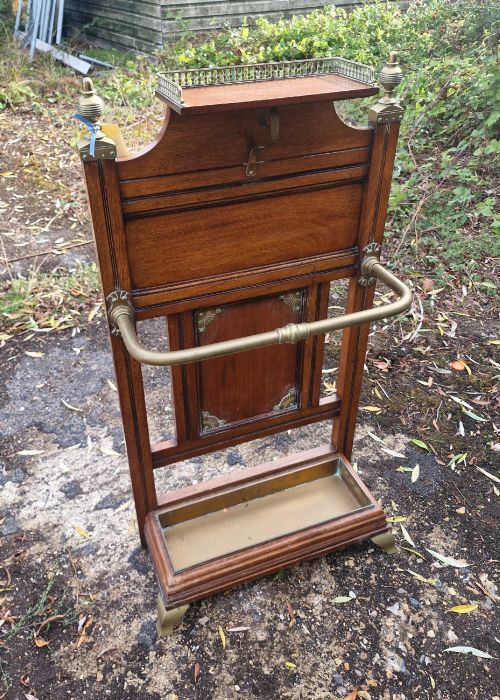
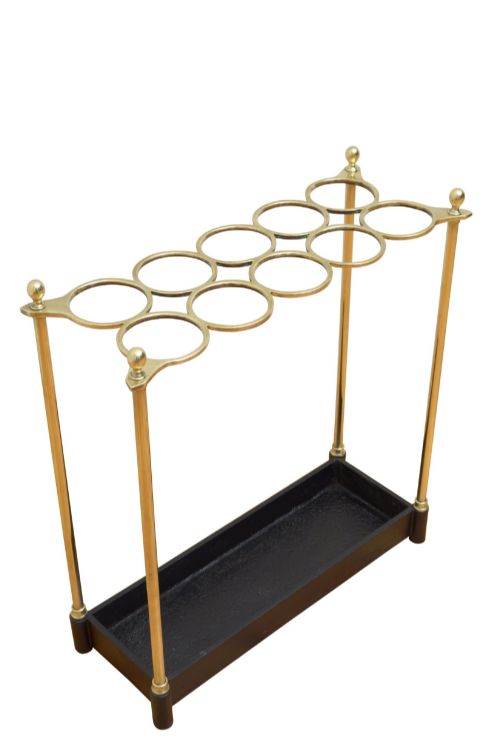
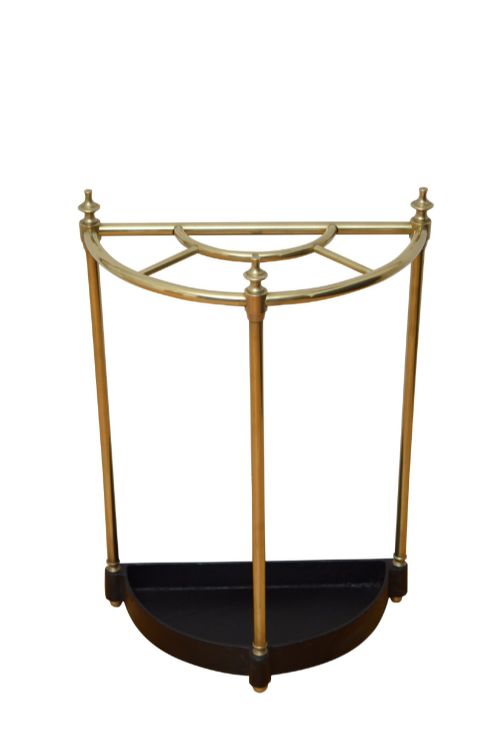
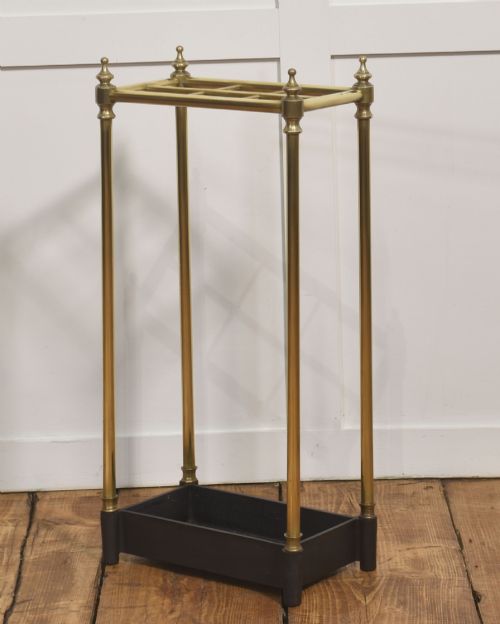
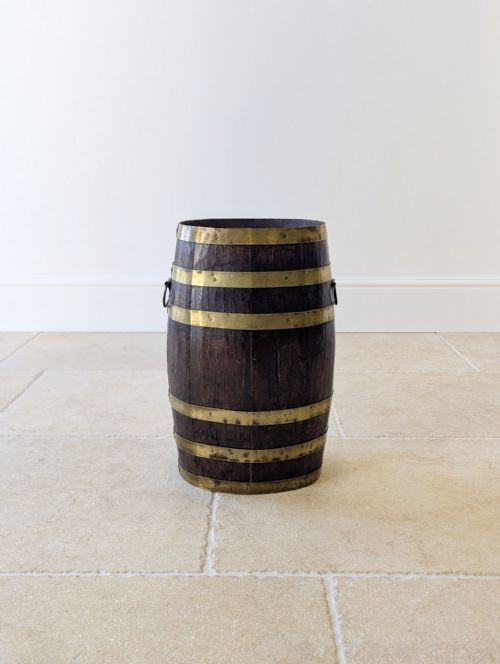
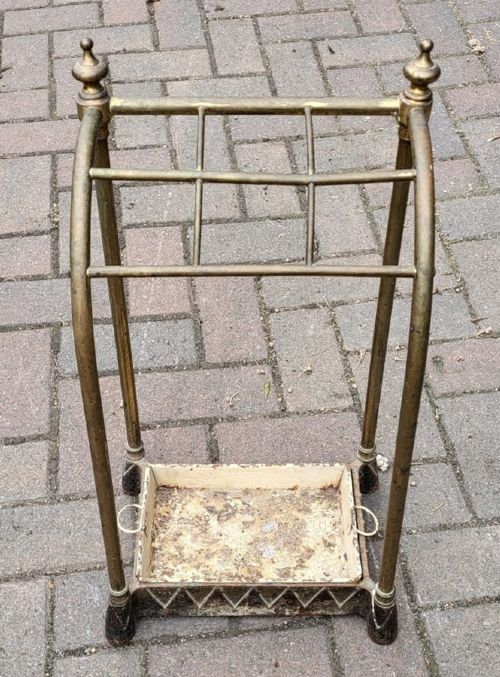
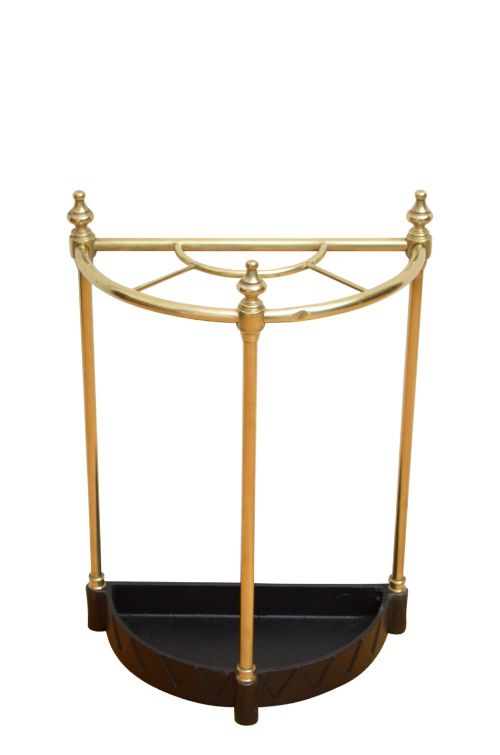
The form appears most frequently as a hybrid construction pairing a polished brass frame with a heavy cast iron base and drip tray. Alternatively, examples manifest as coopered oak barrels bound with brass hoops or as demi-lune half-moon frames intended to sit flush against a hallway wall.
How They Were Made
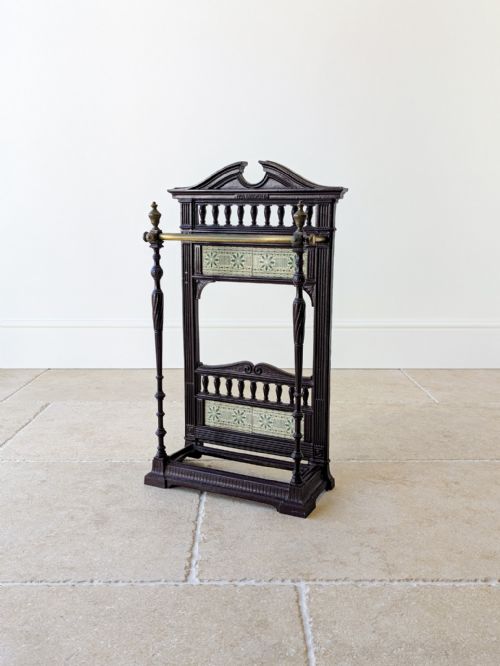
Manufacturers combined sheet and cast brass with structural cast iron to create stable frames capable of supporting heavy umbrellas. Metal components frequently incorporated decorative ball finials, divisions, and perforated or dog-tooth drip trays.
Wooden variants utilised traditional cooperage techniques, binding staves of oak or mahogany with fitted brass bands and structural braces. Metal elements were often joined with threaded fixings, whilst iron bases provided the necessary weight to prevent tipping.
Victorian Brass Stick Stand Retail Price Guide 2026
Typical asking prices for victorian brass stick stand among the pieces listed under this phrase on Sellingantiques today, from the lower quarter to the upper quarter. They describe what is for sale here now, not the wider market.
Listings feature materials including brass, cast iron, oak, copper, and mahogany across Victorian and Edwardian periods.
What Varies in Quality
The distinction between tiers of production lies in the weight of the metal and the intricacy of the casting. Heavier gauge brass and substantial cast iron bases indicate superior durability compared to lighter, thinner assemblies.
Design complexity also separates standard utility items from finer examples, seen in multiple divided sections, detailed gallery rails, and integrated ceramic or removable drip trays that protect hallway floors.
Coalbrookdale·Thomas Jeckyll·Shoolbred & Co.
The Victorian Brass Stick Stand Glossary
- Demi-lune
- A half-moon shape designed to fit flat against a wall in narrow hallways or entryways.
- Coopered
- Constructed from wooden staves joined side by side and bound with metal hoops, much like a barrel.
- Drip tray
- A shallow base pan positioned beneath the rack to catch moisture from wet umbrellas and protect flooring.
- Finial
- A decorative terminal ornament, often spherical or ball-shaped, topping the upright posts of the stand.
- Pricket
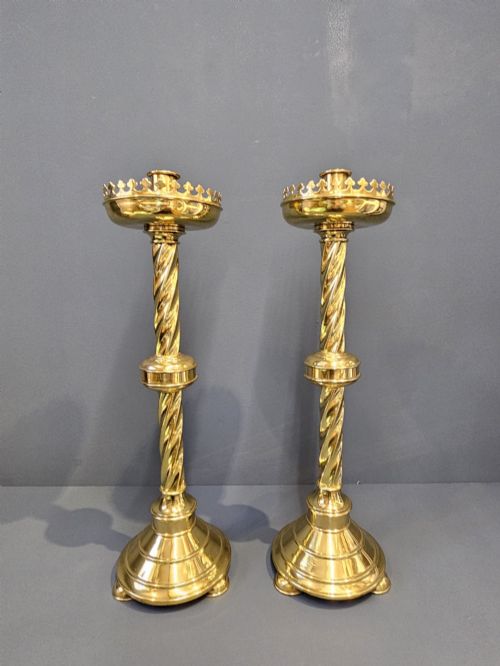
- A sharp vertical spike on a candlestick or stand used to secure a candle or hold a specific fitting.
Victorian Brass Stick Stand: Frequently Asked Questions
Where were stick stands placed in the home?
These pieces traditionally stood in entrance halls, vestibules, or boot rooms where family members and visitors deposited wet umbrellas upon entry.
Their compact footprints, particularly the half-moon and corner shapes, allowed them to fit neatly into narrow circulation spaces without blocking doorways.
How do I clean polished brass safely?
Maintenance involves removing surface dust with a dry cloth and applying mild soapy water to lift grime from textured areas without stripping the underlying metal.
Avoid harsh chemical abrasives that can wear away historic patination accumulated over the nineteenth and twentieth centuries.
Are these stands suitable for modern umbrellas?
Standard divisional grids accommodate most modern folding umbrellas, walking poles, and traditional crook-handled canes alike.
The inclusion of a sturdy cast iron base and a waterproof tray ensures that modern damp items drain safely without damaging domestic flooring.
What is the difference between iron and oak frames?
Metal frames utilise cast iron and brass to create open, airy structures with visible divisions and decorative finials.
Coopered oak versions rely on traditional barrel-making methods, offering a warmer, country house aesthetic bound with structural brass hoops.