


Brass Cane Holder
A brass cane holder is a practical hall furnishing designed to keep walking sticks and umbrellas tidy.
Brass Cane Holder
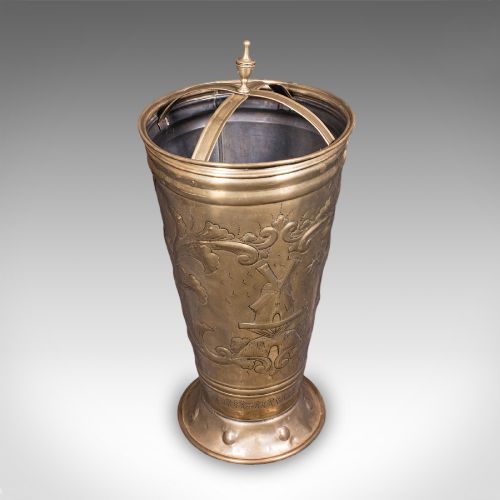
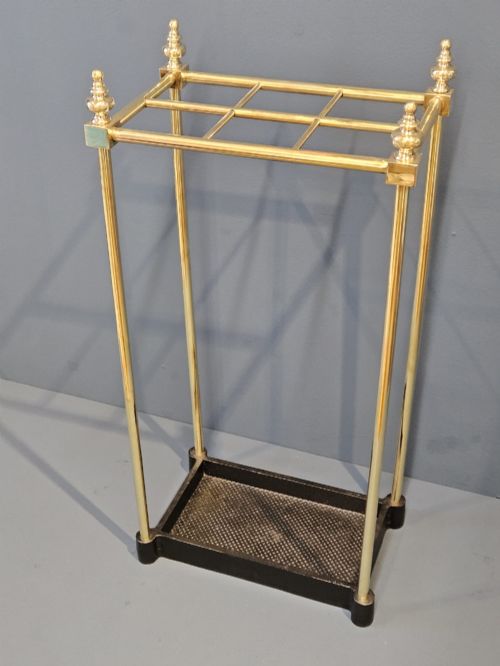
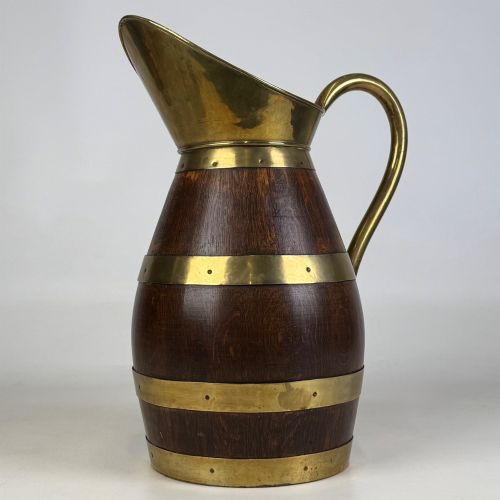
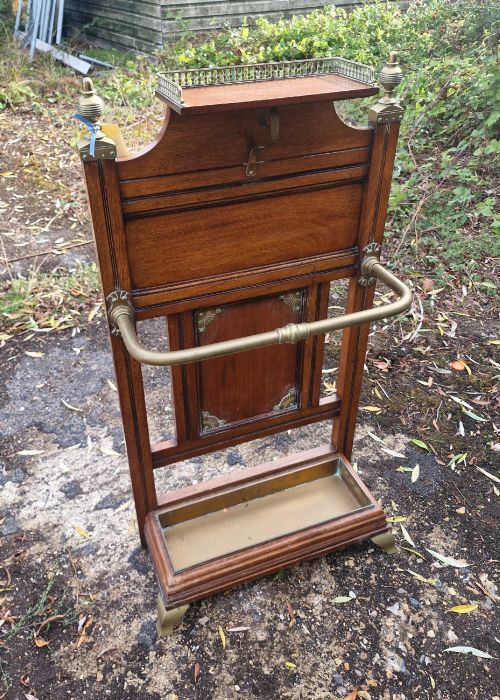
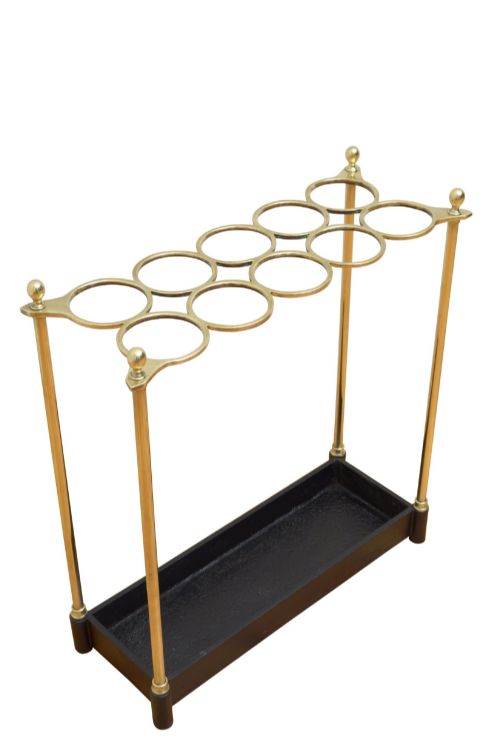
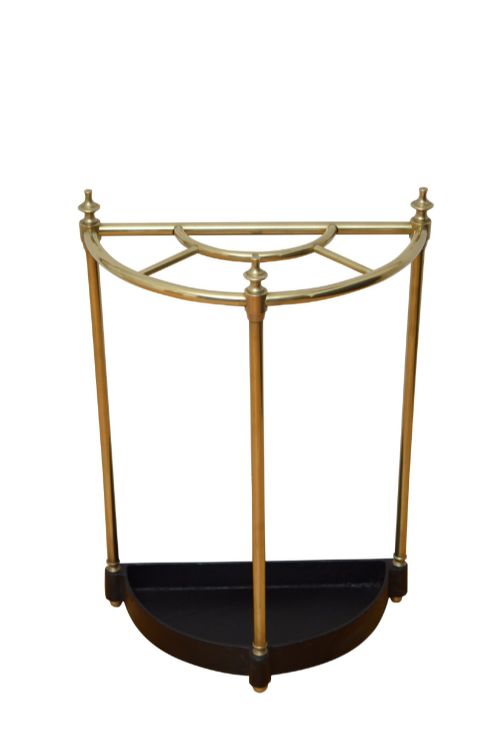
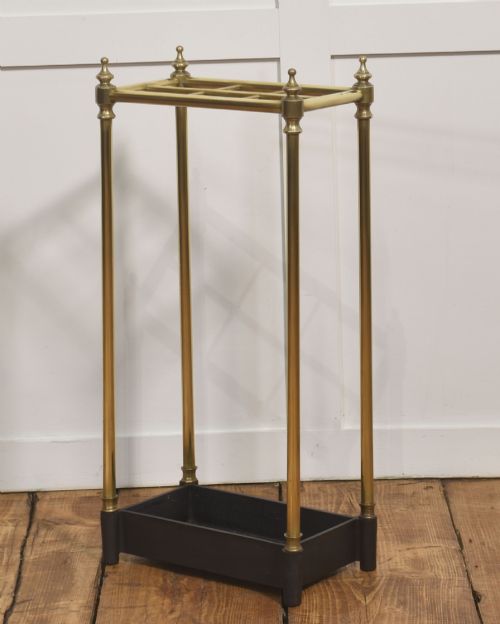
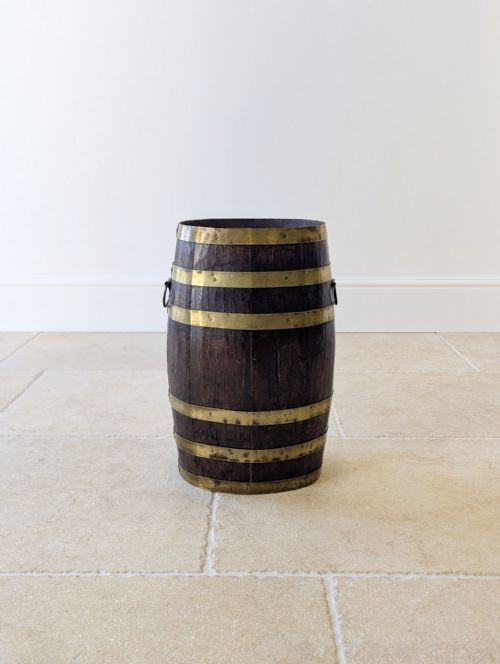
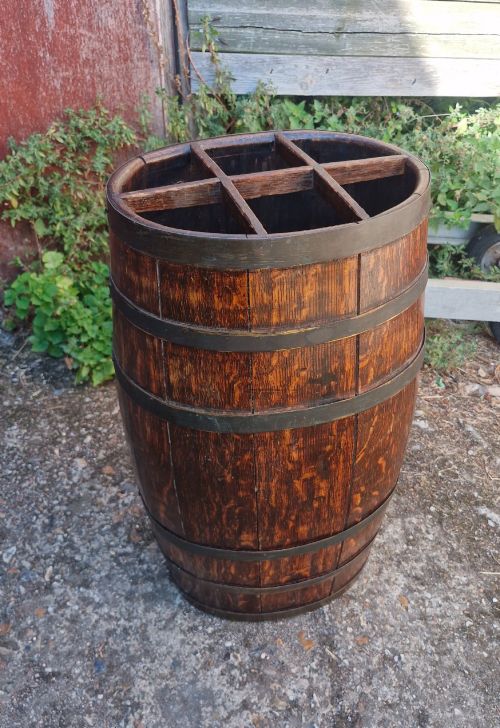
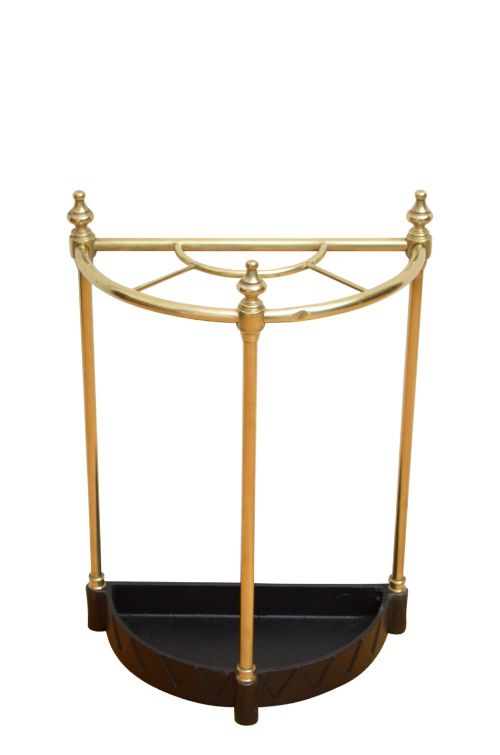
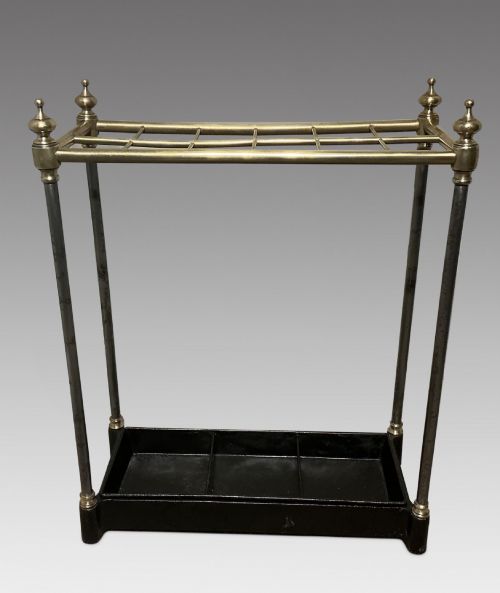
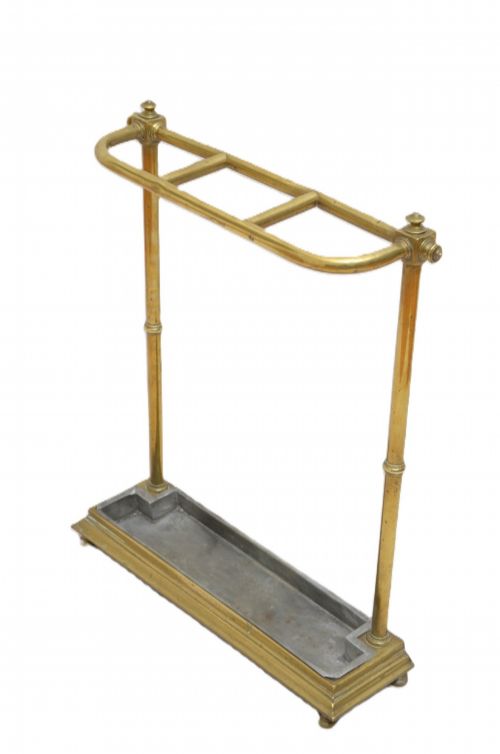
A brass cane holder serves as a functional hall furnishing for walking sticks, canes, and umbrellas, frequently appearing under various forms of stick and umbrella stands in the evidence. You will most commonly encounter Victorian and Edwardian examples shaped in a demi-lune, half moon, or cylindrical barrel design.
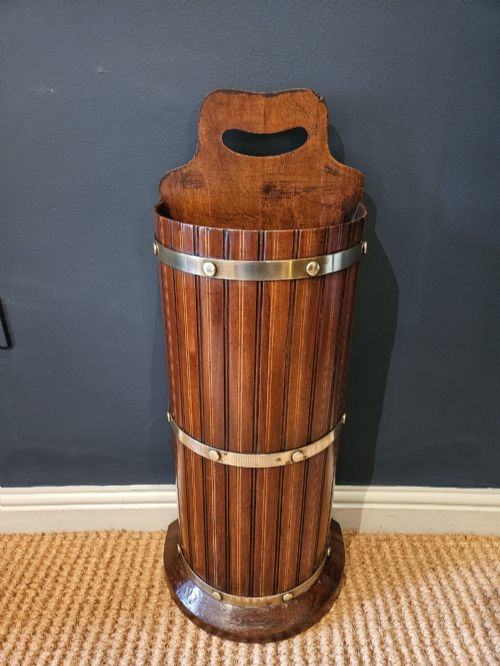
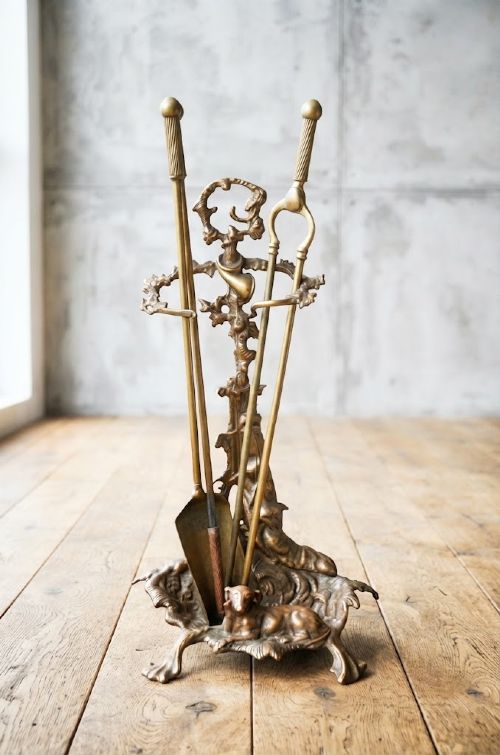
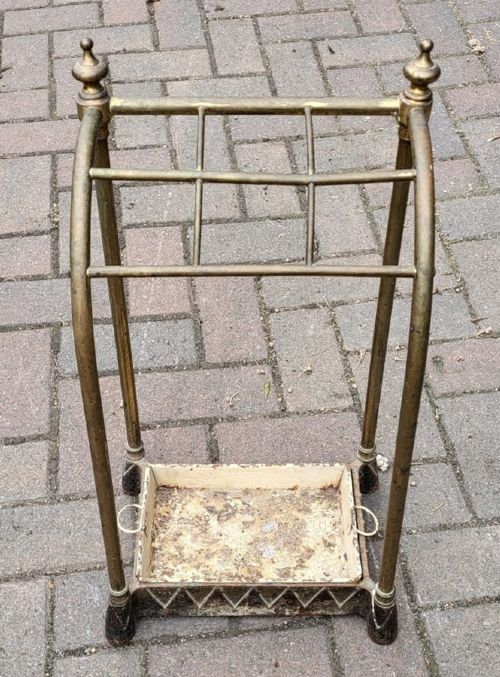
The materials span brass, cast iron, oak, mahogany, copper, and ceramic, often combining wood staves with metal bands. Pieces range from straightforward English country designs to more decorative examples featuring ball finials, bun feet, and dog tooth trays.
How they were made
The construction relies heavily on combinations of brass, cast iron, and timber such as oak and mahogany. Many barrel-form stands employ coopered construction, binding wooden staves together with metal or brass braces.
Cast iron frequently provides stability through heavy weighted bases or internal frames, paired with sheet brass or copper bodies. Metal components are joined with visible fixings, rivets, and decorative finials characteristic of nineteenth and early twentieth century metalwork.
Brass Cane Holder Retail Price Guide 2026
Typical asking prices for brass cane holder among the pieces listed under this phrase on Sellingantiques today, from the lower quarter to the upper quarter. They describe what is for sale here now, not the wider market.
Materials recorded across the inventory include brass, cast iron, copper, oak, mahogany, and ceramic.
What varies in quality
Quality rests upon the weight and gauge of the metal used, alongside the precision of the cooperage on wooden barrel designs. Heavier gauge brass and substantial cast iron frameworks denote sturdier execution than thin sheet metal alternatives.
Design complexity also marks the distinction, separating plain utility models from pieces incorporating decorative cast relief work, matched pairs, or distinctive styles such as Arts and Crafts and Gothic Revival.
Thomas Jeckyll
The Brass Cane Holder Glossary
- Demi-lune
- A half-moon shape designed to sit flat against a hallway wall. This profile allows the stand to occupy minimal floor space.
- Coopered
- A method of construction using curved wooden staves bound together by metal hoops. This technique mirrors traditional barrel-making.
- Drip tray
- A shallow metal basin placed at the base to catch moisture from wet umbrellas. It protects the floor beneath the stand.
- Finial
- A decorative ornamental crowning element attached to the top corners or posts. These details appear frequently on nineteenth-century metalwork.
Brass Cane Holder: Frequently Asked Questions
Where should I place a brass cane holder?
These pieces suit entrance halls and boot rooms where coats and outdoor accessories accumulate. Placing them near the primary doorway provides immediate access for walking sticks and umbrellas upon arrival.
The semi-circular demi-lune shapes fit particularly well against narrow hallway walls without obstructing passage. Solid bases with integrated drip trays protect wooden flooring from dampness brought in from outside.
How do I clean brass and copper stands?
Maintenance involves dusting with a soft cloth and occasionally addressing tarnish depending on the desired finish. Many collectors prefer to leave an aged patina rather than polishing the metal to a bright shine.
Harsh chemical abrasives should be avoided to preserve the original surface texture of nineteenth-century brass and copper. Ensuring the internal drip tray remains dry prevents corrosion at the base.
Are these stands suitable for modern umbrellas?
Most historical stands accommodate standard walking canes and traditional umbrella shafts comfortably. Wider cylindrical barrels and heavy cast iron frames easily hold multiple modern wet umbrellas.
Narrower hall stands function best with slender walking sticks and compact umbrellas rather than oversized golf brollies. Checking the internal diameter helps determine capacity for daily use.