
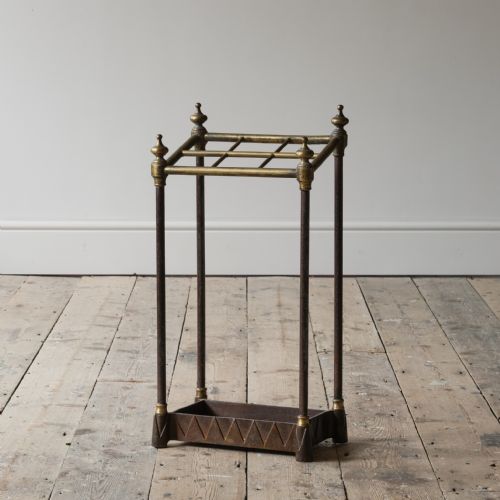
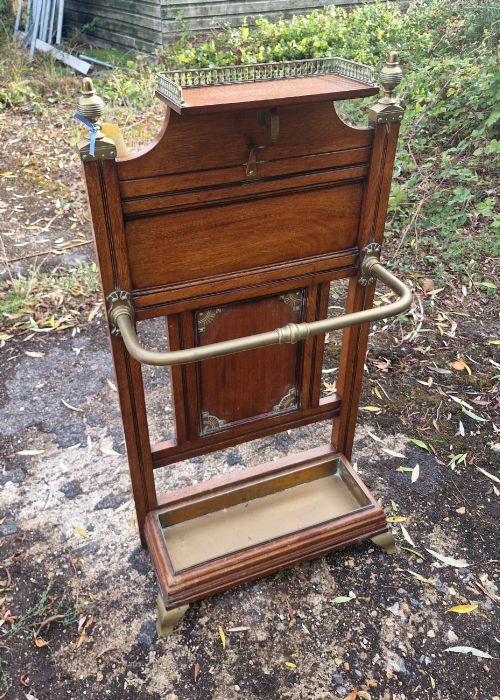
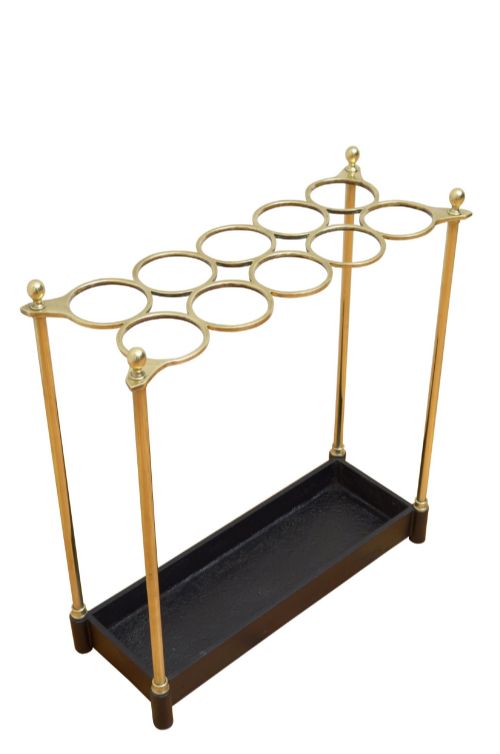
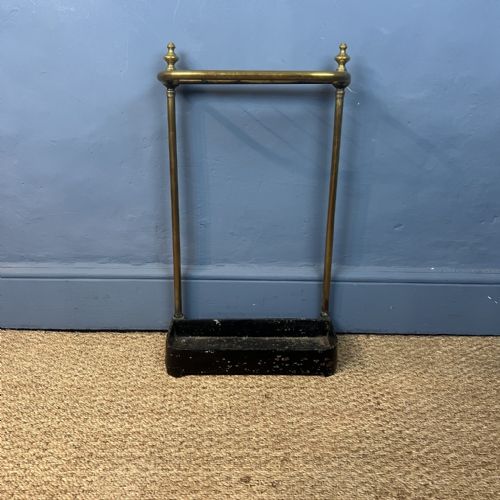
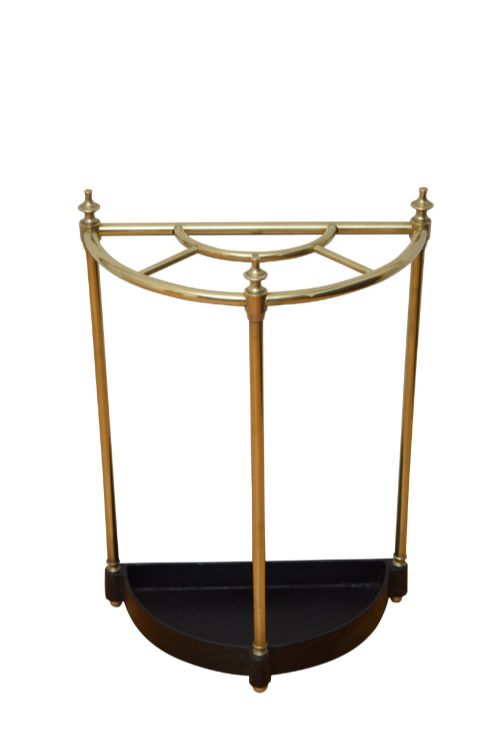
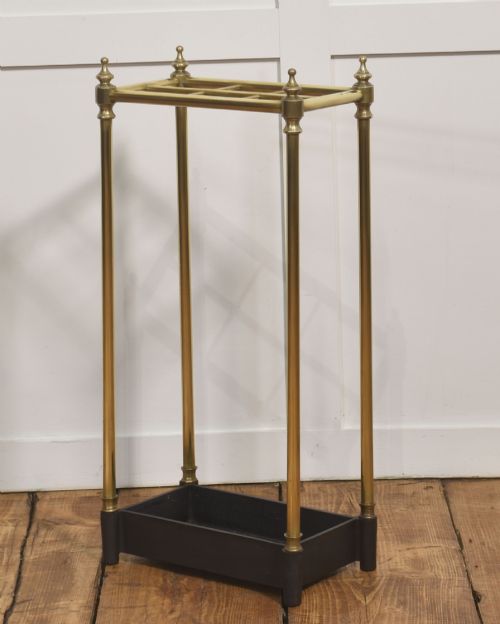
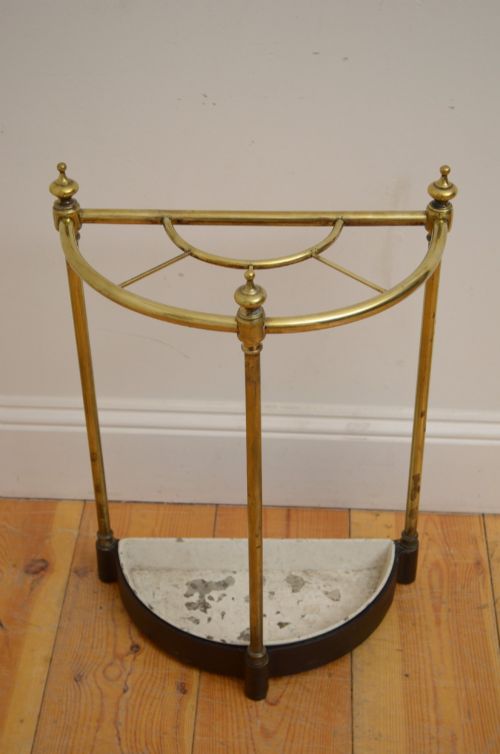
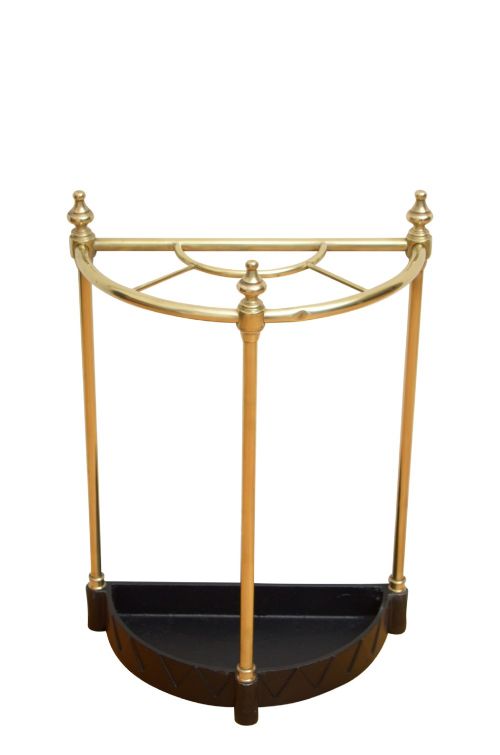
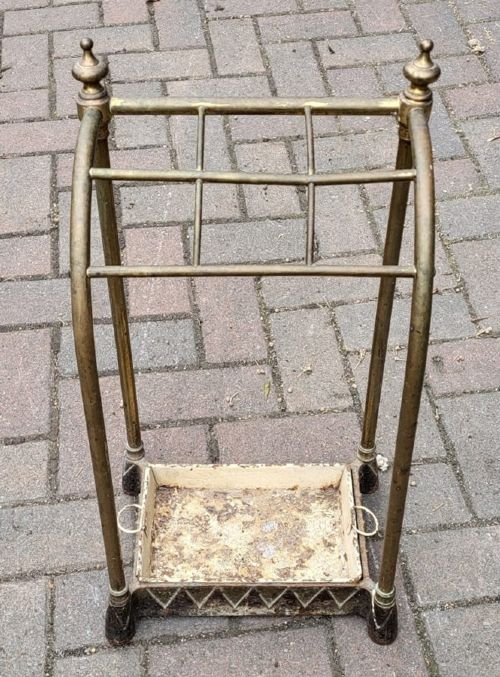
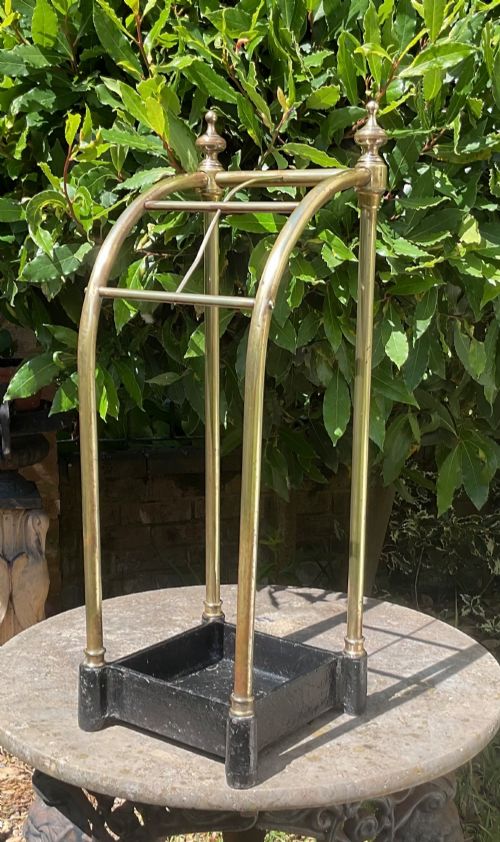
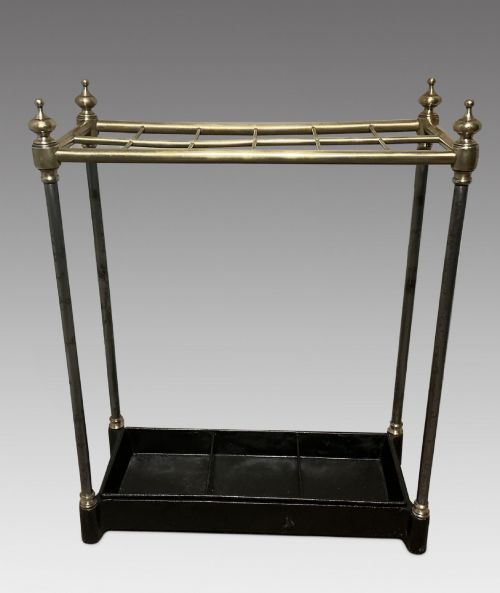
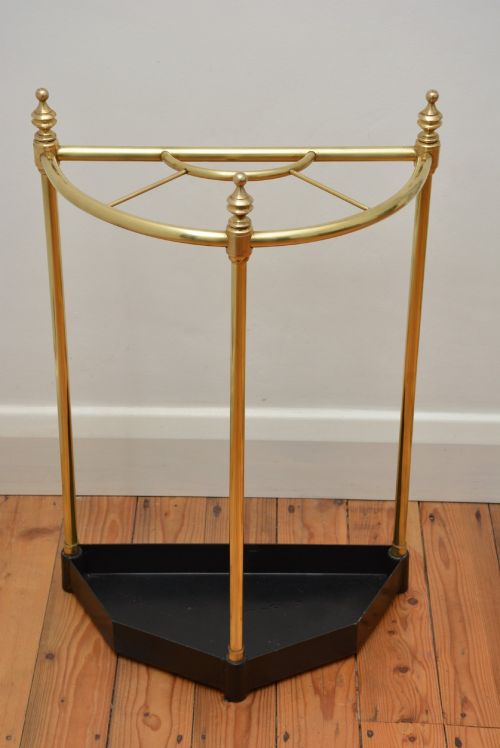


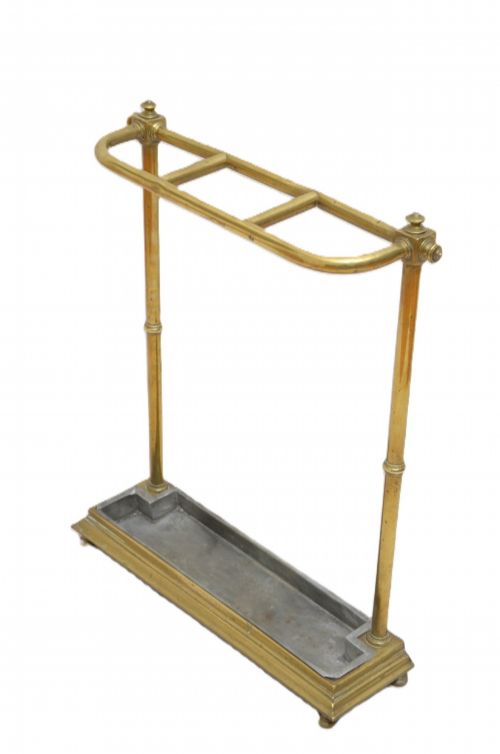
Brass Drip Tray Stand
A brass drip tray stand keeps hallway floors dry while holding walking sticks and umbrellas in style.
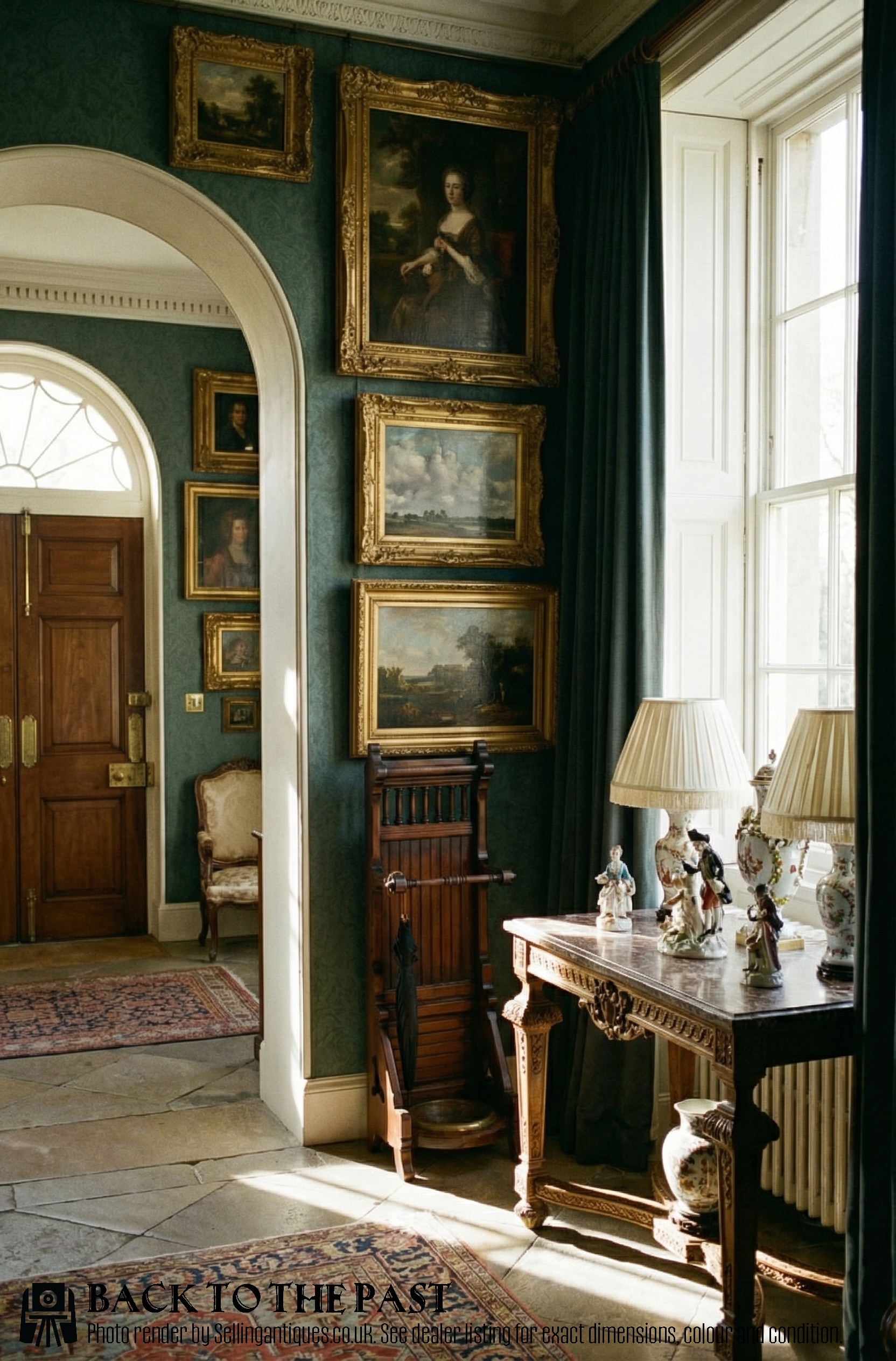
Identifying a brass drip tray stand
A brass drip tray stand is designed for the hallway to catch moisture from wet umbrellas and walking sticks. These functional items appear in Victorian, 1930, 19th Century, and 1880 contexts, reflecting practical domestic needs.
Forms span demi-lune, circular, and corner shapes, alongside multi-section stick stands. Many combine brass with cast iron bases or timber frames like oak and mahogany to provide stability.
The aesthetic reaches from plain utilitarian designs to Gothic Revival and Art Nouveau styles. Buyers often encounter pieces featuring decorative touches such as coronets or loop dividers.
Construction and materials
Construction relies on a combination of metals and timbers, utilising brass for frames, stick loops, and removable drip trays. Cast iron frequently forms the heavy base needed to support wet walking aids without tipping.
Wooden elements incorporate oak and mahogany for structural stability or surrounds. Metal components utilise casting and joining techniques typical of nineteenth and early twentieth-century metalwork.
Retail Price Guide 2026
Typical UK retail prices for brass drip tray stand, calculated from the Sellingantiques database of over a million retail prices indexed since 2003. This retail price guide relies exclusively on Sellingantiques data; no external sources or auction records are used, so the figures do not describe the wider market.
Materials recorded on this site include brass, cast iron, oak, and mahogany.
Assessing quality
Quality reveals itself in the substance of the base and the weight of the metal. Heavy cast iron bases paired with solid brass framework represent a higher standard than lighter, thinner alternatives.
Design ambition separates standard utility items from more elaborate examples. Pieces incorporating stylistic flourishes like Gothic Revival or Art Nouveau motifs, or specialised configurations such as twin drip trays, show greater craftsmanship.
The Brass Drip Tray Stand Glossary
- Demi-lune
- A half-moon shape allowing the stand to sit flush against a hallway wall. This profile saves floor space in narrow corridors.
- Stick loop
- The metal dividers that keep individual umbrellas and walking sticks upright. These loops prevent items from leaning haphazardly.
- Drip tray
- The removable shallow pan at the base that catches rainwater. It protects flooring from moisture damage.
- Gothic Revival
- A nineteenth-century design style drawing on medieval architectural motifs. Pieces in this style often feature pointed arches or structural tracery.
- Art Nouveau
- A decorative movement characterised by flowing, organic lines. This style appears in the sinuous curves of later metalwork.
Frequently Asked Questions
Where should I place a drip tray stand?
Position the stand near the primary entrance of the home to catch wet umbrellas immediately upon arrival.
The compact footprint of demi-lune and corner designs allows them to fit neatly into hallways without obstructing movement.
How do I clean brass and iron?
Dust the metal surfaces regularly with a soft cloth to prevent grime accumulation.
Avoid harsh chemical polishes that strip historical patination, opting instead for gentle cleaning methods appropriate for older metals.
What is the purpose of the iron base?
Cast iron provides the substantial weight required to anchor tall umbrellas securely.
This heavy foundation prevents the stand from toppling when multiple heavy walking sticks are placed inside.
How do I identify a Victorian stand?
Look for construction materials such as heavy brass, cast iron, and timbers like mahogany or oak.
Stylistic indicators like Gothic Revival elements or traditional section dividers also point toward nineteenth-century origins.