
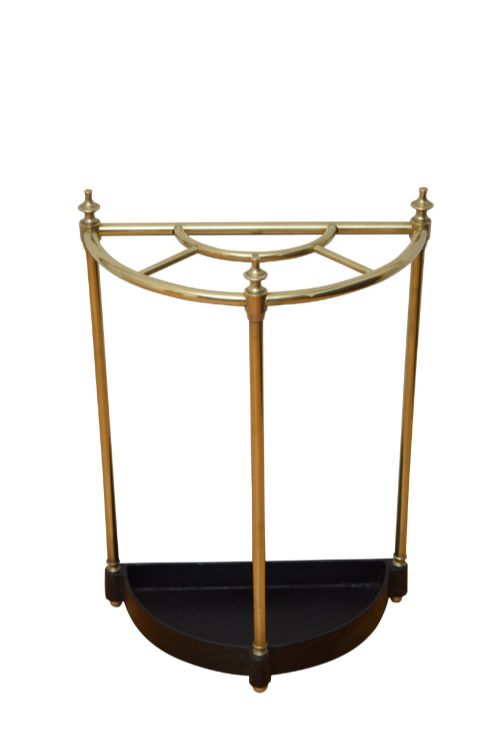
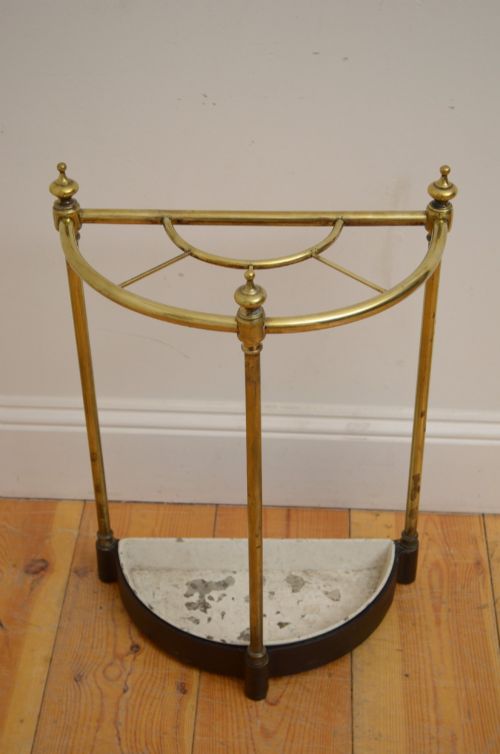
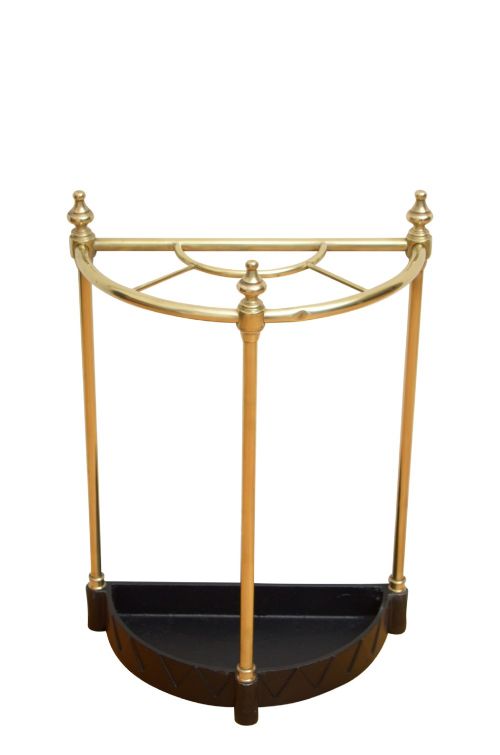
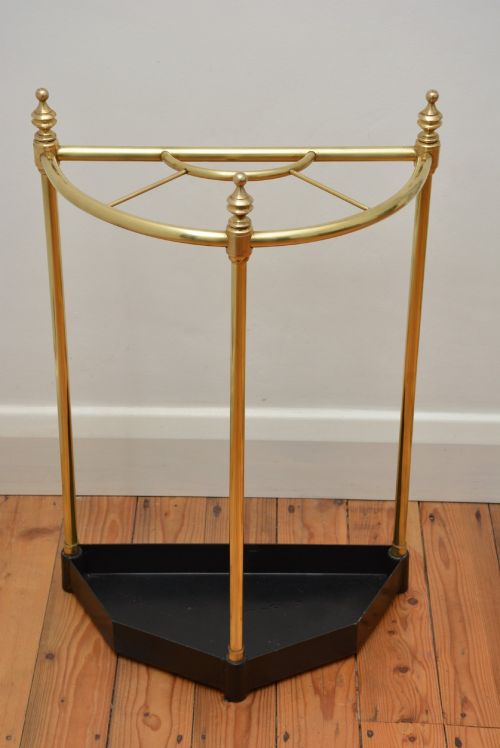


Half Moon Umbrella Stand
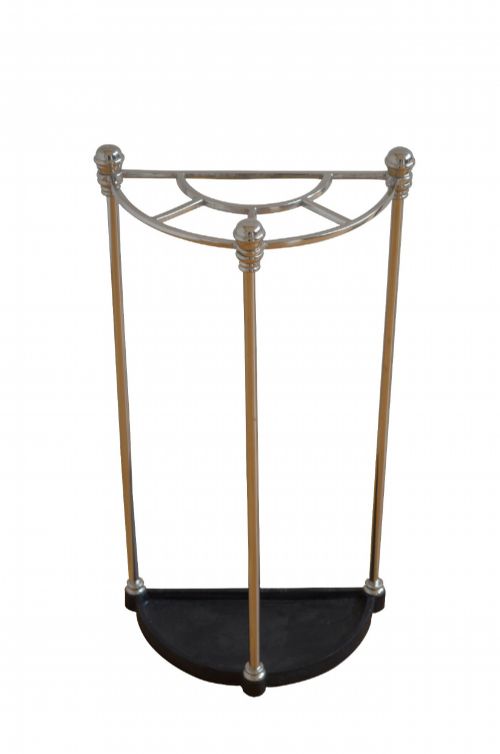
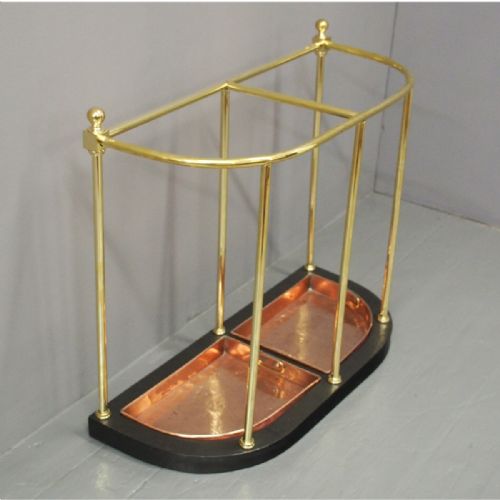
These half moon umbrella stand pieces are practical hall furniture shaped to fit flat against a wall, offering a tidy place for walking sticks and wet canes.
Half Moon Umbrella Stand
A half moon umbrella stand provides a compact footprint designed to sit snugly in narrow hallways and entrance passages. The selection here spans several distinct eras, including Victorian, Edwardian, and Art Deco periods, capturing how entryway furniture evolved across decades.
Most examples found on this page adopt the demi-lune or half-round form, often accompanied by a matching drip tray at the base to catch rainwater. The object types range from dedicated umbrella stands to stick stands and combined hall stands.
Originating largely from English workshops, these pieces draw upon traditional decorative styles such as Art Nouveau, Jacobean Revival, and clean geometric lines from the early twentieth century. Buyers encounter straightforward brass models alongside mixed-media constructions featuring cast iron and oak.
Materials and construction methods
Makers utilised resilient metals including brass, nickel, copper, and cast iron to build sturdy frames capable of supporting heavy walking sticks and damp umbrellas. Brass appears frequently, shaped into tubular rails and decorative panels, sometimes paired with cast iron bases for stability.
Timber examples employ solid oak and general wood construction, reflecting traditional joinery techniques used in domestic furniture. Selected items incorporate specialised details such as dog tooth trays and stick loops to keep items separated and upright.
Half Moon Umbrella Stand Retail Price Guide 2026
Typical asking prices for half moon umbrella stand among the pieces listed under this phrase on Sellingantiques today, from the lower quarter to the upper quarter. They describe what is for sale here now, not the wider market.
Distinguishing quality across the range
Quality in a half moon umbrella stand rests on the integrity of the metalwork, the weight of the base, and the retention of original components like drip trays. Sturdier castings and heavier gauge brass separate better utility pieces from lighter, more decorative alternatives.
The refinement of period stylistic details, from Art Nouveau curves to clean Art Deco geometry, distinguishes standard production items from more ambitious designs. Preservation of the surface finish and structural soundness without excessive replacement parts dictates the standing of each piece.
The Half Moon Umbrella Stand Glossary
- Demi-lune
- Half-moon shape designed to sit flat against a hallway wall. This curved profile maximises floor space in narrow entryways.
- Stick loop
- Metal divider or ring configuration that keeps individual walking sticks and umbrellas separated. It prevents items from sliding or leaning haphazardly.
- Drip tray
- Removable base pan positioned beneath the stand to catch water from wet umbrellas. It protects flooring from moisture damage.
- Cast iron
- Heavy alloy poured into moulds to create rigid, durable bases for umbrella stands. This material provides the necessary weight to prevent tipping.
- Dog tooth
- Decorative jagged pattern often found along the edge of trays or borders. It adds a textured visual element to the metalwork.
Half Moon Umbrella Stand: Frequently Asked Questions
How do I spot an Edwardian umbrella stand?
Edwardian umbrella stands often exhibit lighter brass construction and simpler decorative motifs compared to heavier Victorian predecessors. They date from the early years of the twentieth century.
Look for refined metal tubing and functional additions like integrated drip trays designed for everyday domestic use.
Were these stands made for walking sticks too?
These pieces were built to accommodate both walking sticks and wet umbrellas side by side in the hallway. The vertical divisions and loops kept slender canes from slipping.
Many listings explicitly group umbrella stands and stick stands together due to this dual purpose in period homes.
What materials are common in these stands?
Brass and cast iron form the backbone of the metal examples found in this selection. Copper, nickel, and solid oak also appear across various periods.
These durable materials endured daily exposure to wet weather and heavy walking sticks.