


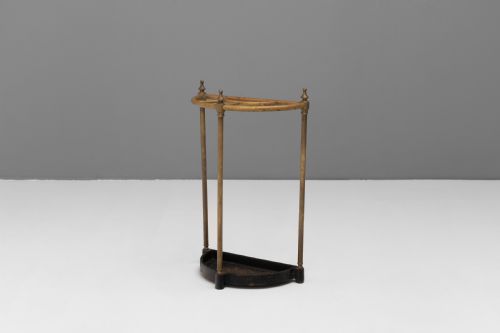


Demi Lune Umbrella Stand
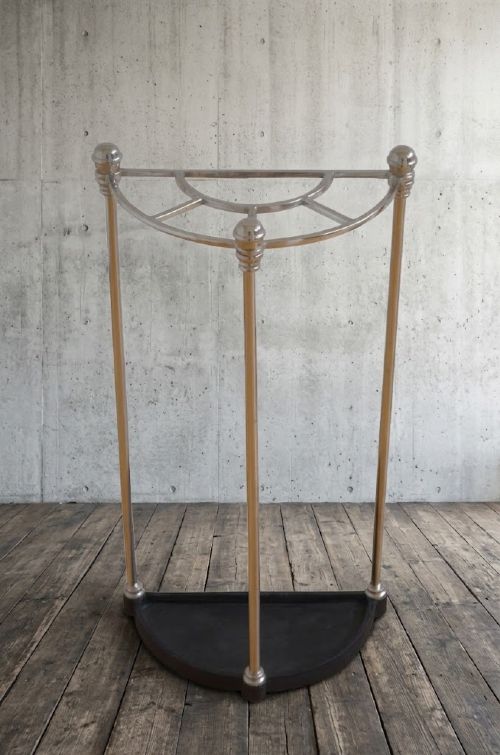
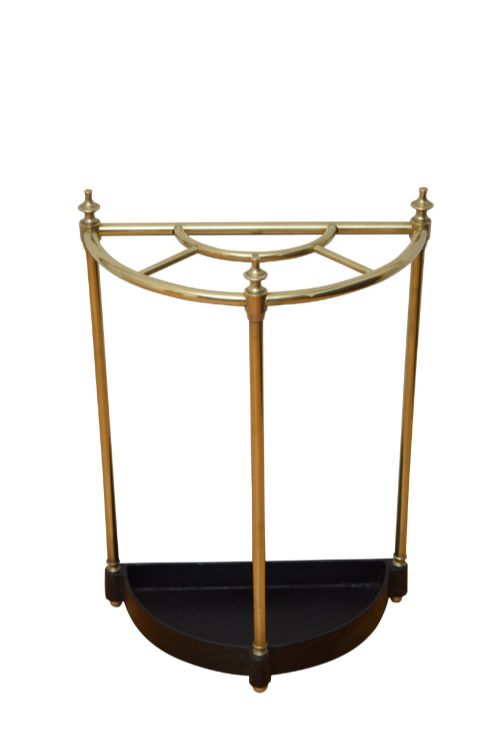
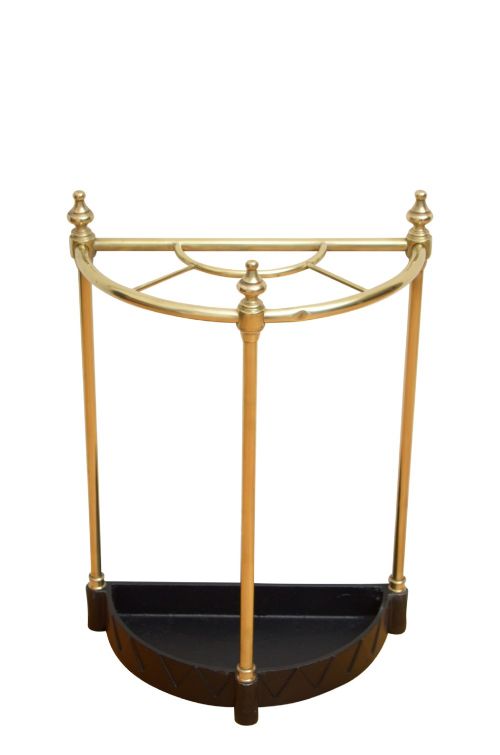
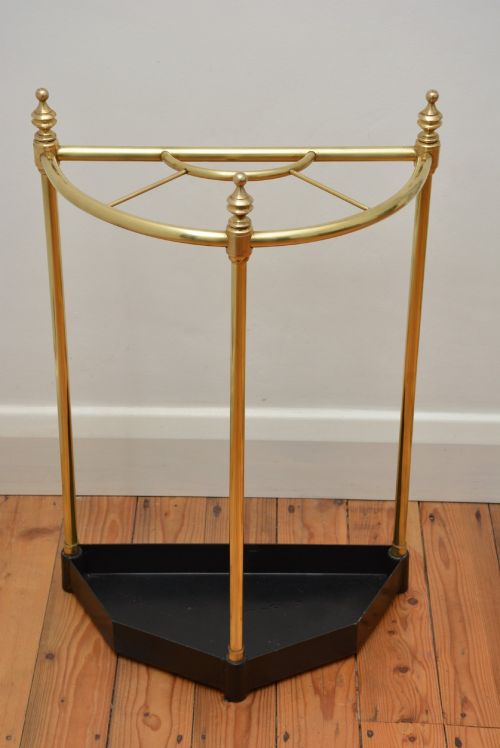
A demi lune umbrella stand is a half-moon hall fixture designed to hold wet walking sticks and umbrellas tightly against a wall.
Demi Lune Umbrella Stand
A demi lune umbrella stand presents a flat back to sit flush against a hallway wall, sweeping forward in a half-circle to contain wet canes and umbrellas. These hall pieces emerge most frequently from Victorian, Edwardian and Art Deco workshops, spanning the late nineteenth century into the nineteen-thirties.
The profile accommodates narrow entryways where a full circle would obstruct the passage. Most examples met here are constructed from brass or cast iron, though oak and bentwood variants appear among the country house hall stands.
Materials and Construction
Metal stands rely on cast iron bases and heavy brass frames, often incorporating tubular metal and nickel plating for durability against wet dripping water. Drip trays sit beneath to catch moisture, sometimes shaped with distinctive dog tooth borders.
Wooden iterations utilise oak, beech bentwood and mahogany, relying on steam bending to create the curved framework. Hall stands combine these umbrella rings with coat and hat hooks, integrating several functions into one hall piece.
The documented periods span the Victorian era, Edwardian period, early twentieth century, and nineteen thirty.
Build and Detail
Quality rests in the substantial weight of the metal and the integrity of the joints. Cast iron bases provide necessary stability, preventing the stand from tipping when loaded with heavy walking sticks.
Decorative ambition separates standard utility pieces from better examples. Art Nouveau castings, pierced trays and crisp brass loop divisions show greater workshop care than plain utilitarian frames.
The Demi Lune Umbrella Stand Glossary
- Demi lune
- A half-moon shape allowing furniture to sit flush against a wall. This profile saves floor space in narrow hallways and passages.
- Stick stand
- An alternative term for a holder designed for walking sticks and canes. These often share form and function with umbrella stands.
- Bentwood
- Wood softened by steam and bent into curved shapes. This technique defines many Edwardian hall stands.
- Drip tray
- A shallow metal basin placed at the base to catch water from wet umbrellas. These trays remove for cleaning and emptying.
Demi Lune Umbrella Stand: Frequently Asked Questions
Where should I place a demi lune umbrella stand?
These half-moon stands suit narrow hallways, porches and narrow entryways where space is tight. Their flat back allows them to sit directly against the wall without blocking foot traffic.
Position them near the main entrance so wet umbrellas go straight into the stand upon entry.
How do I care for a brass umbrella stand?
Brass stands require occasional dusting and cleaning to maintain their metal finish. Avoid harsh abrasive cleaners that strip the historic surface.
Empty and dry the base drip tray regularly to prevent moisture accumulation and protect the surrounding flooring.
Are these stands suitable for modern umbrellas?
Most antique stands accommodate traditional walking sticks and standard umbrella shafts easily. The loop divisions and metal rings keep upright items separated and stable.
Very wide modern golf umbrellas might not fit into smaller individual dividers on older stands.
How do I date an Edwardian hall stand?
Edwardian stands often feature steam-bent beechwood or lighter brass framing combined with hat and coat hooks. Construction methods and registration numbers can help narrow the production decade.
Victorian pieces tend to use heavier cast iron and darker oak, while Art Deco examples from nineteen thirty show cleaner geometric lines.