


Vintage Cane Rack
These vintage cane rack pieces are sturdy hallway vessels designed to hold umbrellas and walking sticks, bringing order and historic character to an entryway.
Vintage Cane Rack
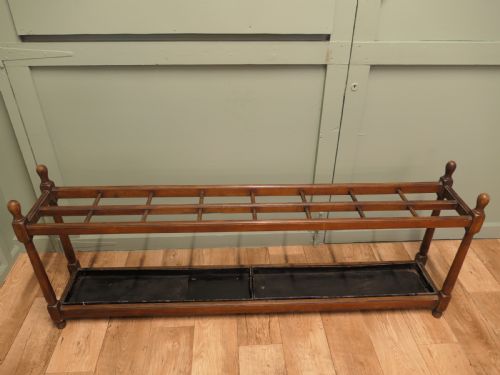
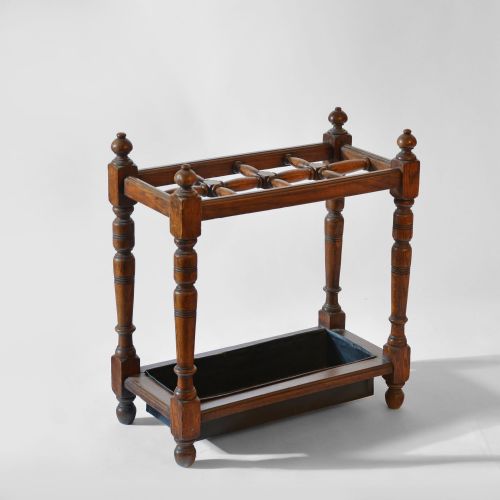
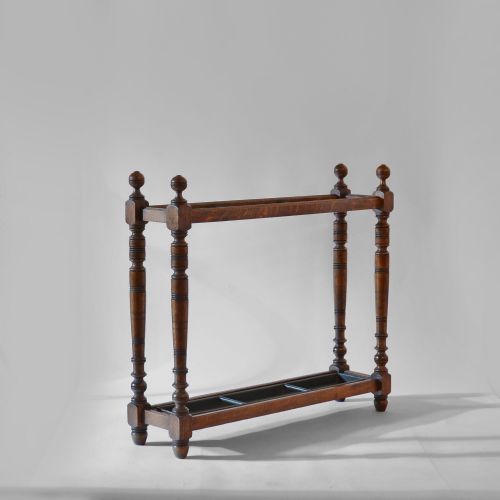
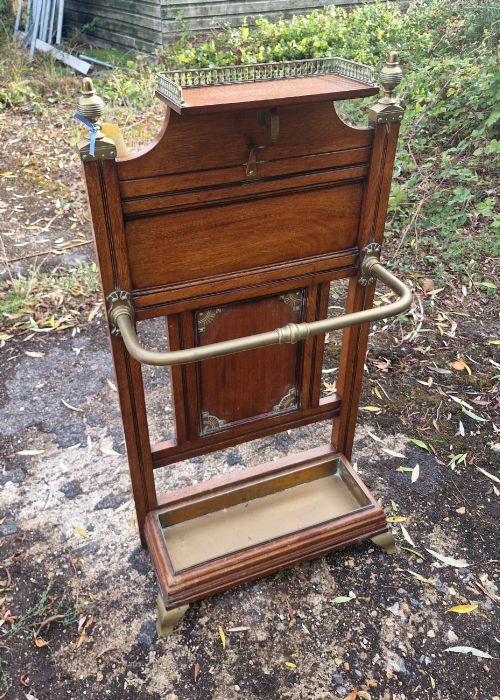
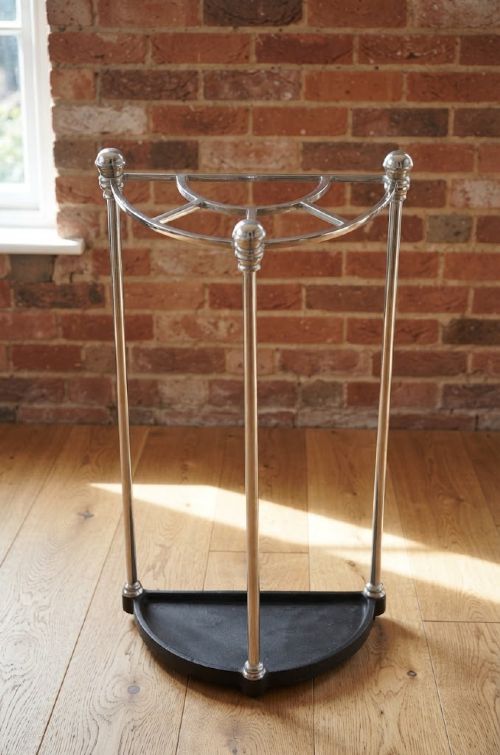
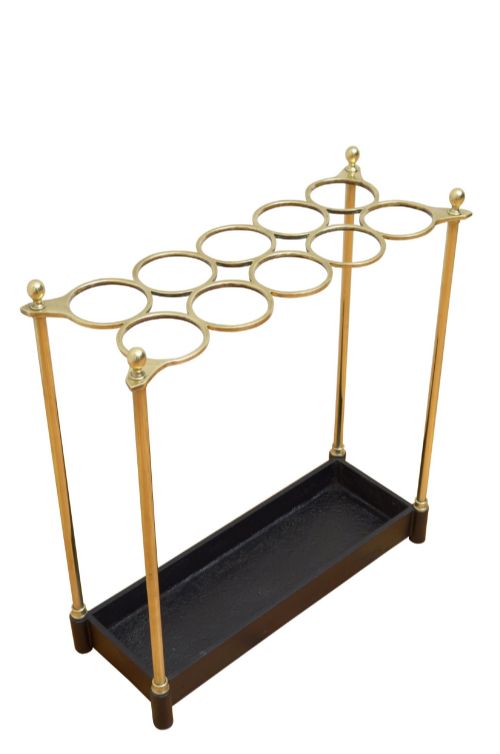
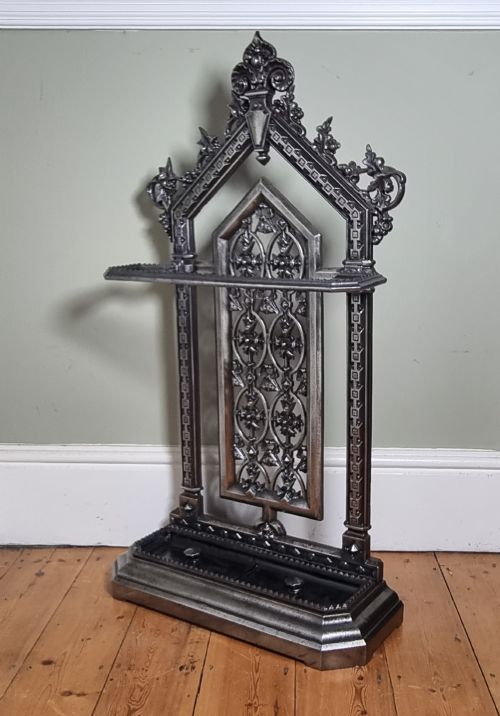
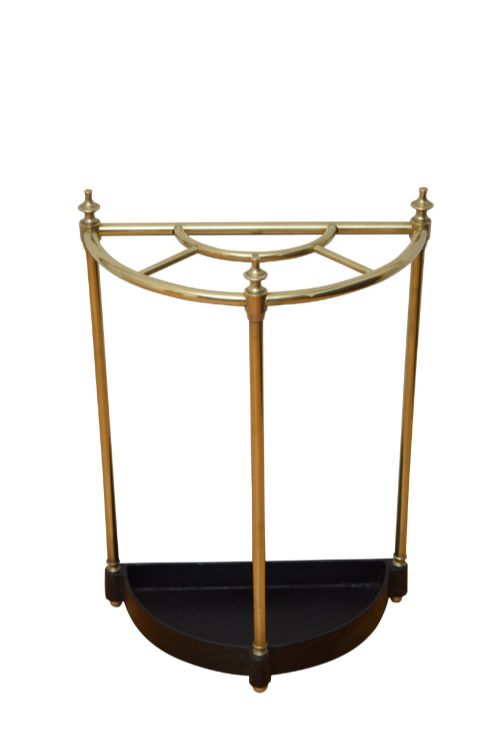
A vintage cane rack serves as a practical hallway fixture designed to store walking sticks, canes, and umbrellas neatly upright. Most examples found on this page date from the Victorian and Edwardian eras through to the Art Deco period, spanning the late nineteenth and early twentieth centuries. These objects take the form of dedicated stick stands, half-moon demi-lune designs, and larger multi-purpose hall stands.
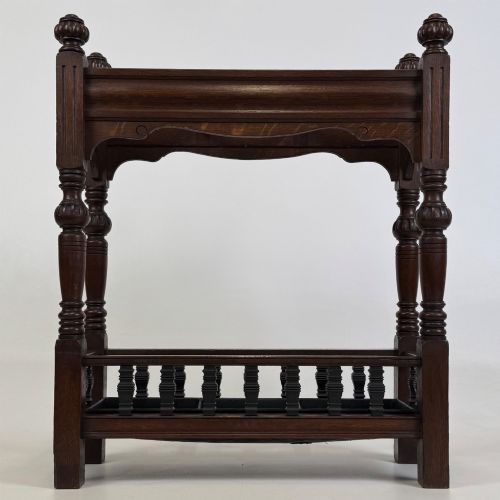
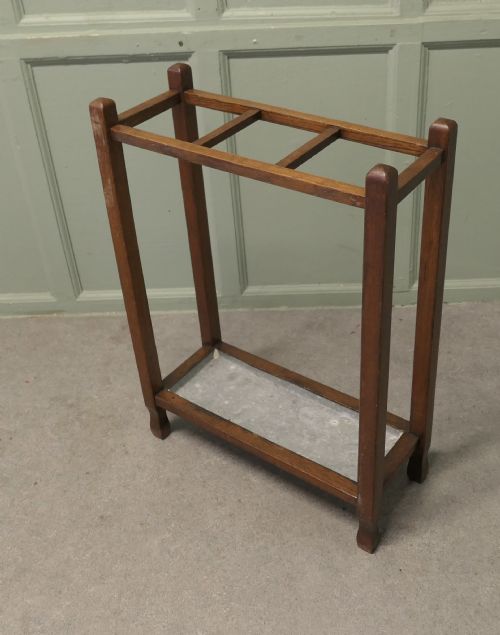
The domestic interior of the nineteenth century required dedicated furniture for wet weather gear and walking aids, resulting in diverse forms built from timber and metal. Oak and mahogany provide traditional wooden structures, while cast iron and brass offer robust alternatives suited to heavy daily use. Pieces frequently incorporate internal divisions and base trays to catch rainwater from wet items.
How they were made
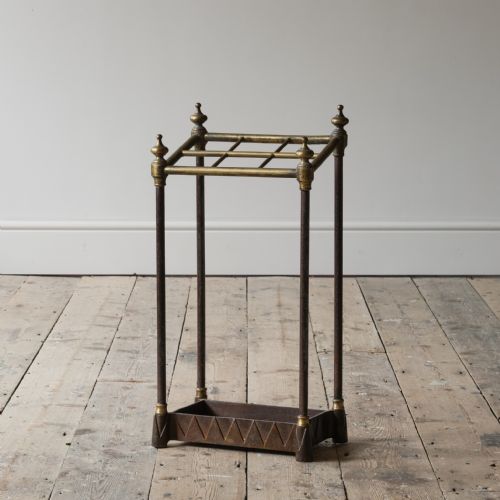
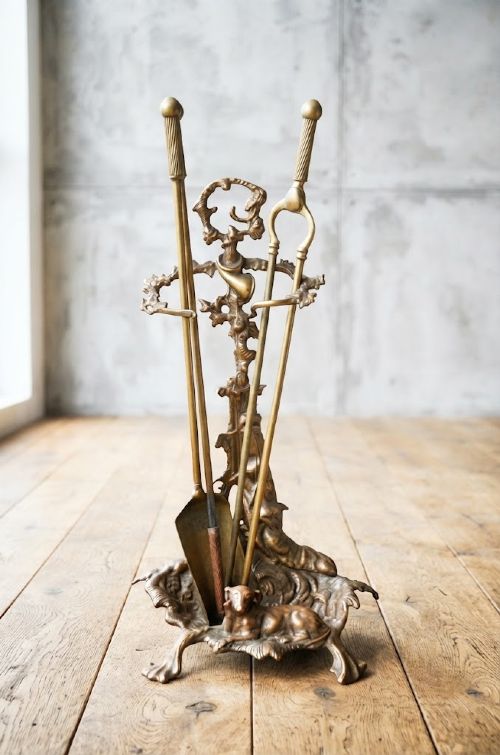
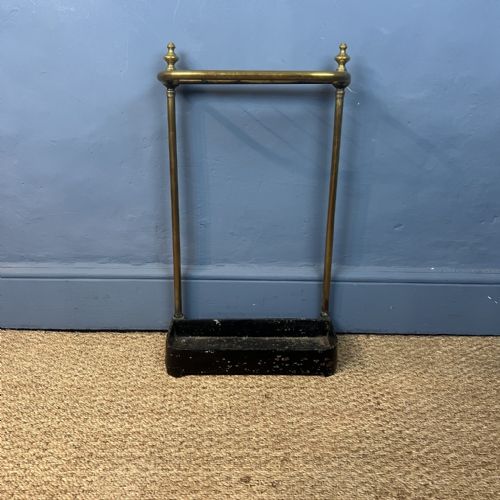
Makers utilised durable metals such as cast iron and brass alongside solid timbers like oak. Cast iron sections were poured into moulds to create decorative pierced frameworks, whilst brass components were shaped into tubular rails and decorative finials. Wooden stands relied on traditional joinery techniques, sometimes incorporating bentwood or bamboo elements to achieve specific stylistic looks.
Finishing methods varied according to the primary material. Cast iron stands frequently received painted surfaces or white enamel finishes, while brass surfaces were polished or left with a natural aged patina. Oak and mahogany structures were treated with varnishes or wax to highlight the natural grain of the wood.
Some cast iron stands depict cheerful Victorian footballers ready to field your soggy brollies.
What varies in quality
The distinction between standard utility items and superior pieces often lies in the ambition of the design and the integrity of the materials. Cast iron stands with crisp, deeply detailed mouldings show higher craftsmanship than simpler production pieces. Similarly, solid oak or mahogany frames joined with secure traditional methods outlast lighter constructions.
Completeness and originality dictate the standing of an individual piece within its type. Stands retaining their original removable metal drip trays and matching finials demonstrate higher preservation. The presence of identifiable maker signatures or specific design movements adds distinct character to the construction.
Coalbrookdale·Thonet·Heals of London
The Vintage Cane Rack Glossary
- Demi-lune
- A half-moon shape characteristic of hall stands and cane racks designed to sit flat against a wall. This profile allowed the furniture to occupy minimal hallway space while holding multiple items.
- Drip tray
- A shallow metal pan positioned beneath the rack to catch water from wet umbrellas. These trays are often removable for easy emptying and cleaning.
- Aesthetic Movement
- A late nineteenth-century design style emphasising visual beauty over narrative subject matter. Pieces from this movement often feature stylized natural motifs and dark woods.
- Arts and Crafts
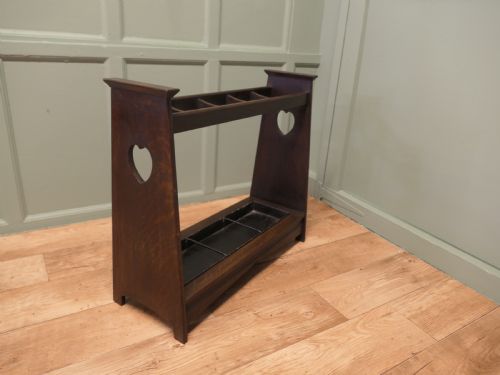
- A design movement valuing traditional craftsmanship and honest construction methods. Items in this style typically display solid oak construction and simple, robust forms.
- Finial
- A decorative ornamental terminal piece mounted at the top corners of a stand. They frequently appear as brass balls or cast metal knobs on nineteenth-century examples.
Vintage Cane Rack: Frequently Asked Questions
Where should I place a cane rack?
These stands belong in an entrance hall, porch, or boot room where outdoor accessories are kept. Their narrow footprint allows them to fit neatly against narrow hallway walls.
Ensure the floor surface beneath the stand is protected or that the drip tray is checked regularly if storing wet umbrellas indoors.
How do I clean a cast iron stand?
Dust the iron framework regularly with a soft dry cloth to prevent surface grime accumulation. Avoid harsh chemical cleaners that might strip historic painted or enamelled finishes.
For unpainted cast iron, a light application of neutral wax can help protect the metal from atmospheric moisture.
Are these stands suitable for modern umbrellas?
Most historic racks accommodate standard modern umbrella handles and walking sticks comfortably within their division rings. The interior grid dimensions suit traditional walking aids and modern folding or long umbrellas alike.
Check the diameter of the individual divisions if you intend to store unusually thick walking canes or heavy golf umbrellas.
How do I date an oak stick stand?
Examine the construction joints, timber selection, and overall stylistic details to determine the likely period of manufacture. Victorian and Edwardian examples often display distinct decorative movements such as Aesthetic or Arts and Crafts influences.
Original fixings, cast metal manufacturer marks, and the wear patterns on the base tray also provide reliable indicators of age.