
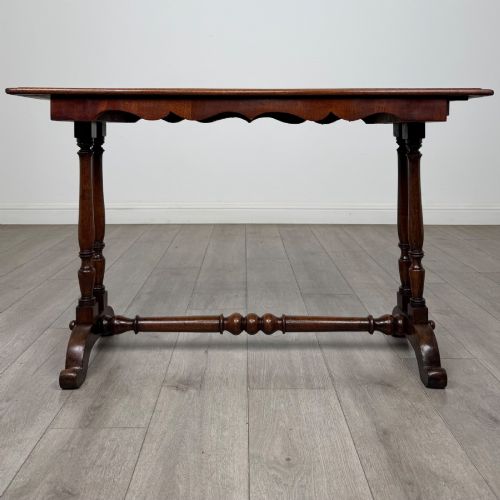
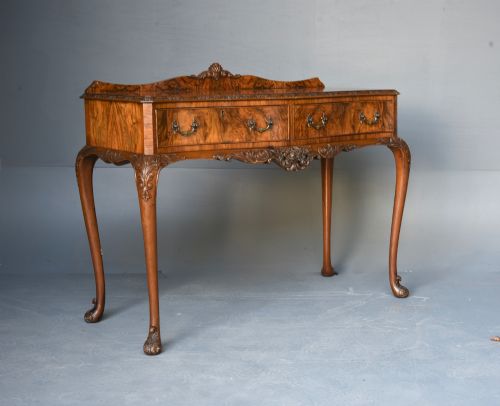
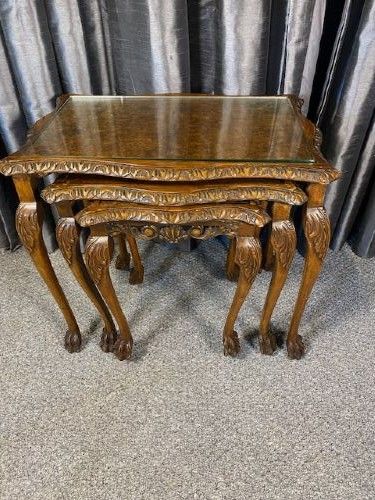
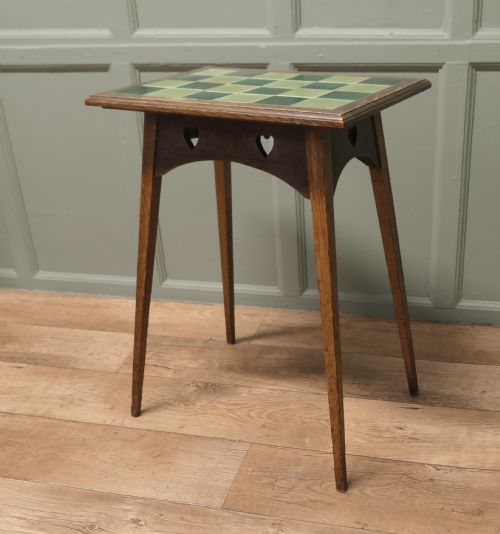
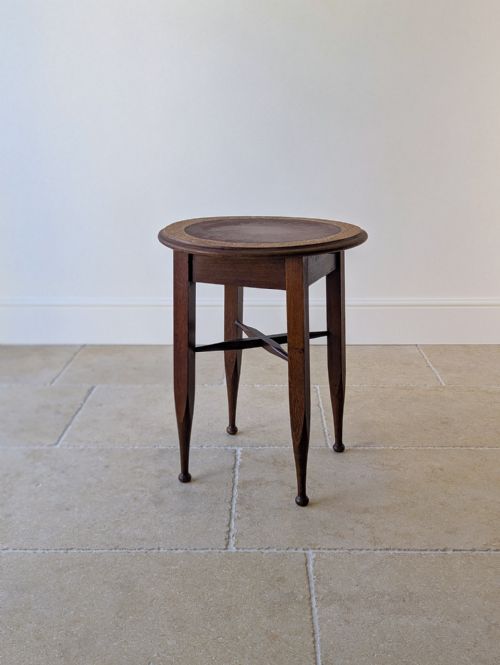
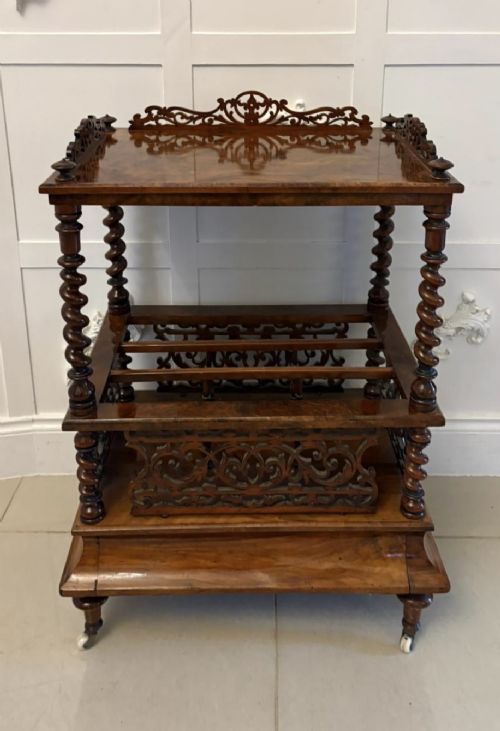
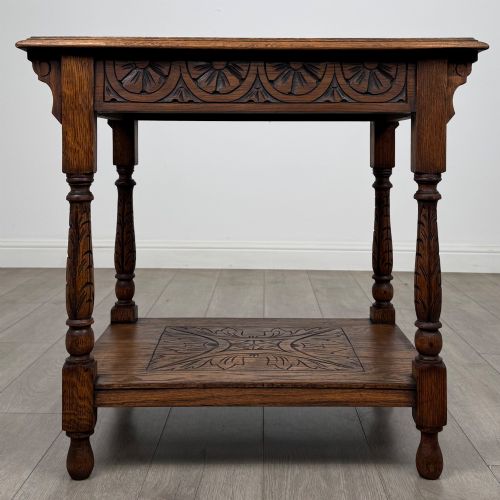
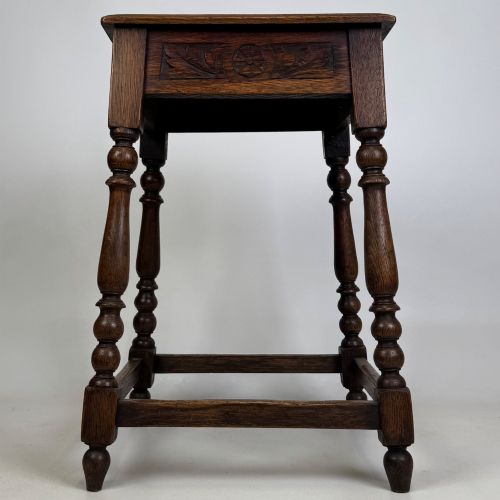
Edwardian Carved Occasional Table
An edwardian carved occasional table brings versatile surface space and period craft into a room, forged in rich timbers with detailed hand work.
Edwardian Carved Occasional Table
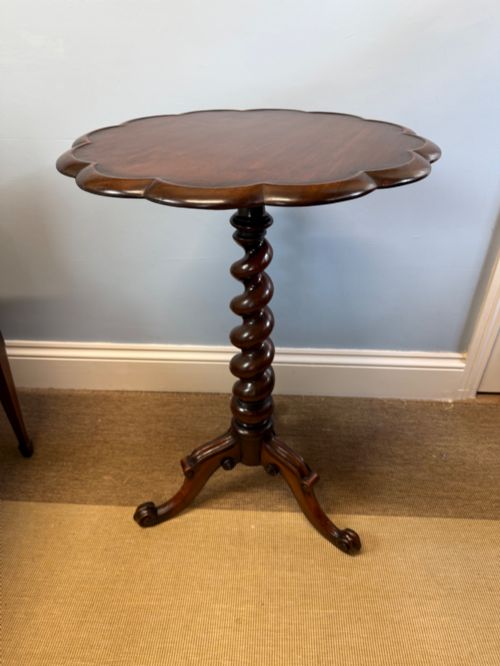
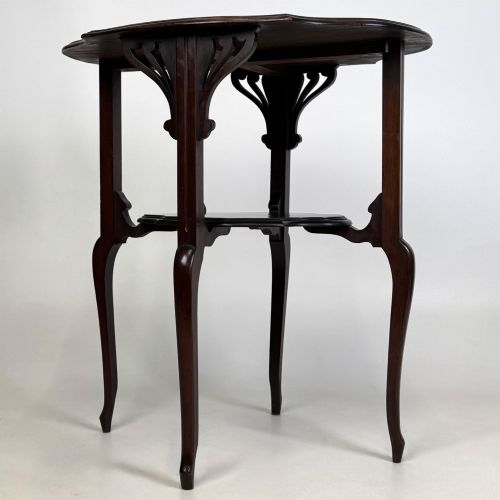
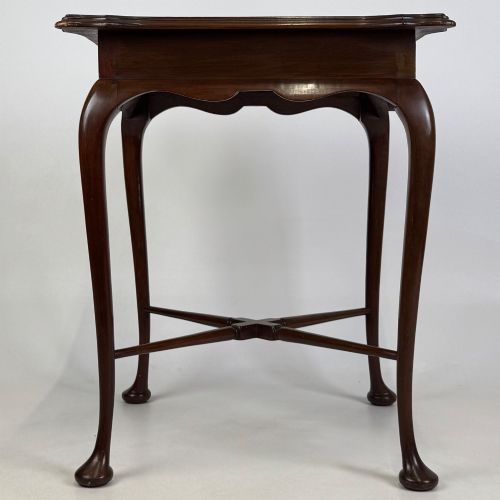
An edwardian carved occasional table is a movable small stand designed for a parlour or sitting room, most frequently encountered in mahogany, oak, or walnut. These pieces span compact tripod wine stands, two-tier tiers, and drop-leaf formats intended to hold lamps, books, or tea.
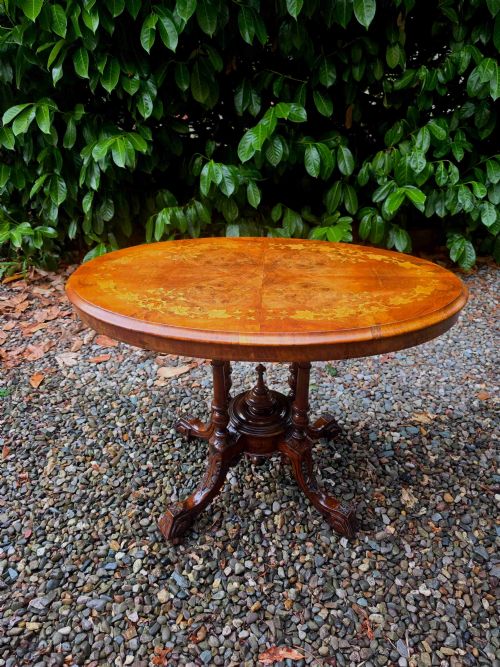
The material palette relies heavily on native and imported hardwoods, sometimes inlaid with contrasting light woods or fitted with brass accents. Makers drew upon diverse historical styles, ranging from simple vernacular oak to revival interpretations of Chippendale and Jacobean motifs.
How they were made
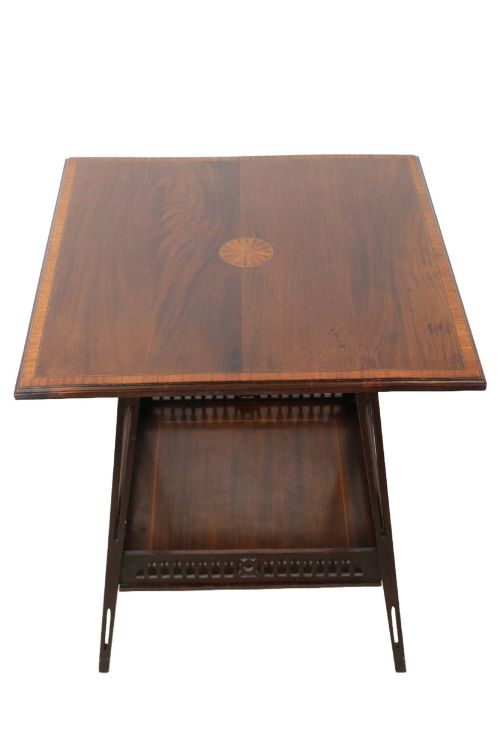
Cabinetmakers constructed these tables using solid hardwoods such as mahogany, oak, and walnut, frequently enhancing surfaces with figured burr walnut veneers or delicate string inlay. Structural stability relied on traditional joinery, including mortise and tenon frames and sturdy central pillar supports.
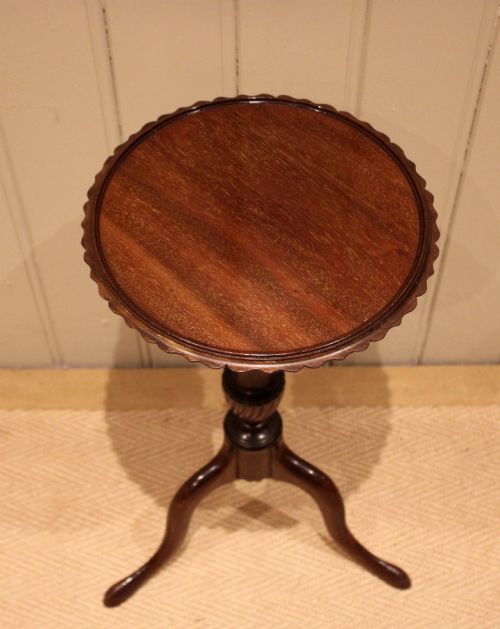
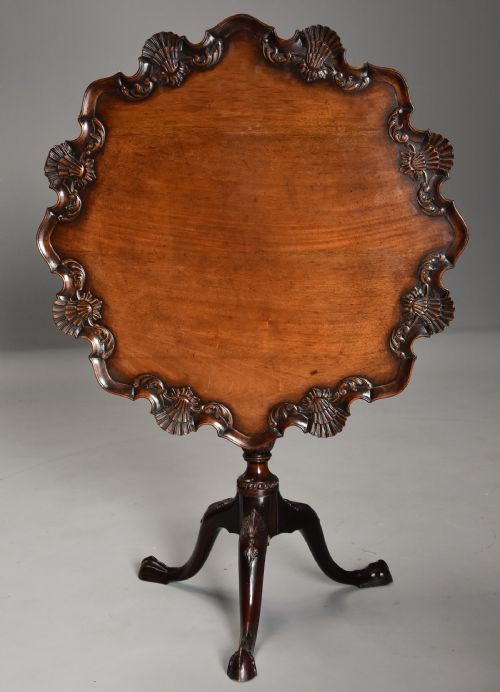
Carving was executed by hand, producing crisp mouldings, piecrust edges, or foliate motifs that distinguished vernacular output from workshop production. Selected pieces incorporated brass hardware, bone inlay, or tilting mechanisms for functional versatility.
Listings feature woods such as mahogany, oak, walnut, burr walnut, rosewood, satinwood, and brass.
What varies in quality
Quality rests upon the selection of timber and the precision of the hand carving, where deeply articulated foliage and crisp edge moulding elevate a piece above standard factory output. Well-figured veneers and tight, uncompromised joinery indicate superior workshop standards.
The integration of maker attribution, such as stamps from established firms, separates notable examples from anonymous production. Proportion, stability in the frame, and balanced decorative restraint dictate the standing of an individual table.
Trevor Page and Co·Shapland and Petter·Liberty and Co
The Edwardian Carved Occasional Table Glossary
- Piecrust edge
- A raised, scalloped rim carved into the perimeter of a circular tabletop, often found on tripod wine stands.
- Tripod base
- A central pillar support resting on three splayed legs, providing stability for lightweight occasional tables.
- Bijouterie table
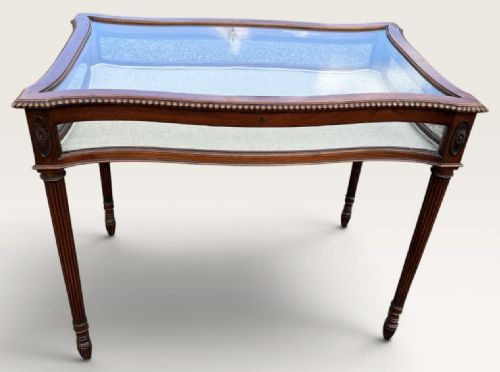
- A glass-topped display table intended for showing small valuables, curiosities, or collections.
- Canterbury
- A low multi-partition stand originally used for sheet music or books, frequently combined with an occasional table top.
- Inlay
- A decorative technique where contrasting materials like satinwood or bone are fitted flush into the primary timber surface.
Edwardian Carved Occasional Table: Frequently Asked Questions
What rooms suit an occasional table?
These compact stands work well beside armchairs or sofas to hold reading lamps, drinks, or small decorative items.
Their movable nature allows them to shift easily between sitting rooms and hallways as domestic needs change.
How do I identify an Edwardian piece?
Edwardian tables generally display lighter proportions and brighter timber tones than their heavier Victorian predecessors.
Stylistic cues often include subtle satinwood inlay, crisp machine-assisted or hand-carved detailing, and revival motifs.
Are these tables sturdy enough for daily use?
Solid hardwood construction and traditional joinery make these pieces durable for normal household placement.
Care should be taken with delicate tripod legs or hinged drop-leaf mechanisms to avoid undue strain.
What is the difference between a side table and a wine table?
Side tables typically feature rectangular or square surfaces with four legs, suited for placement against walls.
Wine tables usually stand on a central tripod base with a small circular top designed for portability.