
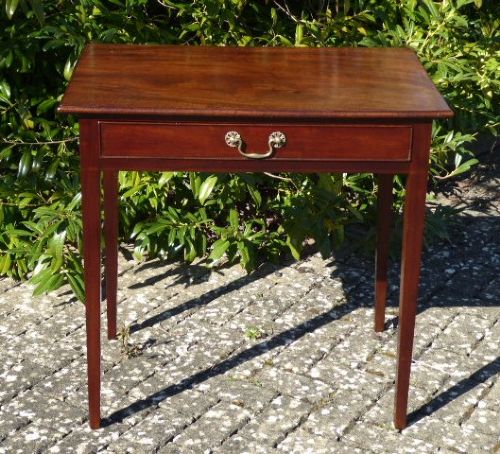
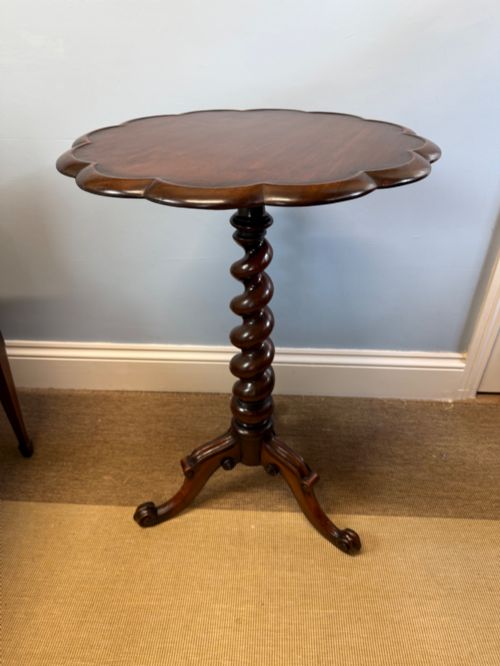
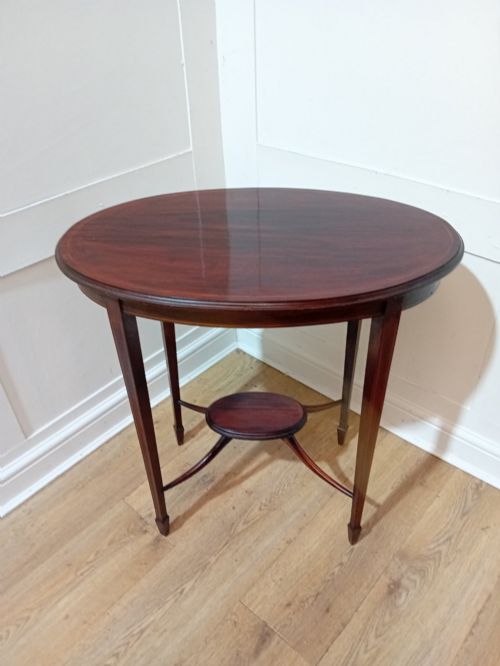

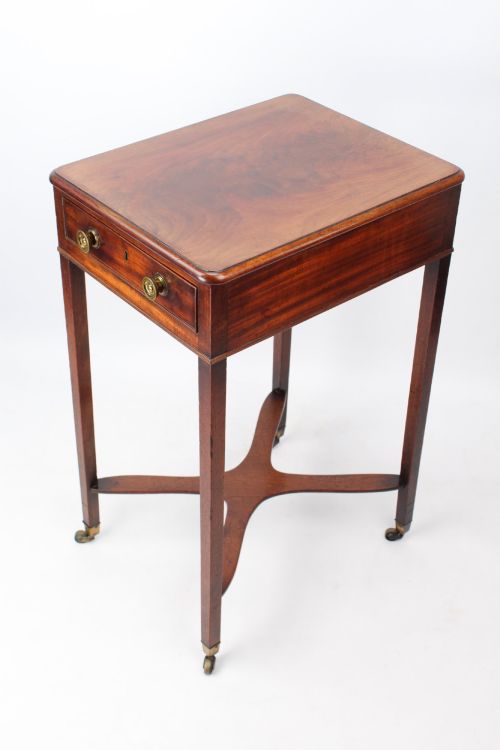
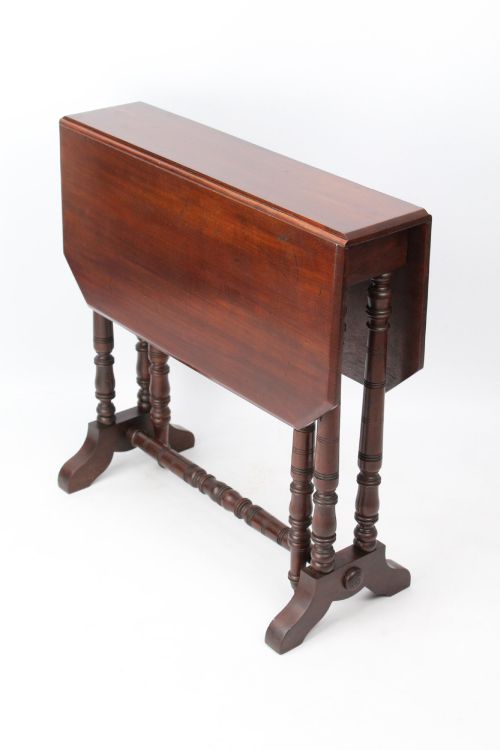
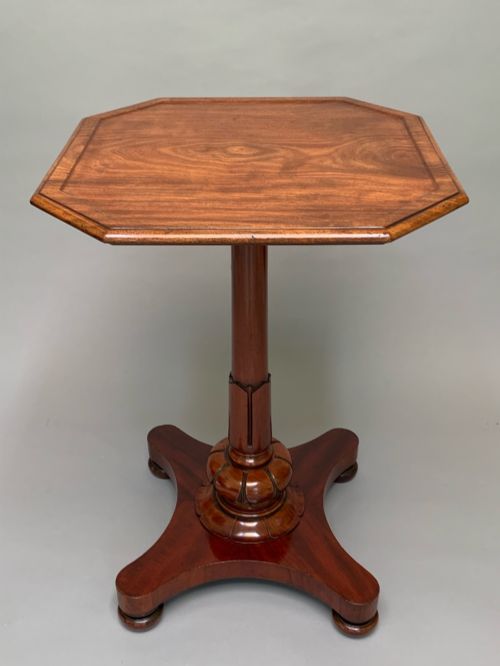
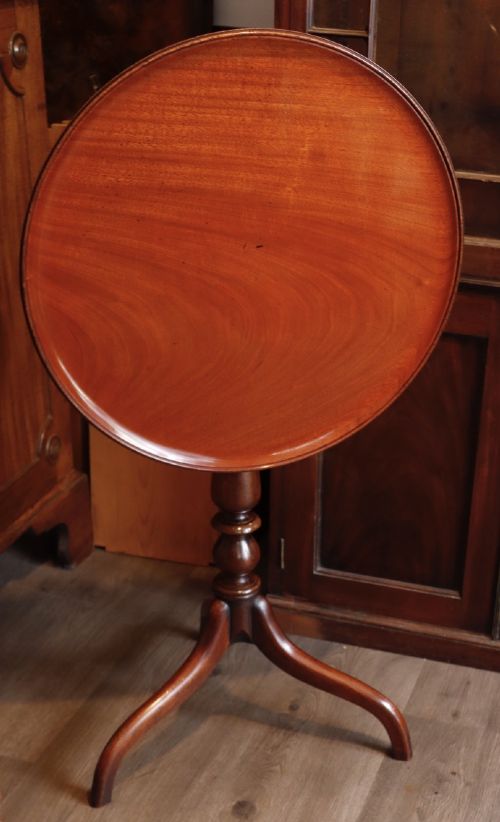
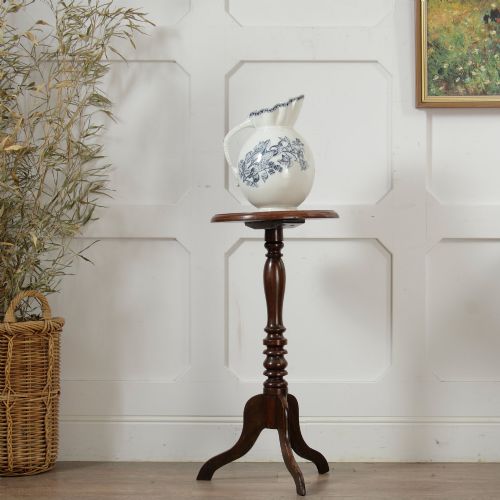
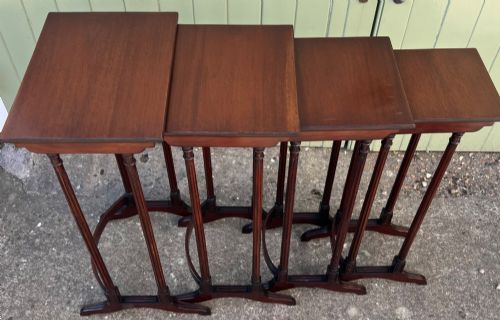
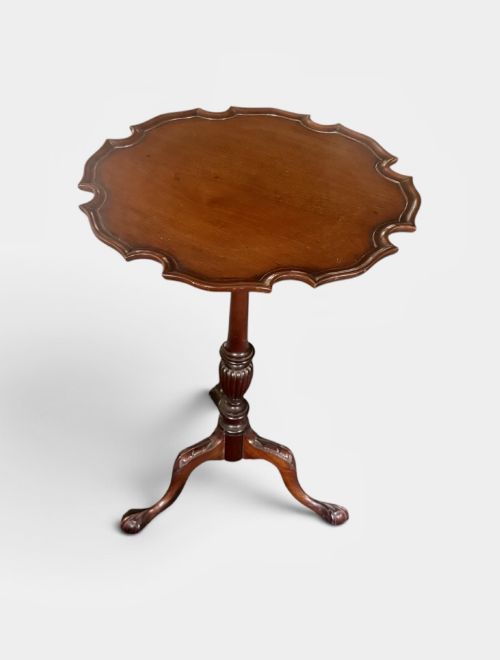
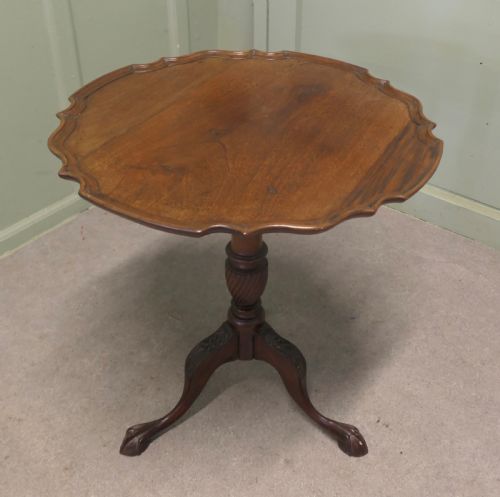
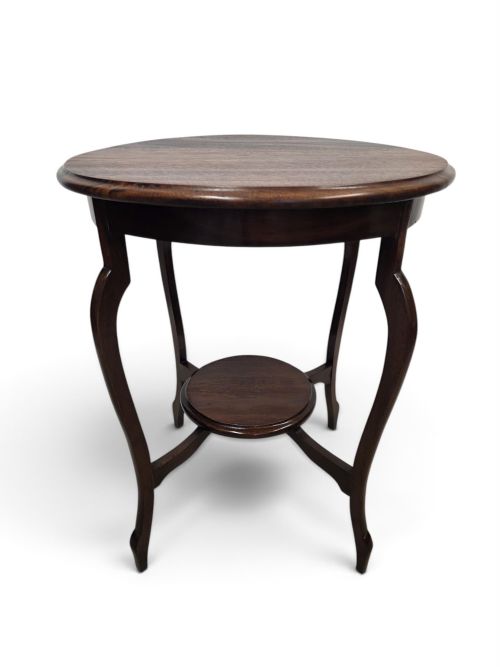
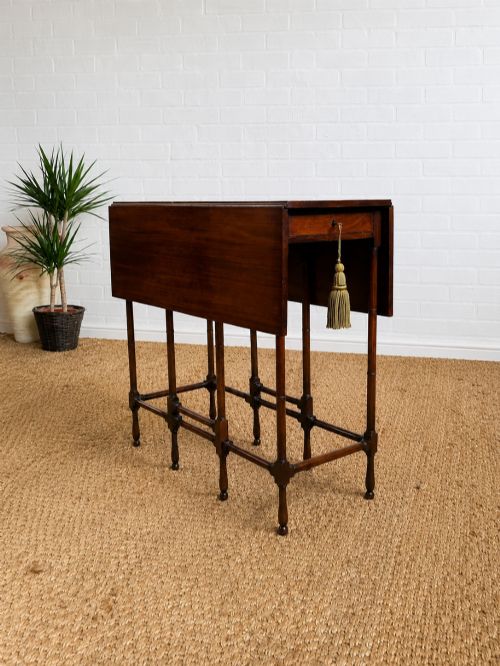

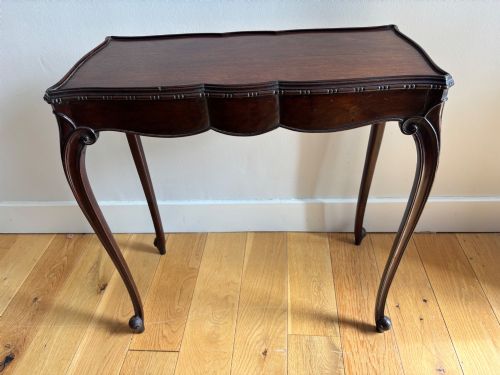
Small Mahogany Tea Table
A small mahogany tea table is a compact serving piece offering deep timber and quiet proportion, suited to holding a lamp or a cup.
How they were made
Makers relied on dense Cuban mahogany or solid native timber, often applying fine veneer over secondary woods to achieve smooth surfaces. Structural integrity depended on sturdy tenon joints, pivoting rule joints on drop leaves, and stable tripod bases fitted with snap-top mechanisms.
Decorative elements frequently include subtle satinwood inlay, boxwood stringing, or bamboo-turned legs, depending on whether the piece reflects Georgian restraint or later Edwardian and Sheraton revival tastes.
What varies in quality
Quality rests in the choice of timber figure, where dense Cuban mahogany with rich grain variation outranks plainer secondary woods. The crispness of carved tripod feet, the neatness of wood inlay, and the tightness of pivoting leaf hinges reveal the original cabinetmaker's hand.
Proportion dictates desirability, particularly in small tea tables where diminutive dimensions and unaltered legs separate utilitarian workshop output from refined domestic furniture.
Some small tea tables were built with secret wells hidden beneath their fold-over tops, keeping the tea caddy safe from sticky fingers.
The Small Mahogany Tea Table Glossary
- Pembroke table
- A small rectangular drop-leaf table with hinged flaps on opposing sides, introduced during the eighteenth century for breakfast or letter writing.
- Tripod base
- A central pillar supported by three spreading legs, commonly fitted with a tilt-top or snap-top mechanism for easy storage.
- Demi-lune
- A half-moon shape used for console and tea tables designed to stand flat against a wall.
- Stringing
- A narrow inlaid line of contrasting timber, such as boxwood or satinwood, set into the mahogany surface for decoration.
- Rule joint
- A rounded moulding joint connecting a table top to its drop leaf, leaving no visible gap when the leaf opens or closes.
Small Mahogany Tea Table: Frequently Asked Questions
What is a small mahogany tea table used for?
These tables served historically for pouring and serving tea from porcelain sets during the eighteenth and nineteenth centuries. Today they function flexibly as side tables, lamp stands, or display surfaces in compact rooms.
Their folding or drop leaves allow them to occupy minimal floor space while expanding quickly when an extra surface is needed.
How do I tell Georgian from Edwardian mahogany tables?
Georgian pieces generally display structural honesty, heavy Cuban timber, hand-cut dovetails, and simpler, robust proportions. Edwardian examples often feature lighter construction, machine-cut elements, and revivals of earlier styles.
Revival pieces from the Edwardian era also frequently incorporate satinwood inlay and factory-produced stringing not found on earlier work.
What does a fold-over top mean?
A fold-over top consists of a hinged double board that opens outward to double the available surface area. When closed, it forms a slim console or side table against a wall.
Inside, these tables often conceal a small well or cavity originally intended for storing tea canisters and utensils.
How do I care for antique mahogany timber?
Protect the wood by keeping it away from direct sunlight and sudden radiator heat to prevent timber shrinkage and veneer lifting. Regular dusting with a dry, soft cloth maintains the natural wax finish without building up heavy residues.
Avoid silicone polishes, choosing instead a traditional beeswax applied sparingly when the surface feels dry.