



Claw Foot Tripod Table
A claw foot tripod table brings together a sturdy pillar and distinct pedestal support, offering a practical surface with enduring architectural character.
Claw Foot Tripod Table
A claw foot tripod table serves as a versatile surface, taking the form of wine tables, tilt top tables, and occasional tables across various historical periods. Buyers searching for a claw foot tripod table frequently encounter mahogany and walnut examples spanning the Georgian, Victorian, and Edwardian eras.
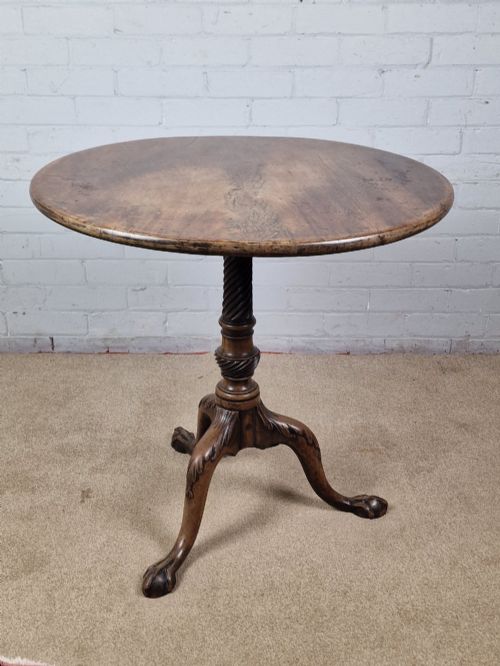
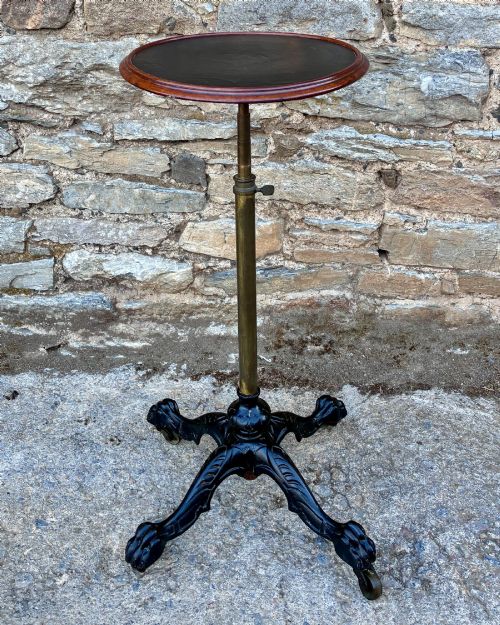
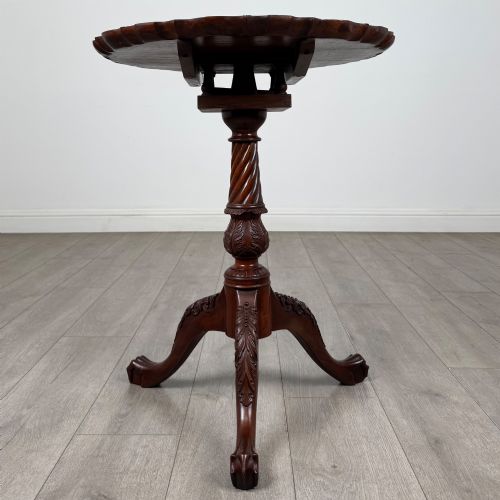
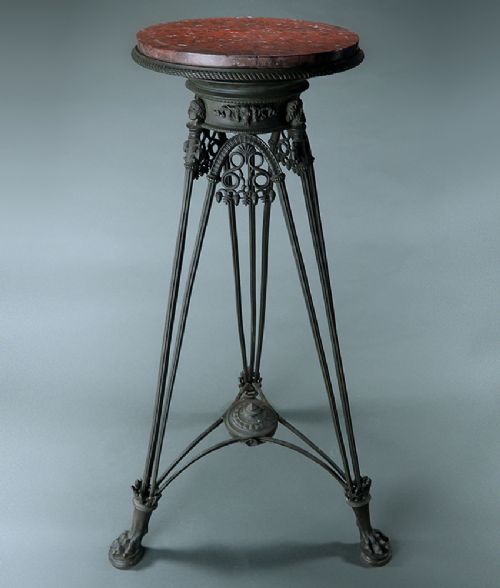
The selection ranges from compact wine tables and tilt top designs to display stands, dumbwaiters, and gueridon tables. Most pieces rely on a central pillar supported by three legs, terminating in distinct feet that anchor the design firmly to the floor.
Origins stretch from English workshops to Irish and continental makers, incorporating styles from George III and Chippendale revival to Regency. These small tables function effectively beside seating or as central decorative accents within a room.
Materials and construction
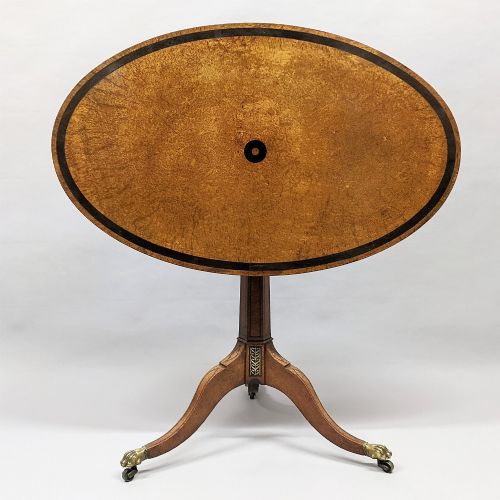
Cabinetmakers utilised dense timbers such as mahogany, walnut, and oak for the structural frames, tabletops, and pedestal supports. Finer examples incorporate veneers like burr oak and amboyna, alongside contrasting ebony details and inlaid brass work.
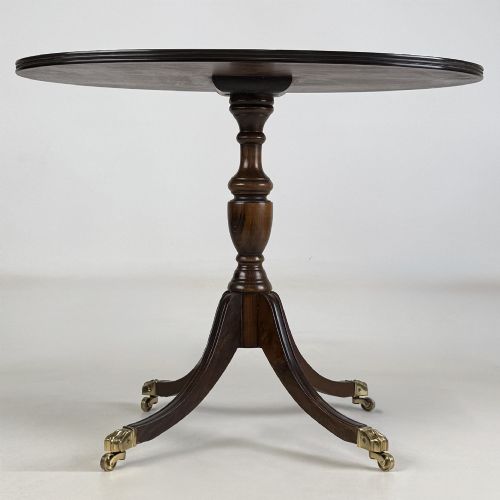
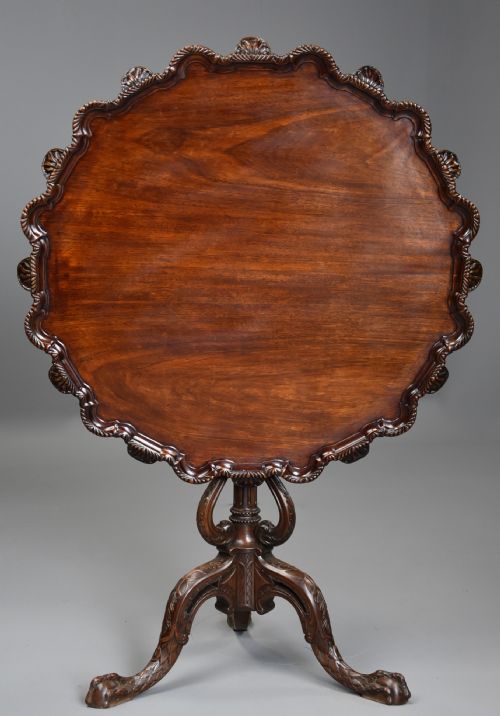
Tilt top and birdcage mechanisms allow the surface to pivot and lock into position, combining utility with mechanical ingenuity. Turned pillars and carved tripod legs join securely to the central stem, often featuring brass castors or distinct claw feet at the base.
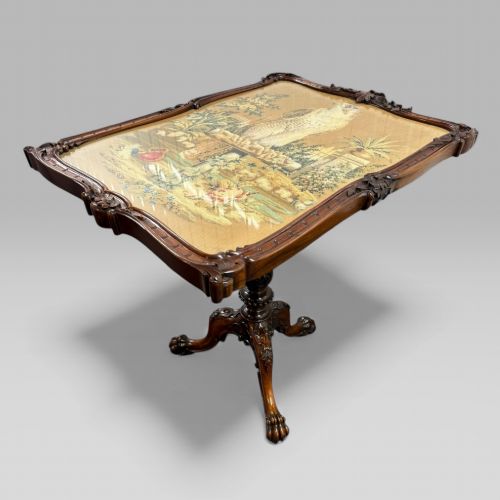
Some tilt top tables double as fire screens, proving that historical furniture excelled at multitasking.
Assessing quality and craftsmanship
Superior examples demonstrate crisp carving on the knees and feet, balanced proportions in the pillar, and carefully selected timber grains on the tabletop. The integrity of the tilt top mechanism and the tightness of the joints beneath the pillar dictate the mechanical reliability of the piece.
Finer pieces maintain original surfaces and patination, whereas lesser items may show heavy restoration or mismatched replacement components. The harmony between the top, the turning of the column, and the stance of the tripod legs determines the overall success of the design.
Gillows·S & H Jewell London
The Claw Foot Tripod Table Glossary
- Tilt top table
- A table with a hinged surface that rotates vertically to save space when not in use. This mechanism often operates via a catch or birdcage block beneath the top.
- Birdcage
- A wooden framework beneath the tabletop that allows the surface to both tilt and revolve. This assembly sits atop the central pillar.
- Guéridon
- A small French occasional table supported by a central column or figures, frequently featuring a marble top. These pieces often serve as display stands or decorative accents.
- Dumbwaiter
- A tiered freestanding piece with multiple circular shelves on a central pillar, used for serving food or displaying objects. These tables often incorporate tripod bases for stability.
- Piecrust edge
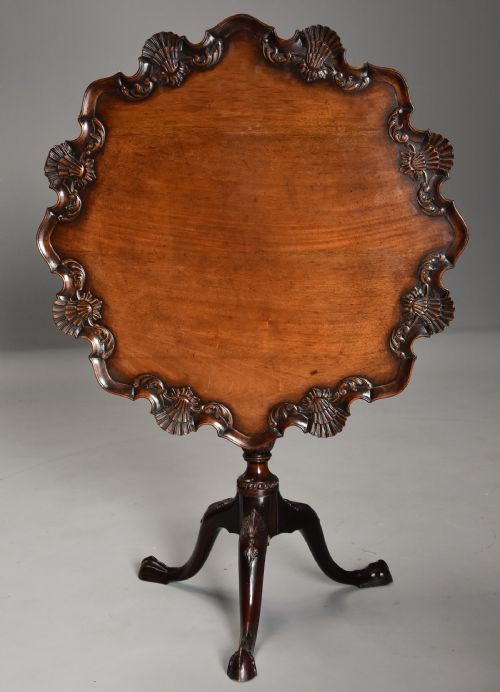
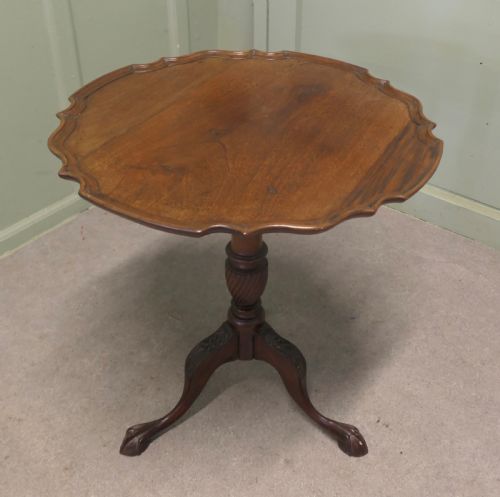
- A raised, carved decorative rim shaped in undulating curves around the circumference of a circular tabletop. This detail appears frequently on Chippendale style tables.
Claw Foot Tripod Table: Frequently Asked Questions
What is a birdcage mechanism?
A birdcage mechanism is a small wooden cage structure fitted beneath the tabletop of a tripod table. It connects the top to the central column and allows the surface to rotate horizontally as well as tilt vertically.
This clever engineering solved space issues in period homes, letting owners fold the tables flat against walls when they were not needed for dining or drinking.
How do I use a tilt top table?
You release the brass catch or wooden wedge beneath the top to allow the surface to pivot upright. This transforms the table into a flat profile that takes up minimal floor space in a corner.
When lowered, the top rests securely on the pillar block, providing a stable surface for lamps, drinks, or decorative objects.
Are these tables suitable for modern rooms?
Their compact footprints make these tables ideal for placing beside sofas, between armchairs, or in narrow hallways. The three-legged base prevents rocking on uneven floors better than a standard four-legged table.
They bring warmth through rich timber grains like mahogany and walnut while offering practical tabletop space without dominating a room.
How can I tell a Georgian table from a later revival?
Georgian tables exhibit hand-cut joinery, mature timber patination, and proportions driven by period utility. Revival pieces from the Edwardian or later eras often display machine-tooled elements, brighter factory finishes, and standardised fittings.
Examining the underside of the top and the peg construction inside the pillar reveals the working methods of the original cabinetmaker.