


Spiral Pedestal Table
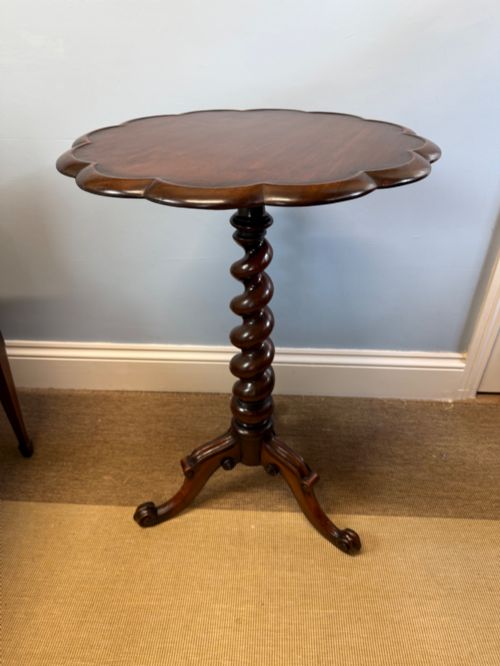
A spiral pedestal table combines a sturdy central support with turned timber, offering a compact surface suited to corners or seating areas.
Spiral Pedestal Table
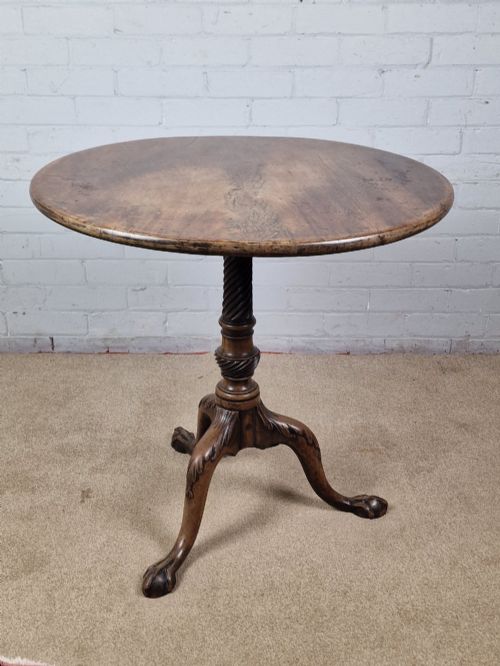
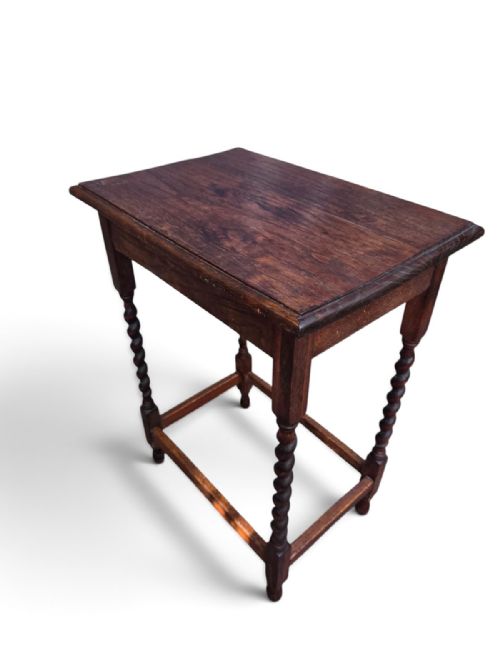
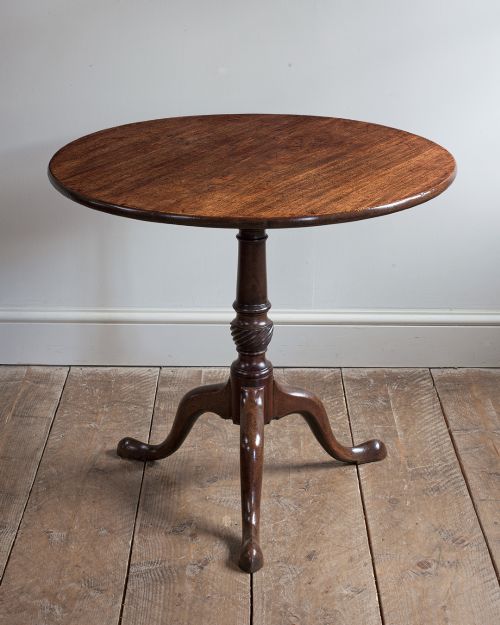
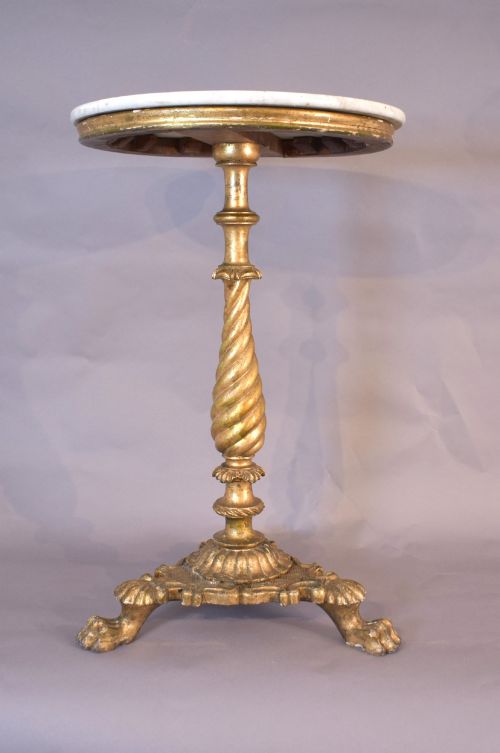
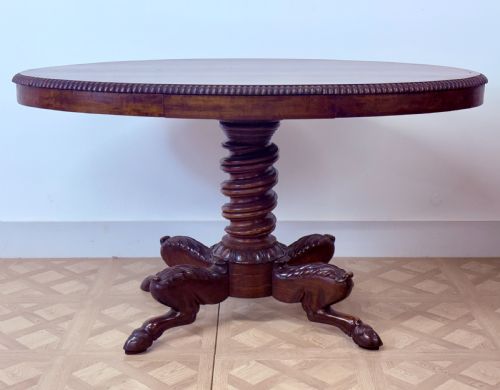
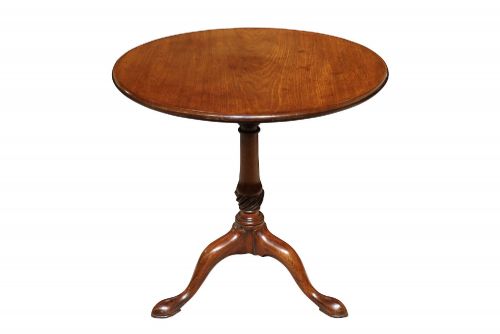
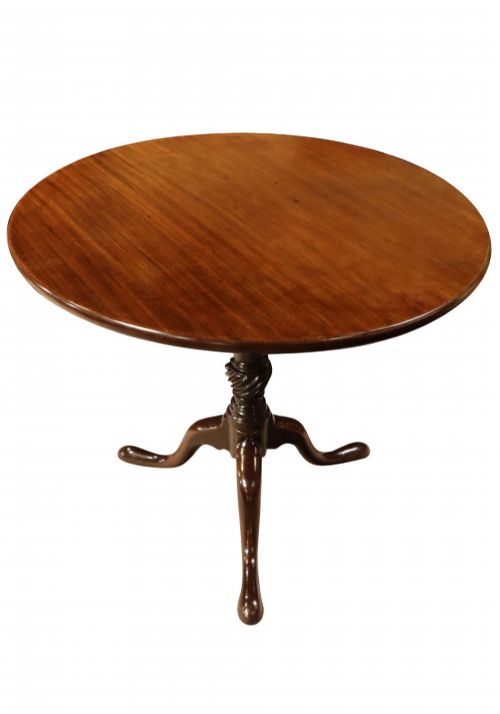
A spiral pedestal table typically serves as an occasional, wine, or lamp table, raised on a central pillar rather than four corner legs. Buyers searching for a spiral pedestal table encounter various formats from the eighteenth and nineteenth centuries, including tilt-top designs and tripod bases.
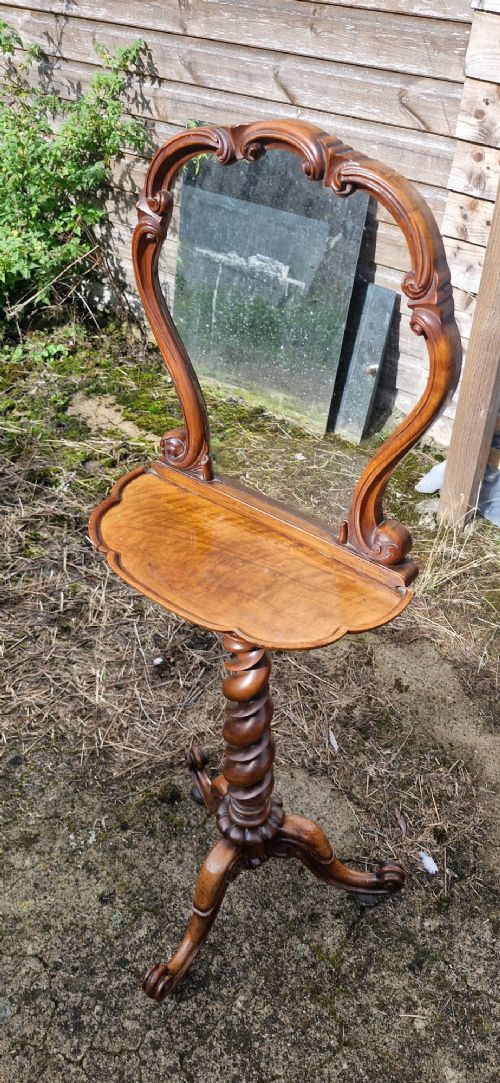
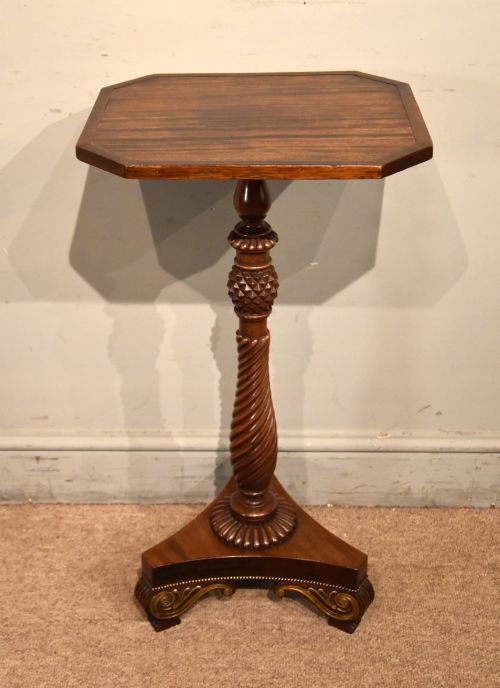
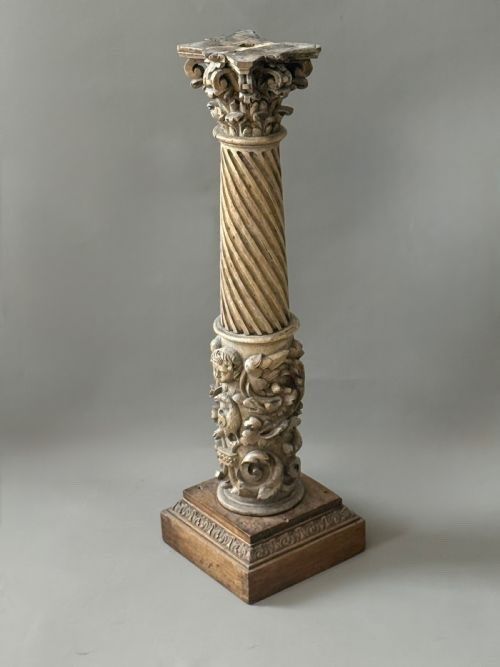
The selection ranges from George II snap-top examples to Victorian walnut and mahogany pieces featuring barley twist or spiral fluted stems. Occasional side tables and torchiere stands appear frequently alongside compact wine tables designed for domestic utility.
Origins span English cabinet workshops to continental European makers, with regional styles influencing the turning of the central column. Burr walnut, mahogany, and rosewood frequently form the primary surfaces of these compact tables.
Materials and Construction
Cabinet makers utilised dense hardwoods such as mahogany, walnut, and oak to construct the shafts and table tops, frequently employing burr veneers for decorative grain patterns. Boxwood stringing and marquetry occasionally decorate the top surfaces, adding contrast to the darker timber grounds.
The distinctive central pillar relies on lathe turning to achieve the spiral twist or barley column effect, which connects the tripod legs to the upper surface. Tilt-top mechanisms incorporate birdcage or snap-top brass catches to allow the top to fold flat when not in use.
Object forms on this page include wine tables, torchiere stands, teapoys, and drum tables.
Judging Quality and Execution
The crispness of the hand-turned spiral column dictates much of the visual appeal, separating sharply carved timber from softened or worn mouldings. Precision in the joinery of the tripod base ensures the table stands level without wobble.
Selection of timber veneers, particularly burr walnut or figured mahogany, marks the distinction between standard utility items and finer parlour pieces. Original surface patination and intact mechanism components maintain the integrity of the piece.
The Spiral Pedestal Table Glossary
- Tripod table
- A small freestanding table supported by three legs radiating from a central pillar. This design prevents rocking on uneven floors.
- Tilt-top table
- A table featuring a hinged top that rotates to a vertical position for storage. This mechanism often uses a brass catch or wooden peg.
- Barley twist
- A decorative turning style resembling a spiralling rope or helix. It appears frequently on seventeenth and nineteenth century furniture legs and columns.
- Teapoy
- A small stand or box originally designed to hold tea caddies and sugar. Later examples double as occasional lamp tables.
- Torchiere
- A tall, slender stand intended to hold a candle or lamp. These pieces feature elongated stems supported by narrow bases.
Spiral Pedestal Table: Frequently Asked Questions
Where should I place a spiral pedestal table?
These compact tables fit well beside armchairs, in small hallways, or as lamp stands in reception rooms. Their central pillar design allows them to occupy minimal floor space.
Because the top surface is relatively small, they function best holding a single lamp, a book, or decorative items rather than heavy loads.
How do tilt-top mechanisms function?
The table top secures to a block or birdcage mechanism that pivots on small wooden or metal pins. A catch underneath releases the top to fold flat.
This historical feature allowed servants to store multiple tables against a wall when the room needed to be cleared for other activities.
What is the difference between a wine table and an occasional table?
Wine tables traditionally feature small circular tops sized specifically to hold a decanter and glasses during evening gatherings. Occasional tables offer slightly larger square, octagonal, or rectangular surfaces.
Both types rely on the same central pedestal construction, though occasional tables sometimes include drop leaves or drawers.
How do I date a mahogany pedestal table?
Examination of the timber grain, turning style, and construction joints helps determine the period. Eighteenth-century versions often feature slender proportions and mahogany tripod legs terminating in pad or snake feet.
Victorian iterations tend to display heavier barley twist stems and broader walnut or rosewood tops, sometimes incorporating platform bases.