


Edwardian Carved Oak Desk
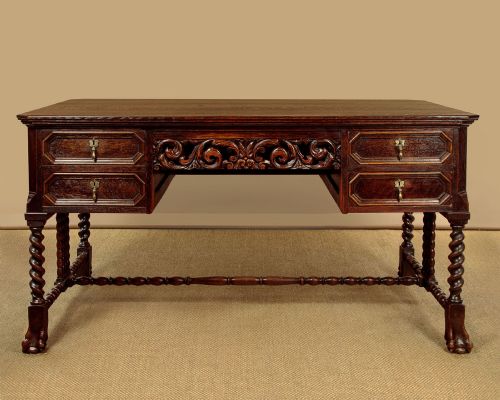
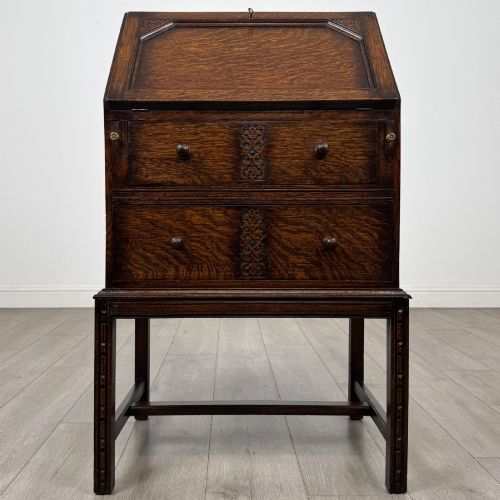
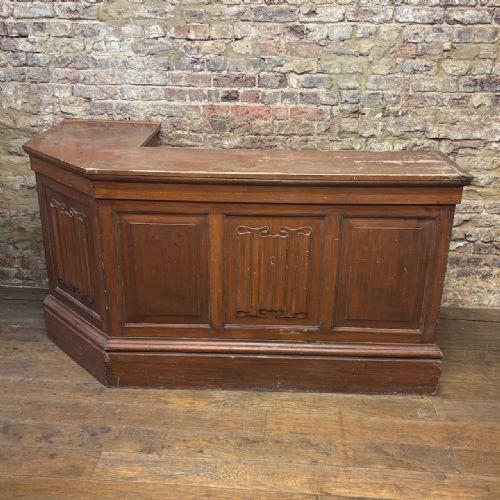
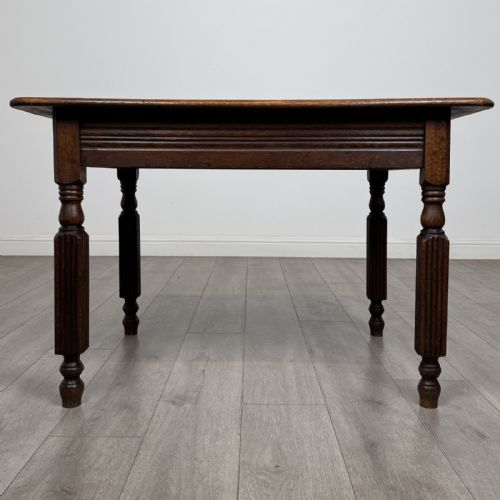
These edwardian carved oak desk pieces bring solid character to a study, built from sturdy timber with traditional carved details.
Edwardian Carved Oak Desk
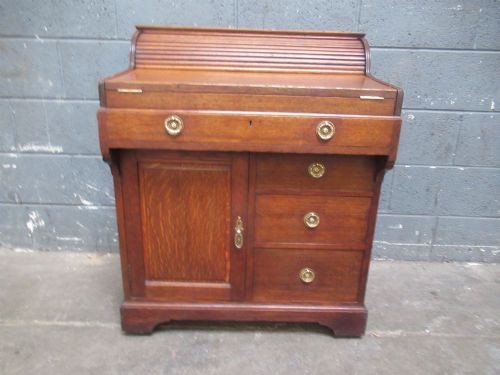
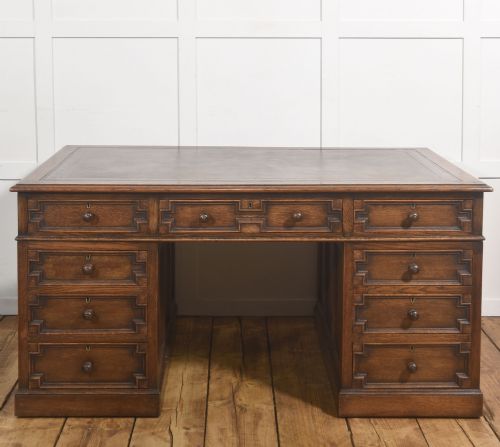
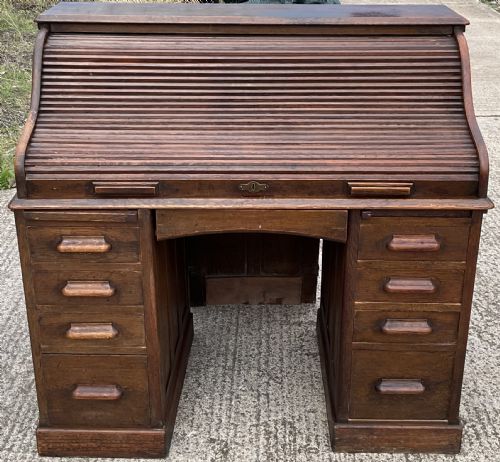
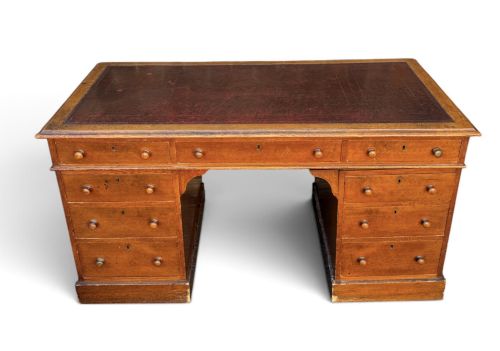
An edwardian carved oak desk offers a robust workspace rooted in early twentieth-century design, often featuring panelled sides and carved mouldings. The selection includes pedestal desks, kneehole formats, and roll-top variants built for practical study use.
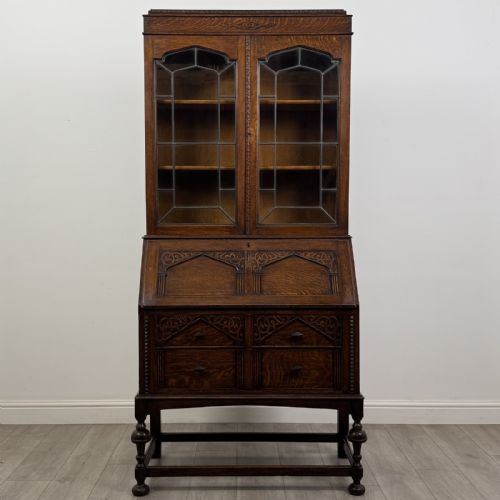
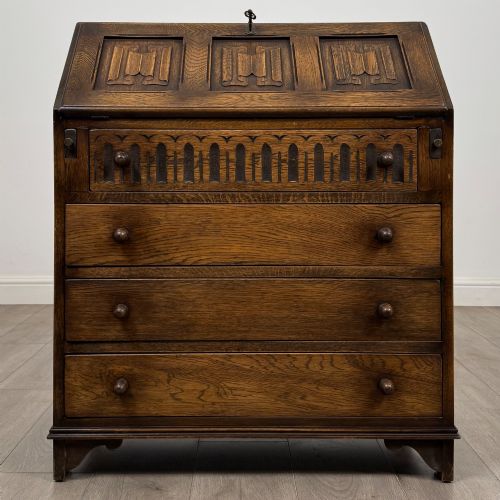
Beyond standard writing desks, the wider inventory spans related forms such as bureaux, side tables, dressing tables, and secretaire bookcases. While Edwardian examples dominate, related pieces stretch back into the Victorian era and forward to the nineteen-tens.
Most items appear in solid oak or figured oak, occasionally complemented by burr walnut, brass fittings, leather inserts, and glass. Stylistic influences cross from straightforward Edwardian utility into the decorative arts and crafts tradition.
How they were made
Cabinet makers constructed these pieces primarily from solid and figured oak, utilising traditional joinery methods to ensure long-term stability. Carved elements were worked directly into the timber by hand, creating relief patterns along drawer fronts and up-stands.
Secondary materials enhanced both utility and appearance, incorporating brass handles, metal locks, and inset leather writing surfaces. Glass panels also appear in associated taller cabinetry, while copper accents feature on specific arts and crafts pieces.
Edwardian Carved Oak Desk Retail Price Guide 2026
Typical asking prices for edwardian carved oak desk among the pieces listed under this phrase on Sellingantiques today, from the lower quarter to the upper quarter. They describe what is for sale here now, not the wider market.
Some desks hide clever internal stationery compartments designed before the invention of email.
What varies in quality
The distinction between standard utility items and finer examples rests on the selection of timber and the ambition of the carving. Figured oak and burr walnut veneers lift the visual presence of a desk far above plain stock.
Design complexity also marks out superior pieces, such as those bearing workshop attribution or integrated pedestal arrangements with panelled backs. Hardware quality, from cast brass pulls to fitted interior pigeonholes, completes the hierarchy of craftsmanship.
Shapland and Petter
The Edwardian Carved Oak Desk Glossary
- Edwardian
- Dating from the reign of King Edward VII, spanning the early twentieth century up to the First World War. Pieces from this era often lighter in construction than heavy Victorian furniture.
- Pedestal desk
- A heavy freestanding writing table supported by two pillars or stacks of drawers on either side of the user. This format provides substantial storage beneath the main writing surface.
- Kneehole desk
- A compact desk configuration featuring a central recess for the legs, flanked by pedestals of small drawers. It offers an efficient footprint for smaller studies.
- Bureaux
- A writing cabinet featuring a sloping fall-front lid that opens to reveal internal compartments and small drawers. They combine surface utility with enclosed storage.
- Secretaire bookcase
- A tall dual-purpose cabinet combining upper shelving behind glass with a pull-down writing drawer at mid-height. These items maximise vertical storage in limited floor spaces.
Edwardian Carved Oak Desk: Frequently Asked Questions
What defines an Edwardian desk?
These desks date from the early twentieth century, reflecting lighter proportions than preceding Victorian forms while retaining solid timber construction. Carved ornamentation and practical compartments define their typical character.
Buyers find both pedestal formats and smaller writing tables suited to contemporary home offices.
How do I care for oak furniture?
Keep wooden surfaces away from direct heat sources and strong sunlight to prevent the timber from drying out or splitting. Regular dusting with a dry cloth preserves the natural finish.
Condition leather writing inserts periodically with appropriate balms if fitted to the desk surface.
Are these desks practical for daily work?
Most variants offer generous drawer space and sturdy writing surfaces that easily accommodate modern laptops and paperwork. Pedestal layouts provide substantial storage for stationery and files.
Kneehole formats offer a comfortable sitting position while maintaining a compact footprint in domestic rooms.
How do arts and crafts pieces differ?
Arts and crafts examples emphasise visible construction methods, natural materials, and hand-worked details rather than factory uniformity. Copper hardware and distinctive decorative carving often mark these out.
They represent a more artistic approach to everyday furniture design from the turn of the century.