

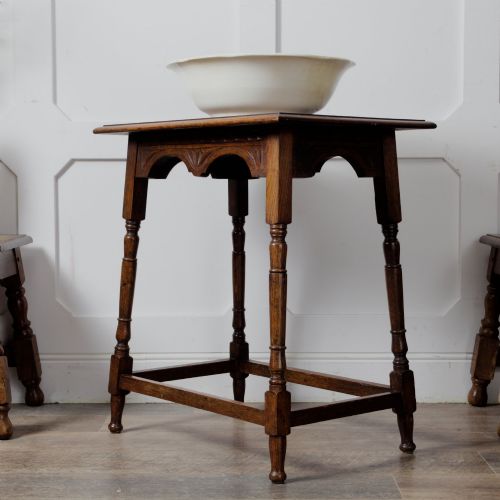
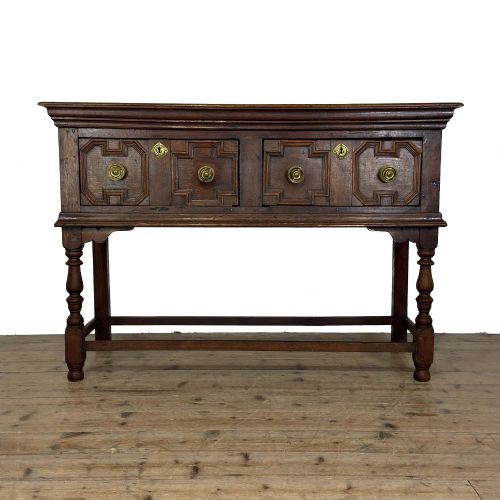
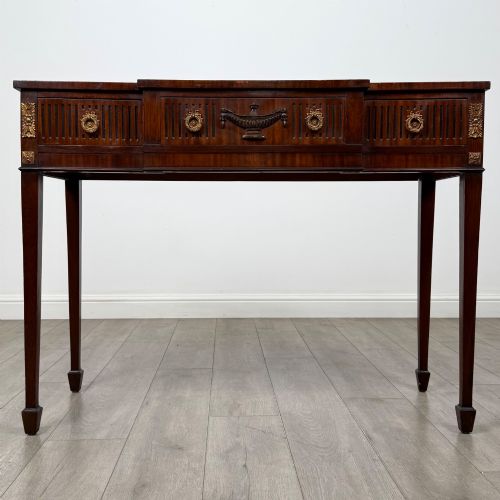
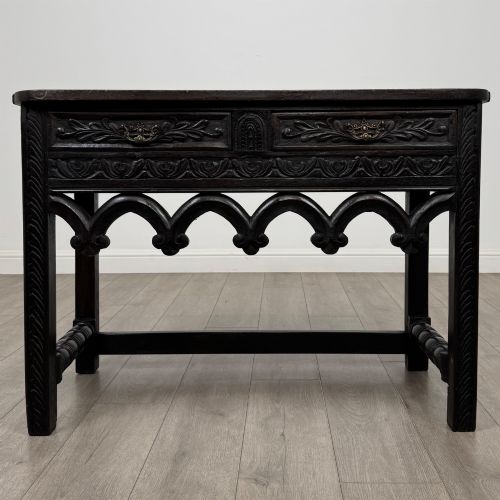
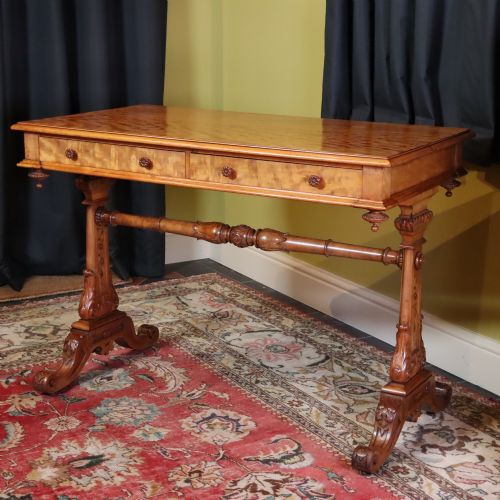
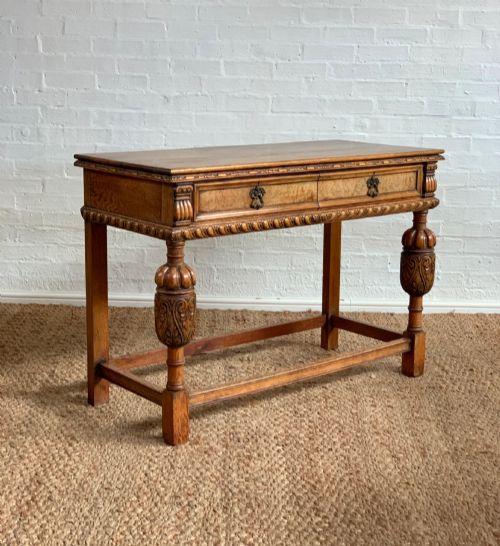
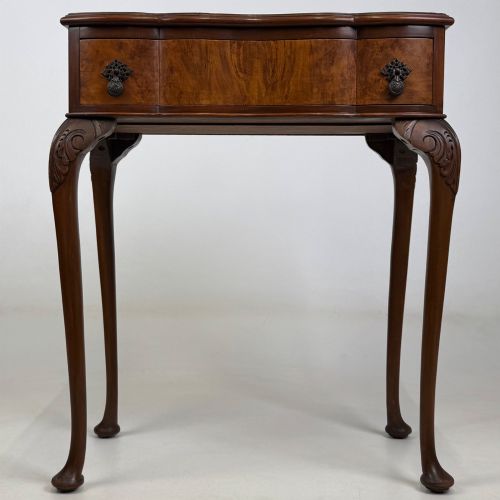
Edwardian Carved Hall Table
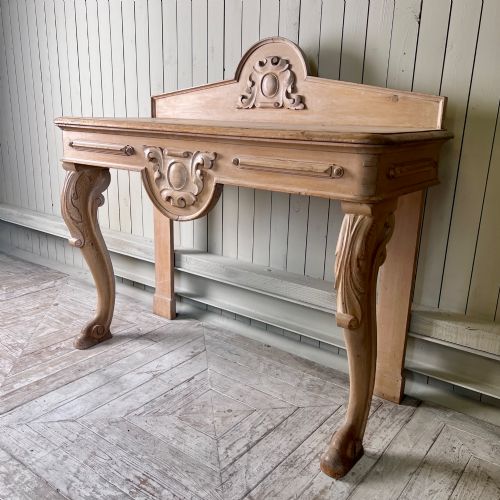
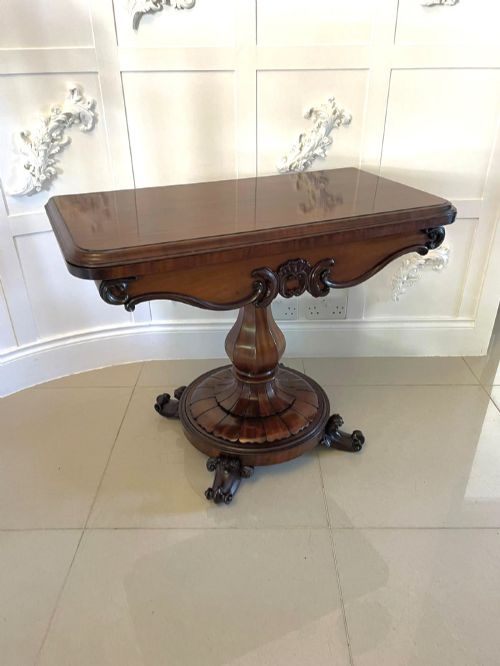
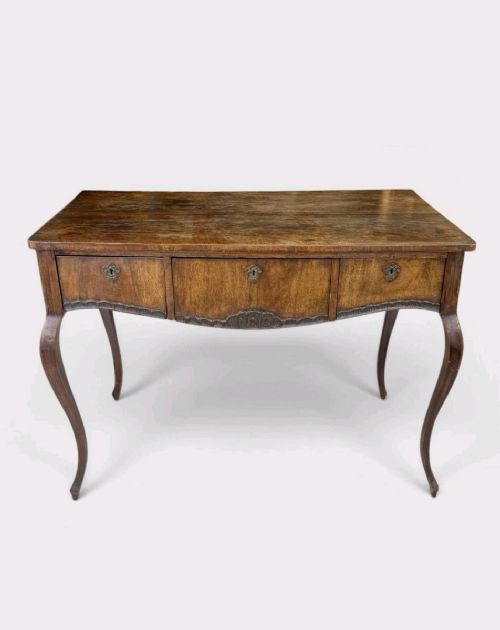
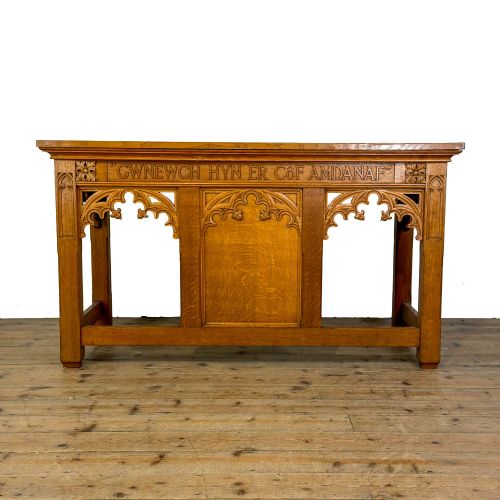
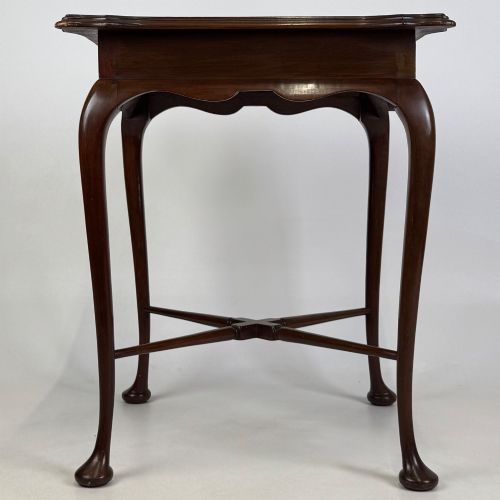
An edwardian carved hall table brings solid timber construction and period detail to an entranceway, offering a surface for letters and keys.
Materials and Construction
Cabinetmakers constructed these tables primarily using solid timbers such as oak, mahogany, and walnut, frequently selecting figured grain varieties for visible surfaces. Wood inlay, brass fittings, and occasional marble tops appear on select decorative examples.
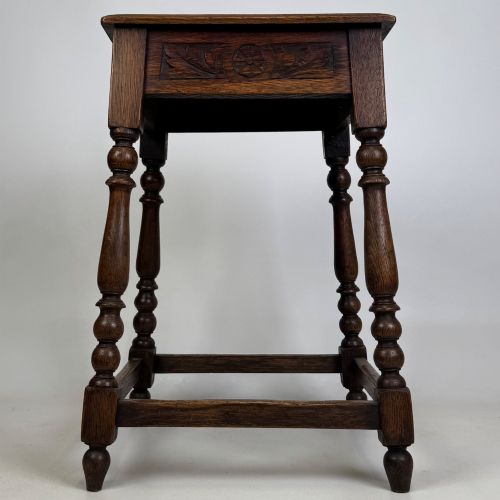
Joinery techniques rely on traditional frame and panel construction, dovetailed drawers, and pegged joints to ensure stability in daily use. Carved details are executed directly into the solid timber framework rather than applied as separate moulded elements.
Assessing Quality
Quality rests in the crispness of the carving and the selection of timber, where tightly figured walnut or quarter-sawn oak indicates a higher grade of material. Heavy, solid construction without excessive structural movement distinguishes better pieces from lighter utilitarian items.
Proportion and restraint in ornament separate superior cabinetwork from plainer production. Tables that integrate carved details harmoniously into the structural lines show greater deliberate design than those with heavy, unrefined decoration.
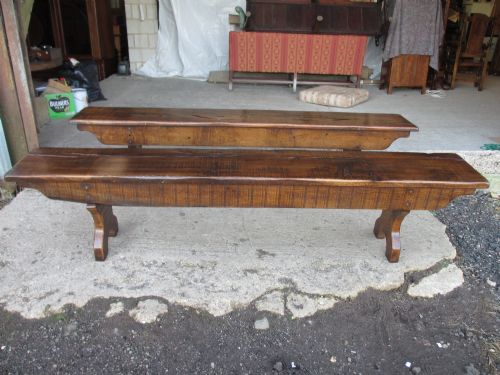
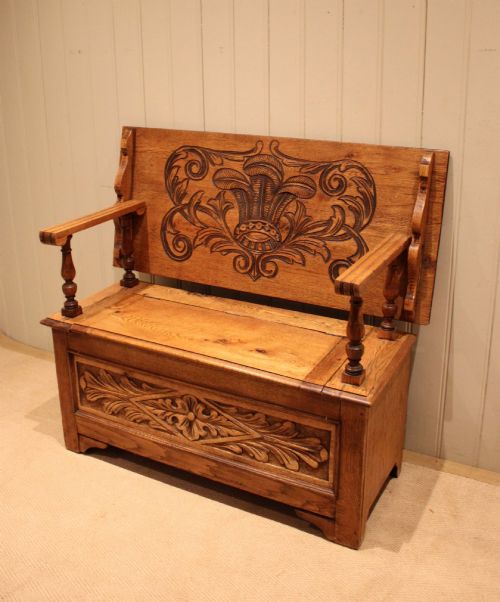
A sturdy oak monks bench converts from a seat with a high back into a flat table surface with a simple tilt.
Beresford and Hicks London·Liberty and Co·Walker and Hall
The Edwardian Carved Hall Table Glossary
- Console table
- A table designed to stand against a wall, frequently fixed or supported by brackets, used primarily in entrance halls and reception rooms.
- Frieze
- The horizontal band running beneath the top edge of a table, often the primary location for carved decoration or drawers.
- Quarter-sawn oak
- Timber cut radially from the log, producing a distinct grain pattern known as medullary rays and providing greater dimensional stability.
- Marquetry
- Decorative veneer work arranged in pictorial or geometric patterns using various coloured woods.
Edwardian Carved Hall Table: Frequently Asked Questions
Where should an edwardian carved hall table be placed?
These tables fit naturally against a flat wall in an entranceway or narrow corridor where depth is restricted. Their narrow proportions allow placement behind sofas or along landing walls.
Positioning the piece away from direct heat sources protects the timber joints and polished surfaces from drying out over time.
How do I care for the timber surface?
Routine maintenance involves dusting with a dry lint-free cloth and applying occasional quality wax polish to nourish the wood grain. Avoid placing damp items directly onto unsealed wooden surfaces to prevent staining.
Keeping the table away from direct sunlight preserves the original colour and prevents the polish from fading unevenly.
Are these tables suitable for daily use?
Solid timber construction and robust joinery make these pieces durable enough to hold everyday items like post, keys, and decorative bowls. Drawers provide practical storage for small household sundries.
Care should be taken not to overload the surface or expose the joints to excessive moisture or rapid temperature changes.
How do I distinguish Edwardian pieces from Victorian ones?
Edwardian furniture often displays lighter proportions and simpler lines influenced by Sheraton and Arts and Crafts ideals, whereas Victorian pieces tend to be heavier and darker in tone. Carving styles also shift from the ornate Gothic and Jacobean revivals of the nineteenth century to cleaner neoclassical motifs.
Examining the secondary woods inside drawers and the style of hardware helps clarify the manufacturing period.