

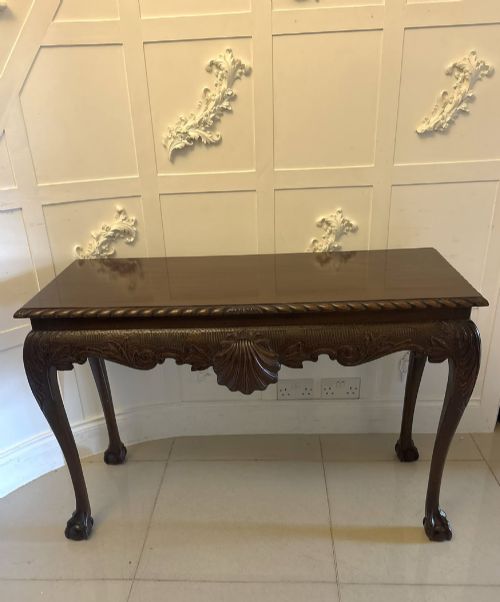
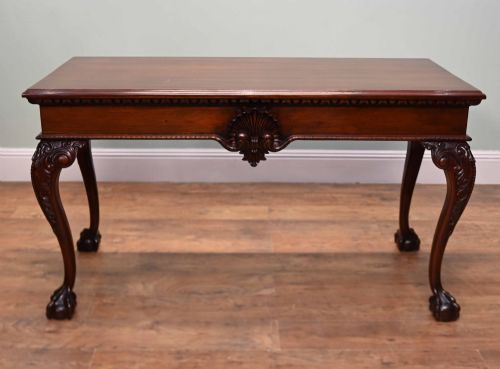
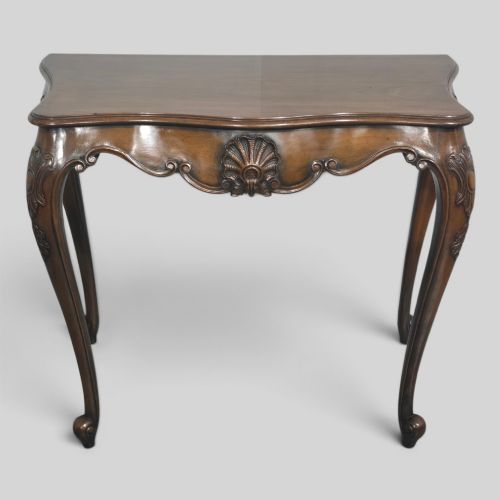


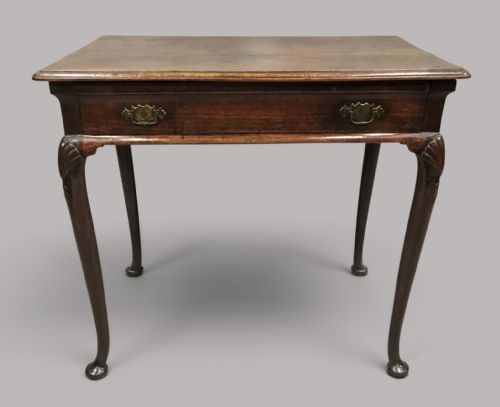


Carved Shell Console Table
These carved shell console table examples bring robust timber and crisp carving to a hallway, with mahogany and walnut pieces appearing frequently.
Carved Shell Console Table
A carved shell console table serves as a statement piece against a wall, frequently taking the form of console tables, side tables, and games tables. These items emerge from periods spanning the eighteenth and nineteenth centuries, alongside later revival pieces.
The materials specified in the listings include mahogany, walnut, burr walnut, rosewood, and giltwood. Buyers encounter various regional expressions, notably Irish designs featuring detailed carved woodwork.
Makers and retailers such as Maple and Co are represented, alongside pieces attributed to the manner of Hicks of Dublin. Forms range from demilune turn over leaf games tables to serpentine centre tables and lowboys.
Materials and construction methods
Cabinetmakers utilised dense timbers such as mahogany and walnut, often selecting burr walnut veneers for decorative surfaces. Giltwood examples demonstrate intricate carving applied to a prepared gesso and gold leaf ground.
Joinery techniques accommodated folding tops and card table mechanisms, requiring precise fitting of hinges and turning leaves. Timber selection dictated the weight and structural integrity of each console and side table.
Carved Shell Console Table Retail Price Guide 2026
Typical asking prices for carved shell console table among the pieces listed under this phrase on Sellingantiques today, from the lower quarter to the upper quarter. They describe what is for sale here now, not the wider market.
Listings feature mahogany, walnut, burr walnut, rosewood, and giltwood across eighteenth, nineteenth, and early twentieth-century periods.
Distinctions in craftsmanship
The depth and definition of the carved shell motif separate standard production from finer examples. Crisp hand-chiselled details on mahogany and walnut surfaces display superior artisan skill compared to softer, more rounded moulding.
Proportion and timber selection drive the distinction between pieces. Figured burr walnut veneers and well-matched mahogany grains indicate careful material choice by the workshop.
Maple and Co·Hicks of Dublin
The Carved Shell Console Table Glossary
- Console table
- A table designed to stand against a wall, often supported by brackets or ornate legs. These items function as decorative and practical ledges in reception rooms and hallways.
- Giltwood
- Timber coated with gold leaf or metallic powder over a prepared base. This finish appears on eighteenth-century and revival console tables.
- Demilune
- Having a half-moon or semicircular shape. This form is common in folding card and games tables.
- Lowboy
- A small low table with drawers, typically standing on four legs. These pieces share stylistic traits with contemporary side tables.
- Lowboy
- A small low table with drawers, typically standing on four legs. These pieces share stylistic traits with contemporary side tables.
Carved Shell Console Table: Frequently Asked Questions
Where should a carved shell console table be placed?
These tables fit well in hallways, living rooms, or dining spaces against a flat wall. Their shallow depth allows them to occupy narrow circulation areas without obstruction.
Many examples function as serving surfaces or display ledges for lamps and decorative objects. Folding card tables can also stand closed until needed for games.
How do I identify a Georgian piece?
Georgian furniture relies on dense mahogany or walnut timbers, often featuring hand-carved details such as shell motifs on the knees or apron. The construction uses period joinery methods appropriate for the eighteenth century.
Revival pieces from later centuries often imitate these proportions and decorative vocabulary. Examining the timber grain and secondary woods helps clarify the period of manufacture.
What is the difference between a console and a side table?
Console tables historically relied on wall attachment or brackets for complete stability, though many freestanding variants exist in later styles. They prioritise decorative impact in formal rooms.
Side tables function as general utility furniture designed to stand against any wall. Both forms frequently share similar top designs and timber construction.
How do I care for antique timber tables?
Keep wooden furniture away from direct heat sources and strong sunlight to prevent the timber and veneer from splitting or fading. Regular dusting with a dry, soft cloth maintains the polished surface.
Avoid applying modern silicone polishes, which can build up on historic wood finishes over time. Natural wax applied sparingly preserves the sheen of mahogany and walnut.