
Edwardian Brass Tray
When you search for an edwardian brass tray, you seek a functional piece of serving ware shaped by early twentieth-century metalwork.
Edwardian Brass Tray
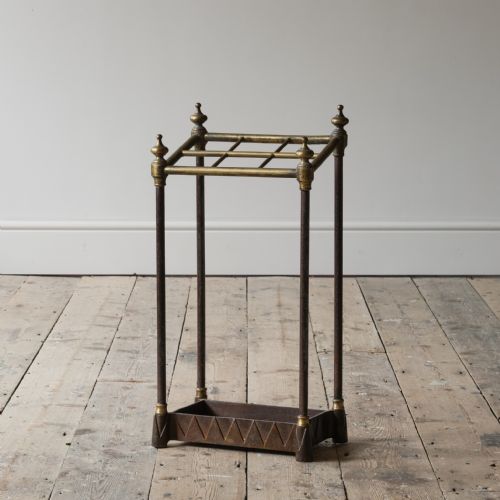
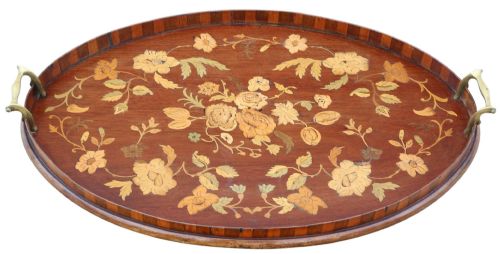
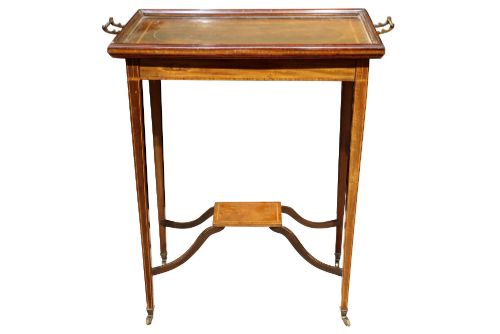
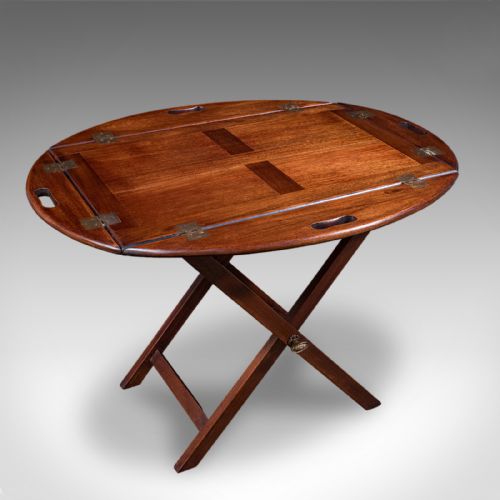
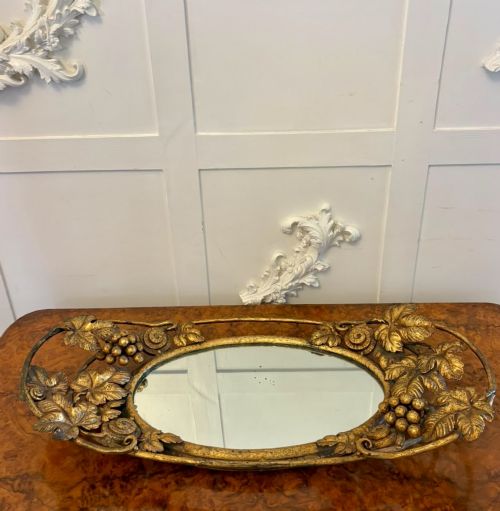
An edwardian brass tray is a serving accessory produced around the start of the twentieth century, often incorporating wooden elements or galleries alongside polished metal surfaces. These pieces include afternoon tea platters, drinks trays with integrated handles, and smaller smoking or calling card receptacles.
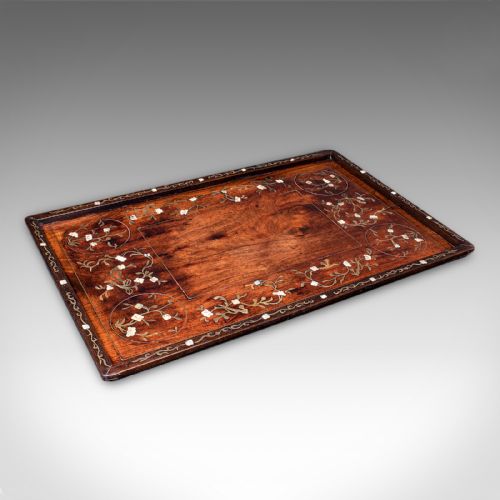
Makers of the period produced both oval and rectangular variants, sometimes augmenting the flat plane with pierced galleries or engraved motifs. While some function as portable serving vessels, others appear mounted on folding or fixed stands for domestic use.
How they were made
The construction of an edwardian brass tray relies primarily on sheet brass, frequently pressed, hammered, or cast to form the base and raised borders. Metal galleries are often secured to wooden bases using pins or screws, uniting timber and metal elements.
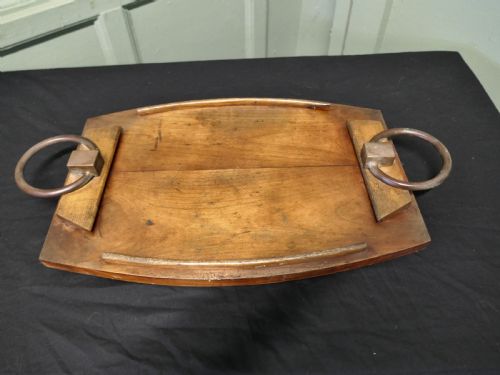
Makers utilised woods such as oak, walnut, and mahogany for the primary body of composite trays, often enriching the surface with marquetry or inlay. Handles cast in brass or forged separately are then affixed to the rims to facilitate service.
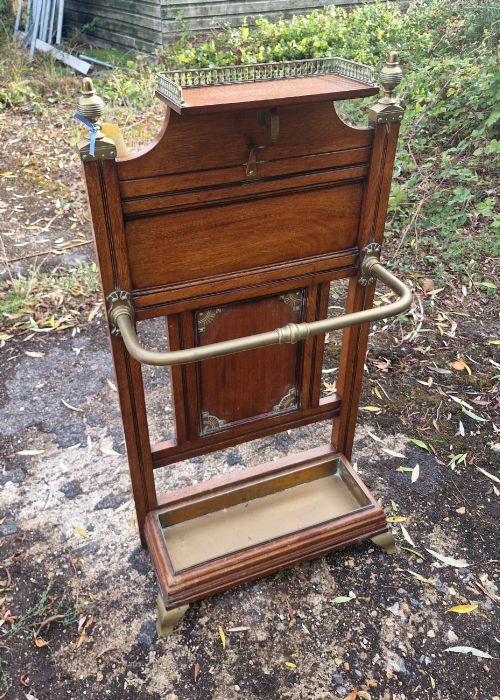
Listings show edwardian brass tray examples combining solid oak, walnut, and mahogany with cast brass galleries.
What varies in quality
The grade of an edwardian brass tray depends heavily on the weight of the metal and the precision of its assembly. Heavier gauge brass resists bending and maintains structural integrity along the gallery walls.
Attention to detail in the joinery between brass rims and wooden bases separates standard utility items from finer domestic furnishings. Pierced openwork, crisp engraving, and securely fitted handles indicate higher standards of period craftsmanship.
Edwards and Roberts
The Edwardian Brass Tray Glossary
- Gallery
- A raised pierced or solid border surrounding the edge of a tray to prevent items from sliding off. This feature is commonly cast in brass on edwardian serving ware.
- Marquetry
- Decorative veneer patterns applied to wooden surfaces using various tinted woods. It frequently adorns the timber bases found beneath brass galleries.
- Demi-lune
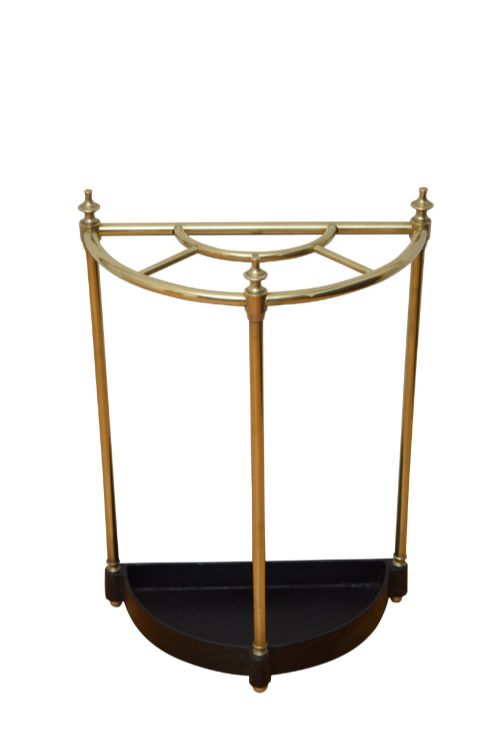
- A half-moon shape used in the footprint of furniture and accessories. Many hall stands and wall pieces share this profile.
- Etagere
- A set of open shelves or tiered trays used for display. These pieces often incorporate brass supports and handles.
Edwardian Brass Tray: Frequently Asked Questions
What is an edwardian brass tray used for?
These items served primarily for carrying afternoon tea, drinks, or calling cards in domestic settings. Many were designed to sit flat on a table or serve atop a folding stand.
Today, they function as decorative display surfaces or practical serving platters for home entertaining.
Are edwardian brass trays marked with maker names?
Most examples remain unmarked, as many makers did not stamp their serving wares. Some retail furnishers applied paper labels that have since worn away.
Attribution typically relies on distinct design characteristics, construction methods, and materials recorded in period catalogues.
How can I date an edwardian brass tray?
Dating relies on stylistic cues such as the profile of the brass gallery, handle design, and the integration of wood types like oak and mahogany. Pieces from this era often reflect arts and crafts or late Victorian design transitions.
Comparing construction techniques with dated archive examples helps narrow the period of manufacture.