



Antique Indian Charger
An antique indian charger brings the rich metalwork and intricate surface decoration of the subcontinent straight to a wall or table.
Antique Indian Charger
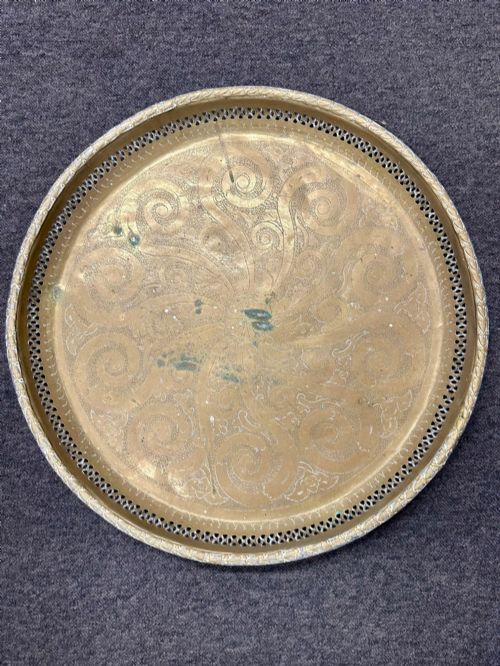
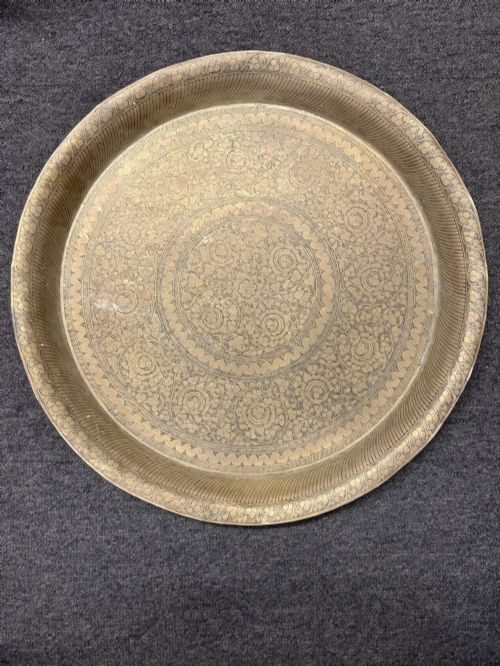
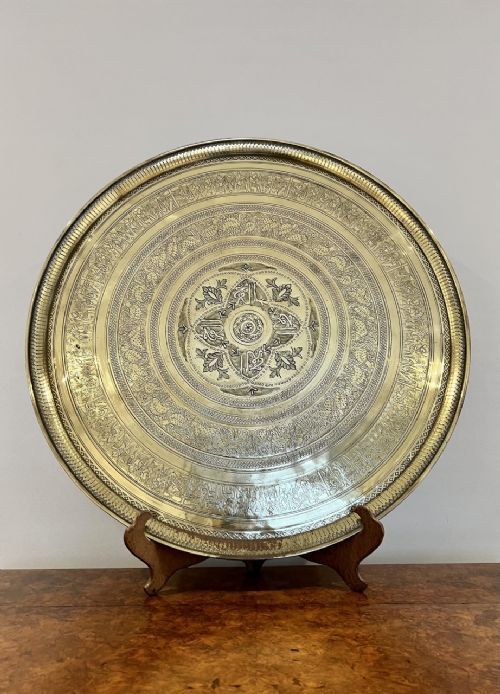
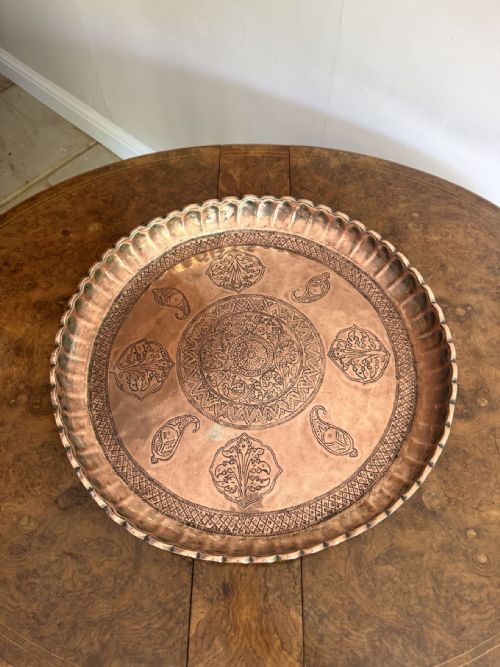
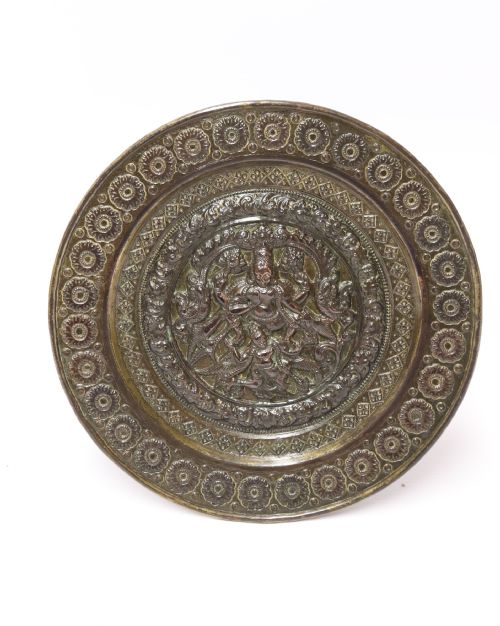
When you search for an antique indian charger, you are looking at large circular plates, wall chargers, and decorative trays created across the nineteenth century. These items include heavy brass wall chargers, mixed metal trays, and ceremonial shields fashioned for display or domestic utility.
The versions you are most likely to meet on this page date from the late nineteenth century, specifically around eighteen eighty to nineteen hundred. They frequently display the distinct aesthetic of the Anglo-Indian Raj period alongside Kashmiri traditions.
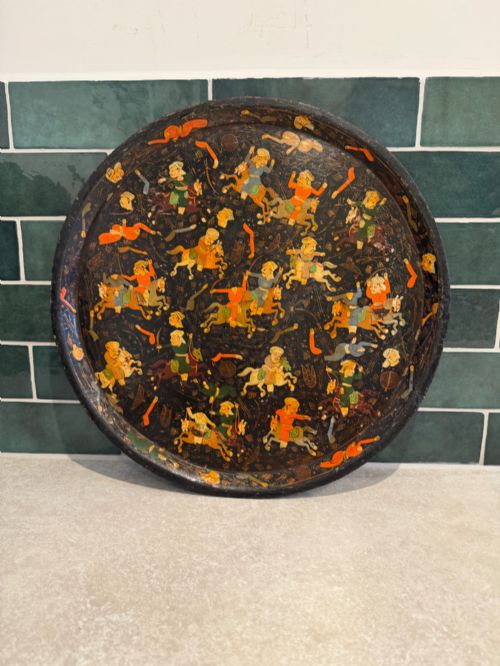
These pieces range from broad brass platters with pierced galleries to deep copper plates and papier-mache trays. Each object serves primarily as a decorative focal point, whether hung by a rear wire or rested upon a sideboard.
Materials and methods of manufacture
Makers shaped these chargers from base metals including brass, copper, and mixed metal alloys, alongside occasional silver plating and papier-mache with paint and lacquer. The metal foundation provides the substantial weight required for deep surface manipulation.
Artisans decorated the surfaces using hand engraving, repoussé work, and meticulous piercing. Gravers cut fine foliate and floral motifs into the metal, while punches hammered out raised relief designs from the reverse side.
Antique Indian Charger Retail Price Guide 2026
Typical asking prices for indian charger among the pieces listed under this phrase on Sellingantiques today, from the lower quarter to the upper quarter. They describe what is for sale here now, not the wider market.
The listings here span from eighteen sixty to nineteen hundred, encompassing brass, copper, mixed metal, and papier-mache forms.
What separates the finest pieces
Quality rests upon the depth and crispness of the hand engraving and repoussé work. Superior examples show confident, intricate lines and well-defined relief rather than shallow, hasty tool marks.
The choice of materials also dictates standing, with mixed metal combinations and heavy gauge copper or brass sitting above lighter utilitarian items. Pierced gallery work requires exceptional patience and steadiness of hand to achieve symmetrical openwork.
The Antique Indian Charger Glossary
- Repoussé
- A metalworking technique where the artisan hammers the design from the reverse side to form a raised pattern on the front. This method creates tactile depth across the face of a charger.
- Anglo-Indian
- A style describing decorative arts produced in India during the British Raj, often combining traditional eastern motifs with forms suited to western tastes. These objects frequently bridge two distinct design vocabularies.
- Pierced gallery
- An openwork border cut through the rim of a tray or charger using small saws or chisels. This delicate technique lightens the silhouette of heavy metal vessels.
- Dhal
- A traditional Indian shield used for ceremonial or defensive purposes, often adapted into decorative wall plaques during the nineteenth century. They typically feature central bosses and engraved metal surfaces.
- Mixed metal
- The deliberate combination of contrasting metals, such as brass and copper inlaid together, to create visual variety across a single surface. This technique highlights the maker's skill in handling different materials.
Antique Indian Charger: Frequently Asked Questions
How do I hang a wall charger?
Most heavy brass and copper chargers feature a turned rim or an applied wire on the reverse for secure wall mounting. You should use a sturdy picture hook fixed directly into a wall stud or masonry anchor.
Avoid using adhesive hangers or flimsy picture wire that cannot support the substantial weight of nineteenth-century metalwork. Check the balance of the piece before letting it hang unsupported.
Were these trays used for serving food?
While some brass and copper trays served utilitarian purposes in South Asian households, many nineteenth-century examples were made specifically for decorative display. Their intricate repoussé surfaces and pierced galleries make them ill-suited for holding wet or greasy food.
Today, collectors view them primarily as ornamental wall plaques or decorative table centrepieces rather than active tableware.
How do I clean an antique brass charger?
You should generally preserve the dark patination and accumulated age that build up on nineteenth-century metalwork over decades. Harsh modern metal polishes strip away this historical character and can damage hand-engraved details.
A gentle dusting with a soft, dry cloth is usually all that is required to keep the surface clear of loose particles.
What does Raj period mean?
The Raj period refers to the era of direct British governance in the Indian subcontinent, lasting from eighteen fifty-eight to nineteen fourty-seven. During this time, local metalworkers produced specialised decorative items geared towards British officers and travellers.
These pieces often blend traditional Indian floral and foliate motifs with European furniture and display formats.