
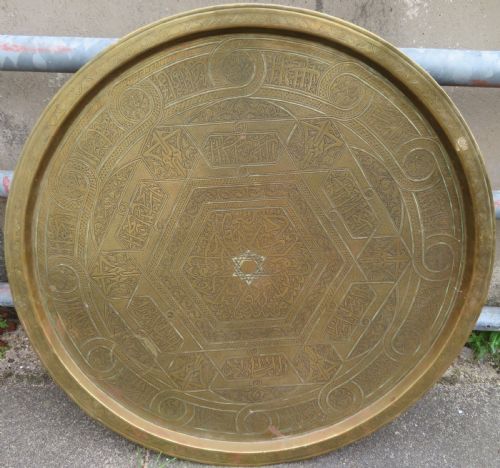


Engraved Brass Trays
Engraved brass trays are circular metal pieces marked by intricate surface decoration, offering collectors a rich mix of Islamic, Persian, and Victorian domestic craft.
Engraved Brass Trays
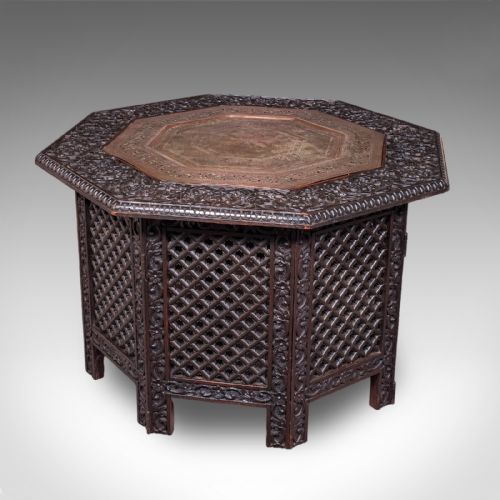
When searching for engraved brass trays, buyers encounter a diverse selection ranging from large Victorian chargers and middle eastern dishes to folding table tops. The pieces on this page span several decades, featuring origins from India, Persia, and the Middle East alongside European revival styles.
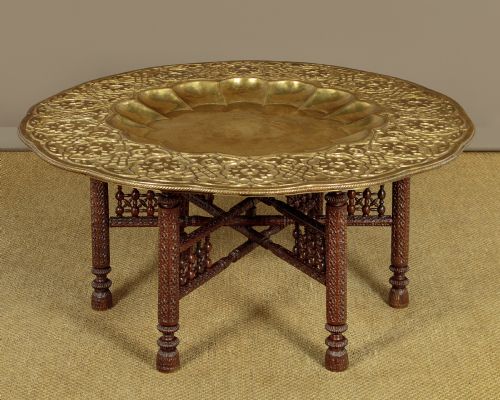
Most examples function either as standalone decorative plates or as removable table tops resting on folding wooden bases. Forms include large circular chargers, smaller dishes, and complete tray service sets intended for display or occasional use.
How they were made
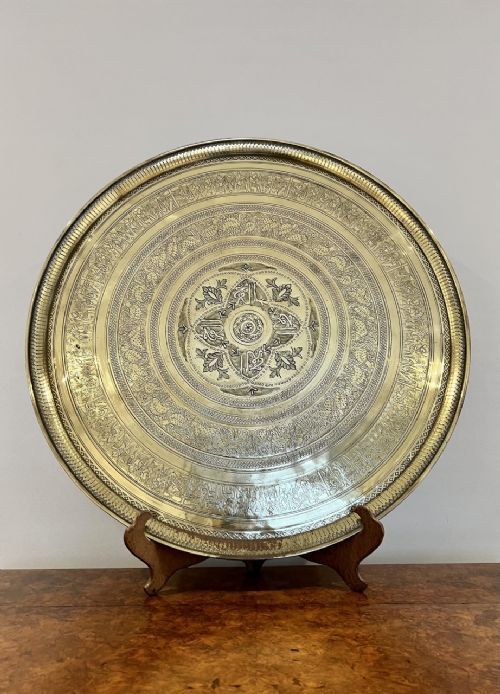
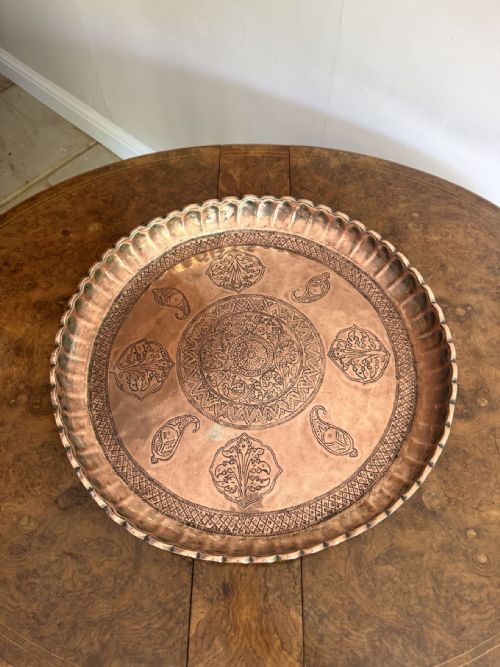
The construction of these pieces relies primarily on worked brass, copper, and mixed metal alloys, occasionally incorporating silver inlay or patinated finishes. Artisans applied hand-engraving techniques to etch detailed geometric, floral, and figurative motifs directly into the metal surface.
Many larger items combine brass and copper elements within a single composition, whilst structural supports utilise folding hardwood bases designed to hold the tray tops securely.
Listings feature periods spanning from the Victorian era through the 1930s, incorporating brass, copper, and mixed metal materials.
What varies in quality
The standard of these objects depends heavily on the depth and precision of the hand-engraving, with superior pieces showing crisp, deeply incised details rather than shallow stamped patterns. The complexity of the design, such as intricate Mamluk revival motifs or silver inlay work, separates standard production items from finer presentation pieces.
Material selection also dictates overall grade, as mixed metal compositions and heavy gauge copper or brass demonstrate greater substance than lighter alternatives.
The Engraved Brass Trays Glossary
- Charger
- A large decorative plate or tray intended for display rather than everyday service. These substantial pieces often feature elaborate engraved designs across the entire surface.
- Mamluk Revival
- A 19th-century design style that emulates the rich brass and silver-inlaid metalwork of the historical Mamluk Sultanate. Pieces in this style display dense geometric and calligraphic ornamentation.
- Patinated Copper
- Copper that has undergone chemical treatment or natural ageing to darken its surface colour. This finish highlights engraved details by creating contrast between recessed and raised areas.
- Mixed Metal
- An object constructed from two or more distinct metals, such as brass and copper combined in a single tray. This technique creates visual contrast through differing metal tones.
Engraved Brass Trays: Frequently Asked Questions
How were engraved brass trays used?
These trays served primarily for serving tea or food in Middle Eastern and Asian households, often placed atop folding wooden stands to create portable tables.
In Western homes, larger chargers and trays were frequently hung on walls or displayed on side tables purely for decorative purposes.
How do I care for an antique brass tray?
Dust the surface regularly with a soft, dry cloth to prevent dirt accumulation within the engraved grooves. Avoid using harsh chemical polishes that can strip the natural patina and damage historical finishes.
Keep the metal away from excessive moisture and humidity to prevent corrosion. If cleaning is necessary, use a mild, pH-neutral soap solution followed by thorough drying.
How can I tell the period of a tray?
Examine the manufacturing marks, style influences, and construction techniques to estimate the date of origin. Victorian examples often reflect domestic revival tastes, whilst items from the early twentieth century frequently include folding table bases.
Compare the depth of the hand-engraving and the specific alloy composition against known stylistic periods such as Art Nouveau or Mamluk Revival.
Are these trays suitable for everyday use?
Whilst many trays retain structural integrity, antique pieces with delicate silver inlay or soft brass construction are better suited for light display or occasional service.
Frequent heavy use can wear down the hand-engraved details and compromise the patinated finish over time. Consider using protective pads if placing items on top of the metal.