
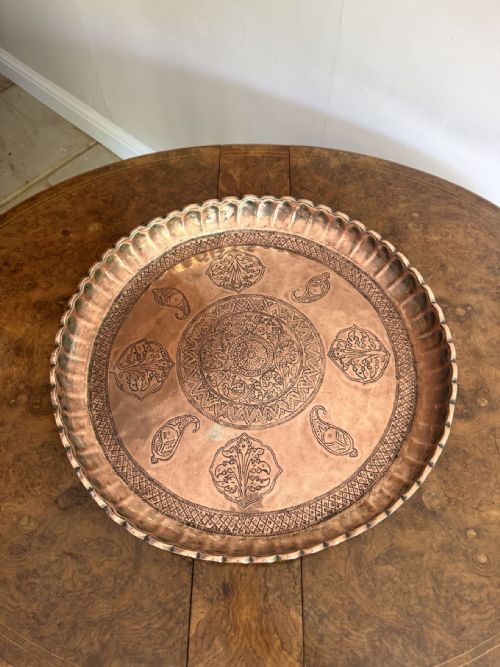


Brass Wall Dishes
These brass wall dishes span centuries of global metalwork, bringing intricate repoussé, cloisonné enamel, and engraved imagery directly to domestic interiors.
Brass Wall Dishes
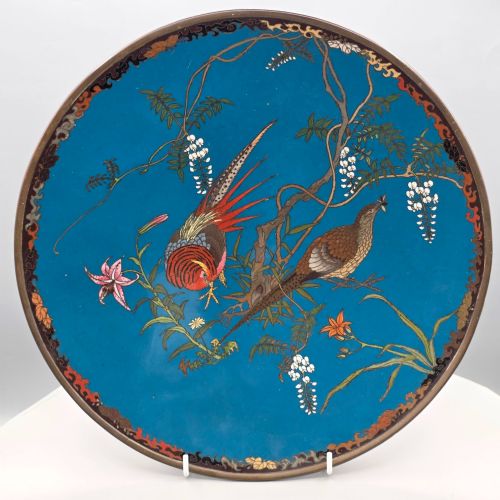
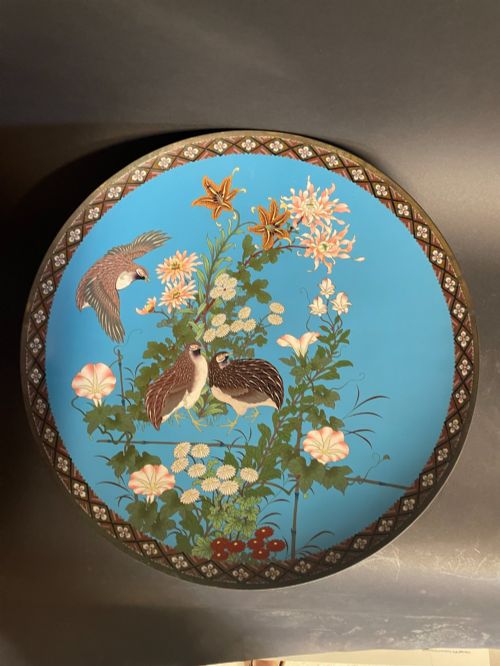
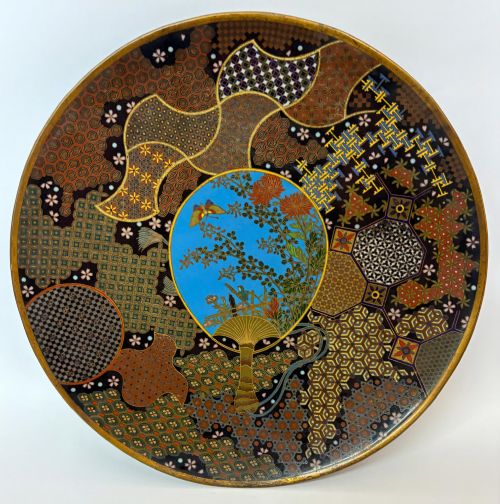
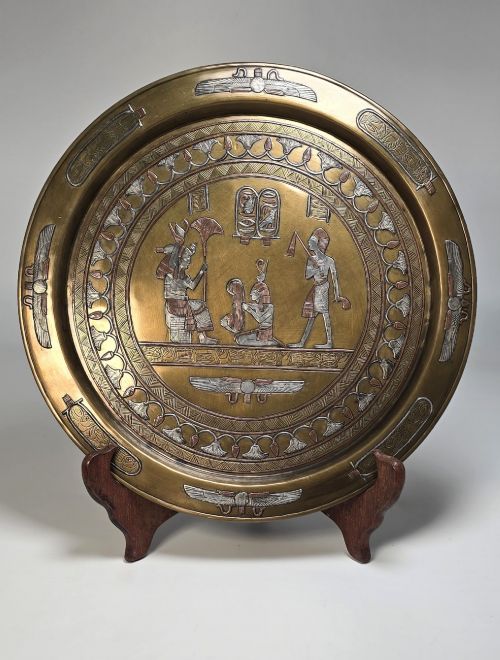
Brass wall dishes encompass a diverse array of decorative chargers, plaques, and trays designed primarily for display rather than dining. When searching for brass wall dishes, collectors encounter heavily ornamented surfaces ranging from European neo-classical repoussé work to Japanese Meiji period cloisonné enamel and Middle Eastern inlaid metalwork.
The selection on this page draws heavily from late nineteenth-century production alongside earlier eighteenth-century embossed alms dishes. Forms vary from large circular copper and mixed-metal chargers to oval plaques and deep presentation trays.
Origins stretch across Britain, Europe, Japan, India, and the Middle East, reflecting distinct regional techniques applied to copper, brass, bronze, and patinated metals.
What varies in quality
Quality rests in the precision of the handwork, the depth of relief, and the complexity of the decorative scheme. Superior examples exhibit crisp chasing, balanced composition, and flawless enamel cells without pooling or distortion.
The choice of materials and depth of patination further distinguish finer outputs, particularly where mixed metals, silver inlay, or gold accents are integrated into the primary brass or copper ground.
Several Japanese chargers feature startled frogs locked in permanent standoff with chrysanthemums and leaping koi.
The Brass Wall Dishes Glossary
- Charger
- A large decorative plate or platter intended for display on a wall or sideboard rather than for practical table use. These substantial pieces often feature elaborate central motifs.
- Repoussé
- A metalworking technique where an artisan hammers metal from the reverse side to create a raised design in relief on the front. Fine details are then refined from the front using chasing tools.
- Cloisonné
- An enamelling method where thin metal wires are soldered to a metal base to form compartments, which are then filled with coloured glass paste and fired. This technique yields vibrant pictorial scenes.
- Cairo Ware
- Metalware produced in Egypt for the European market during the late nineteenth and early twentieth centuries, typically characterised by brass or copper inlaid with silver and dark contrasting metals.
- Alms dish
- A shallow metal bowl traditionally used in churches to collect offerings. Early examples often feature embossed religious or heraldic iconography around a central boss.
Brass Wall Dishes: Frequently Asked Questions
How do I hang a wall dish safely?
Most antique chargers require a specialised spring-loaded brass plate hanger that grips the rim securely without causing structural stress to the metal body.
Ensure the wall fixing engages directly with solid masonry or a secure stud rather than standard plasterboard alone.
Are these dishes meant for food?
These decorative pieces are intended strictly for visual display and historic appreciation rather than culinary service.
Many antique metal surfaces carry historical patination or protective coatings that should not come into contact with moisture or acidic foods.
How do I clean antique brass?
Dust gently with a soft, dry cloth to remove surface particles without disturbing the underlying oxidation or patination.
Avoid abrasive metal polishes and harsh chemical dips, which strip away centuries of accumulated character and diminish collector value.
How do I tell Japanese work apart?
Japanese Meiji period pieces typically feature precise cloisonné wirework depicting natural subjects like birds, koi, dragons, and Mount Fuji. The reverse often shows smooth counter-enamel or fine patinated bronze grounds distinct from European domestic brassware.