
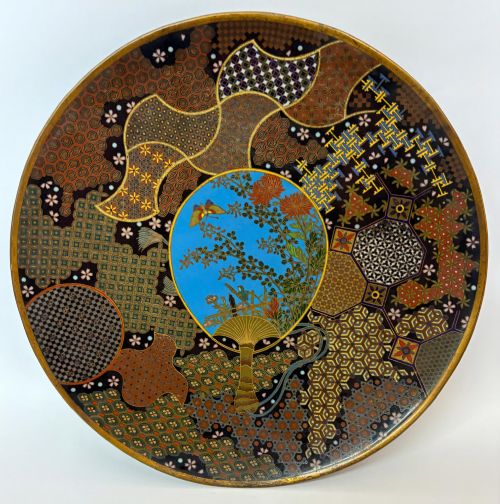


Oriental Metal Display Plates
Oriental metal display plates bring striking craftsmanship to a wall or cabinet, offering intricate motifs worked in cloisonne enamel, brass, and bronze.
Oriental Metal Display Plates
Oriental metal display plates encompass decorative chargers, trays, and plaques created in styles ranging from the Japanese Edo and Meiji periods to the Qing Dynasty. These items function primarily as visual centerpieces rather than tableware, designed to showcase elaborate pictorial scenes.
Buyers encountering this selection will most frequently find Japanese cloisonne enamel chargers featuring natural subjects such as koi, dragons, owls, and chrysanthemums. Pieces span from the mid-nineteenth century through to the early twentieth century, alongside Chinese brass and bronze plates.
How they were made
Makers formed the foundational body using metals such as copper, brass, and bronze, shaping them into broad chargers and shallow trays. Artisans then applied thin metal wires, including copper and brass wire, to outline intricate motifs across the surface.
Coloured enamel pastes were packed into the cellular compartments created by the wire framework before firing and polishing. This cloisonne technique required precise temperature control to fuse the vitreous materials to the metal base without cracking.
Several Meiji period chargers swap stern dragons for surprised frogs and tumbling koi, proving that nineteenth-century artisans appreciated a moment of levity.
What varies in quality
Quality rests upon the fineness of the wirework and the complexity of the pictorial design. Dense, delicate wire patterns forming detailed subjects like leaping koi or samurai require superior skill compared to simpler geometric fills.
The smoothness of the polished enamel surface and the depth of the metal ground distinguish finer examples. Expert finishing ensures the wire outlines remain entirely flush and uniform beneath the glossy glass paste.
The Oriental Metal Display Plates Glossary
- Cloisonne Enamel
- A technique where metal wires are soldered to a metal base to form cells that hold coloured glass paste. These compartments are then fired and polished smooth.
- Charger
- A large decorative plate intended for display rather than for serving food at a table. These pieces often feature prominent pictorial scenes.
- Totai Shippo
- A specialised variation of cloisonne where enamel is applied over a translucent body or organic core such as tree bark. This method creates unique textural effects.
- Edo Period
- A historical division of Japan spanning from sixteen hundred and three to eighteen hundred and sixty-eight. Pieces from this era often demonstrate early mastery of metalwork.
- Meiji Period
- The era in Japanese history lasting from eighteen hundred and sixty-eight to nineteen hundred and twelve. This timeframe saw a prolific output of detailed cloisonne chargers for export.
Oriental Metal Display Plates: Frequently Asked Questions
How do I hang a heavy charger?
Display chargers require robust wall mountings that securely cradle the rim without putting pressure on the enamel body. Adjustable spring-loaded plate hangers designed for heavy objects provide the necessary support.
Ensure the fixing is anchored directly into wall studs or uses appropriate masonry plugs. Regular checks of the wire or bracket prevent accidental slips.
Can I clean these metal plates with water?
Dusting with a dry, soft microfibre cloth is generally sufficient for routine maintenance. Moisture can seep into tiny microscopic fissures in older enamel or tarnish exposed metal wires.
Avoid liquid cleaners, abrasives, or soaking entirely. If a plate requires gentle cleaning, a slightly damp cloth followed by immediate drying is safest.
How do I tell Japanese and Chinese plates apart?
Japanese cloisonne from the Meiji and Edo periods frequently utilises extremely fine copper wire to delineate naturalistic subjects like birds, fish, and Mount Fuji. The overall aesthetic prioritizes pictorial depth and refined botanical accuracy.
Chinese bronze and brass plates, such as those from the Qing Dynasty, often emphasise cast ornamentation, ritual symbols, or archaic motifs rather than wire-inlaid enamel fields.
What does a signed plate mean?
A signature on an oriental metal display plate typically indicates the workshop or artisan responsible for the cloisonne or metalwork. These marks are usually incorporated directly into the enamel design or stamped on the reverse.
Signatures provide insight into the origin and production period of the piece, though many fine export pieces remain unmarked.