


Brass Oriental Dishes
Brass oriental dishes bring decorative weight and intricate surface detail to a room, spanning periods from the Victorian era to the mid-twentieth century.
Brass Oriental Dishes
Brass oriental dishes encompass decorative chargers, bowls, plates, and jardinieres originating from Chinese and Japanese traditions. These vessels serve primarily as display pieces rather than utility items, often featuring elaborate iconography.
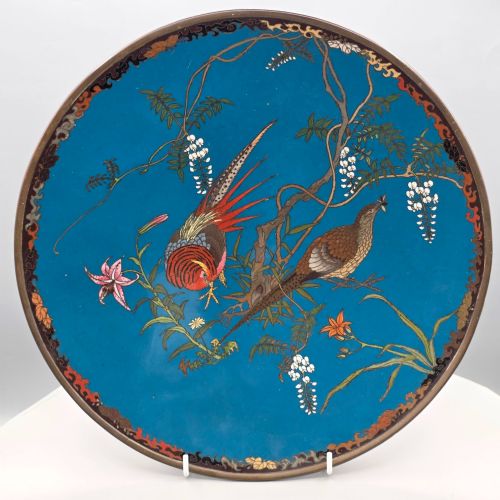
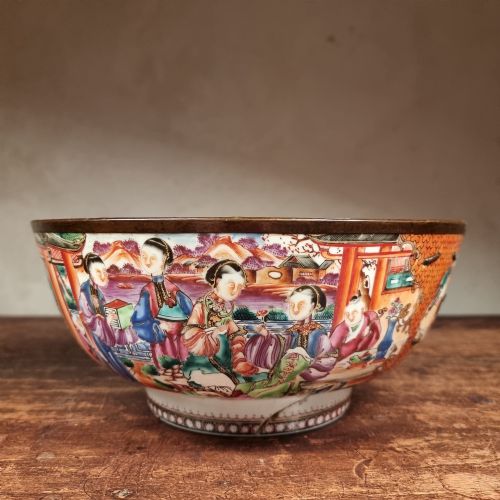
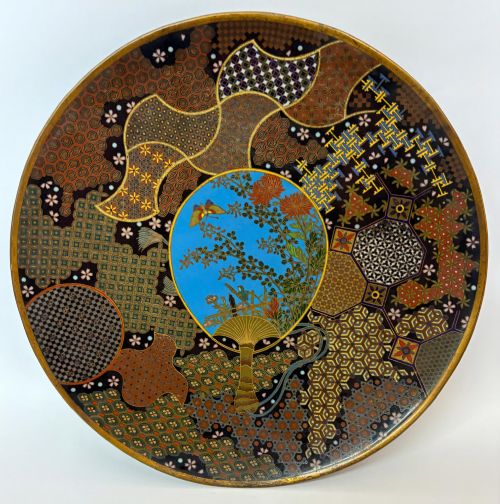
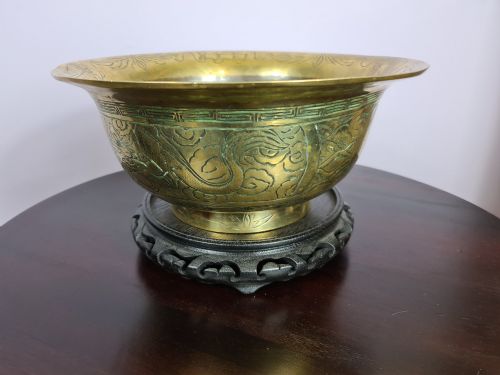
The selections on this page are dominated by Japanese Meiji period cloisonne enamel chargers and Chinese brass or bronze bowls. Pieces range from large heavy planters to delicate display plates featuring birds, landscapes, and mythological figures.
Makers and artisans produced these works across the nineteenth and early twentieth centuries, blending traditional metalworking with ornamental designs suited for both eastern and western markets.
How they were made
Makers utilised brass, bronze, and copper as the foundational metal bases for shaping chargers, bowls, and planter dishes. Artisans applied hammering, casting, and turning techniques to form the heavy plates and vessels.
Cloisonne enamel technique involves soldering thin metal wire onto the brass or copper surface to create compartments, which are then filled with coloured enamel paste and fired. Mixed-metal inlays and gold detailing further enrich the surfaces of specific Meiji period dishes.
Surface finishing includes polishing, patination, and detailed hand engraving to delineate feathers, foliage, and narrative scenes across the metal and enamel.
Listings feature items spanning the Victorian era, the Meiji period, and the Qing dynasty.
What varies in quality
The complexity and precision of the wirework separation in cloisonne enamel distinguish superior examples from simpler production. Artisans who maintained microscopic regularity in cellular patterns achieved greater visual depth.
Scale and weight dictate the presence of quality, as larger chargers and heavy brass bowls require substantial metalwork skill to cast and finish without distortion. Superior pieces display crisp definition in subject matter such as birds, fish, and Mount Fuji.
The integration of mixed-metal components and gold inlay indicates higher workshop standards during the Meiji period. Details in the enamel pigmentation, such as subtle tonal gradations, elevate a decorative plate from standard commercial output.
The Brass Oriental Dishes Glossary
- Charger
- A large ornamental decorative plate meant for display on a wall or sideboard rather than for dining use. These pieces often measure over thirty centimetres across.
- Cloisonne
- An ancient metalworking technique where wire is soldered to a metal body to form cells that hold enamel paste before firing. This method creates vibrant, multi-coloured pictorial surfaces.
- Meiji Period
- The era in Japanese history spanning from 1868 to 1912, noted for a surge in decorative arts produced for international export. Work from this time frequently incorporates meticulous enamel and mixed-metal detailing.
- Jardiniere
- A large ornamental pot or bowl designed to hold plants or flowers, often cast in heavy brass or bronze. These decorative planters appear frequently alongside flat display dishes.
- Qing Dynasty
- The final imperial dynasty of China, lasting from 1644 until 1912, associated with refined metalwork and ceramic production. Export wares from this period reached western collections in substantial numbers.
Brass Oriental Dishes: Frequently Asked Questions
How do I hang a heavy charger?
Heavy chargers require specialised wall brackets or spring-loaded plate hangers designed to support the substantial weight of brass and cloisonne pieces securely.
Ensure the fixing is anchored directly into a wall stud or uses appropriate masonry plugs rather than relying on standard plasterboard hooks.
What is the difference between a bowl and a charger?
Chargers are wide, shallow display plates intended primarily for vertical presentation or flat surface display. Bowls possess deeper vertical sides designed to contain items or stand as independent sculptural objects.
Both forms utilise similar metalworking and enamelling techniques depending on their period of origin.
How do I clean brass and enamel dishes?
Dust surfaces gently with a soft, dry cloth to prevent accumulation in the intricate wire channels of cloisonne work. Avoid liquid polishes, abrasive cloths, or chemical dips, which can strip patination or damage delicate enamel fillings.
Examine the piece carefully before undertaking any maintenance to ensure the metal and enamel layers remain stable.
Where were these pieces made?
These items originated primarily in workshops across China and Japan during the nineteenth and early twentieth centuries. Many were specifically manufactured for export to western markets during periods of burgeoning international trade.
Japanese examples frequently hail from artistic centres such as Nagoya, while Chinese pieces reflect broader imperial traditions.