



Edwardian Brass King Bed
An edwardian brass king bed combines robust proportions with metalwork warmth, offering a grounding centrepiece for a period bedroom.
Edwardian Brass King Bed
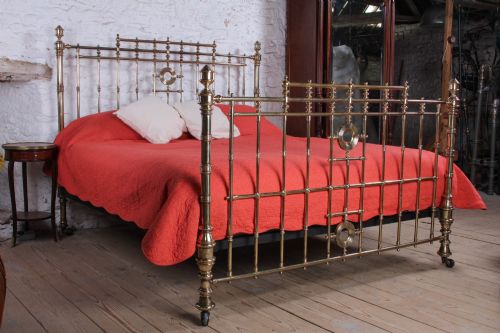
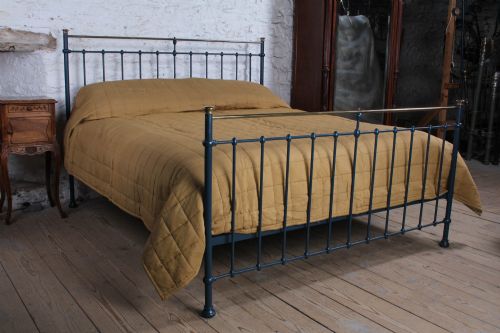
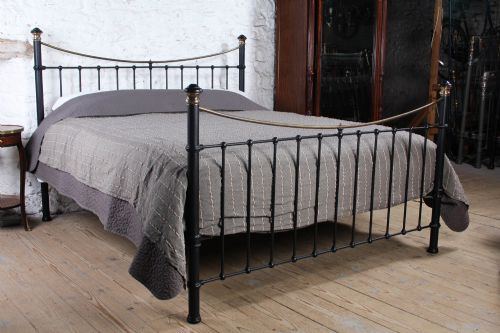
When you examine an edwardian brass king bed on this page, you encounter large sleeping frameworks originating primarily from the Edwardian era alongside earlier Victorian examples. These frames span full brass constructions as well as combination pieces pairing brass components with cast or wrought iron structures. The forms include standard head and footboards, low profile no end designs, and characteristic dip-rail configurations that lower the footboard for an open sightline.
The materials recorded in these listings rely heavily on polished brass tubing, cast iron frames, and painted metal finishes such as japanned lacquer or coloured enamel. Makers often integrated tapering posts, square tubes, and shaped details to vary the silhouette of the bedstead. While the search phrase specifies the Edwardian period, the historical scope of the listings extends back through Victorian decades to the middle of the nineteenth century, offering both all-brass models and mixed-metal frameworks.
How They Were Made
Construction relies on a combination of cast iron structural elements and brass tubing, joined with internal threaded rods and dovetail joints to ensure rigidity. Metalfounders shaped the decorative components using sand-casting methods, producing ornate finials, mounts, and junctions that were subsequently polished or coated.
Surface finishes involved either bright-polishing the brass or applying protective varnishes and durable japanned lacquer to iron parts. Many frames incorporated contrasting painted finishes in black, basalt blue, French grey, or aged cream alongside the bright brass elements.
Listings combine Edwardian and Victorian periods with materials including brass, cast iron, wrought iron, and japanned lacquer.
What Varies in Quality
Quality in an edwardian brass king bed depends on the heft of the metal components and the precision of the original joinery. Heavier gauge brass tubing and substantial cast iron frames resist flexing and maintain structural integrity much better than lighter alternatives.
The refinement of the decorative metalwork also distinguishes different tiers of the range. Crisp casting in the ornamentation and intact, original finishes demonstrate higher workshop standards during production.
Winfield·Maple & Co
The Edwardian Brass King Bed Glossary
- Dip Rail
- A footboard top rail that curves downward in the centre. This design lowers the visual weight at the foot of the bedstead.
- Japanned Lacquer
- A heavy, dark decorative finish applied to iron components to mimic traditional Japanese lacquerwork. It provides a durable and glossy protective coating.
- Bedstead
- A framework of a bed supporting the mattress and springs. It encompasses both the head and foot assemblies along with the side rails.
- Super King Size
- An extra-wide mattress platform exceeding standard king dimensions. These frames accommodate larger proportions while maintaining period styling.
- Winfield
- A notable manufacturing name associated with metal bed production. Pieces bearing this mark reflect established nineteenth-century foundry traditions.
Edwardian Brass King Bed: Frequently Asked Questions
How do I fit a modern mattress?
Most antique metal bedframes accommodate standard modern mattress sizes if the side rails match contemporary length specifications. Checking the internal dimensions ensures the base supports standard proportions without overhang.
Where width or length varies from current standards, custom mattress suppliers can construct a piece to fit the exact interior dimensions of the antique rails.
Are these beds structurally stable?
Period metal beds rely on heavy iron and brass components that offer substantial rigidity when assembled correctly. The original dovetail joints and securing bolts lock the side rails firmly to the head and footboards.
Regularly checking and tightening the internal fixings maintains this stability over decades of daily domestic use.
How should I clean the brass?
Maintaining brass surfaces requires simple dusting with a soft cloth to prevent particulate accumulation. Harsh chemical polishes can strip protective historic lacquers and alter the aged appearance of the metal.
Gentle cleaning preserves the underlying patina developed across more than a century of existence.
Can iron parts be repainted?
Original painted finishes on iron components can be preserved by touching up minor chips with compatible enamel paint. Many surviving frames retain historic japanned or coloured coatings that contribute to their character.
Completely stripping and repainting an iron frame is an option if the existing finish has deteriorated beyond simple conservation.