

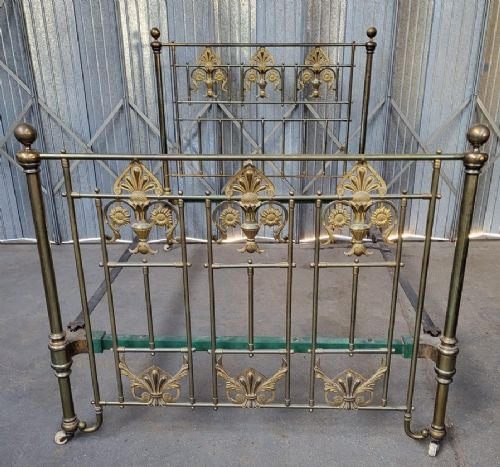


Ornate Brass Bed Frame
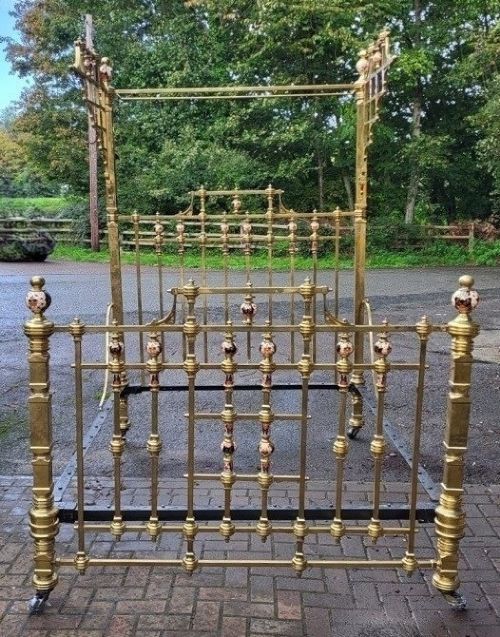
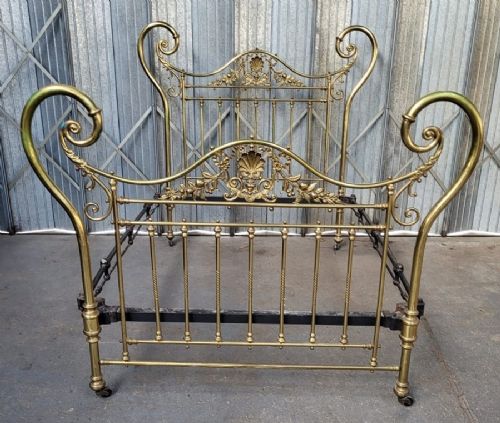
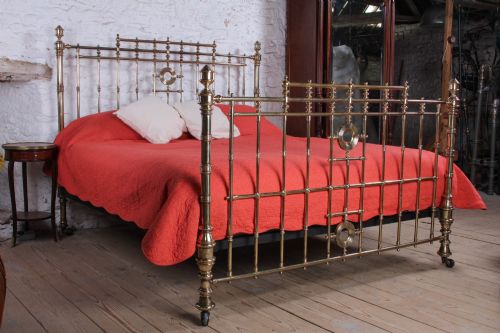
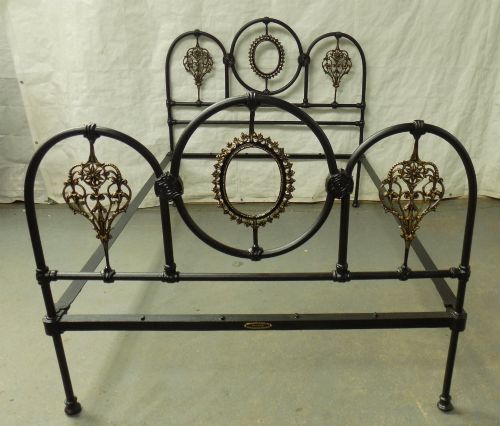
An ornate brass bed frame brings substantial Victorian presence and warm metallic polish into a bedroom.
Ornate Brass Bed Frame
When you search for an ornate brass bed frame, you are looking at substantial Victorian and turn-of-the-century sleeping furniture built on sturdy metal foundations. The pieces found here span the nineteenth century, including the Aesthetic Movement, Victorian Gothic, and French Belle Epoque styles.
You are most likely to meet standard double or king size proportions, alongside larger half tester frames and super king dimensions. Materials primarily pair polished brass with iron elements, while occasional examples introduce maple wood or painted finishes.
Origins stretch across British workshops as well as continental French and Portuguese traditions. These bed frames serve as major architectural anchors for a bedroom rather than simple functional items.
How they were made
Makers constructed these frames using heavy-gauge brass tubing alongside structural iron and cast iron components to ensure adequate weight-bearing strength. Metal parts frequently joined through mechanical casting and detailed jointing techniques characteristic of nineteenth-century metalwork.
Surface ornamentation relied on applied brass castings, turned spindles, and ceramic accents integrated into the headboards and footboards. Selected pieces incorporated painted wood or specific brass detailing to enhance the visual depth of the design.
Ornate Brass Bed Frame Retail Price Guide 2026
Typical asking prices for ornate brass bed frame among the pieces listed under this phrase on Sellingantiques today, from the lower quarter to the upper quarter. They describe what is for sale here now, not the wider market.
One exceptional four poster frame carries the distinct provenance of being made for the Prince of the Ottoman Empire.
What varies in quality
The distinction between standard production and exhibition grade work lies in the complexity of the brass castings and the architectural ambition of the frame. Pieces produced by notable makers display superior hand-finishing and heavier structural gauge.
Proportion and scale also dictate quality, with large half tester and four poster constructions representing greater original expenditure than standard double bedsteads. The retention of original components and authentic structural hardware preserves the integrity of the piece.
Maple & Co·Winfield·RW Winfield
The Ornate Brass Bed Frame Glossary
- Half tester
- A canopy bed where the tester extends only partway over the head of the bed rather than spanning the full length. This form provides a dramatic focal point while keeping the foot of the bed open.
- Bedstead
- A framework of wood or metal designed to support a mattress and bedding. In antique terminology, it specifically denotes the complete standing structure including headboard and footboard.
- Aesthetic Movement
- A late nineteenth-century design current emphasising visual beauty and craftsmanship over narrative content. Pieces from this movement often feature refined geometric or stylized floral motifs.
- Cast iron
- Iron shaped by pouring molten metal into a mould rather than hammering it by hand. It allowed Victorian foundries to produce intricate decorative bed frame components with reliable structural strength.
Ornate Brass Bed Frame: Frequently Asked Questions
Will a standard mattress fit these antique frames?
Many Victorian and early twentieth-century bed frames were built to dimensions that differ slightly from modern standard mattress sizes. It is essential to check the internal width and length measurements of the specific frame before sourcing a mattress.
Modern custom mattress makers can easily accommodate non-standard antique proportions if the frame requires a tailored fit. Modern support slats or base boards can also be integrated discretely to suit contemporary sleeping requirements.
How do I care for antique brass?
Polished brass requires gentle cleaning with a soft cloth to remove dust and fingerprints without damaging the underlying metal or lacquer. Avoid harsh abrasive cleaners that can strip historical patination from the surface.
Regular light dusting keeps the metallic finish bright and prevents the accumulation of grime in the detailed cast crevices. Some owners prefer a warm, aged patina while others maintain a high shine depending on personal taste.
How are these beds dismantled for transport?
Most metal bedsteads use tapered dovetail joints or heavy iron bolts to connect the side rails securely to the headboard and footboard. These mechanical connections allow the entire frame to be disassembled into flat components for moving.
Care should be taken with vintage bolts and threaded connections during dismantling to preserve the original hardware. Professional removal ensures that structural joints do not suffer strain during transit.
How do I date an antique brass bed?
Dating relies on stylistic clues such as the presence of Aesthetic Movement motifs, Victorian Gothic detailing, or French Belle Epoque curves. Construction methods, including the evolution of cast iron techniques and tubing thickness, also offer clear chronological markers.
Purchasing records or maker stamps from firms like Winfield or Maple & Co provide precise attribution when present on the iron or brass components.