
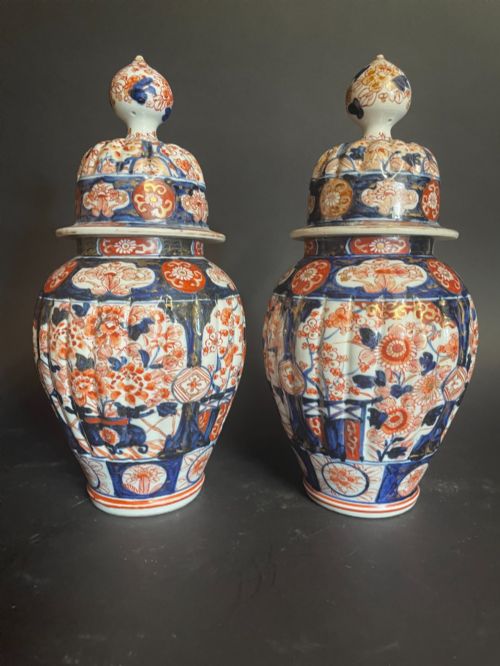
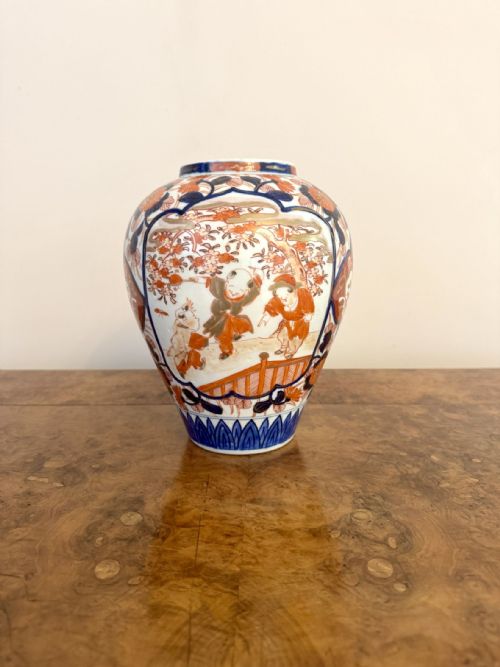
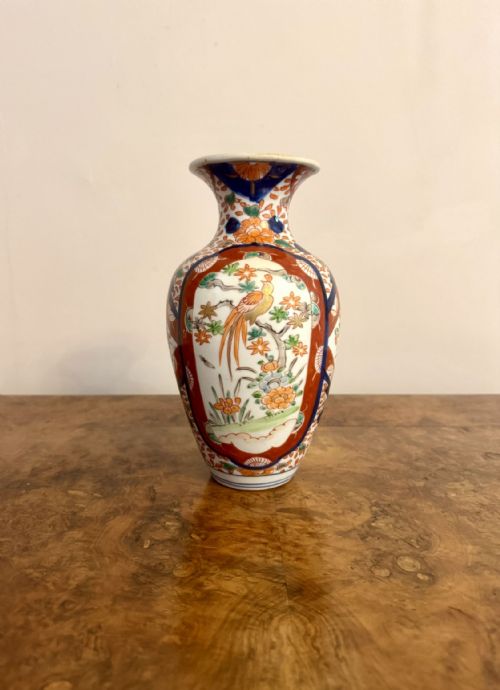


Edo Period Porcelain Jars
These edo period porcelain jars bring centuries of Japanese kiln artistry into a room through deep blue, iron red and gilt palettes.
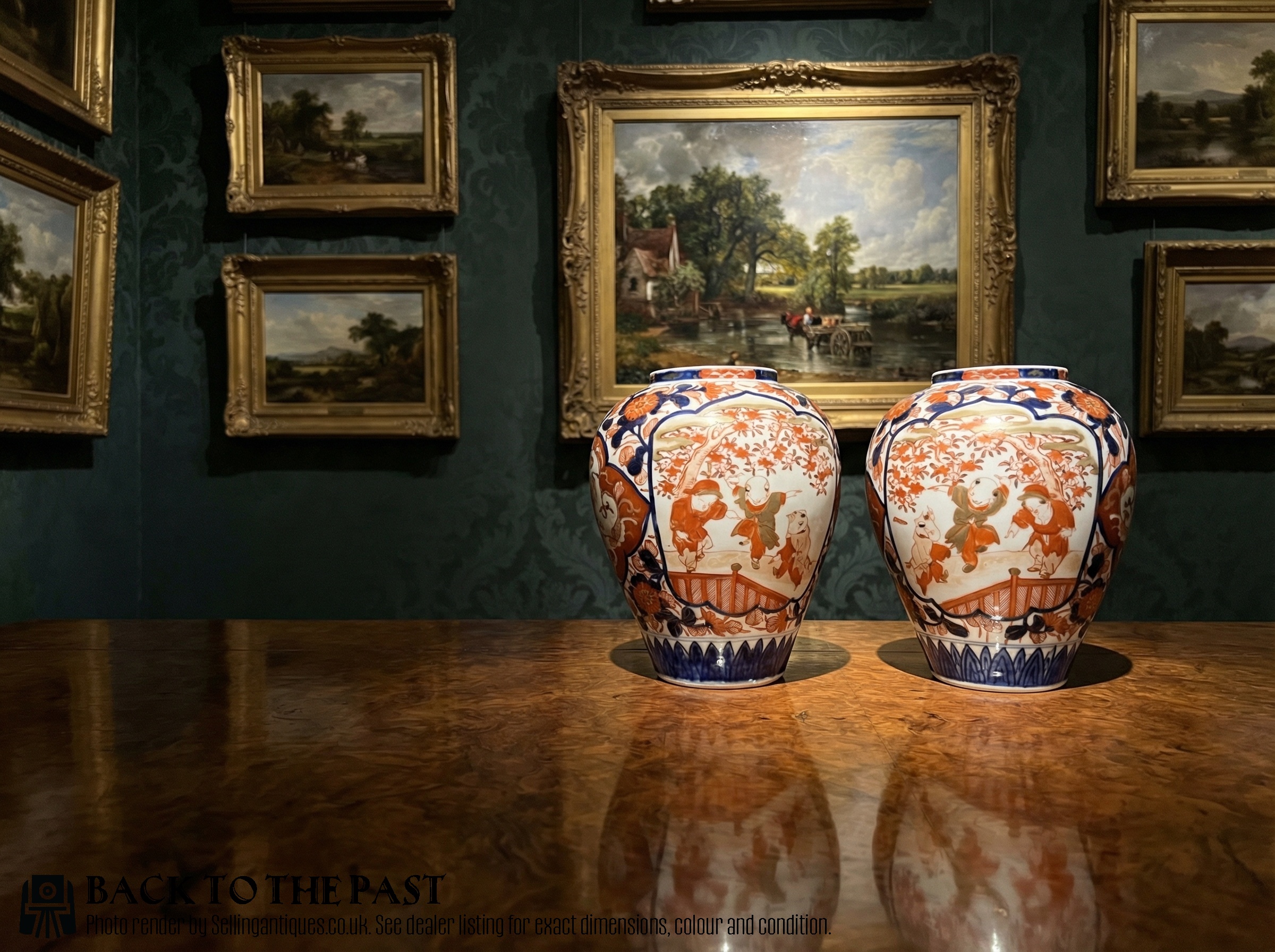
Edo Period Porcelain Jars
Edo period porcelain jars encompass lidded vessels, baluster vases, and decorative containers originating from Japanese kilns between the seventeenth and nineteenth centuries. The pieces available here most frequently display Japanese Imari palettes alongside Arita blue and white designs and Kakiemon styles.
Makers shaped these items as pairs, garnitures, or single decorative lidded jars intended for display. The forms range from standard hexagonal and octagonal profiles to shaped baluster silhouettes.
The historical span recorded in these listings stretches from the seventeenth century through to the nineteenth century, including specific eras such as the Bakumatsu period. Buyers encounter both utilitarian storage vessels transformed into display items and dedicated decorative urns.
Assessing quality in edo period ceramics
The distinction between standard commercial pieces and finer examples rests upon the precision of the hand-painted brushwork and the clarity of the glaze. Crisp application of cobalt enamel and balanced composition across the panels indicate superior workshop output.
The presence of matching lids on baluster jars and original covers affects the integrity of a set. Preservation of the original gold leaf and enamel surface without excessive rubbing marks distinguishes better-kept specimens.
Listings feature porcelain forms spanning the seventeenth, eighteenth, and nineteenth centuries, including Arita blue and white and Japanese Imari styles.
The Edo Period Porcelain Jars Glossary
- Imari
- A style of Japanese export porcelain decorated in underglaze blue, iron red, and gold. This palette dominated production in the town of Arita during the Edo period.
- Arita
- The Japanese town where porcelain production originated during the early seventeenth century. Kilns in this area produced the blue and white and Imari wares seen on this page.
- Koro
- A traditional Japanese incense burner featuring a lid and often supported by small feet. These ceramic vessels accommodated aromatic materials.
- Kakiemon
- A style of Japanese porcelain featuring asymmetrical enamel decoration on a milky white body. This technique emerged during the seventeenth century.
- Baluster
- A vase shape characterised by a rounded lower body that tapers toward a narrower neck and flared rim. This silhouette provides stability for lidded jars.
Edo Period Porcelain Jars: Frequently Asked Questions
What is an edo period porcelain jar?
These pieces are ceramic storage and decorative vessels created in Japan during the Edo era. They span diverse forms including lidded jars, temple jars, and shaped vases.
Potters produced them for domestic use and export markets, decorating the porcelain bodies with cobalt blue, enamel colours, and gold leaf.
How do I identify Imari porcelain?
Imari wares are recognised by their distinctive palette combining underglaze cobalt blue with iron red and gold enamel overglaze. The designs typically feature complex floral and panel motifs.
This style originated in Arita and remained popular across the seventeenth, eighteenth, and nineteenth centuries.
Are these jars sold with matching covers?
Many examples on this page are listed as lidded jars or include their original matching covers. Garnitures and pairs frequently retain their corresponding lids.
Buyers should examine specific listings to confirm whether a lid is present, as some historical vases survived centuries separated from their covers.
Where were these porcelain jars made?
The pieces originated in Japanese kilns, notably around Arita, which served as the primary centre for porcelain manufacture during the Edo period. Export trade carried these items to Western markets.
Artisans shaped the clay locally before firing and hand-painting each vessel in distinct regional styles.