


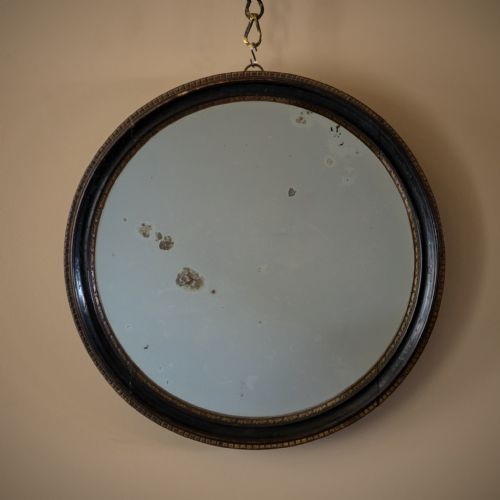
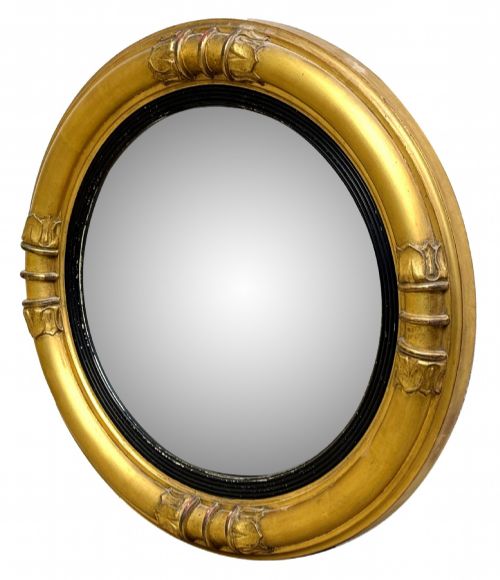
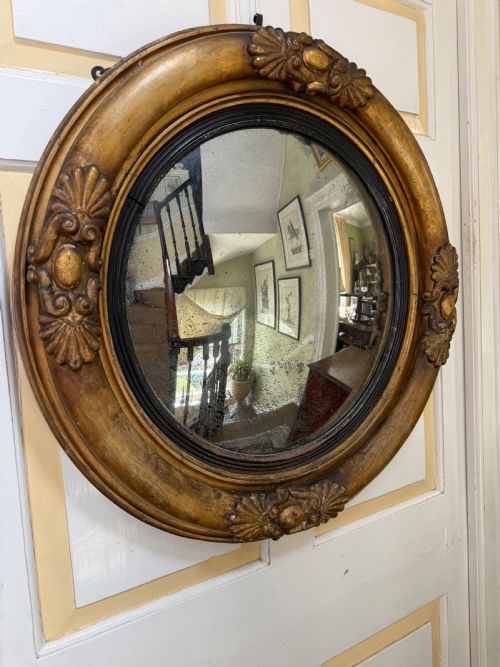


Ebonised Convex Mirror
An ebonised convex mirror gathers the whole room into a curved glass disc, bringing depth and light to interior walls through centuries of design.
Ebonised Convex Mirror
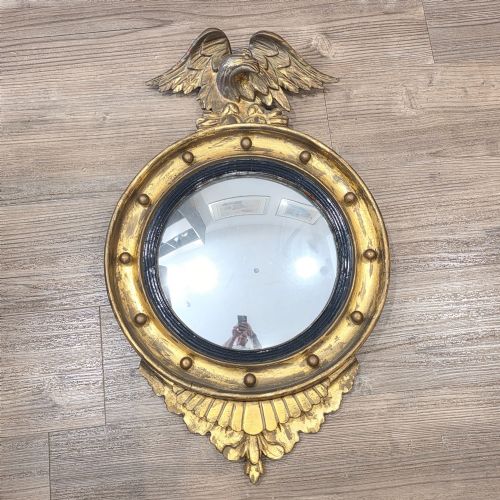
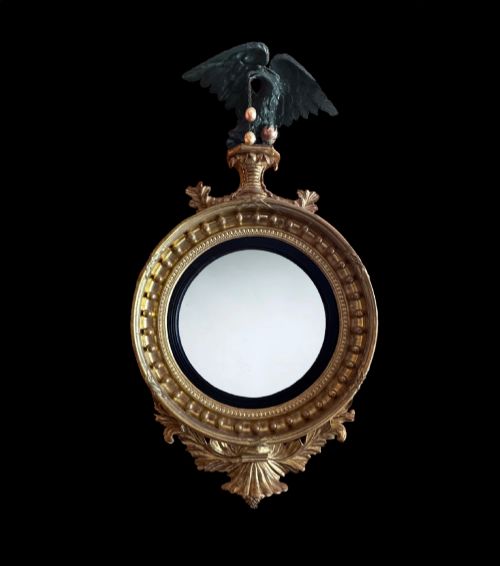
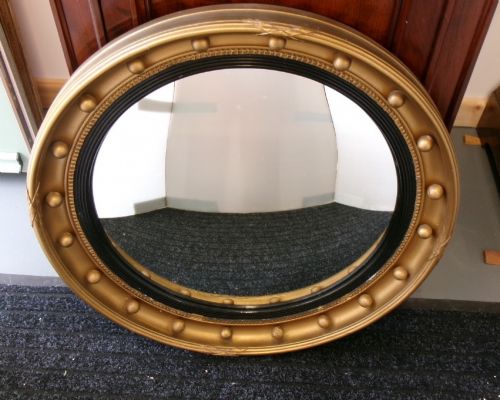
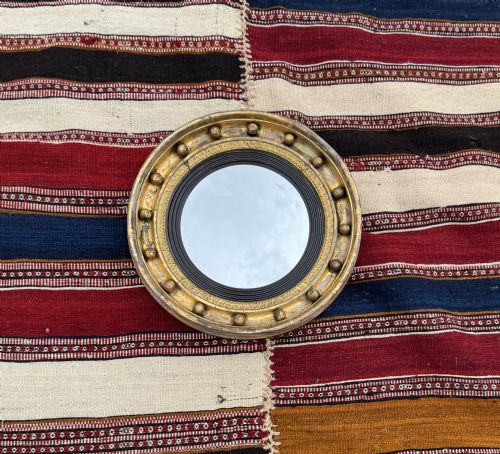
An ebonised convex mirror presents a curved reflective glass plate housed within a circular wooden frame, often accompanied by gilt details and decorative crests. When searching for an ebonised convex mirror, a buyer encounters wall mirrors originating predominantly from the Regency period, alongside Victorian and later revivals.
The form frequently incorporates ebonised wood or ebonised slips alongside giltwood and gesso, producing a striking contrast between dark frames and bright metallic highlights. These pieces function as prominent wall mirrors, historically positioned to monitor domestic spaces or illuminate dark corners with distorted panoramic reflections.
How they were made
Cabinet makers constructed the circular frames from timber, applying layers of gesso to build up smooth surfaces for gilding and ebonising. The dark sections rely on ebonised wood or specialised finishes to imitate ebony, contrasted with applied giltwood mouldings.
Makers set curved mirror glass into the rebated frame, frequently retaining an ebonised slip directly adjacent to the glass plate to frame the reflection. Brass components and carved wooden ornaments, such as eagles or candle sconces, completed the structural assembly.
Ebonised Convex Mirror Retail Price Guide 2026
Typical asking prices for ebonised convex mirror among the pieces listed under this phrase on Sellingantiques today, from the lower quarter to the upper quarter. They describe what is for sale here now, not the wider market.
Materials recorded across these listings include ebonised wood, giltwood, gesso, brass, and curved mirror glass.
What varies in quality
The crispness of the carved ornamentation defines the upper tier of these mirrors, particularly in complex details like eagle surmounts and leafy gesso foliage. Finer examples display meticulous control over the juxtaposition of deep ebonised surfaces and bright giltwood.
The optical purity of the convex glass plate and the integrity of the original frame construction distinguish superior examples from later reproductions. Proportions matter significantly, with well-balanced scale separating standard domestic items from grander architectural pieces.
The Ebonised Convex Mirror Glossary
- Ebonised wood
- Timber treated with stain, dye or paint to achieve the dense black appearance of ebony. This finish provides a sharp contrast against giltwood elements in period frames.
- Convex glass
- A curved reflective plate that bends light to display a wide-angle, panoramic view of the surrounding interior. It is often referred to in historical contexts as a sorcerer's mirror.
- Gesso
- A plaster-based mixture applied to wooden frame substrates to create a smooth surface for gilding. It allows craftsmen to model intricate low-relief decorations.
- Giltwood
- Wood decorated with a thin layer of gold leaf applied over a prepared gesso ground. It catches and reflects ambient room light.
- Ebonised slip
- A thin inner moulding finished in black positioned directly next to the mirror glass. It serves to separate the reflective surface from the outer gilt frame.
- Girandole
- A wall mirror equipped with attached candle sconces or branch candleholders. The reflective glass amplifies the light cast by the candles.
Ebonised Convex Mirror: Frequently Asked Questions
What is a convex mirror used for?
Historically, a convex mirror provided servants with a wide-angle view of a dining room or parlour to anticipate the needs of guests.
In modern interiors, these pieces function primarily as decorative focal points that bounce natural light across a room and create an illusion of expanded space.
How do I date an ebonised convex mirror?
Dating relies upon examining the construction techniques of the wooden frame, the composition of the gesso, and the characteristics of the mirror glass itself. Regency examples often feature deep circular mouldings and elaborate crests, while Victorian and Edwardian pieces show subtle variations in scale and secondary woods.
Checking the reverse of the frame for original backing boards and old fixings also helps establish the correct period of manufacture.
Why are they called sorcerers mirrors?
The curved glass produces a distorted, wide-angle reflection that captures an entire room within a single circular frame. This optical effect earned the pieces the colloquial title of sorcerer's mirrors or convex butler's mirrors during the nineteenth century.
Such descriptors highlight their dual role as optical novelties and sophisticated wall furnishings.
Where should I hang a convex mirror?
These mirrors command attention and work best hung at eye level on a principal wall where the curved glass can capture passing light and activity. Placing them opposite a window or fireplace maximises their ability to illuminate darker corners of a room.
Due to their weight, particularly those with heavy gesso and wooden frames, they require secure fixings anchored directly into structural wall supports.