



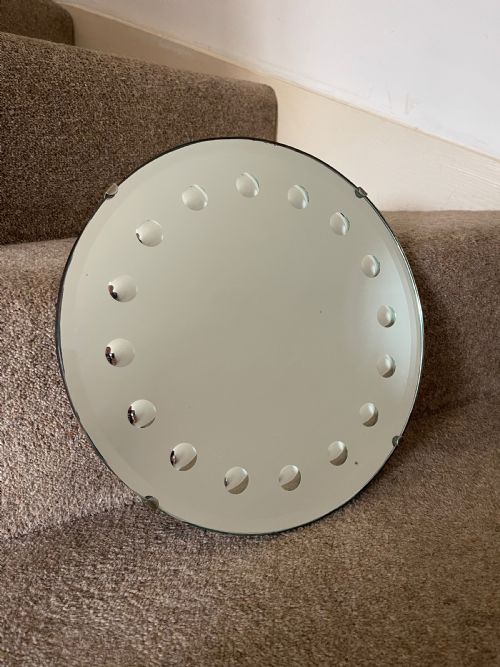


Vintage Convex Glass Mirror
A vintage convex glass mirror gathers the whole room into its gleaming eye, offering a distortion that collectors and decorators prize.
Vintage Convex Glass Mirror
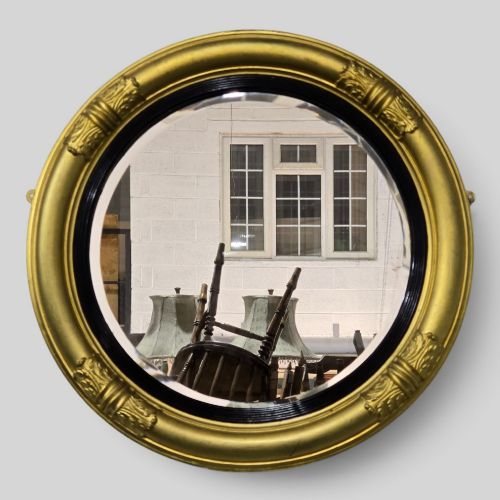
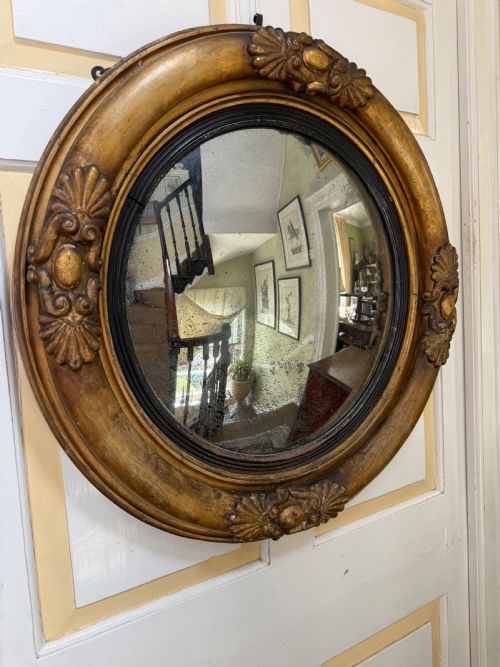
When you search for a vintage convex glass mirror, you encounter pieces that range from Regency giltwood frames to Victorian sorcerer mirrors and mid-century fairground examples. These circular looking-glasses bend reflections to curve the walls and furniture back into the room, creating an immersive focal point. The form spans various centuries, appearing in grand Regency proportions as well as smaller nineteenth-century designs.
The selection on this page demonstrates how diverse these objects remain in practice. You find wall mirrors alongside wheel barometers encased in mahogany, highlighting the crossover between functional instruments and decorative wall furnishings. Styles drift from strict Regency and Grand Regency through to Art Deco and mid-century revivals.
How they were made
Frames rely heavily on giltwood and gesso applied over a wooden base, often finished with gold leaf to catch the light. Ebonised wood and solid mahogany provide darker, more austere alternatives to the bright gilded surfaces, particularly visible in nineteenth-century wheel barometers and circular wall frames.
The curved plates themselves require specialist glass-blowing and shaping techniques to achieve the characteristic convex distortion. Brass fittings and metal elements occasionally secure the frames or mount secondary details like thermometer scales.
Vintage Convex Glass Mirror Retail Price Guide 2026
Typical asking prices for vintage convex glass mirror among the pieces listed under this phrase on Sellingantiques today, from the lower quarter to the upper quarter. They describe what is for sale here now, not the wider market.
Listings feature periods from the Regency era through to the 1930s, utilising materials such as giltwood, mahogany, and brass.
What varies in quality
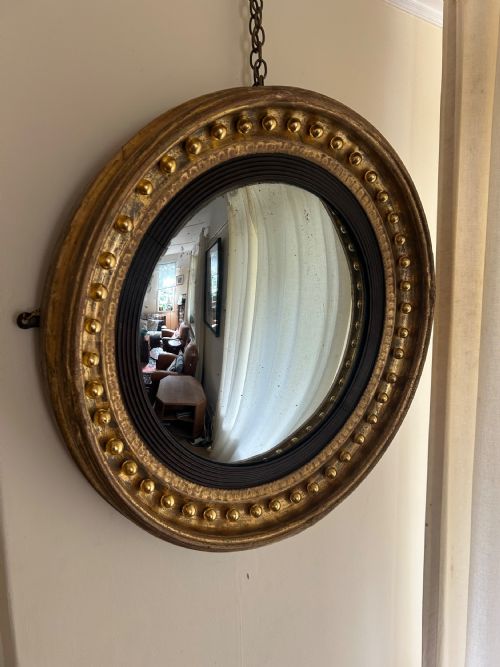
The crispness of the gesso moulding and the depth of the original gilding set finer examples apart from later reproductions. Carved details around the frame, such as reeded bezels or applied spheres, reveal the hand of a more accomplished maker.
The clarity and integrity of the convex glass plate itself dictate the visual success of the piece. Older plates carry subtle ripples and dark spots that denote genuine age, distinguishing them sharply from modern flat or machine-curved substitutes.
The Vintage Convex Glass Mirror Glossary
- Convex mirror
- A circular looking-glass with an outward-curving surface that reflects a wide, fish-eye view of the interior space. It was historically believed to protect homes from evil spirits.
- Giltwood
- Timber that has been coated with a thin layer of gold leaf or gold paint. It provides a luminous surface that defines classical frames.
- Gesso
- A plaster mixture applied to wood frames to create a smooth surface for subsequent gilding and carved detail. It allows for sharp decorative moulding.
- Sorcerer mirror
- An alternative term for a convex mirror, drawing on its magical association with divination and distortion. These pieces often feature spherical convex plates.
- Wheel barometer
- A weather-measuring instrument housed in a large wooden case featuring a circular dial face, frequently paired with a convex mirror above. Mahogany and onion-top cases are typical variants.
Vintage Convex Glass Mirror: Frequently Asked Questions
What is a convex mirror?
A convex mirror is a circular looking-glass with a curved surface that bends light outwards to capture a wide-angle view of the room. This optical distortion creates a compact, panoramic reflection of the entire interior.
Historically, these pieces served both as decorative focal points and as protective household charms. They appear frequently in Regency and Victorian designs.
How do I hang a heavy giltwood mirror?
Hanging a heavy giltwood frame requires secure fixings directly into wall studs or the use of appropriate heavy-duty masonry anchors. The weight of the timber and gesso demands robust support.
Positioning the glass at eye level ensures the curved reflection engages the room effectively. Professional installation is often advisable for larger nineteenth-century scales.
Are wheel barometers the same as mirrors?
Wheel barometers combine weather-measuring dials with integrated glass elements, frequently incorporating a convex mirror into the upper portion of the mahogany case. While their primary function was atmospheric monitoring, they functioned equally as decorative wall furniture.
They share materials like mahogany and brass with standalone wall mirrors of the same period.
How do I date an antique convex mirror?
Dating relies on examining the construction of the wooden frame, the composition of the gesso, and the characteristics of the glass plate. Regency examples often display distinct giltwood moulding and ball-turned bezels.
Later Victorian and twentieth-century interpretations introduce alternative woods, ebonised finishes, and varied proportions. Comparing the backboards and fixings provides further clues to the period.