


Ebonised Card Table
An ebonised card table brings dark polish and clever folding surfaces to a room, offering both a compact side stand and a full gaming top.
What an ebonised card table is
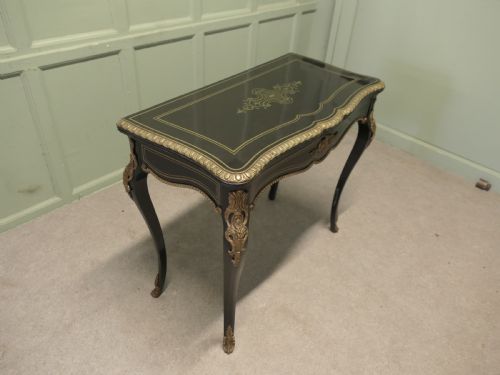
An ebonised card table is a folding furniture piece designed for entertainment and display, appearing frequently from the nineteenth century into the Edwardian era. These items function as console, occasional, or side tables when closed, then open to reveal surfaces lined for cards or chess.
The most common versions on this page belong to the Victorian and Aesthetic Movement periods, often incorporating gilt highlights, brass inlay, or amboyna wood. Makers such as Gillow and James Shoolbred produced notable iterations during the late nineteenth century.
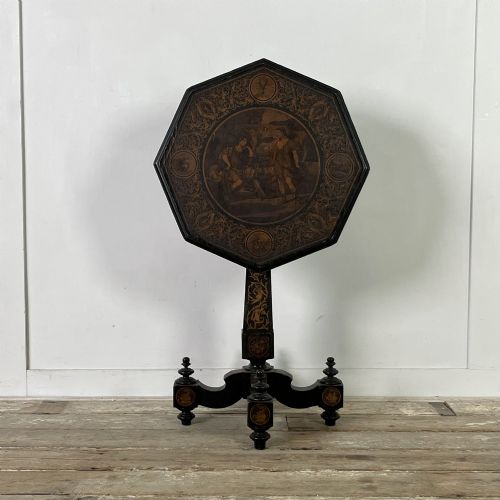
Styles range from French Napoleon III and Louis XV designs to English Aesthetic Movement and papier mâché pieces. Buyers will encounter various configurations, including envelope tops and rotating folding leaves supported by swivel mechanisms.
How they were made
Cabinet makers achieved the characteristic black finish by staining timber, such as mahogany or walnut, to imitate ebony. Surfaces were often decorated with contrasting inlays of brass, mother-of-pearl, and parcel gilt highlights.
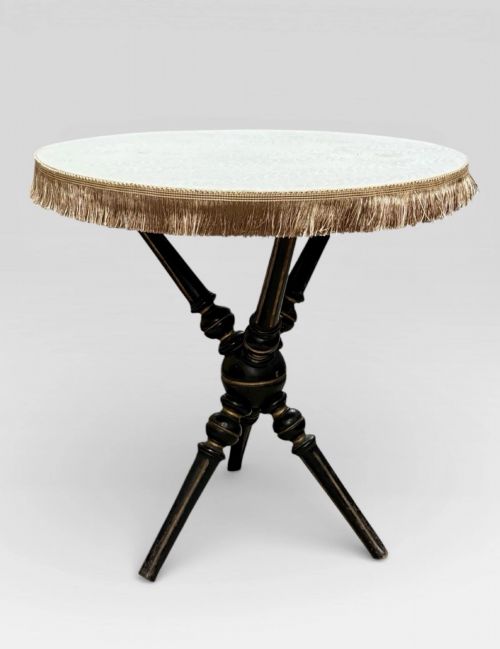
Interiors frequently feature baize or fabric linings for playing cards, sometimes bordered with passementerie fringe. More elaborate examples incorporate marquetry, ormolu mounts, and secondary timbers like amboyna.
Retail Price Guide 2026
Typical UK retail prices for ebonised card table, calculated from the Sellingantiques database of over a million retail prices indexed since 2003. This retail price guide relies exclusively on Sellingantiques data; no external sources or auction records are used, so the figures do not describe the wider market.
Some Victorian card tables hid secret wells beneath their rotating tops for stashing cards away from prying eyes.
What varies in quality
The standard of an ebonised card table rests on the precision of its joinery and the complexity of its inlay. Pieces featuring detailed brass work, mother-of-pearl, and amboyna veneers demonstrate superior workshop execution.
Stability in the folding mechanism and the retention of original surface treatments distinguish finer examples. Maker attribution, such as stamps from established firms, elevates the standing of an item.
Gillow and Co·Holland and Sons·James Shoolbred·Lamb of Manchester
The Ebonised Card Table Glossary
- Ebonised wood
- Timber treated with stain or paint to resemble solid ebony. This dark finish gained popularity during the Victorian and Aesthetic periods.
- Baize
- A coarse woollen material used to line the playing surfaces of card tables. It provides a flat, durable texture for shuffling and dealing.
- Ormolu
- Gilded bronze mounts applied to furniture for decorative effect. This technique appears frequently on French nineteenth-century pieces.
- Marquetry
- Inlay work using various woods to create pictorial or geometric patterns on the table surface. It highlights the skill of the cabinet maker.
- Envelope top
- A clever folding tabletop design featuring four triangular flaps that swivel open to reveal the baize-lined interior.
Frequently Asked Questions
How do I open an ebonised card table?
Most tables feature a swivel top that rotates ninety degrees to reveal a concealed storage well beneath. The hinged leaf then unfolds flat to double the surface area for games.
Envelope versions operate by rotating the triangular flaps outwards simultaneously, which causes the central mechanism to lift the lining into place.
What games were played on these tables?
These pieces accommodated popular parlour pastimes of the nineteenth century, including whist, cribbage, and chess. The lined surfaces provided traction for cards and counters.
Many designs incorporated inlaid chessboards or small compartments within the framework for storing playing pieces and accessories.
Where should I place an ebonised card table?
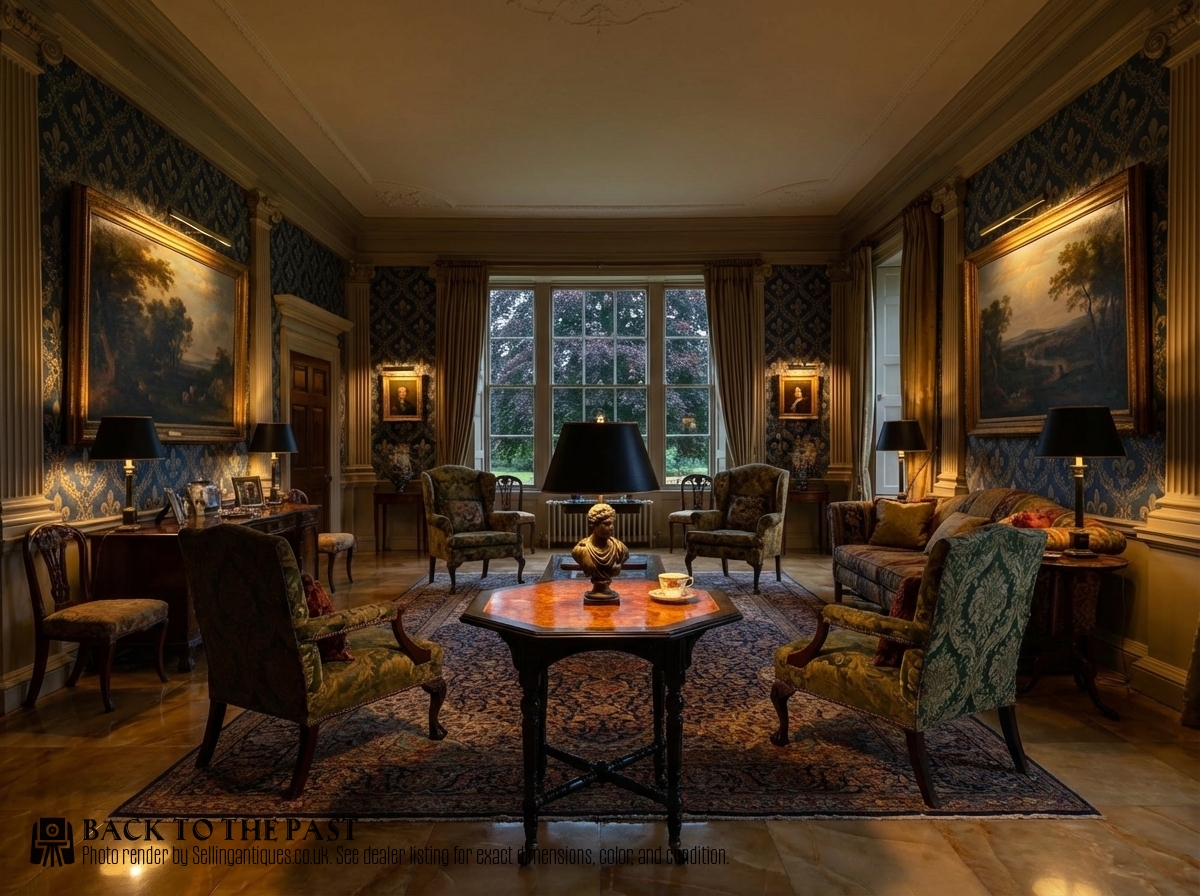
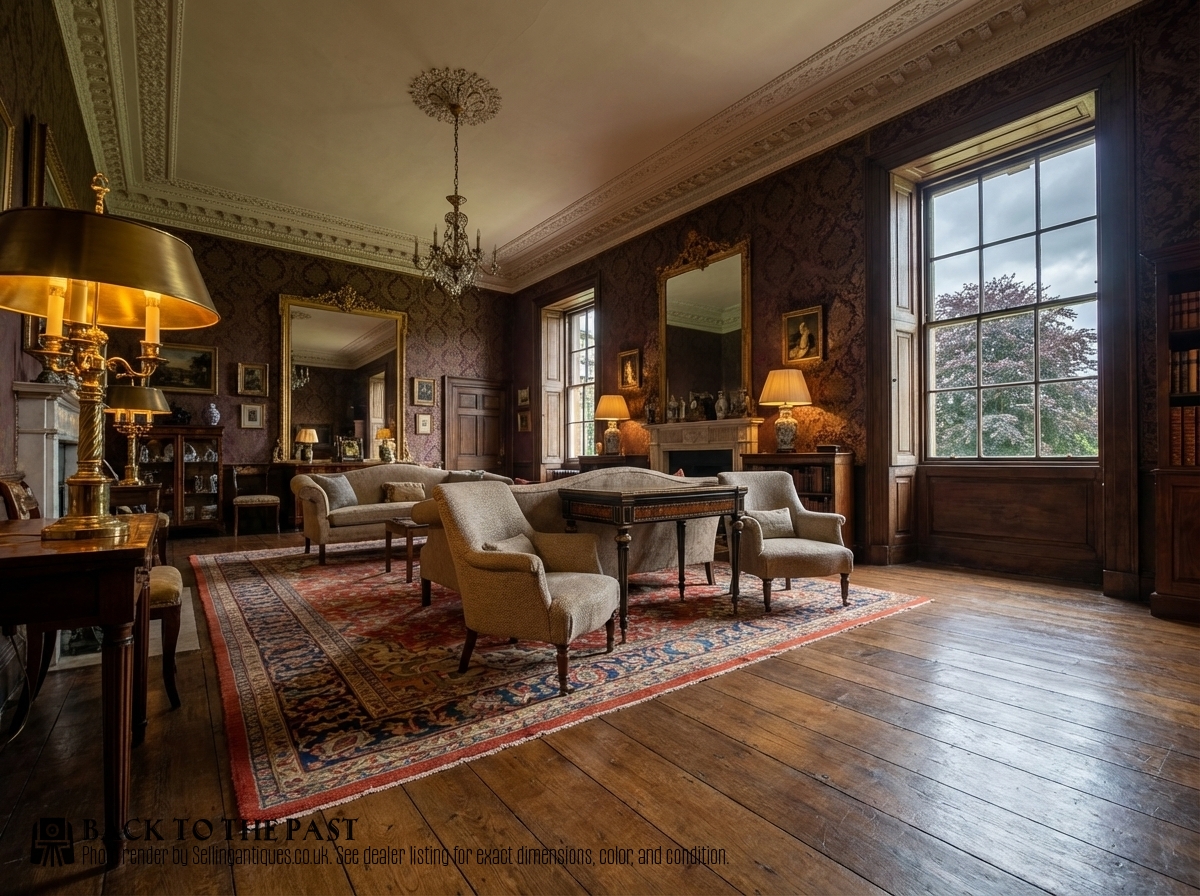
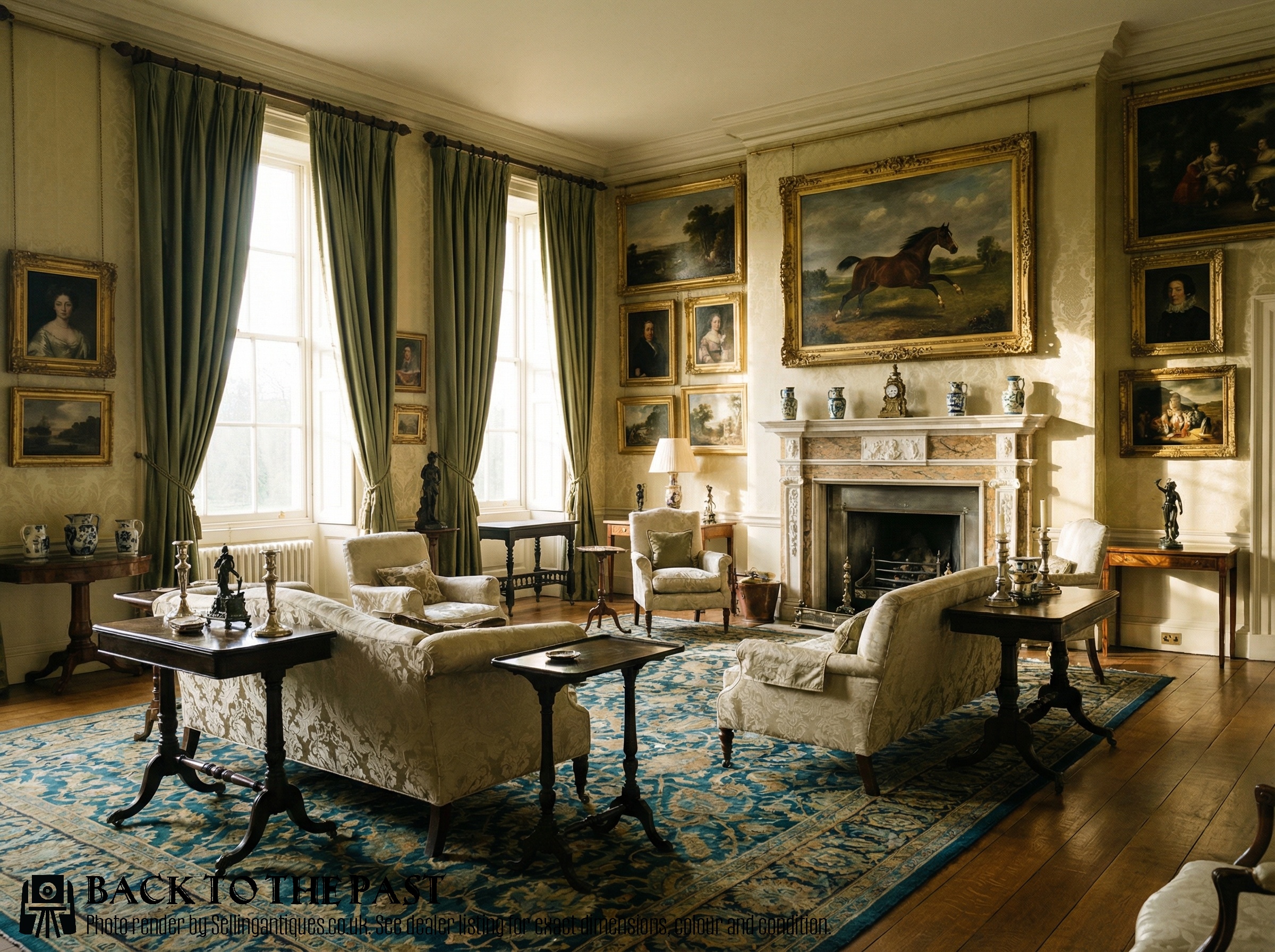
Placed against a wall, the closed table functions as an occasional side or hall console. The dark finish contrasts well with lighter interiors and patterned wallpapers.
When guests arrive, the table moves easily to the centre of a room to serve its primary function as a gaming surface.
How do I distinguish Victorian from Edwardian examples?
Victorian and Aesthetic Movement pieces generally display heavier proportions, rich amboyna veneers, and elaborate brass or mother-of-pearl inlay. They date from the mid to late nineteenth century.
Edwardian items tend towards lighter construction, simpler geometric lines, and the characteristic envelope folding mechanism popular after nineteen hundred.