


Earthenware Plant Pot
These earthenware plant pot pieces bring character to a room, ranging from moulded Victorian jardiniere designs to French provincial planters.

Earthenware Plant Pot
An earthenware plant pot takes many forms on this page, appearing as jardiniere vessels, cachepots, and planters designed to house greenery. Most examples date from the Victorian era and the late nineteenth century, alongside later twentieth-century French provincial items.
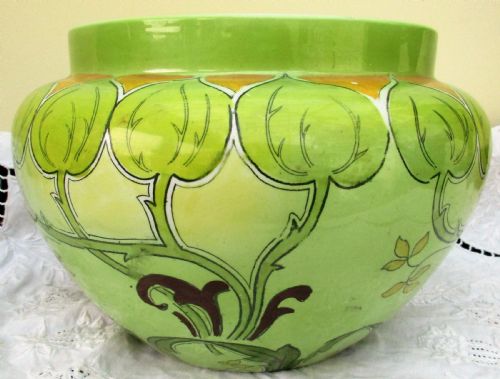
Makers shaped these objects in styles spanning Victorian naturalism, Art Nouveau, and Arts and Crafts aesthetics. Collectors encounter both single vessels and pieces accompanied by matching pedestal stands or separate bases.
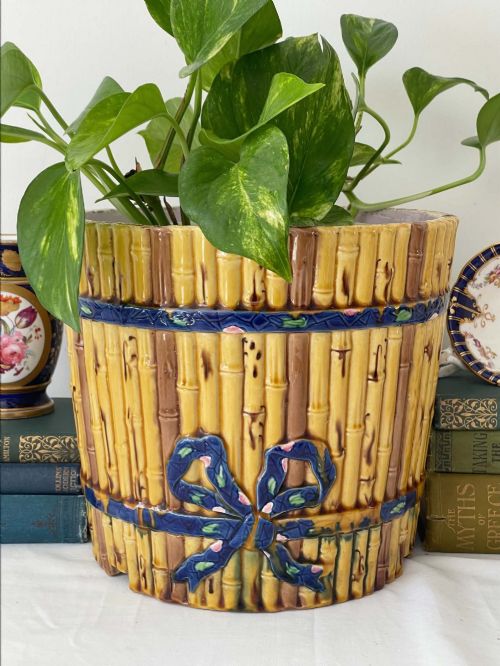
The selection includes English pottery works alongside pieces originating from Scottish kilns, France, and Japan. Forms range from simple naturalistic pots to elaborate moulded bamboo and swan designs.
How they were made
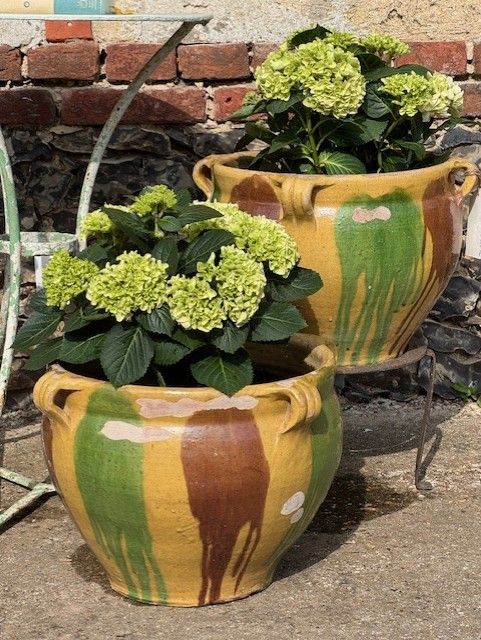
Potters shaped these vessels primarily from earthenware, terracotta, and stoneware clays, often employing majolica glazes to achieve rich coloured surfaces. Some pieces utilise dribble glaze techniques or feature detailed moulded motifs.
Kiln firing set the body before glazes were applied, creating durable ceramic vessels designed to hold damp soil and plants. Makers marked many pieces with factory stamps or date ciphers pressed directly into the clay base.
The listings span from 1820 through the Victorian era and Edwardian period up to mid-twentieth-century French provincial wares.
What varies in quality
The distinction between standard production and top work lies in the crispness of the modelling and the depth of the glaze. Master potters achieved subtle tonal variations and sharp relief details that lesser commercial pieces lack.
Design attribution also separates ordinary pots from notable studio outputs, particularly where factory marks or specific decorators are identified. The complexity of the form, such as integrated handles or figural elements, further distinguishes the range.
W.A. Adderley·Doulton Burslem·Doulton Lambeth·Royal Doulton·Minton·Makuzu Kozan II·Royal Worcester·George Jones·Linthorpe Pottery
The Earthenware Plant Pot Glossary
- Jardiniere
- A large ornamental pot or stand designed to hold a plant or flowers indoors. These vessels often sit on floors or heavy tables rather than window sills.
- Majolica
- A type of earthenware covered with an opaque tin glaze and painted with metallic oxide colours. The technique produces glossy, vibrant surfaces popular during the nineteenth century.
- Cachepot
- A decorative container used to hide an ordinary flowerpot. Unlike a direct planter, a cachepot typically lacks a drainage hole in the base.
- Terracotta
- Unglazed brownish-red fired clay. This porous material breathes well and darkens when exposed to moisture.
- Stoneware
- A heavy, dense ceramic fired at high temperatures until vitrified. This process renders the material waterproof without requiring a surface glaze.
Earthenware Plant Pot: Frequently Asked Questions
Can I plant directly into a jardiniere?
Many older pieces lack drainage holes because they were originally designed as cachepots to hold smaller potted plants. Placing a separate inner pot inside protects the historic ceramic from moisture damage.
Earthenware is porous and can retain salts from damp soil over decades, which may affect interior glazes if used without a liner.
How do I date a Victorian planter?
Makers often stamped registry marks, factory ciphers, or year codes directly into the wet clay base before firing. Stylistic clues such as naturalistic plant motifs or Art Nouveau curves also help narrow the decade of production.
Examining the underside for crazing and wear patterns offers further evidence of age and authenticity.
What is majolica glaze?
Majolica is a colourful lead glaze applied over an opaque white tin enamel ground. This technique creates brilliant greens, blues, and purples characteristic of nineteenth-century decorative pottery.
The glossy finish protects the earthenware body while highlighting moulded details like bamboo stalks and leaves.
How should I clean an antique pot?
Gentle dusting with a soft cloth removes surface dirt without harming fragile glazes or historic earthenware bodies. Harsh chemical cleaners and abrasive scouring pads must be avoided entirely.
If washing is necessary, use lukewarm water and dry the piece thoroughly to prevent moisture penetrating hairline cracks.