
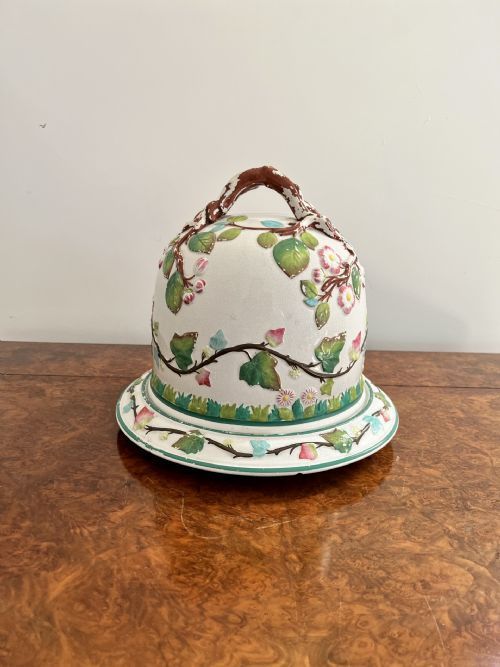


Earthenware Cheese Bell
An earthenware cheese bell is a domestic serving piece designed to keep cheese fresh, combining utility with decorative presence on the dining table.
Earthenware Cheese Bell
When you search for an earthenware cheese bell, you encounter traditional lidded vessels created to protect cheese from drying out during the nineteenth and early twentieth centuries. These pieces typically comprise a matching domed cover and a flat base plate, forming a substantial centrepiece for the Victorian or Edwardian dining table.
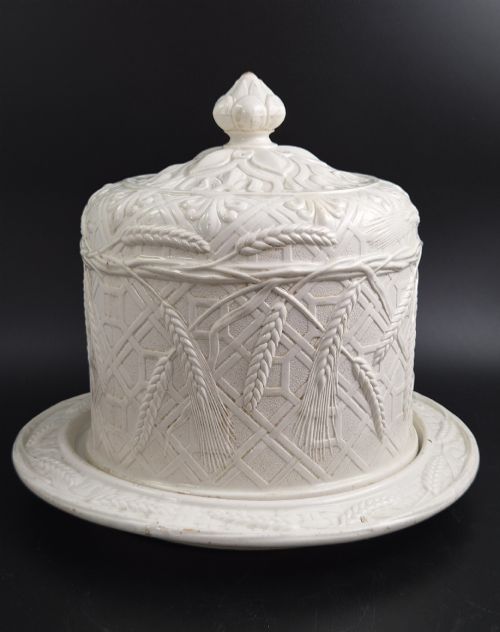
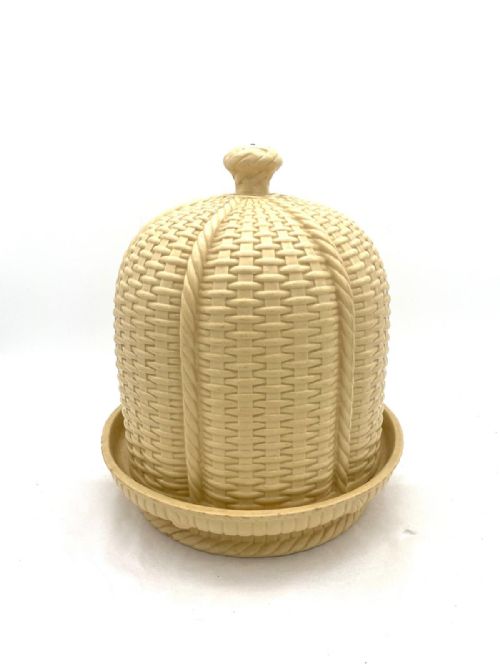
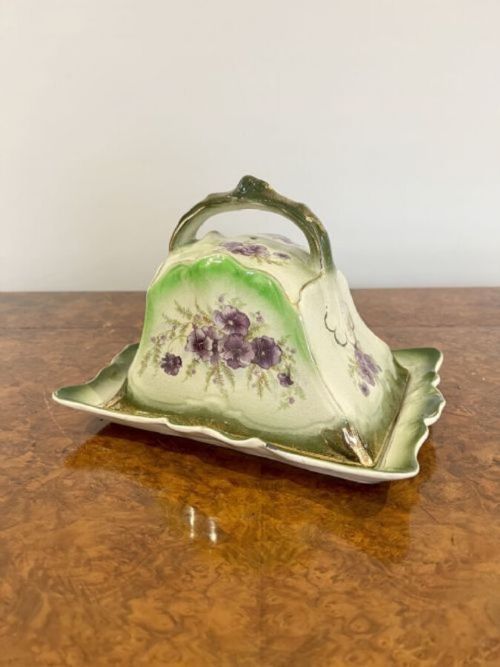
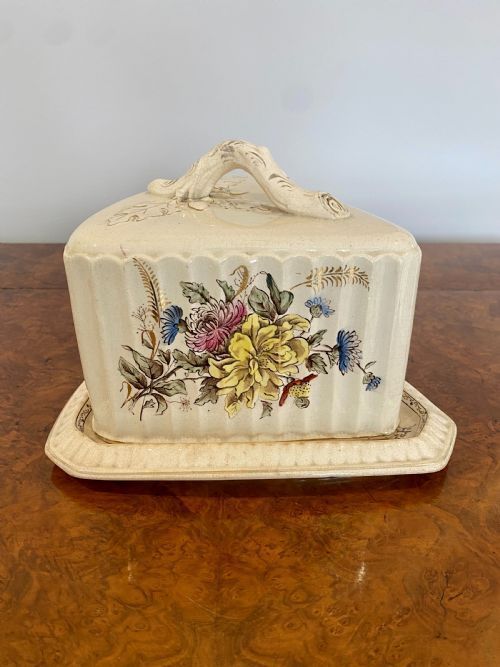
On this page, you are most likely to meet pieces originating from the Victorian period, frequently dated around eighteen eighty, alongside robust ironstone and ornate majolica examples. The forms vary from simple white pottery to heavily moulded basket weave and classical relief designs intended for daily use or formal dining.
Materials and construction
Potters shaped these vessels using traditional earthenware and heavy ironstone bodies, fired to provide durability for heavy household service. The resulting forms were finished with specialised surface treatments including glossy majolica glazes, drabware bodies, and occasional gilding.
Moulding techniques allowed makers to produce intricate surface textures such as wheat and lattice patterns or basket weave relief. These decorative elements were fused directly into the ceramic body before the final glazing and firing stages.
Recorded forms include simple white ironstone domes alongside heavily textured basket weave and drabware designs.
Distinguishing quality in production
The distinction between standard domestic wares and superior examples lies in the crispness of the moulding and the depth of the glaze application. Finer pieces display sharply defined relief work, such as detailed basket weave or botanical motifs, without blurring across the ceramic surface.
Colour saturation and glaze coverage further separate the tiers of production, particularly within majolica pieces where rich tones define the overall visual appeal. The proportion and balance between the domed cover and its matching stand also indicate the care taken by the original pottery.
James Dudson
The Earthenware Cheese Bell Glossary
- Earthenware
- A porous type of pottery fired at lower temperatures, requiring a vitreous glaze to become impervious to liquids. It forms the primary ceramic body for the majority of these pieces.
- Majolica
- A colourful, highly glossy lead-glazed earthenware popular during the nineteenth century. This technique produces vibrant green, brown, and ochre tones on relief-moulded surfaces.
- Drabware
- A utilitarian stoneware or earthenware body coloured in muted greyish-brown or olive shades. It gained popularity for domestic kitchen and dining wares during the nineteenth century.
- Ironstone
- A heavy, durable type of earthenware patented to resist chipping and cracking. It often appears in plain white finishes suitable for rigorous daily service.
- Cheese Dome
- The large, bell-shaped cover designed to fit over a base plate. It traps moisture and protects the cheese while seated on the dining table.
Earthenware Cheese Bell: Frequently Asked Questions
What is an earthenware cheese bell?
An earthenware cheese bell is a covered ceramic vessel designed in the nineteenth century to store and serve cheese at the dining table.
It typically consists of a domed lid with a handle and a matching flat stand to catch crumbs and hold the food.
How were cheese bells used?
These pieces were kept on the sideboard or dining table during and after meals to prevent cheese from drying out or attracting insects.
The tall dome trapped humidity and kept the interior cool while containing strong odours within the vessel.
How do I date an antique cheese dish?
Dating relies on stylistic clues such as registration marks, the type of glaze used, and the weight of the ceramic body.
Victorian pieces often feature majolica glazes or heavy ironstone with relief moulding like basket weave patterns.
Can I use an antique cheese bell today?
Many collectors use these pieces for their original purpose of serving cheese during gatherings, provided they are handled with care.
Hand washing is essential to protect the nineteenth-century glaze and prevent damage to the ceramic body.