


Antique Cheese Dish
An antique cheese dish brings the generous scale and character of nineteenth-century dining rooms directly to the modern table.
Antique Cheese Dish
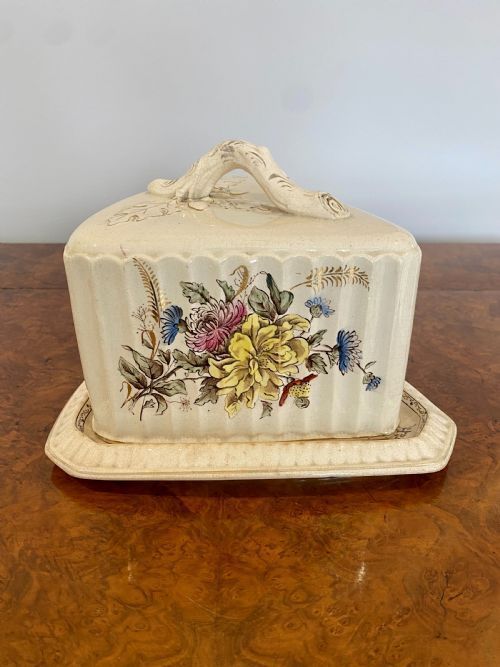
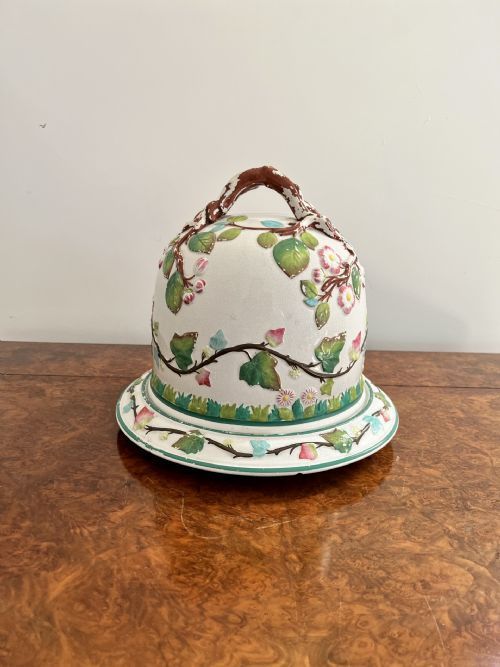
An antique cheese dish typically consists of a fitted domed cover paired with a matching stand or plate, designed to protect and present large cheeses. Most pieces found here belong to the Victorian era, spanning earthenware, ironstone, and majolica forms from the nineteenth century.
Makers produced these serveware items in substantial proportions to accommodate hard cheeses like Stilton or Cheddar. Alongside ceramics, domestic variants incorporate glass domes with silver plate or Old Sheffield Plate stands.
Materials and Techniques
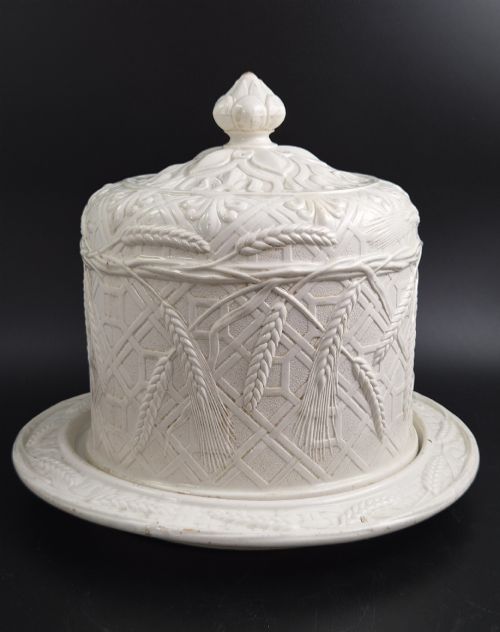
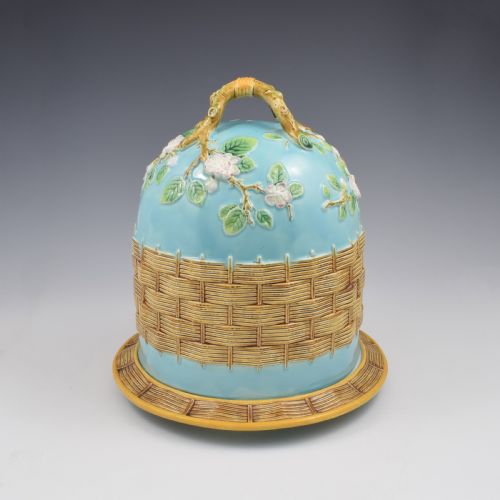
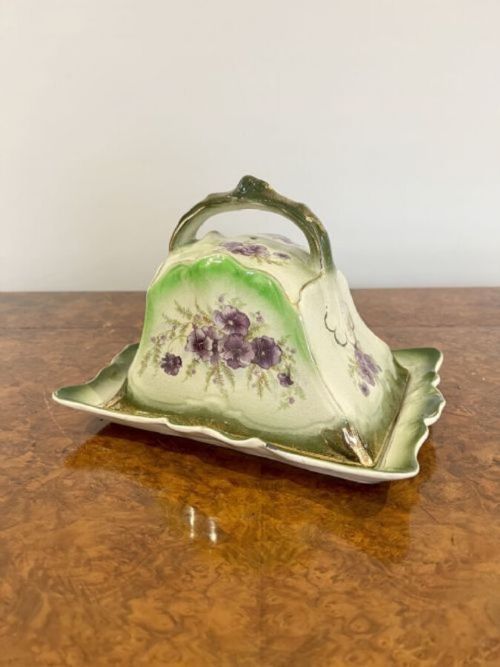
Potteries utilised durable ironstone, earthenware, and heavy stoneware to form the substantial bodies required for daily kitchen and dining use. Moulded details such as basket weave, wheat and lattice, or naturalistic apple blossom relief decorate the surfaces.
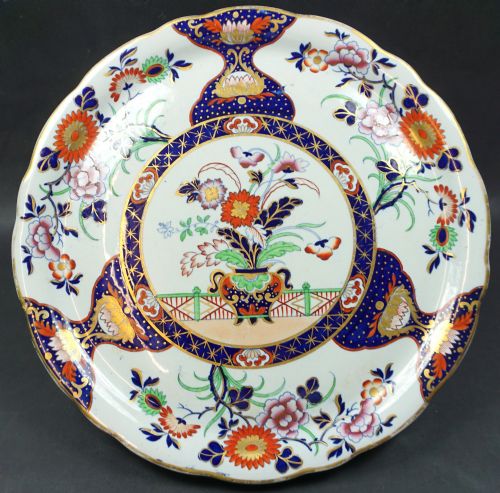
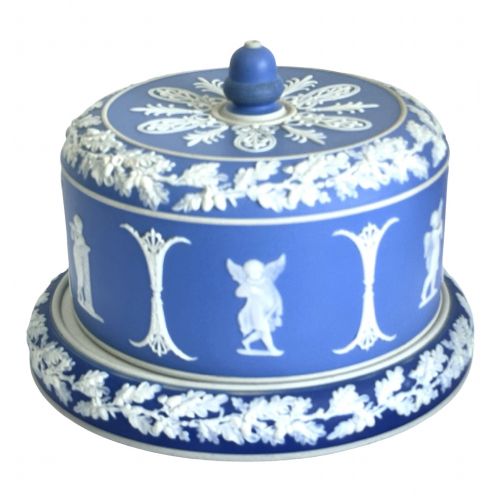
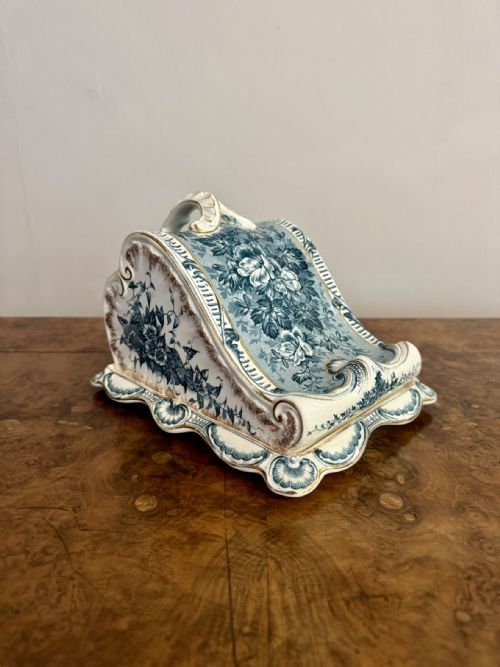
Majolica pieces receive rich coloured glazes over moulded earthenware, while jasperware relies on contrasting matte clay reliefs applied to solid coloured grounds. Hand colouring and intricate transfer printing add depth to patterns like the Pagoda design.
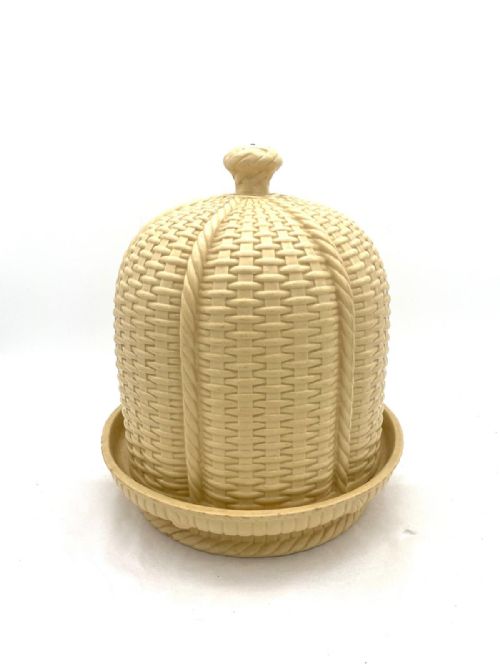
A basket weave drabware dome keeps your cheddar in historical agricultural style.
Craftsmanship and Proportion
Quality rests in the crispness of the moulded relief and the harmony between the dome and its matching stand. Superior examples maintain exact symmetry and deep, saturated glaze colours without muddiness.
Substantial weight and well-defined decorative motifs distinguish ambitious workshop productions from utilitarian kitchen vessels. The crispness of transfer-printed patterns and the precision of applied sprigs on jasperware mark the upper tier.
Hicks and Meigh·George Jones·Wedgwood·James Dudson·Copeland·Mason·W R Carlton Ware·Doulton Burslem·John Maddock·Walker and Hall
The Antique Cheese Dish Glossary
- Cheese bell
- Another term for the domed cover that rests atop the serving plate. It traps moisture and aroma.
- Ironstone
- A dense, durable type of ceramic patented in the nineteenth century to rival imported Chinese porcelain. It forms sturdy domestic tableware.
- Majolica
- Low-fired earthenware covered with an opaque lead glaze rich in metal oxides. This technique produces vibrant greens, browns, and purples.
- Jasperware
- A fine-grained, unglazed stoneware developed by Wedgwood featuring applied white ceramic reliefs against coloured bodies. The contrasting classical or botanical motifs remain highly distinct.
- Drabware
- Earthenware glazed in muted grey, olive, or brownish tones popular during the nineteenth century. It provides a quiet background for moulded decorative details.
Antique Cheese Dish: Frequently Asked Questions
What is an antique cheese dish used for?
These pieces served to store and present large blocks of cheese on the dining table while keeping rinds moist. The heavy dome trapped aromas and protected the dairy from insects.
Today, they function as striking centrepieces or serving platters for dinner parties and gatherings.
How can I date an ironstone cheese dish?
Examine the maker stamps and registry marks impressed or printed on the base of the stand. Stylistic clues like aesthetic movement patterns or deep Victorian moulding also point to specific decades.
Heavier white ironstone bodies without colourful glazes generally date from the mid-to-late nineteenth century.
Are glass and silver plated cheese dishes Victorian?
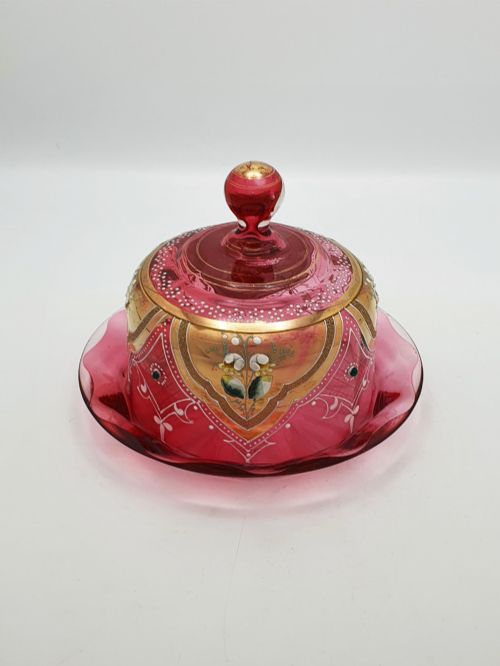
Many glass and silver plated or Old Sheffield Plate combinations date from the late nineteenth and early twentieth centuries, including the Edwardian period. They reflect a shift towards brighter, mixed-material table settings.
Cut glass domes paired with silver stands offer a sparkling alternative to traditional earthenware.