
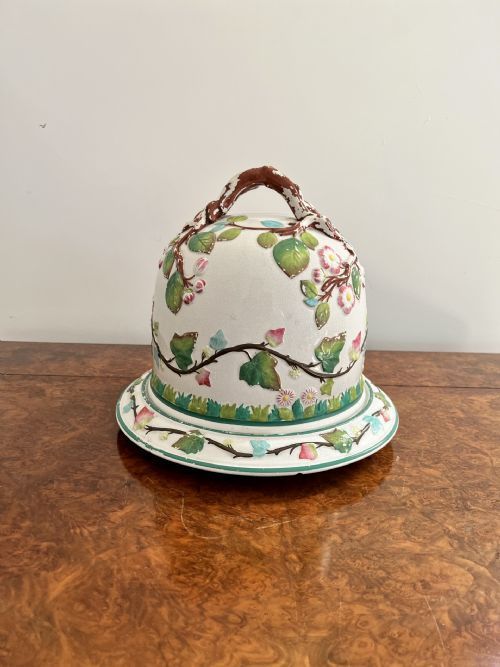


Covered Cheese Keeper
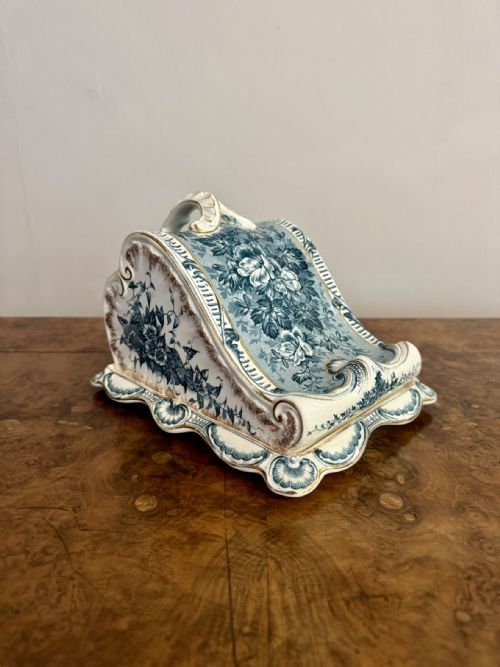
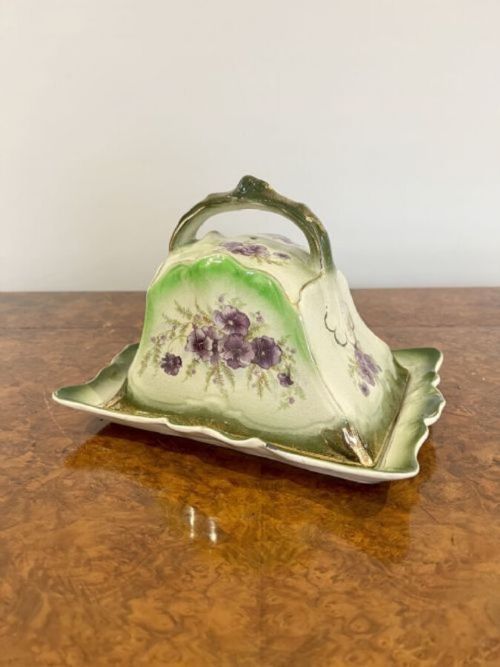
A covered cheese keeper is a domestic vessel designed to preserve cheese at the table, offering a decorative cover paired with a matching stand.
Covered Cheese Keeper
A covered cheese keeper serves as a protective domicile for cheese, comprising a domed cover and a flat base or stand. These pieces belong predominantly to the Victorian and Edwardian eras, spanning from the mid nineteenth century into the early twentieth century.
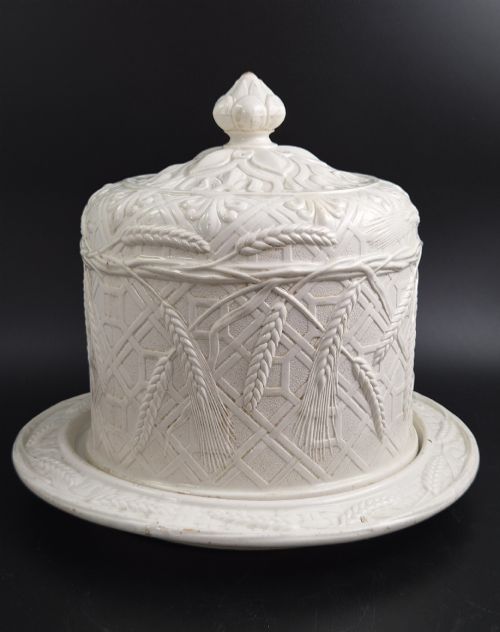
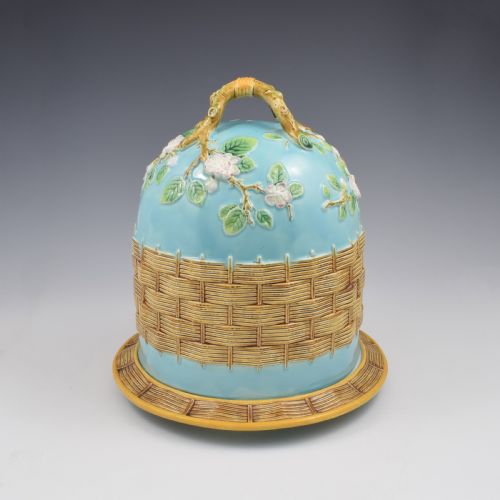
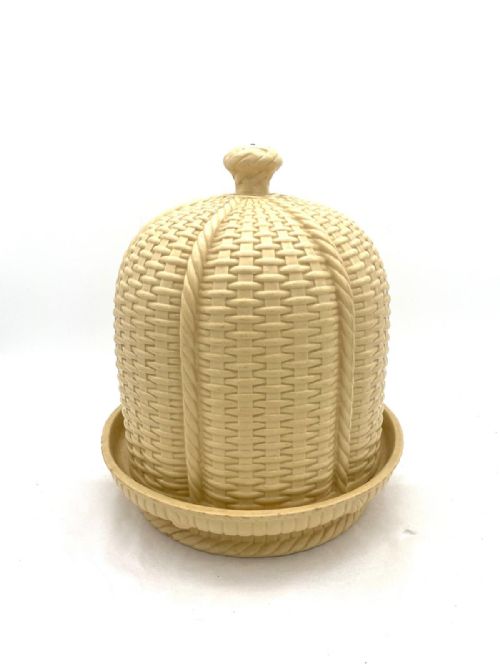
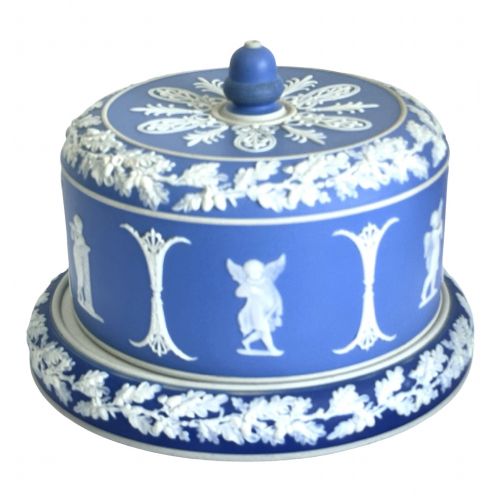
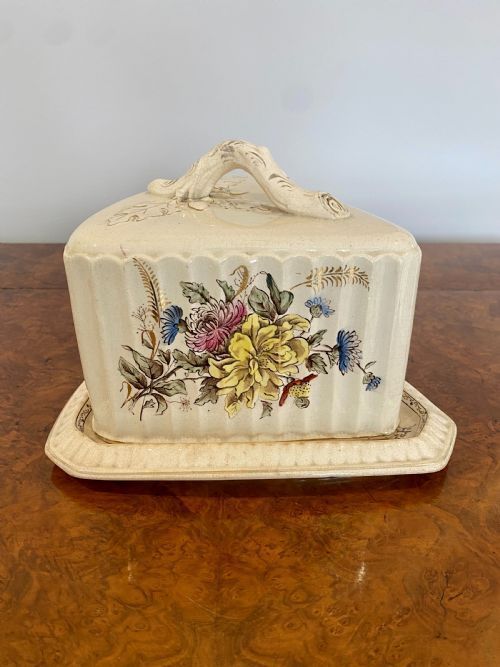
The selections encountered here include large earthenware and ironstone domes, intricate majolica models, and refined jasperware variations. Makers and potteries utilise forms such as basket weave, apple blossom, wheat, and lattice decoration to ornament the ceramic surface.
Serveware of this category often arrives as a complete cheese dome and stand combination, designed to contain large wheels or portions of cheese like Stilton. Buyers encounter both robust utilitarian ironstone and brightly coloured lead glazed majolica finishes.
How they were made
Potters shape these vessels using earthenware, ironstone, stoneware, and ceramic bodies, often applying a glossy glaze to seal the porous clay beneath. Majolica examples receive colourful metallic oxide glazes fired onto moulded relief surfaces such as basket weave or apple blossom motifs.
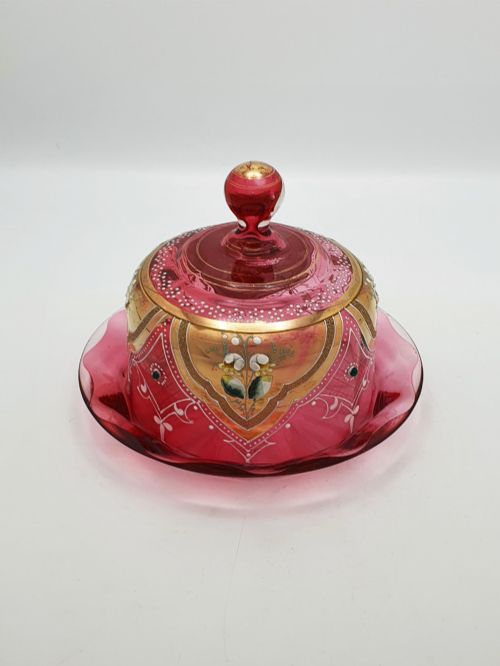
Alternative constructions combine glass covers with silver plate stands or incorporate delicate cranberry glass bodies suited for table service. Manufacturers like Wedgwood and James Dudson employ jasperware techniques to create contrasting white neoclassical reliefs against coloured matte ceramic grounds.
Victorian households expected cheese domes to look like miniature architectural follies guarding dairy.
What varies in quality
Quality reveals itself through the crispness of the moulded relief work, whether observing the delicate veins of apple blossom or the precise geometry of lattice patterns. Finer pieces demonstrate superior control during the glazing process, maintaining smooth, even surfaces across large structural forms.
The ambition of the design dictates distinction, separating simple utilitarian white ironstone keepers from elaborate majolica bells adorned with intricate botanical modeling and rich colour palettes. Heavier proportions and substantial physical scale further elevate certain examples within the category.
George Jones·Wedgwood·James Dudson·Copeland
The Covered Cheese Keeper Glossary
- Cheese dome
- A domed cover designed to fit over a matching stand to keep cheese fresh and protected during dining. This form is central to Victorian table service.
- Majolica
- A type of earthenware covered with an opaque tin glaze or colourful lead glazes, popular during the Victorian period. It is known for vibrant hues and moulded naturalistic decoration.
- Jasperware
- A fine-grained, unglazed stoneware developed by Wedgwood, typically featuring white relief ornaments against a coloured ground. It creates a striking contrast on decorative vessels.
- Ironstone
- A heavy, durable type of ceramic patented in the nineteenth century to imitate porcelain. It provides a robust body suitable for large domestic serveware.
- Drabware
- A type of pottery featuring a dull, brownish-grey or olive-coloured earthenware body, popular in the nineteenth century. It offers a muted background for moulded ceramic designs.
Covered Cheese Keeper: Frequently Asked Questions
What is a covered cheese keeper used for?
These vessels were utilised in Victorian and Edwardian dining rooms to store cheese at the table while containing odours and protecting the food from pests.
The matching base or stand catches crumbs and provides a stable platform for slicing portions during service.
How do I date a ceramic cheese dome?
Dating relies on identifying stylistic markers, ceramic bodies such as ironstone or majolica, and specific decorative motifs like wheat and lattice.
Victorian examples often display heavier proportions and naturalistic plant reliefs, while later Edwardian or twentieth century pieces introduce different glass and silver plate combinations.
Are cheese domes and cheese dishes the same?
The terms describe similar serveware, with cheese dishes generally referring to the complete set of base and cover.
Larger versions are often specifically termed Stilton domes due to the tall cylindrical shape required to house whole cheeses.
How should I clean an antique ceramic keeper?
Gentle washing with warm water and mild soap preserves the delicate glaze and any applied gold leaf or metallic decoration.
Avoid harsh abrasymers that might damage historical ceramic surfaces or nineteenth century coloured glazes.