


Blue Ceramic Cheese Dish
A blue ceramic cheese dish brings nineteenth-century dining tables to life with vibrant glazes, striking transfer prints, and practical lidded forms.
Blue Ceramic Cheese Dish
A blue ceramic cheese dish serves as a traditional table centrepiece designed to keep cheese fresh beneath a fitted domed cover. The selection available here spans the nineteenth century, including the Victorian era and earlier Regency periods.
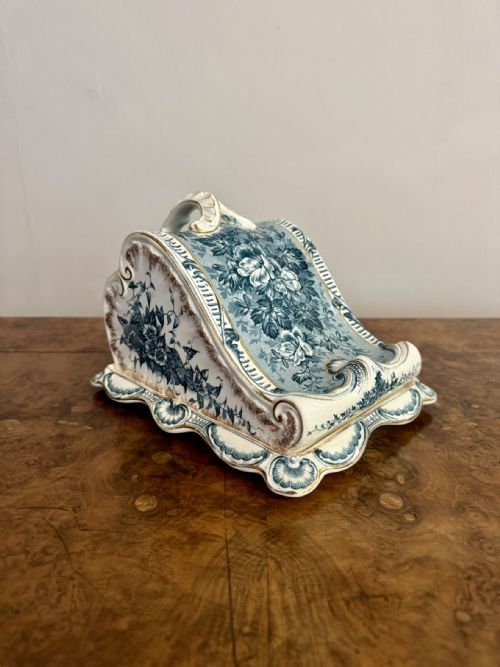
Most examples take the form of cheese domes, cheese bells, and substantial plates with matching covers. Earthenware, ironstone, and stoneware dominate the listings, frequently decorated in rich blue transfer-printed patterns or majolica glazes.
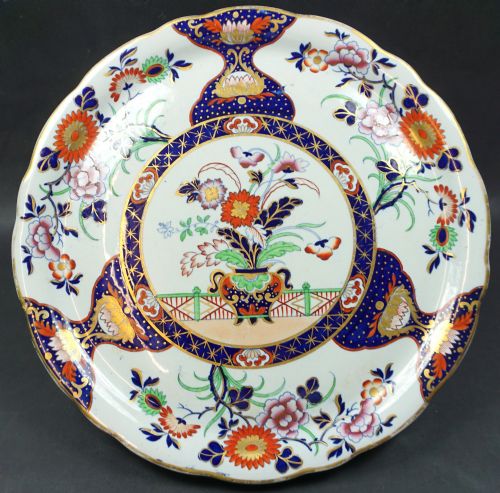
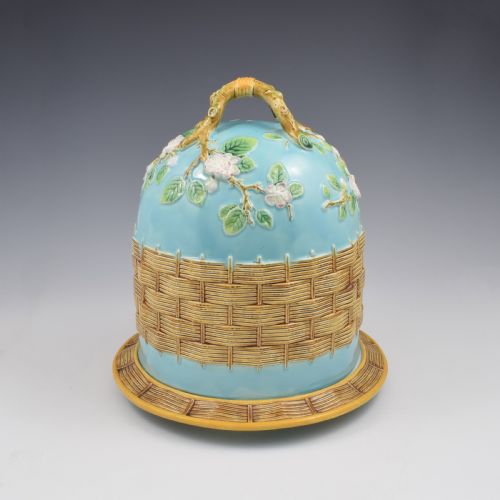
Makers such as Hicks & Meigh, George Jones, Wedgwood, and Mason's appear among the nineteenth-century works. Collectors will find both straightforward serveware and elaborate pagoda patterns or apple blossom motifs.
Materials and production methods
Potters shaped these vessels from earthenware, ironstone, and stoneware, applying glazes to seal the porous clay bodies. Many pieces incorporate hand-coloured details or enamel work over transfer-printed outlines.
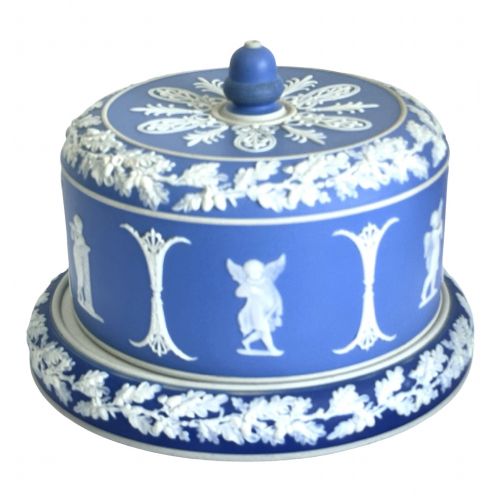
Moulded decoration creates the relief designs seen on jasperware and majolica pieces, while gilding adds metallic highlights to borders and handles. Skilled artisans fired these large domes at high temperatures to set the vibrant blue pigments.
Victorian diners clearly took their dairy very seriously, demanding heavy ceramic domes large enough to house an entire wheel of Stilton in style.
Judging quality and craftsmanship
The crispness of the moulded relief and the depth of the glaze separate ordinary kitchenware from exhibition-quality display pieces. Well-defined transfer prints and neatly applied hand colouring indicate skilled workshop production.
Proportion and scale also dictate worth, as exceptionally large cheese domes require advanced kiln control to prevent warping during the firing process. The presence of a matching stand that fits the cover precisely marks a higher standard of manufacture.
Hicks & Meigh·George Jones·Wedgwood·Mason's
The Blue Ceramic Cheese Dish Glossary
- Cheese dome
- A large ceramic cover placed over a matching plate to protect cheese at the table. This domed lid traps moisture and keeps the wedge fresh.
- Majolica
- A Victorian lead-glazed earthenware known for its bright, colourful botanical and naturalistic designs. The technique uses opaque coloured glazes fired directly over a white slip.
- Jasperware
- A fine-grained, unglazed stoneware developed by Wedgwood, typically featuring white neoclassical reliefs against a contrasting coloured background. It remains one of the most recognisable ceramic innovations of the nineteenth century.
- Ironstone
- A heavy, durable type of feldspathic stoneware patented in the nineteenth century to imitate Chinese porcelain. It withstands daily dining use exceptionally well.
- Chinoiserie
- A decorative style reflecting European imaginative interpretations of Chinese artistic traditions. It frequently appears on nineteenth-century serveware through pagoda and exotic landscape motifs.
Blue Ceramic Cheese Dish: Frequently Asked Questions
What is a cheese bell?
A cheese bell is an alternative term for a cheese dome, featuring a bell-shaped cover with a top handle that rests on a flat ceramic plate. The form was designed to trap humidity and keep soft cheeses from drying out during long Victorian meals.
These pieces sit centrally on the dining table following the main meal, often decorated with colourful glazes or moulded botanical motifs that match the dessert service.
How do I date a blue cheese dish?
Dating relies on identifying the ceramic body, glaze type, and factory marks stamped or printed underneath the base. Nineteenth-century examples frequently combine heavy ironstone bodies with transfer-printed Chinoiserie scenes or majolica glazes.
Stylistic cues such as the classic neoclassical reliefs on jasperware or the vibrant botanical modelling of the Victorian era help narrow down the decade of production.
Can I still use an antique cheese dish?
These ceramic vessels remain completely functional for serving hard and semi-soft cheeses at room temperature. Modern users should wash them gently by hand rather than placing them in a dishwasher to protect the historic glaze and any delicate gilding.
Avoid exposing nineteenth-century earthenware to sudden thermal shocks, such as transferring it straight from a cold refrigerator to a hot environment.
What is the difference between ironstone and earthenware?
Ironstone is a denser, harder, and heavier ceramic material formulated to resist chipping and heavy wear during nineteenth-century dining. Earthenware is slightly more porous and requires a complete glaze coating to remain watertight.
Dishes made from ironstone often feel substantially heavier in the hand and show less crazing across the blue transfer-printed surfaces over time.