


Antique Cheese Bell Stand
An antique cheese bell stand protects a fine wedge while keeping it ready on the dining table.
Antique Cheese Bell Stand
An antique cheese bell stand pairs a domed cover with a matching base plate to serve and store dairy at the table. You will frequently encounter substantial earthenware and stoneware examples dating from the Victorian period, including elaborate Majolica and crisp white ironstone forms.
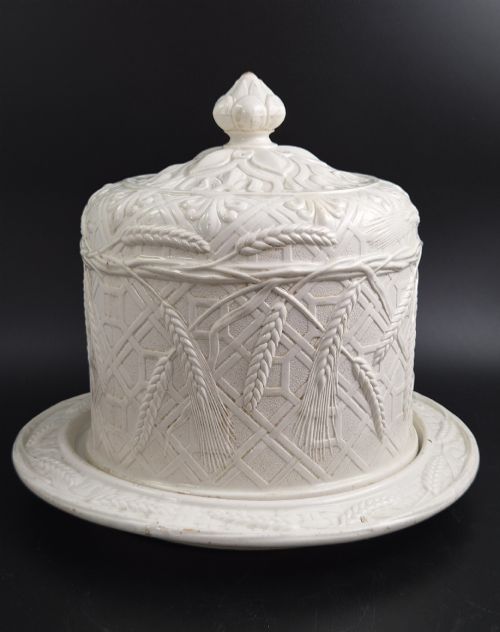
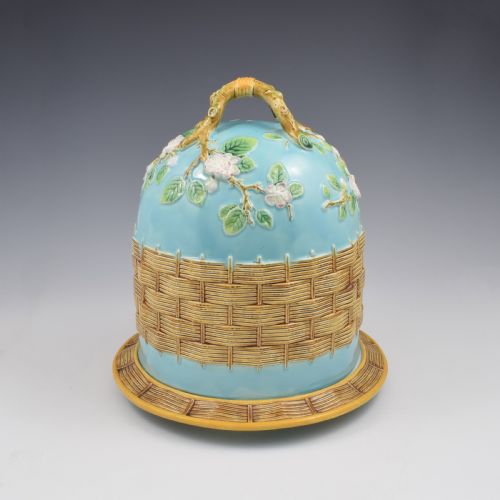
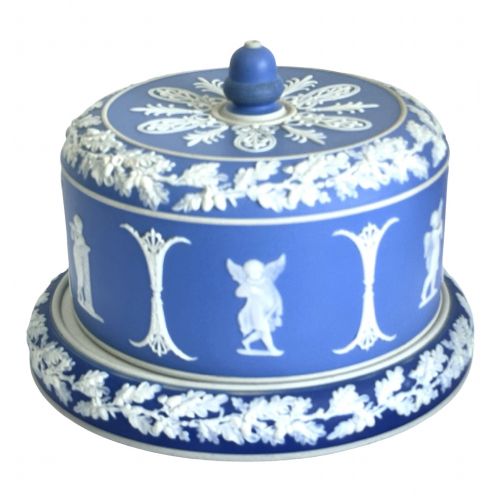
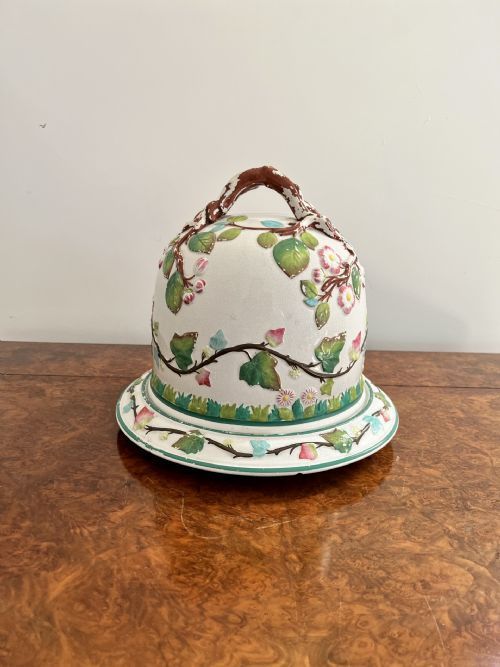
The objects listed on this page span the nineteenth century, featuring notable pottery styles such as Victorian Majolica and classic Jasperware. Most pieces combine a fitted cover with a wide circular stand, designed to accommodate large wheels or portions of cheese.
Makers ranging from George Jones to Wedgwood produced these substantial serveware items in varying scales. The typical survivor reflects the dining habits of the Victorian era, when heavy ceramic domes graced formal and domestic sideboards alike.
Materials and construction
Potters shaped these vessels from heavy earthenware, ironstone, and stoneware, applying thick coloured glazes or delicate relief ornamentation. Majolica pieces receive vibrant lead-glazed mineral colours, while ironstone and Jasperware display moulded motifs such as wheat, lattice, or apple blossom.
Some assemblies incorporate fitted silver-plated mounts alongside blown glass covers to house the cheese securely. The base plates and domed covers require precise kiln firing to ensure the lid rests properly on the surrounding tray.
Some Victorian diners required botanical cheese bells adorned with raised apple blossoms just to keep the blue cheese polite.
Assessing quality and craftsmanship
Quality rests upon the crispness of the moulded relief work and the richness of the applied glaze or colour palette. Finer examples exhibit sharp detailing in botanical motifs such as apple blossom or wheat, whereas lesser pieces show softer contours from worn moulds.
The weight and proportion of the ceramic dome relative to its stand dictate the overall balance of the piece. Superior specimens maintain a harmonious relationship between the decorative cover and the matching base tray without warping.
George Jones·Wedgwood·James Dudson·Copeland
The Antique Cheese Bell Stand Glossary
- Cheese bell
- A domed cover used to keep cheese moist and fragrant on the dining table. It lifts away from the matching stand by a central knob or handle.
- Majolica
- A colourful Victorian lead-glazed earthenware known for rich botanical relief decoration. Potters achieved vibrant hues by applying metallic oxides directly to an opaque white glaze before firing.
- Ironstone
- A durable heavy earthenware patented in the nineteenth century to rival porcelain. It provides a sturdy white body suited to large domestic serveware.
Antique Cheese Bell Stand: Frequently Asked Questions
What is an antique cheese bell stand?
An antique cheese bell stand is a fitted two-part ceramic or glass vessel designed to serve and preserve cheese at the dining table. The tall domed cover traps moisture to keep the cheese fresh, resting securely upon a flat base plate.
These pieces were produced primarily during the Victorian era in various decorative styles, ranging from bright Majolica to utilitarian white ironstone.
How were these domes used historically?
Victorian households used these heavy covers on the dining table or sideboard to protect large wedges of cheese from insects and drying out between meals. The cover lifted by its top handle when guests wished to cut a portion.
They served a practical purpose in domestic dining before modern refrigeration became common in every home.
How do I date a Victorian cheese dome?
Dating relies on stylistic clues, pottery marks stamped underneath the base, and the specific manufacturing materials used. Victorian examples often feature registration diamond marks or distinct maker stamps from firms active in the nineteenth century.
The aesthetic style, such as colourful Majolica or classical Jasperware, also helps narrow the period of manufacture.
Can I still use an antique cheese stand?
Many collectors use these sturdy ceramic stands for serving cheese during gatherings, provided the glaze remains intact and clean. Modern soft cheeses fit comfortably beneath the taller domed covers.
Careful hand washing preserves the historic glazes and any delicate silver-plated mounts on glass variants.