
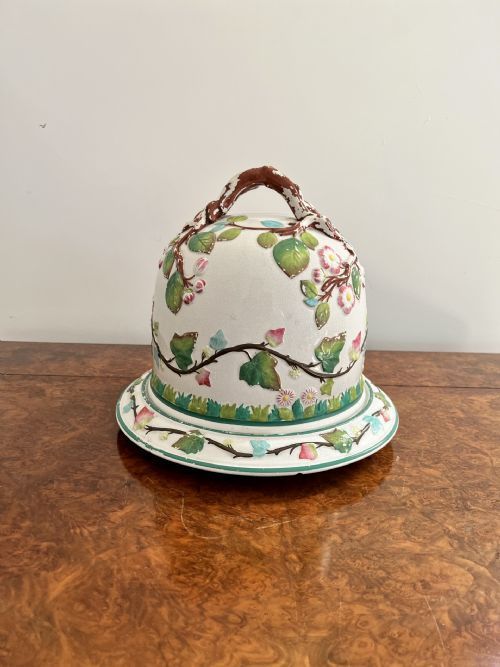


Victorian Earthenware Cheese Dome
A victorian earthenware cheese dome is a substantial tabletop cover designed to keep cheese fresh, prized for its decorative presence.
Victorian Earthenware Cheese Dome
A victorian earthenware cheese dome sits on a matching stand, serving as a decorative and practical centrepiece for the dining table. These domestic pieces date principally from the nineteenth century, spanning periods including eighteen eighty and nineteen hundred.
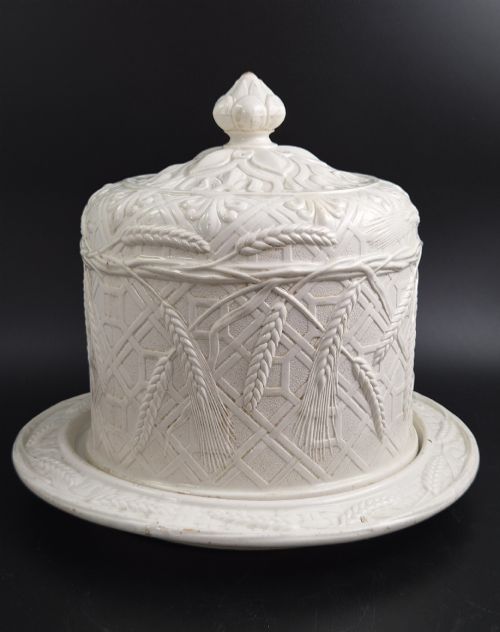
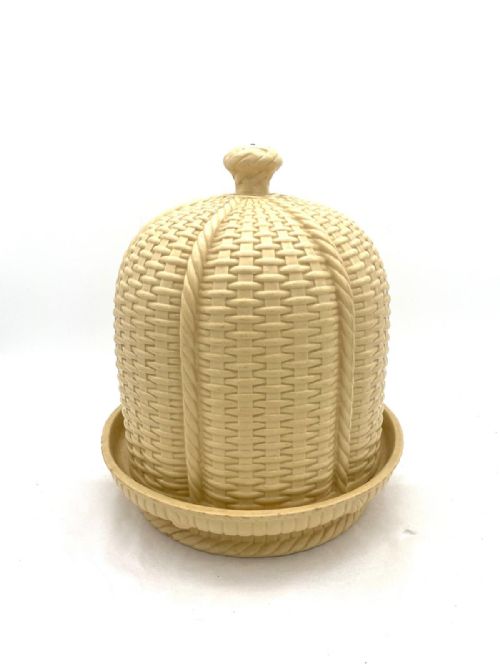
Buyers encounter diverse stylistic expressions, ranging from plain white ironstone with wheat and lattice decoration to drabware with basket weave patterns. Examples include large cheese dishes and specialised Stilton domes.
Origins are rooted in English pottery traditions, encompassing major decorative movements such as Victorian Majolica and Jasperware. The form reflects the domestic habits of the period, when heavy cheese service was customary after dinner.
Materials and construction
Potters utilised earthenware, ironstone, and ceramic bodies to form the heavy domes and stands. These clay bodies provided the necessary durability for daily dining table use.
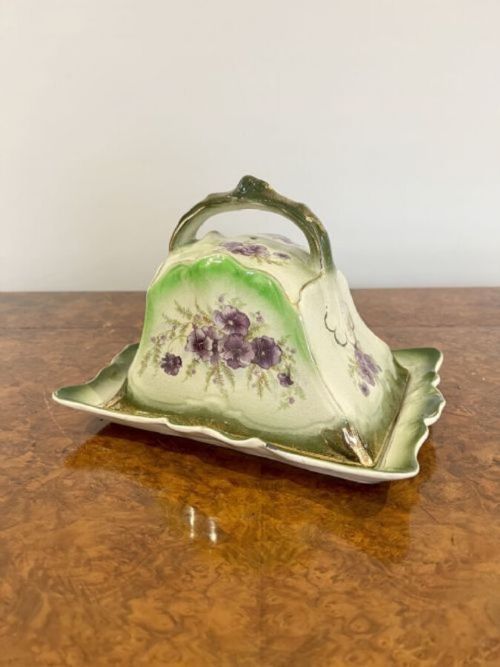
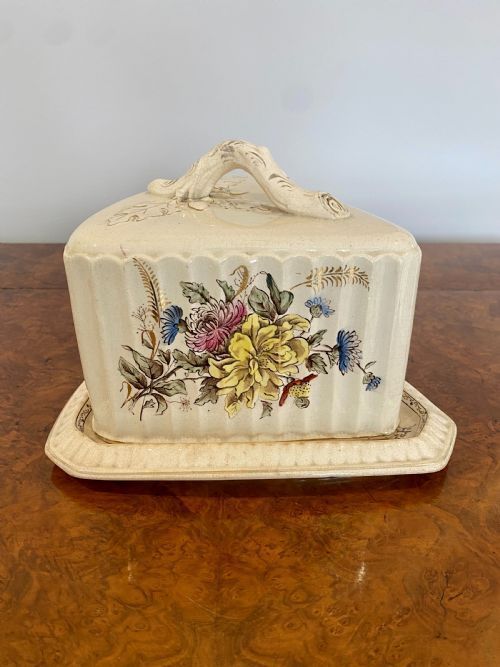
Surfaces received decorative treatments including Majolica glaze, standard glaze, and occasional gilding. Textures varied from smooth finishes to modelled basket weave and wheat and lattice reliefs.
Materials documented across the available pieces include standard earthenware, ironstone, Jasperware, and colourful Majolica glazes.
Judging quality in earthenware cheese domes
Quality rests in the crispness of the modelled decoration, such as basket weave or wheat and lattice motifs, and the evenness of the glaze application. Majolica examples display depth of colour and careful control across intricate moulded surfaces.
The presence of both the original dome and its matching stand defines a complete service. The weight and proportion of the earthenware body also signal the ambition of the original maker.
James Dudson
The Victorian Earthenware Cheese Dome Glossary
- Earthenware
- A porous pottery type fired at lower temperatures than stoneware, requiring a glaze to become impermeable. It forms the core material for the majority of these domes.
- Majolica glaze
- A colourful lead-glazed earthenware technique popular in the nineteenth century. It produces vibrant, glossy surfaces that highlight moulded relief details.
- Ironstone
- A heavy, durable ceramic perfected in the nineteenth century. It bridges the gap between earthenware and porcelain.
- Drabware
- Pottery featuring a subdued greyish-brown body colour. It often appears alongside simple textured moulding.
Victorian Earthenware Cheese Dome: Frequently Asked Questions
What is a victorian earthenware cheese dome used for?
These large domed covers were placed over blocks of cheese on the dining table to retain moisture and keep insects away during the Victorian era.
They allowed households to present large cheeses, including tall Stilton varieties, in an orderly and decorative manner following the main meal.
How do I distinguish Majolica from white ironstone?
Majolica pieces feature rich, colourful lead glazes over heavily moulded earthenware surfaces such as basket weave designs. They offer a vibrant visual palette.
White ironstone items rely on crisp, uncoloured moulded details like wheat and lattice patterns, presenting a clean, durable white ceramic body.
Did all cheese domes include a stand?
Many examples on this page are listed with a matching stand, which collected crumbs and contained the cheese securely. The stand is an integral component of the complete set.
Some domes were produced to sit directly on existing platters, though matched bases remained standard for formal dining.
How should I care for an antique cheese dome?
Wash the glazed ceramic surfaces gently by hand using warm water and mild soap. Avoid harsh scrubbing that could damage historic glazes or delicate gilding.
Keep the heavy earthenware stable on strong tabletops or sideboards, as the combined weight of the dome and stand is considerable.