


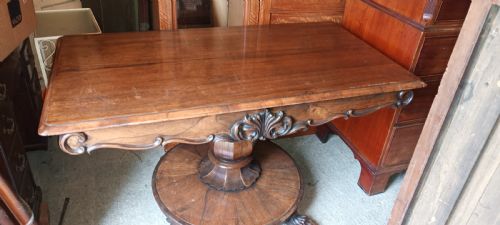

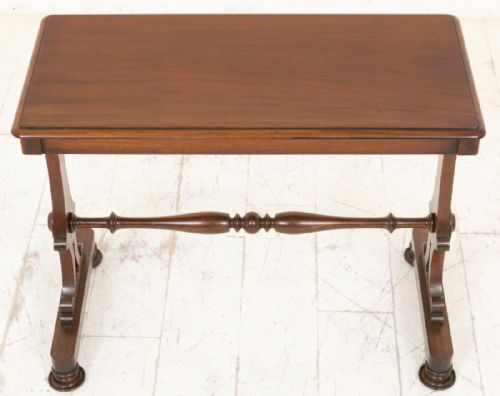

Early Victorian Centre Table
An early victorian centre table anchors a room with timber grain and solid proportions, built to stand free.
Early Victorian Centre Table
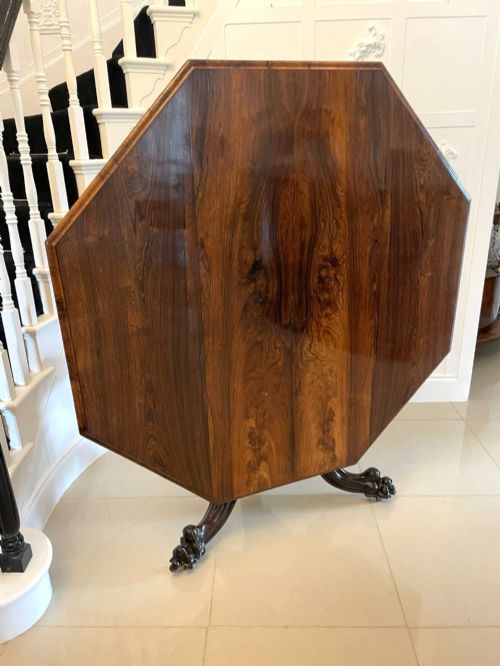
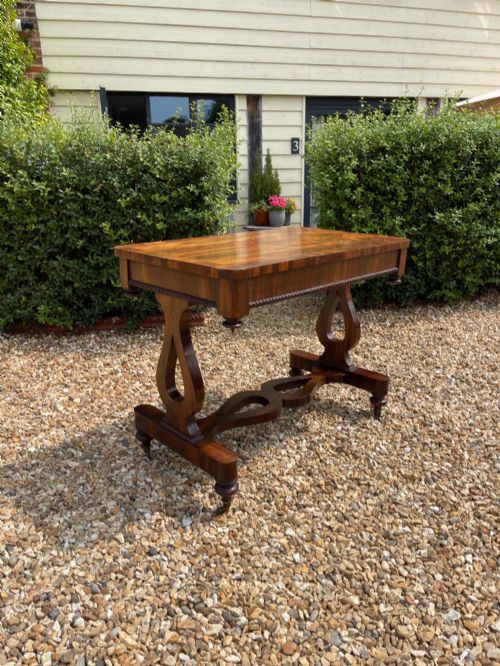
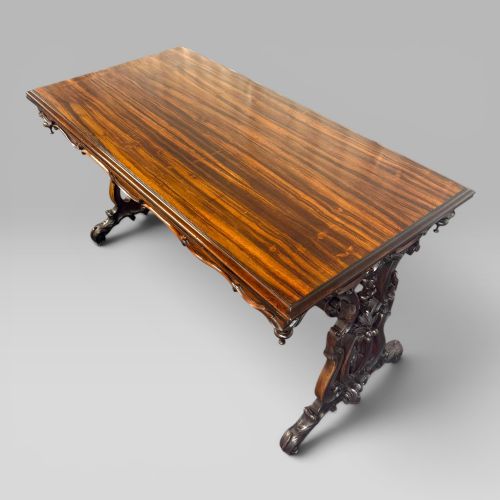
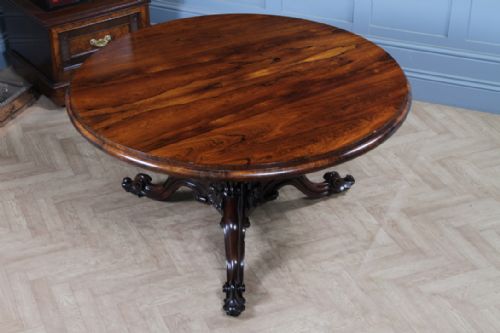
An early victorian centre table is a freestanding piece designed to sit in the middle of a room rather than against a wall, showing finished timber from every angle. The selection here covers round pedestal dining formats, tilt-top versions, and rectangular library or sofa tables spanning the nineteenth century.
Rosewood and mahogany dominate the offerings, often shaped with circular tops, pedestals, or multiple drawers for functional use. Buyers encounter forms ranging from large dining variants by known makers to smaller occasional or octagonal marble-topped examples.
The styles blend early victorian aesthetics with lingering regency and william iv influences, reflecting a period of heavy, decorative cabinet work. Each piece served as a central focal point for domestic life in large nineteenth-century homes.
How they were made
Cabinet makers utilised dense tropical hardwoods like rosewood and flame mahogany as solid timbers and finely sliced veneers over firmer secondary woods. Marquetry, boxwood stringing, and brass details added surface decoration to tops and pedestals.
Table tops frequently relied on tilt mechanisms or central pedestals supported by heavy plinth bases with carved feet. Drawer linings and internal framing demonstrate traditional joinery methods suited to supporting heavy loads of books or dining china.
Tilt-top tables let Victorian households reclaim their floor space by pivoting giant mahogany discs against the drawing-room wall.
What varies in quality
Quality rests in the choice of timber figure, such as highly figured burr walnut, zebrawood, or rich flame mahogany matched symmetrically across the top. The crispness of carved mouldings on pedestals and the integration of drawer construction further separate standard examples from finer workshops.
Attribution to documented makers like Gillows or Holland & Sons elevates the standing of a piece through superior engineering and refined proportions. Condition of the polish and stability of the central pedestal base determine how well the structure survives daily use.
Gillows·Holland & Sons
The Early Victorian Centre Table Glossary
- Tilt top
- A table top hinged to fold vertically when not in use, allowing the piece to be stored against a wall. This mechanism saved space in nineteenth-century drawing rooms.
- Pedestal
- A central column supporting the main table top, usually rising from a tripartite or platform base. It provides legroom around the entire perimeter of the table.
- Marquetry
- Decorative patterns created by fitting different woods, brass, or shell into a veneer ground. It creates intricate geometric or floral designs across the surface.
- Sofa table
- A rectangular side or centre table fitted with small drop leaves and drawers, originally designed to stand in front of a sofa. They feature twin pedestal supports or trestle ends.
- Loo table
- A large round table used for nineteenth-century card games such as loo, often fitted with a tilt mechanism. They double as informal dining or centre pieces.
Early Victorian Centre Table: Frequently Asked Questions
Where should a centre table go?
These tables are designed to stand away from walls, allowing a clear path around the entire perimeter in a principal room.
They function best where natural light can strike the timber grain and highlight the polished surface from multiple angles.
Can you dine off them?
Many examples, particularly the circular pedestal and tilt-top formats, were built specifically for dining or library use.
Their sturdy central columns and heavy timber tops provide the stability needed for everyday meals.
How do I identify the period?
Look for the dense rosewood and mahogany timbers, heavy pedestal bases, and transitional regency or william iv design elements.
Cabinet makers of the nineteenth century favoured substantial proportions and hand-cut joinery before industrial methods took over.
What is a tilt top used for?
The hinged mechanism allows the top to lock vertically so the piece occupies minimal floor space when not in service.
This practical feature enabled nineteenth-century households to clear rooms quickly for entertaining or dancing.