



Victorian Marble Pedestal Table
A victorian marble pedestal table combines a sturdy stone top with a central pillar, offering a solid surface for lamps, plants, and display.
Victorian Marble Pedestal Table
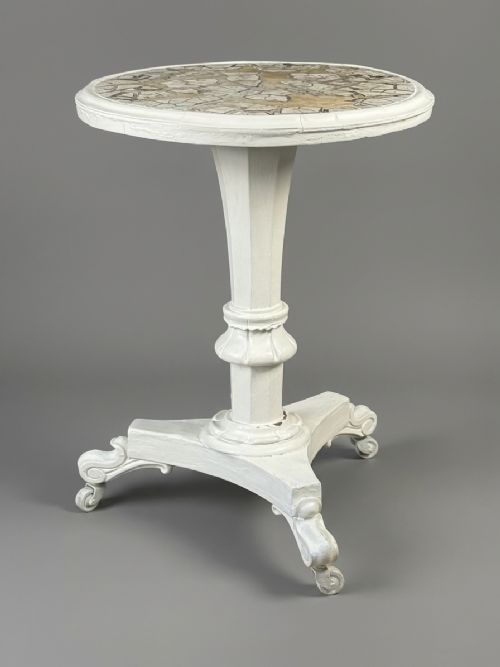
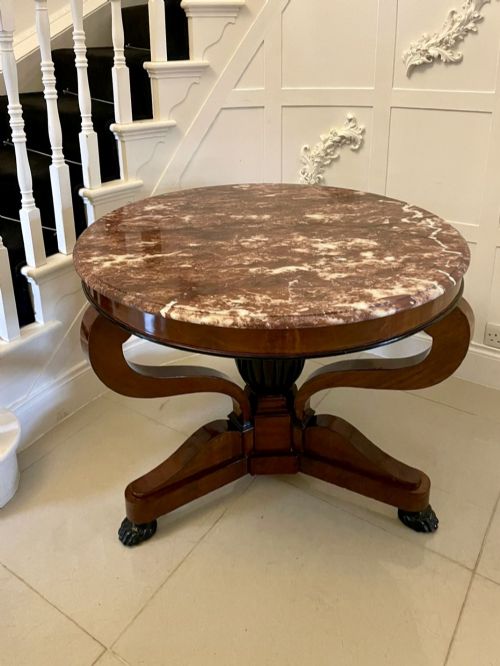
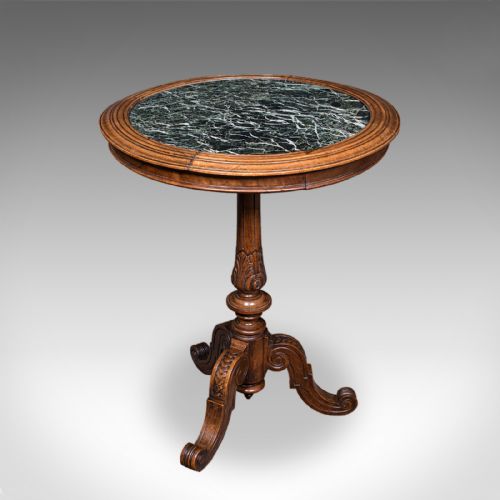
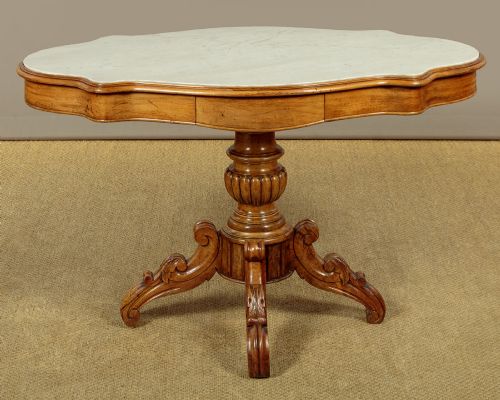
A victorian marble pedestal table serves multiple domestic functions, appearing on this page as centre tables, gueridons, lamp tables, and plant stands. These pieces feature a heavy stone slab supported by a single central column or pedestal base rather than four standard corner legs.
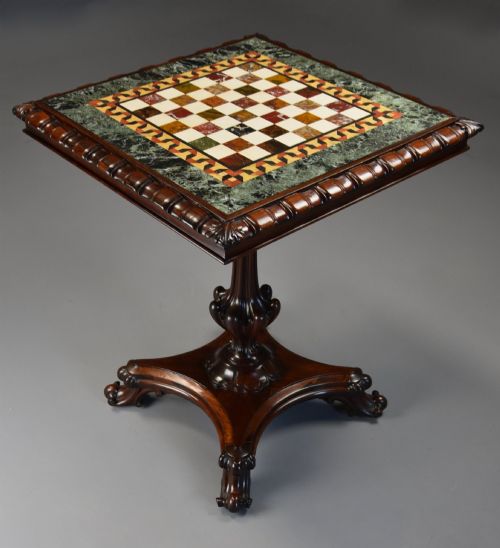
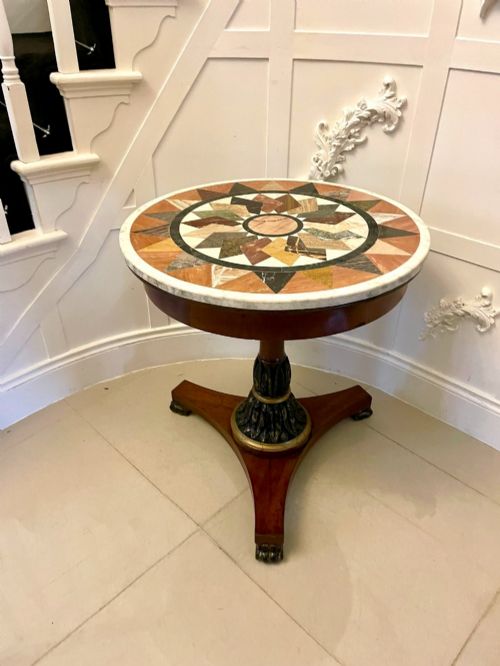
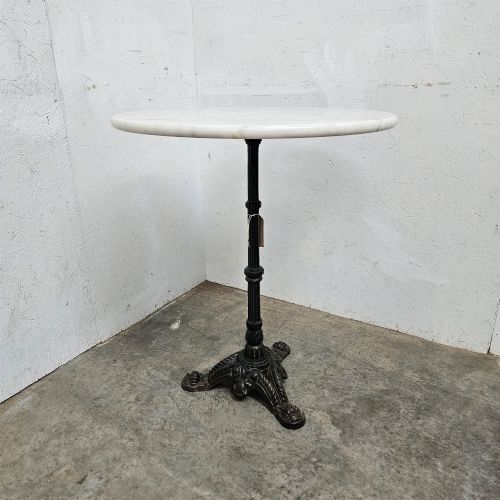
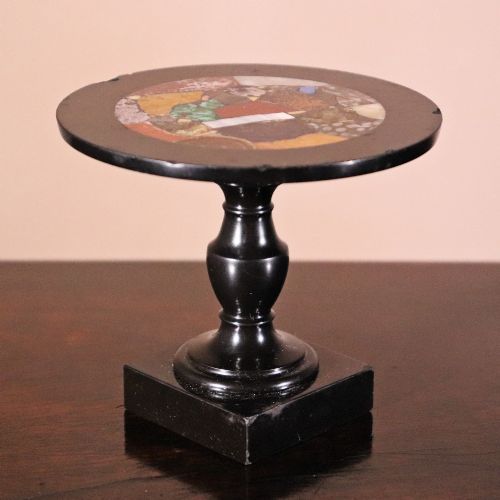
The materials span from traditional English and French hardwoods like mahogany, walnut, and rosewood to more exotic Chinese hardwoods and ebonised finishes. Many examples incorporate inset stone tops, ranging from simple white marble to complex multi-coloured specimen marble and pietra dura work.
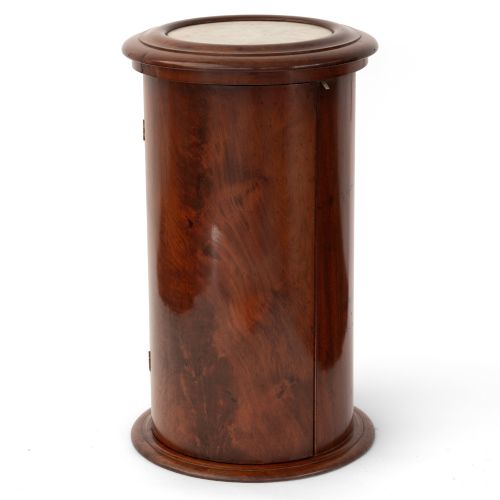
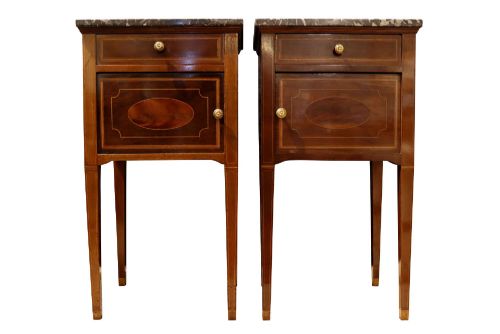
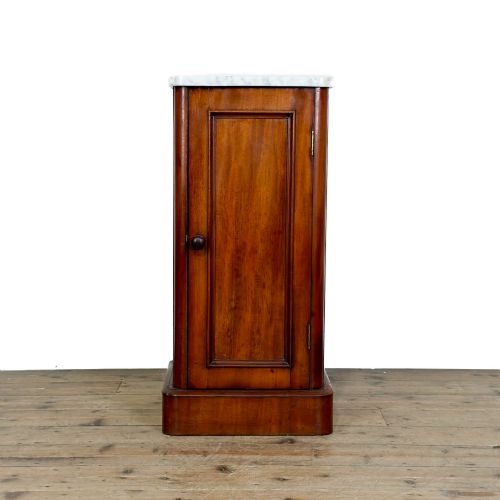
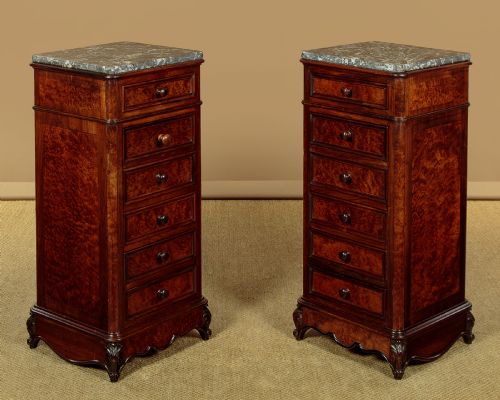
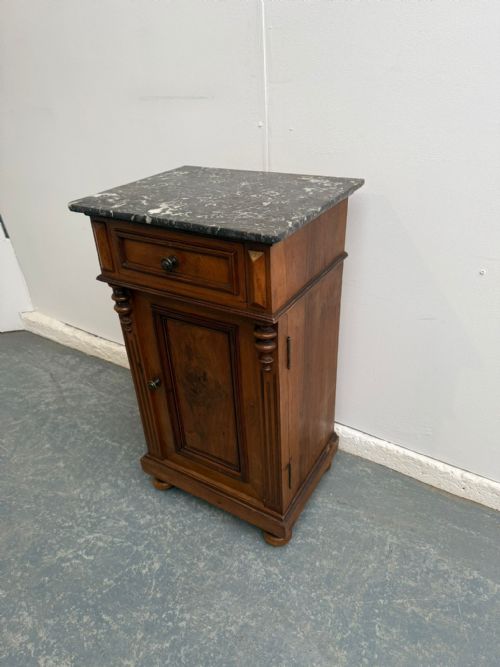
Origins vary widely across the selection, encompassing English workshops, French design influences, and Chinese export pieces created for Western markets. Forms range from compact bedside cabinets and cylindrical cupboards to grand centre tables designed for principal rooms.
Materials and construction methods
Cabinetmakers utilised dense timbers such as flame mahogany, walnut, satinwood, and kingwood to construct the structural bases and pedestals, often employing turned pillars and carved cabriole legs. These wooden frames provide the necessary structural integrity to support the significant weight of a stone top.
The upper surfaces rely on heavy slabs of marble, alabaster, or slate, sometimes decorated with intricate specimen marble inlays or geometric pietra dura compositions. Brass and gilded metal mounts, collars, and galleries frequently accent the junctions between the stone and the timber frame.
Victorian Marble Pedestal Table Retail Price Guide 2026
Typical asking prices for victorian marble pedestal table among the pieces listed under this phrase on Sellingantiques today, from the lower quarter to the upper quarter. They describe what is for sale here now, not the wider market.
Materials documented across the selection include alabaster, slate, ebonised wood, and multi-coloured specimen marble.
Factors of distinction
The refinement of the carving on the central pillar and base distinguishes standard utility pieces from high-status examples. Superior items display crisp, deeply carved wooden details, whether executed in traditional European scrolling foliage or elaborate Chinese organic motifs.
The choice and execution of the stone top dictate the overall standing of the piece. Simple plain marble slabs sit at the accessible end of the scale, whilst multi-coloured specimen marbles, Ashford marbles, and detailed pietra dura work represent the highest level of artisan skill.
Woodley family
The Victorian Marble Pedestal Table Glossary
- Gueridon
- A small French occasional table supported by a single central pillar. These tables often feature circular marble tops and were traditionally used for holding light or decorative objects.
- Specimen marble
- A decorative surface composed of numerous small pieces of different coloured marbles arranged in geometric or pictorial patterns. This technique requires exceptional precision in cutting and fitting the stone.
- Pietra dura
- An artistic technique using cut and fitted polished coloured stones to create mosaic images. The stones are embedded flush into a background slab to form pictures or ornamental designs.
- Jardiniere stand
- A tall pedestal table designed specifically to hold indoor plant pots or flower arrangements. They frequently incorporate waterproof tops of marble, tile, or slate.
- Padouk
- A heavy, durable tropical hardwood with a reddish hue used in fine cabinetmaking. It is frequently encountered in Chinese export furniture from the nineteenth century.
Victorian Marble Pedestal Table: Frequently Asked Questions
What rooms suit a pedestal table best?
These compact tables fit well beside seating areas as lamp supports or in hallways as display surfaces. Their central pillar design allows chairs to tuck in closely without corner legs obstructing the space.
Larger centre versions anchor drawing rooms or reception spaces, providing a natural focal point for the middle of the room. Smaller bedside cabinets and plant stands adapt easily to tighter corners and bedrooms.
How do I care for a marble top?
Wipe the stone surface regularly with a soft, damp cloth and neutral soap to prevent dust accumulation. Avoid acidic liquids like citrus juice or vinegar, which can etch polished marble.
Use coasters and protective mats beneath glasses and heavy objects to prevent scratching and staining. Periodic application of a specialised stone wax helps maintain the sheen.
Are these tables heavy to move?
The combined weight of the timber base and the stone top makes most examples surprisingly substantial. The marble slab is frequently heavy, though many period tables feature loose tops resting on the wooden frame rather than being permanently fixed.
Lifting the stone separately from the base eases repositioning and prevents structural strain on the pedestal joints during transport.
How do I distinguish French from English pieces?
French examples, particularly gueridons and cabinet styles, often utilise exotic woods like kingwood and incorporate prominent gilt-brass mounts and chased collars. Their silhouettes lean towards softer curves and lighter decorative bronze details.
English furniture from the same era typically relies on solid mahogany or walnut construction, favouring robust turned columns and disciplined proportions over overt metal embellishment.