
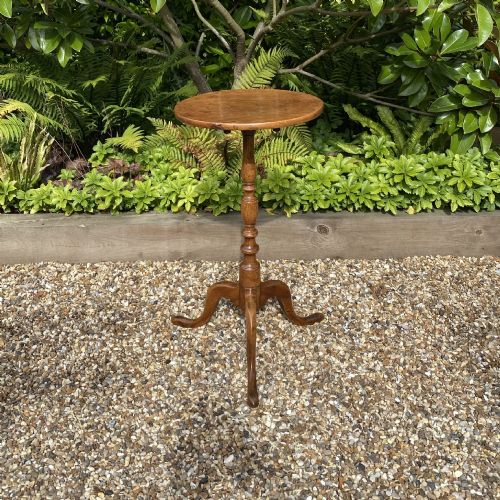
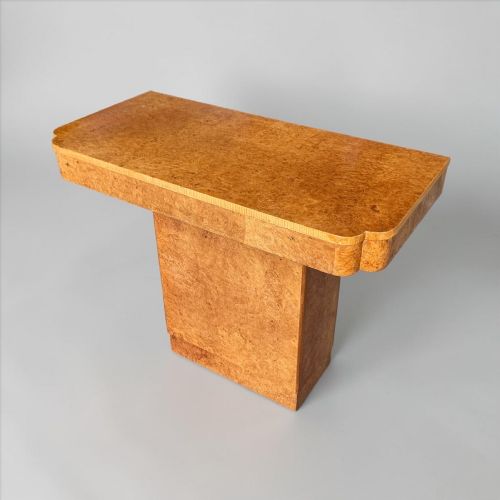
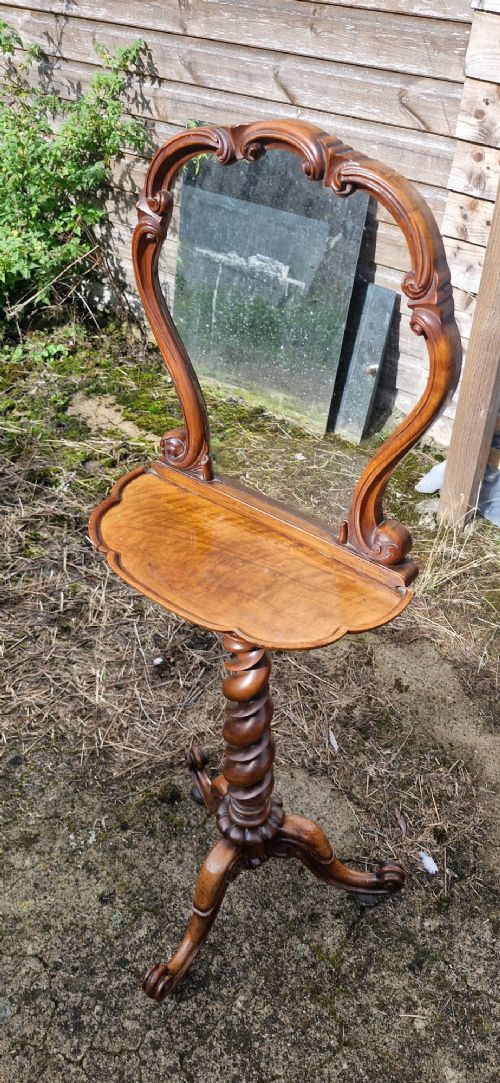


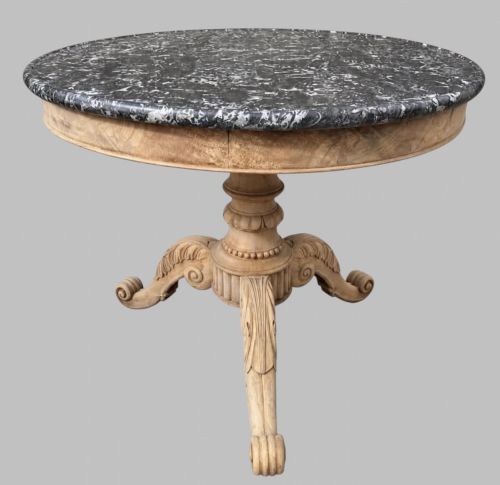
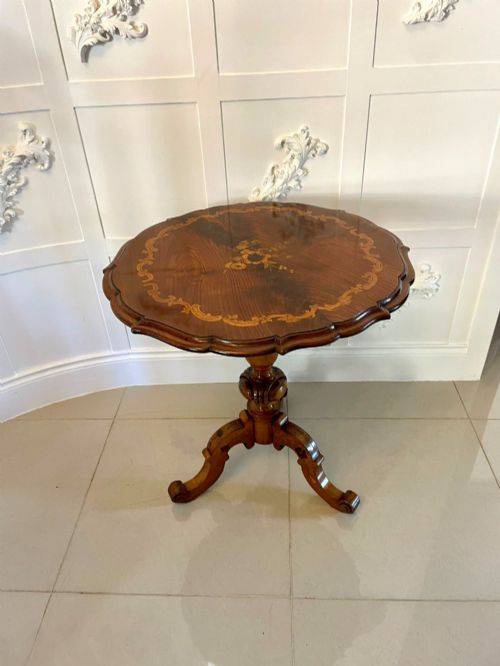
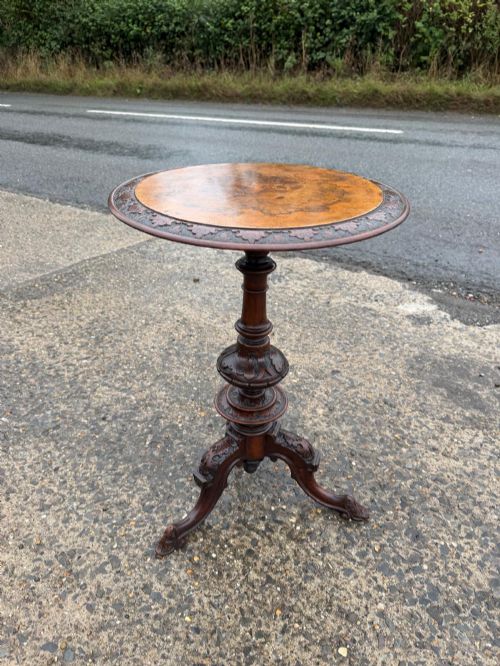
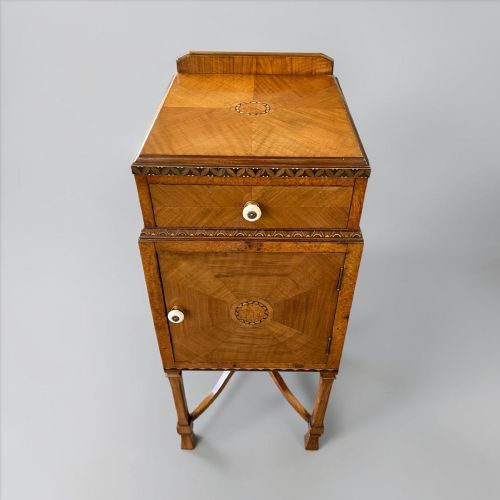
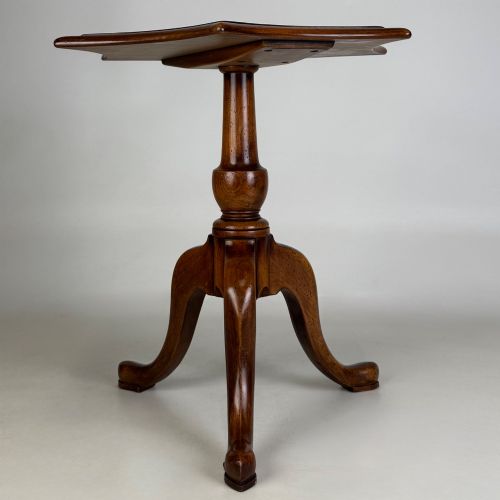
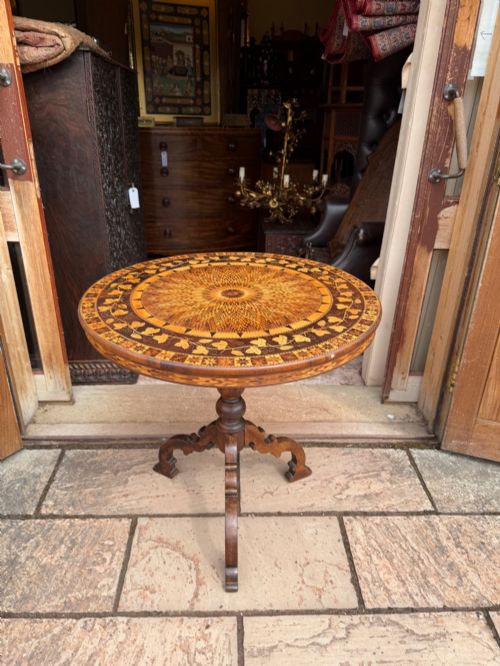
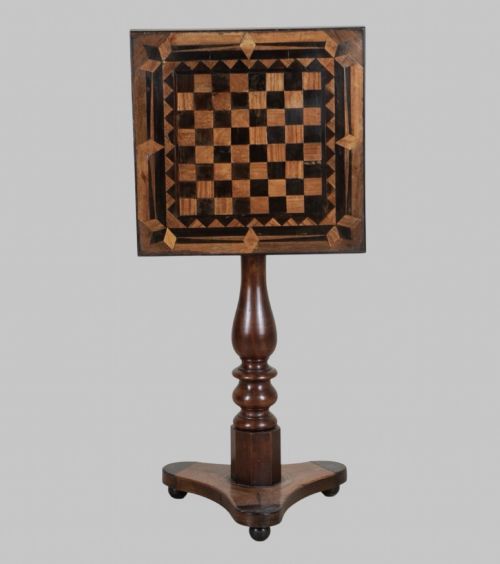
Walnut Pedestal Side Table
A walnut pedestal side table brings warm timber grain and practical surface area to a corner or beside a chair.
How they were made
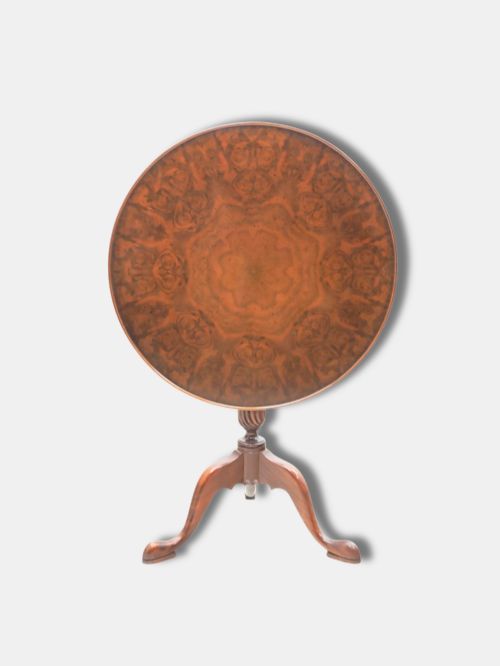
Makers constructed these tables using solid timber frames combined with walnut veneer and decorative burr walnut sections to create striking grain patterns on the top surface. Tradesmen also incorporated secondary woods like mahogany alongside brass fittings, marble inserts, and leather panels depending on the intended function of the piece.
Structural stability relied on turned or carved central pedestals, often supported by three or four legs joined to the central shaft with traditional timber joints. Marquetry inlay, parquetry, and carved detailing were frequently added by hand to enhance the visual appeal of the timber.
What varies in quality
Quality in a walnut pedestal side table is determined by the selection of timber veneers and the intricacy of the hand-applied inlay or carving. Superior examples exhibit carefully matched burr walnut figures across the top surface, demonstrating the maker's skill in handling decorative grain.
Construction methods also separate standard production from finer work, visible in the stability of the central column and the precision of the joints connecting the pedestal to the feet. Better pieces retain balanced proportions and crisp detail in turned barley twist or carved elements.
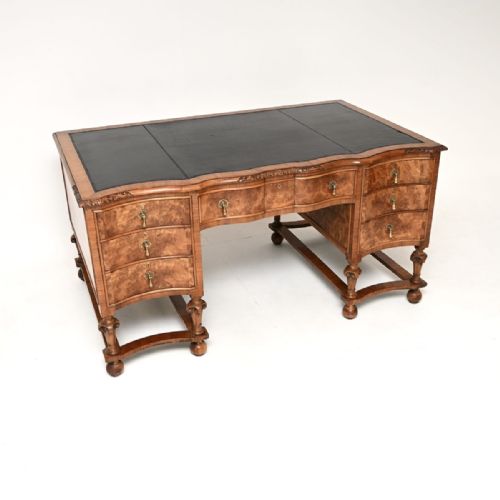
Materials recorded across these pieces include burr walnut veneer, solid mahogany, marble inserts, brass hardware, and leather writing surfaces.
Maple and Co·Shoolbred·Holland And Sons·Walter Carter Harrods·William Sylvans Smee
The Walnut Pedestal Side Table Glossary
- Burr walnut
- A highly figured wood obtained from the wart-like growths on walnut trees, prized for its swirling patterns. Cabinet makers sliced this timber into thin veneers for table tops.
- Tripod table
- A small freestanding table supported by three legs radiating from a central pedestal. This configuration prevented the table from wobbling on uneven floors.
- Marquetry
- The art of applying pieces of veneer to a structure to form decorative patterns or pictures. Craftsmen used contrasting woods to create geometric designs on table tops.
- Pedestal
- A single central support column carrying the weight of the table top. It allows maximum legroom and eliminates corner legs.
- Gueridon
- A small French occasional table supported by a central column. These pieces often served as candle stands or small display surfaces.
Walnut Pedestal Side Table: Frequently Asked Questions
What is a pedestal side table used for?
These tables served primarily as convenient surfaces for lamps, wine glasses, books, or sewing equipment within principal rooms. Their compact footprints allowed them to sit easily beside chairs or in tight corners without obstructing movement.
Over successive periods, makers adapted the form for specialised tasks such as chess playing, bedside storage, or holding decorative items. This versatility explains their continued presence in domestic interiors.
How do I date a walnut pedestal table?
Dating relies on observing the combination of stylistic cues, construction methods, and timber treatments characteristic of specific eras. Victorian examples often display heavy turned columns or elaborate marquetry, whereas Art Deco pieces show cleaner geometric lines and streamlined burr walnut veneers.
Earlier Georgian items exhibit finer proportions and traditional tripod bases without the mass-produced hardware seen in later nineteenth-century manufacturing. Comparing the secondary woods beneath the top provides further clues to the period of origin.
Are these tables sturdy enough for daily use?
The central column and leg configuration was engineered to support typical domestic items like lamps, books, and drinks. However, the stability depends heavily on the soundness of the joints connecting the pedestal to the base.
Tables with tripod legs distribute weight effectively, though users should avoid placing excessive downward force on the edges of tilting or multi-legged variants. Regular checking of the central fixing ensures the top remains firm during everyday use.
How should I care for walnut veneer?
Walnut timber and its decorative veneers respond best to stable indoor environments away from direct sunlight and heat sources. Excessive temperature fluctuations can cause the underlying wood to expand or contract, placing stress on the historic veneer.
Gentle dusting with a soft cloth preserves the polished surface without the need for heavy chemical polishes. Applying occasional specialist wax helps maintain the moisture balance of the antique timber.