





Nineteenth Century Sutherland Table
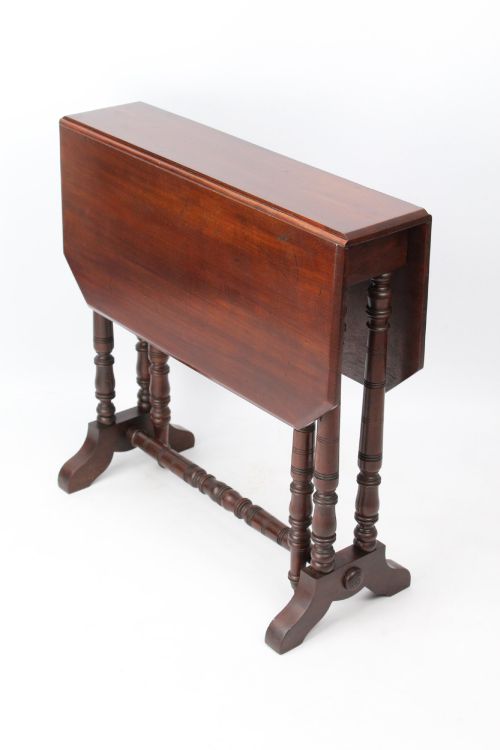
A nineteenth century sutherland table offers a narrow drop-leaf surface with slender gate legs, built for domestic versatility and easy storage.
Nineteenth Century Sutherland Table
A nineteenth century sutherland table is a narrow drop-leaf occasional table designed to fold flat when not in use. These pieces appear in forms such as small occasional tables, side tables, and afternoon tea tables.
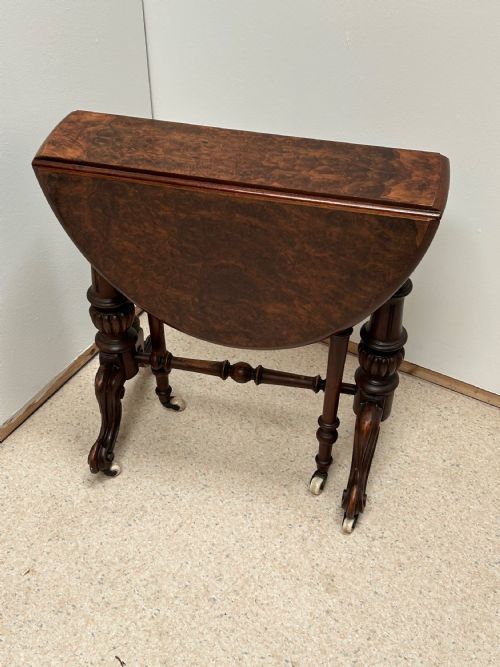
The versions most commonly met on this page belong to the Victorian period, spanning decades from eighteen fifty to eighteen ninety. Makers constructed them with oval tops supported by pivoting gate legs that swing out to hold the hinged leaves.
Makers adapted the form for various domestic uses, ranging from full-sized occasional pieces to baby sutherland tables and low coffee tables. The proportions remain remarkably slender compared to standard dining tables of the era.
How they were made
Makers used timbers such as mahogany, walnut, and burr walnut veneer, frequently selecting figured wood for the top leaves. Some examples utilise ebonised timber or incorporate marquetry inlay into the surface.
Hardware details include brass fittings and ceramic castors fitted to the base of the gate legs for mobility. Joinery focuses on stability for the hinged flaps while maintaining light framing.
Nineteenth Century Sutherland Table Retail Price Guide 2026
Typical asking prices for nineteenth century sutherland table among the pieces listed under this phrase on Sellingantiques today, from the lower quarter to the upper quarter. They describe what is for sale here now, not the wider market.
What varies in quality
Quality rests primarily in the choice of timber veneer and the crispness of any inlay work, such as marquetry panels on walnut tops. Finer examples display carefully matched burr walnut grains across the drop leaves.
The mechanical action of the gate legs and the condition of the original brass and ceramic castors distinguish better specimens. Structural refinement in the turning of the legs and supports also elevates a piece above standard utility items.
Jenks & Woods
The Nineteenth Century Sutherland Table Glossary
- Sutherland table
- A narrow drop-leaf table with hinged flaps and swinging gate legs designed to fold into a compact footprint. This form emerged in the Victorian era for flexible room use.
- Gate leg
- A hinged leg that swings outward from the centre frame to support an extended drop leaf. It provides stability to the narrow table top when open.
- Burr walnut veneer
- Thin slices of decorative walnut growth applied to a solid wood carcase to create swirling grain patterns. It was favoured for high-status Victorian occasional furniture.
- Marquetry
- Inlaid pieces of wood fitted together to form decorative patterns on a surface. This technique appears on specific walnut table tops in the selection.
- Ebonised timber
- Wood stained or treated to resemble heavy ebony. This dark finish is characteristic of the Victorian Aesthetic Movement style.
Nineteenth Century Sutherland Table: Frequently Asked Questions
What is a sutherland table?
A sutherland table is a narrow drop-leaf table featuring exceptionally thin leaves and gate legs that swing out from a central pivot. The design allows the piece to fold into a very flat profile when not in use.
These tables were commonly utilised in Victorian drawing rooms for afternoon tea or as occasional side furniture where space was at a premium.
How do you date these tables?
Dating relies on stylistic markers such as the presence of Victorian Aesthetic Movement ebonising, marquetry inlay, or specific timber choices like burr walnut. Dates span from mid-century examples around eighteen fifty to late Victorian pieces from eighteen ninety.
Hardware such as brass and ceramic fittings also provides chronological clues when compared against documented cabinet maker methods of the era.
What is a baby sutherland table?
A baby sutherland table is a reduced-scale version of the standard drop-leaf design. These smaller pieces served specific domestic functions in tighter parlour spaces.
Despite their diminutive proportions, they retain the functional gate leg mechanism and folding leaves characteristic of larger examples.
Were these used for dining?
These tables served primarily as occasional, side, or afternoon tea tables rather than principal dining furniture. Their narrow central well and slender gate legs limit the surface area when fully opened.
They suited light refreshments and temporary display rather than heavy daily meals.
How do you live with one?
Living with a nineteenth century sutherland table involves placing it against a wall in its folded state, where it occupies minimal floor space. The hinged leaves lift easily when an additional surface is required.
Care should be taken to protect polished walnut and mahogany surfaces from moisture and direct heat sources.