






Walnut Marble Centre Table
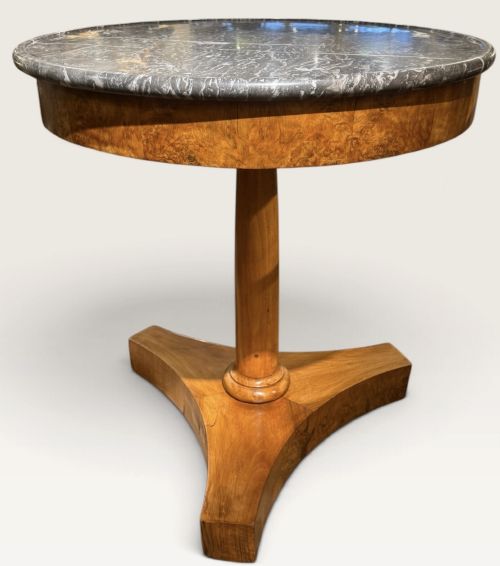
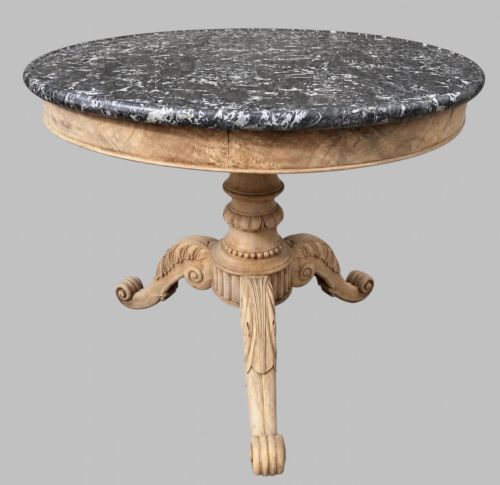
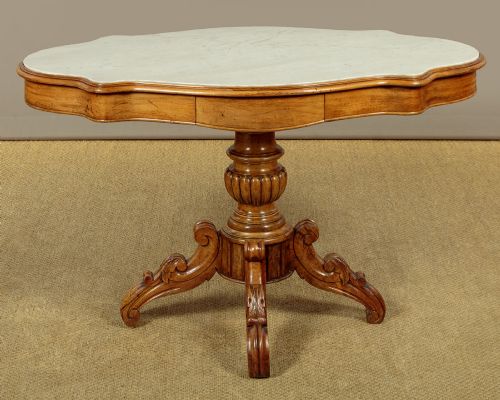
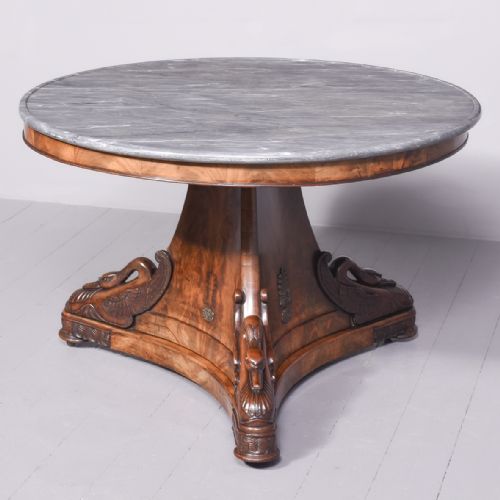
A walnut marble centre table anchors a grand room with a cool stone surface atop rich timber.
Walnut Marble Centre Table
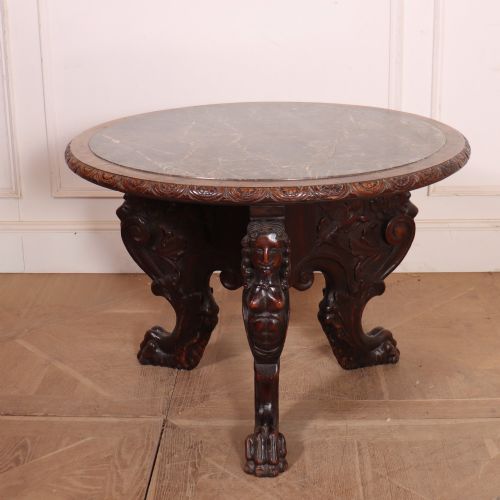
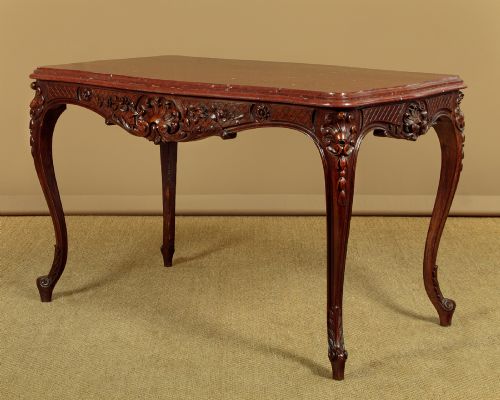
A walnut marble centre table brings together a substantial timber frame and a smooth stone top designed to stand free in a room. You will encounter round gueridon forms, oval shapes, and broad circular tables originating from English, French, and Italian workshops.
The selection spans the Regency era through the nineteenth century, including later Victorian interpretations and early twentieth-century examples. These tables function as primary display surfaces or central accents in formal spaces.
Makers utilised figured walnut, burr walnut, and bleached walnut for the bases, pairing them with white, rouge, pink Salome, breccia, or multi-coloured specimen marble slabs.
How they were made
Cabinetmakers constructed the main framework from solid and veneered walnut, frequently incorporating fruitwood inlay, carved wood details, and brass mounts. Heavy central pillars or carved legs support the weight of the inset stone slab.
Stonemasons shaped and polished the marble inserts to fit flush within the timber rims, utilising local Italian and French quarries for breccia, rouge, and specimen marble varieties.
Walnut Marble Centre Table Retail Price Guide 2026
Typical asking prices for walnut marble centre table among the pieces listed under this phrase on Sellingantiques today, from the lower quarter to the upper quarter. They describe what is for sale here now, not the wider market.
Materials recorded include solid walnut, burr walnut, bleached walnut, fruitwood inlay, and various marble tops.
What varies in quality
The distinction between standard production and exceptional craftsmanship lies in the selection of the timber grain and the complexity of the stone top. Highly figured burr walnut and multi-coloured specimen marble tops indicate superior workshop output.
Carved wooden details on the base and the precision of fruitwood inlay demonstrate the maker's hand, separating simple utilitarian pieces from grand console and gueridon tables.
Gillows
The Walnut Marble Centre Table Glossary
- Gueridon
- A small round table on a single central pillar or tripod base, frequently topped with marble. These French tables often serve as intimate display pieces.
- Specimen marble
- A top assembled from multiple distinct mineral fragments arranged in geometric or pictorial patterns. Italian workshops specialised in this intricate stonemasonry.
- Breccia marble
- A stone composed of broken angular fragments embedded in a fine-grained matrix. It provides a mottled, highly variegated surface texture.
- Burr walnut
- Timber taken from the abnormal growth of a walnut tree, yielding swirling knot patterns. Cabinetmakers prized this veneer for high-status furniture fronts and tabletops.
- French Restoration
- A stylistic period bridging the fall of Napoleon and the July Monarchy. Furniture from this era often combines restrained classical lines with rich walnut veneers.
Walnut Marble Centre Table: Frequently Asked Questions
What is a gueridon table?
A gueridon is a specific circular form of table supported by a central column or pillar rather than four corner legs. They were originally designed to hold light sources or decorative objects in French interiors.
Over time, the term broadened to describe small round tables featuring marble tops and timber bases suitable for central placement in a room.
How do you style a centre table?
A centre table stands independently in the middle of a room, allowing people to walk around all sides. They serve as focal points for displaying sculptures, lamps, or curated collections.
Because these pieces feature heavy stone surfaces and finished timber from every angle, they anchor an open floor plan without needing to touch a wall.
How do I date a walnut table?
Dating relies on examining the timber species, the treatment of the walnut veneer, and the carving style of the base. Regency and nineteenth-century pieces display specific regional characteristics in their pedestals and edge mouldings.
Comparing the construction methods of the internal frame and the type of marble used helps narrow down the period of manufacture.