




Mid Victorian Parlor Table
A mid victorian parlor table brings rich timber and sculptural form to a central room, offering a sturdy surface designed to anchor a Victorian interior.
Mid Victorian Parlor Table
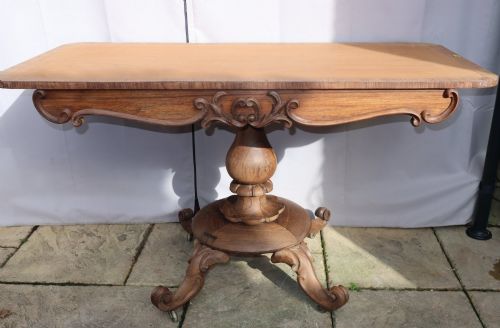
A mid victorian parlor table is typically encountered as a centre table designed to stand free in a room rather than against a wall. These pieces date primarily from the middle decades of the nineteenth century, spanning the eighteen-fifties, eighteen-sixties, and eighteen-eighties.
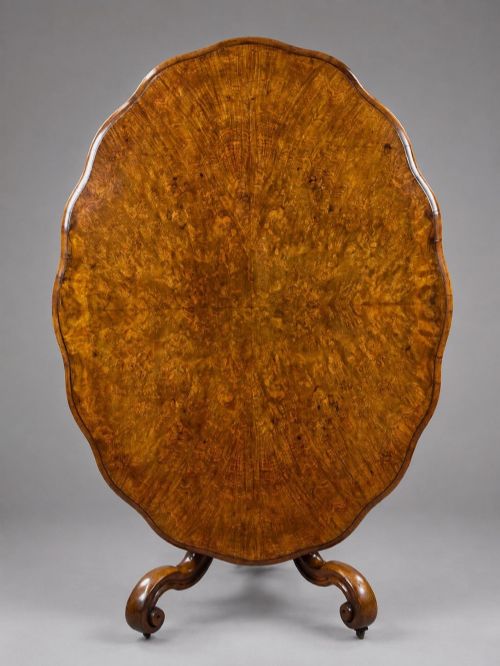
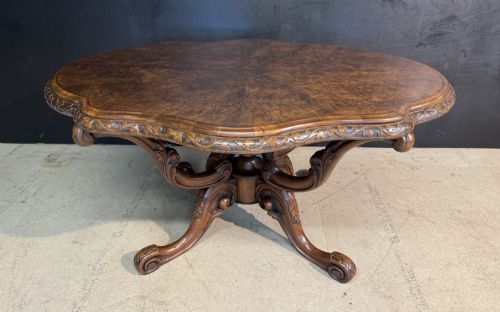
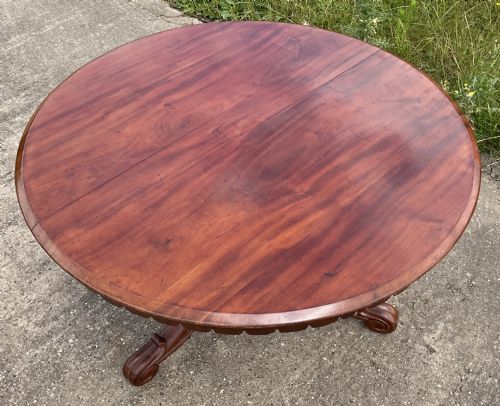
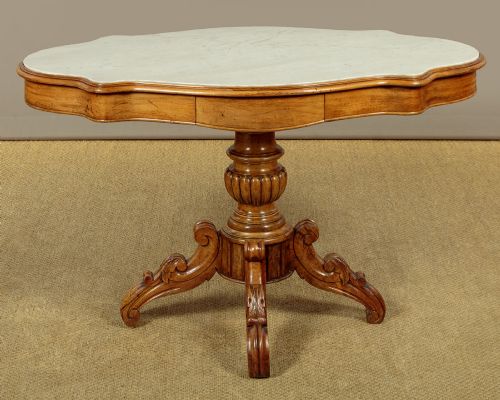
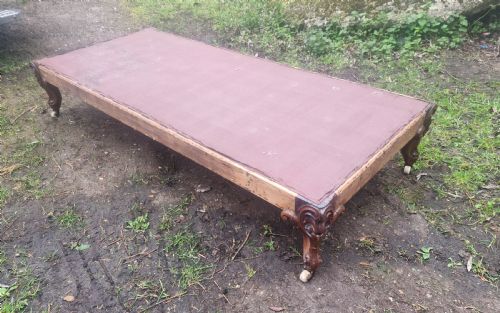
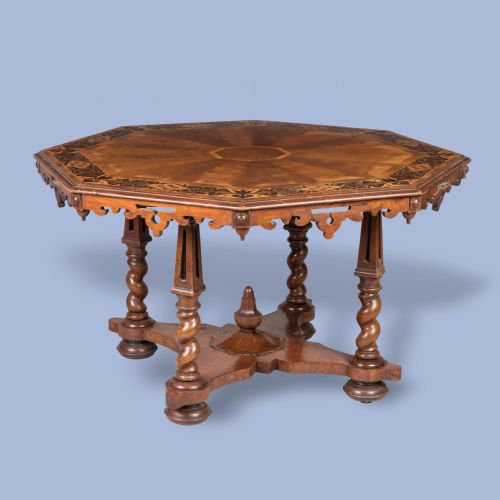
The forms on this page include circular tops, oval shapes, shaped octagonal formats, and loo tables supported by various pillar or basket bases. Alongside standard tables, the selection includes related centre stools intended for domestic placement.
Makers and workshops of the period utilised timber frames to create substantial pieces for the Victorian home. Buyers searching for a mid victorian parlor table will find these core variations across the current listings.
How they were made
Cabinet makers constructed these tables using dense timbers such as walnut, burr walnut, rosewood, and mahogany. Many surfaces feature burr walnut veneer applied over a solid timber carcase to display rich natural grain patterns.
Carved details and inlaid ornament define the decoration of these pieces, alongside fitted marble tops on specific examples. Structural stability is provided by carved pillars, freestanding basket bases, and robust wooden frames.
Mid Victorian Parlor Table Retail Price Guide 2026
Typical asking prices for mid victorian parlor table among the pieces listed under this phrase on Sellingantiques today, from the lower quarter to the upper quarter. They describe what is for sale here now, not the wider market.
The materials recorded across the selection include solid mahogany, rosewood, walnut, and highly figured burr walnut veneer alongside inset marble tops.
What varies in quality
Quality in a mid victorian parlor table rests upon the choice of timber and the complexity of its preparation. The selection of figured burr walnut veneer and dense rosewood separates standard examples from more ambitious constructions.
The refinement of carved ornament on the pillar, base, and edge moulding determines the artistic ambition of the piece. Subtlety in proportion and crispness of joinery further distinguish finer examples from simpler workshops.
James Winter
The Mid Victorian Parlor Table Glossary
- Burr walnut
- A wood harvested from the abnormal growth of a walnut tree, producing highly figured, swirling grain patterns. Cabinet makers prized this veneer for the decorative surfaces of Victorian tables.
- Centre table
- A freestanding piece designed to be viewed from all sides and placed in the middle of a room rather than pushed against a wall. These tables often feature finished decoration around the entire perimeter.
- Loo table
- A large Victorian card and conversation table featuring a tilting top mechanism. The circular or oval top could be tipped vertically when not in use to save space in the parlor.
- Rosewood
- A dense, heavy timber with a dark reddish-brown colour and distinct dark figuring. It was frequently utilised for fine nineteenth-century tables and seating.
Mid Victorian Parlor Table: Frequently Asked Questions
Where did they put a parlor table?
These tables were positioned directly in the centre of a Victorian parlor or drawing room to serve as a focal point. They held decorative objects, books, or lamps while allowing people to circulate around the room.
Because they are finished on all sides as freestanding pieces, they did not need to anchor against a wall. This placement made them central to the social life of the nineteenth-century household.
How do I date a mid Victorian table?
Dating relies on examining the timber species, base construction, and overall stylistic details recorded in the piece. Mid-nineteenth-century examples frequently combine walnut or rosewood with specific pillar and basket base designs popular between eighteen-fifty and eighteen-eighty.
Makers' marks, where present, and construction techniques inside the frame also help narrow the decade of production. Stylistic shifts from early Victorian heavy forms to later revival styles offer further chronological clues.
Can I use a centre table every day?
These nineteenth-century tables were built from solid timbers and strong veneers designed for active domestic interiors. Their robust construction makes them well-suited for daily use as display surfaces or writing tables in modern homes.
Proper care involves protecting polished wood and marble surfaces from excessive moisture and direct heat. Placing coasters and pads underneath items helps preserve the historic finish against everyday wear.