

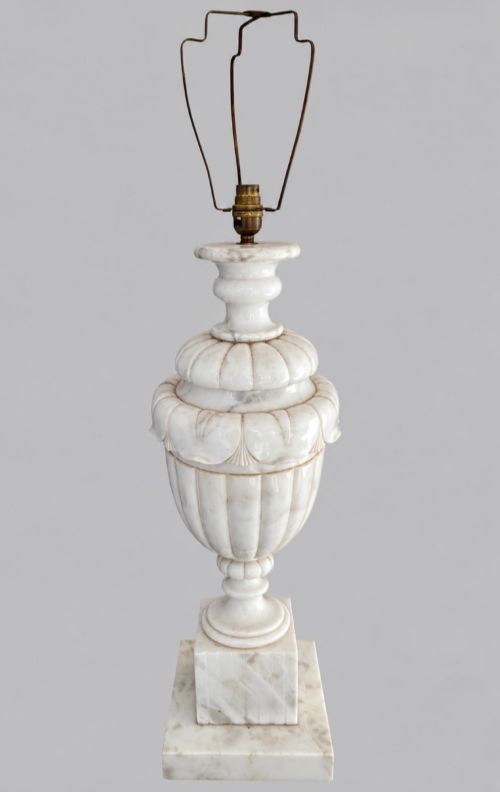

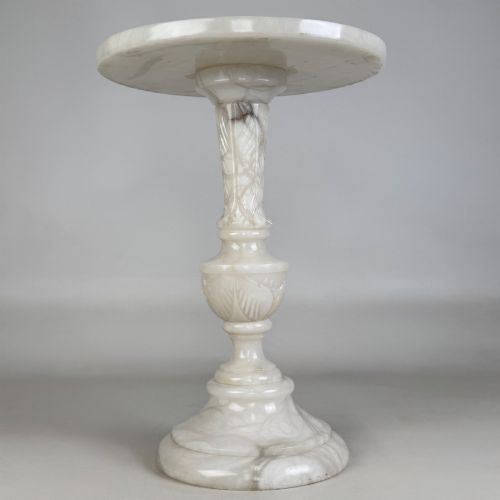
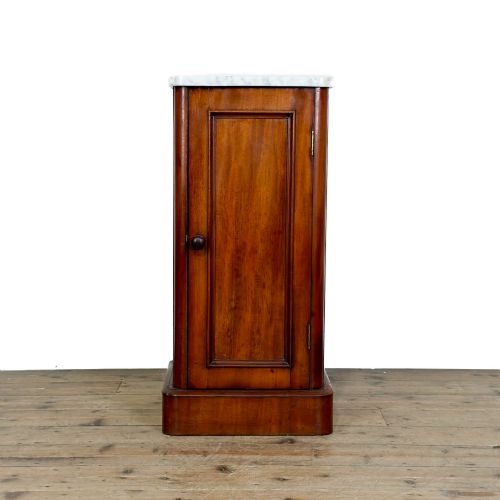
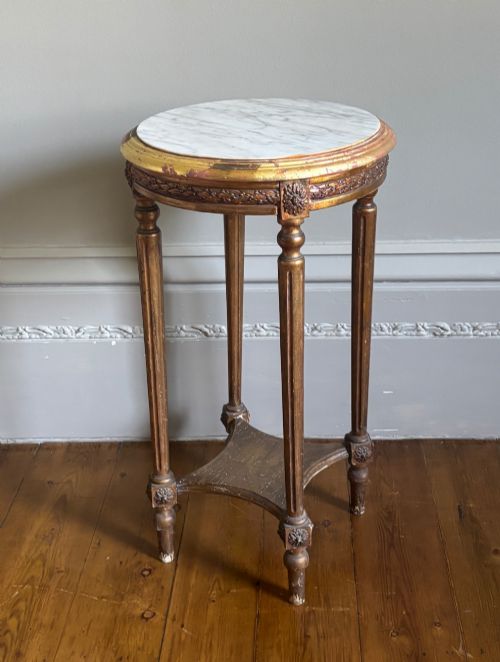
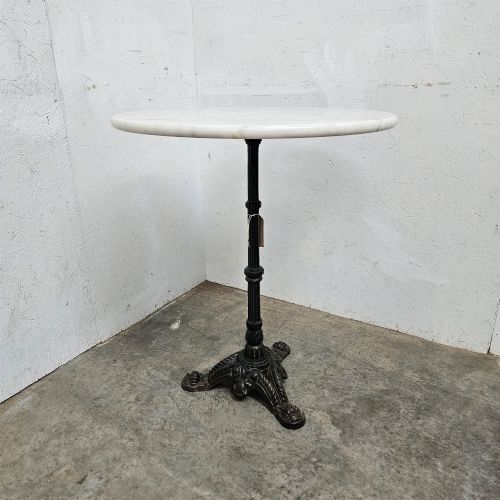
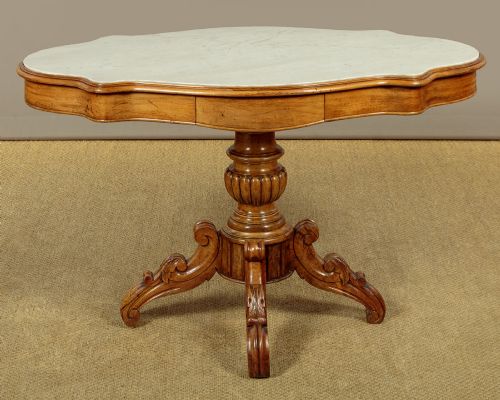


White Marble Pedestal Table
A white marble pedestal table brings cool stone and balanced form into a room, offering a sturdy surface for lamps and drinks.
White Marble Pedestal Table
When you search for a white marble pedestal table, you encounter a variety of forms designed to anchor a corner or centre a room. Side tables, centre tables, and bistro tables dominate the selection, often taking circular or octagonal shapes supported by a single central column or sturdy iron base.
The aesthetic reaches across multiple periods and regional styles, from nineteenth-century Victorian walnut pieces to French bistro iterations and Regency neoclassical designs. These tables combine utilitarian function with decorative presence, serving as washstands, occasional surfaces, or garden furnishings depending on their original purpose.
Buyers are most likely to meet circular marble tops paired with timber columns, cast iron legs, or giltwood frames. The stone provides a smooth, cool plane that contrasts sharply with the warm tones of mahogany, satinbirch, and walnut used in the bases.
What varies in quality
The calibre of a white marble pedestal table depends largely on the purity and figuring of the stone top and the integrity of its support structure. Superior examples display tightly fitted joints, substantial timber or metal bases, and finely carved detailing that remains crisp and steady.
Proportion and material selection dictate the overall standing of each piece, distinguishing utilitarian cafe furniture from formal neoclassical drawing-room tables. The weight distribution between the heavy marble top and the supporting pedestal ensures stability and longevity in daily use.
White Marble Pedestal Table Retail Price Guide 2026
Typical asking prices for white marble pedestal table among the pieces listed under this phrase on Sellingantiques today, from the lower quarter to the upper quarter. They describe what is for sale here now, not the wider market.
Some tables double as sneaky washstands, proving that nineteenth-century Victorians liked to scrub up next to fine mahogany.
The White Marble Pedestal Table Glossary
- Gueridon
- A small French table supported by a single column or central pedestal. These pieces often feature circular marble tops and ornate wooden or brass frames.
- Bistro table
- A small cafe table traditionally constructed with a durable stone or composite top and a cast iron base. They were designed for commercial hospitality use.
- Pedestal table
- Any table supported by a central pillar or column rather than four corner legs. This form allows maximum legroom around the perimeter.
- Neoclassical
- A style drawing inspiration from classical antiquity, prominent in Regency and French Empire furniture. It emphasises symmetry, clean lines, and restrained classical ornamentation.
- Washstand
- A utilitarian piece of furniture designed to hold a basin and pitcher, frequently finished with a marble top to resist water damage. Victorian examples often incorporate cabinetry or splashbacks.
White Marble Pedestal Table: Frequently Asked Questions
How do I clean a marble top?
Wipe the surface with a soft, damp cloth using mild, neutral soap to preserve the polish. Avoid acidic cleaners and abrasive scrubbing pads that can etch the stone.
Dry the marble thoroughly after washing to prevent water spots. Routine maintenance keeps the natural veining clear and bright.
Are these tables suitable for daily use?
Marble provides a durable, heat-resistant surface that handles everyday items like cups and books with ease. The central pedestal design also allows chairs to tuck neatly underneath.
Care should be taken with heavy impacts that might chip the edges of the stone. Using coasters prevents staining from liquids.
How do I identify a French bistro table?
French bistro tables typically combine a heavy white marble top with a dark cast iron or metal base. They were built for commercial cafes, resulting in practical, sturdy construction.
Many examples feature three-legged iron bases designed to stay level on uneven floors. Their scale tends to be compact and functional.
What is the difference between a centre table and a side table?
A centre table is finished on all sides and designed to stand free in the middle of a room as a focal point. Side tables are generally smaller and intended to sit flush against a wall or beside seating.
Both forms utilise marble tops across various historical periods, but their placement within a room differs.