


Early Textile Framed Art
Early textile framed art brings historic needlework and woven panels to the wall, offering a tangible connection to centuries of domestic skill.
Early Textile Framed Art
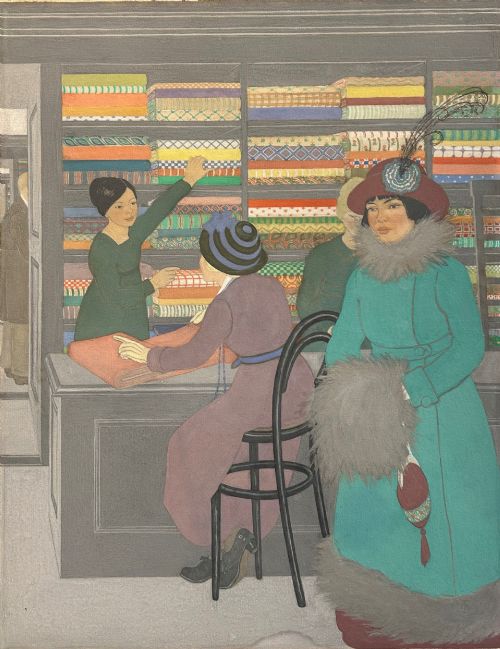
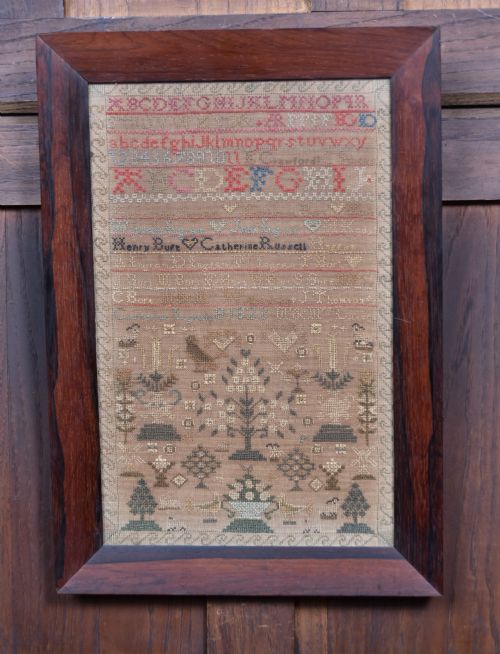
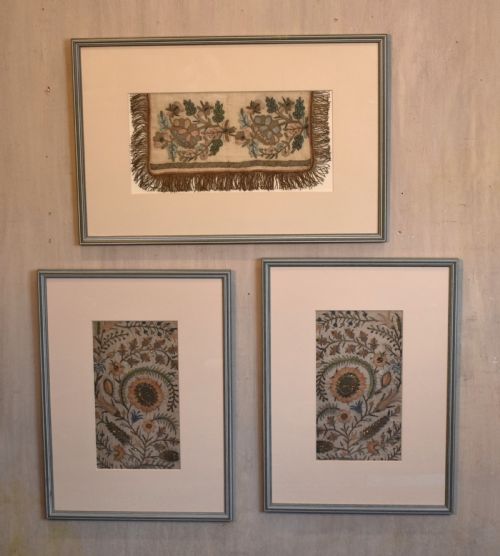
Early textile framed art encompasses needlework pictures, samplers, tapestries, and embroidered panels secured behind glass in period wooden frames. These pieces span from the seventeenth century through the early twentieth century, capturing centuries of textile traditions across England, Scotland, France, Italy, Germany, and beyond.
Makers range from named young girls completing educational samplers to professional workshops executing complex maps of England and Wales or intricate needlepoint panels. Each object preserves the specific material culture of its era, from Stuart needlework to Art Deco printed fabrics.
Materials and Techniques
Protection and presentation relied on traditional framing materials such as wood and giltwood, often housing the textiles beneath glass to safeguard the fragile organic fibres from dust and atmospheric moisture. The stitching techniques range from fine cross-stitch and crewel work to raised silk embroidery and heavy tapestry weaves.
Listings incorporate items dated across the seventeenth, eighteenth, nineteenth, and twentieth centuries, using wool, silk, linen, and paper.
Evaluating Quality and Execution
The distinction between ordinary and exceptional examples rests upon the precision of the needlework and the complexity of the composition. Works displaying sophisticated pictorial narratives, such as embroidered story scenes or detailed cartography, demonstrate a higher tier of skill than standard alphabet samplers.
Preservation of the original materials dictates the standing of a piece within its period. Examples that retain vibrant thread colours, stable fabric grounds, and period-appropriate frames offer a more complete historic survival than those compromised by heavy fading or modern reframing.
Mary Greening·Jane Wettmore·Susan Mary Williams·Mary Pinfold·Beatrice Saunders
The Early Textile Framed Art Glossary
- Sampler
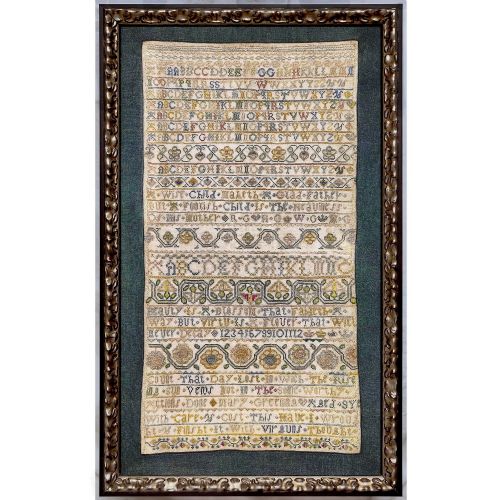
- A piece of needlework produced by a maker to demonstrate proficiency in various stitches and patterns. These often include alphabets, numerals, and moral verses alongside stitched signatures and dates.
- Crewel work
- A type of embroidery executed using fine wool yarn on a linen or twill ground. It allows for textured, flowing designs common in seventeenth and nineteenth-century wall pieces.
- Silkwork
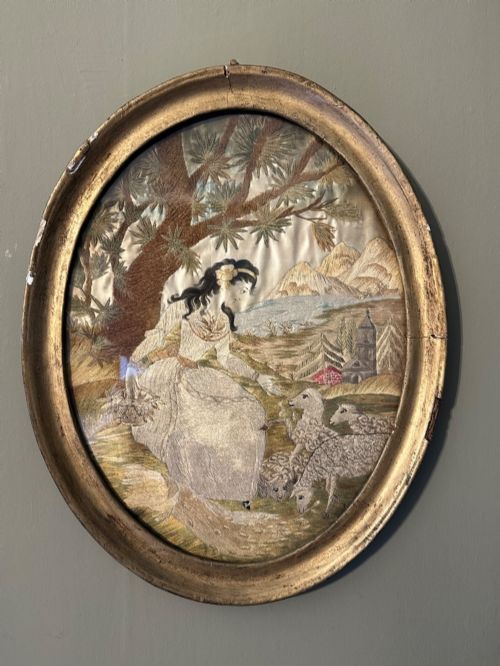
- Needlework created primarily using silk threads, frequently deployed in pictorial embroidery to achieve a glossy, reflective surface finish. These pictures often depict figures, landscapes, or allegorical scenes.
- Tapestry
- A form of heavy textile art woven by hand on a loom, combining different coloured warp and weft threads to form pictorial designs. Seventeenth-century panels often served functional roles before later framing.
- Kuba cloth
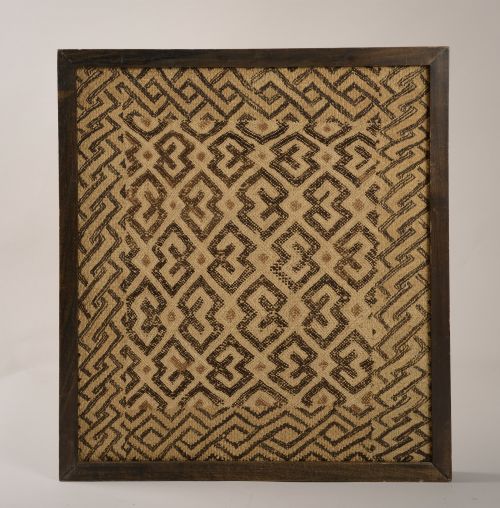
- A textile originating from Central Africa, woven from raffia palm fibre and decorated with geometric cut-pile embroidery. These pieces entered global collections and display distinctive abstract patterns.
Early Textile Framed Art: Frequently Asked Questions
How should I hang early textile framed art?
Keep framed textiles away from direct sunlight and damp environments to protect the fragile silk, wool, and paper components from degradation.
Utilise stable wall hooks suited to the weight of the wooden frame and ensure the piece hangs flat against a partition.
What periods do these framed textiles cover?
The listings span from the seventeenth century through the early twentieth century, incorporating Georgian, Regency, and Art Deco examples.
Earlier pieces often feature devotional or pastoral tapestries, while nineteenth-century items commonly showcase educational needlework samplers.
Are these pieces displayed behind glass?
Many historic textiles are framed beneath glass to shield the delicate threads and woven grounds from atmospheric dust and handling.
Glass also provides a stable microclimate, provided the framing allows adequate breathing space for organic materials.
Can I identify the maker of a sampler?
Numerous samplers and embroidered pictures include stitched signatures, names of schools, and specific dates worked directly into the composition.
Genealogical research or school records can sometimes link these names to specific historic individuals and institutions.