
Antique Floral Needlepoint
These antique floral needlepoint pieces are hand-worked textiles and upholstered furniture items that bring texture and historical colour into a room.
Antique Floral Needlepoint
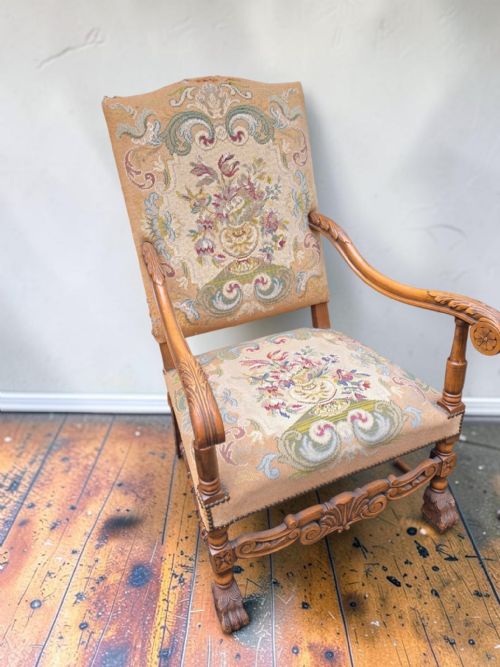
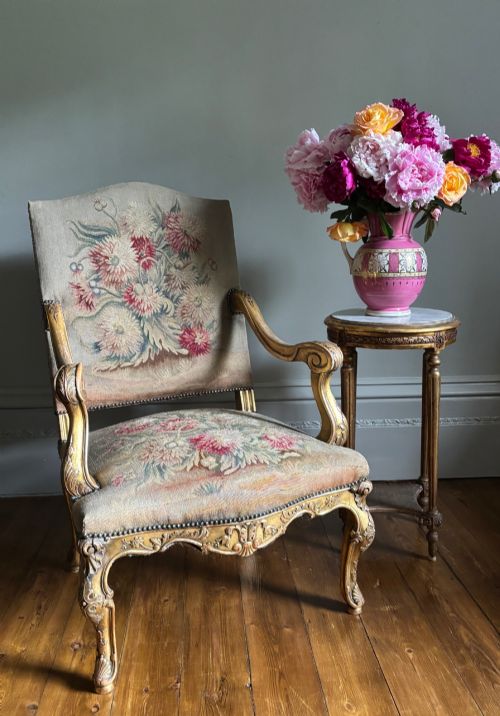
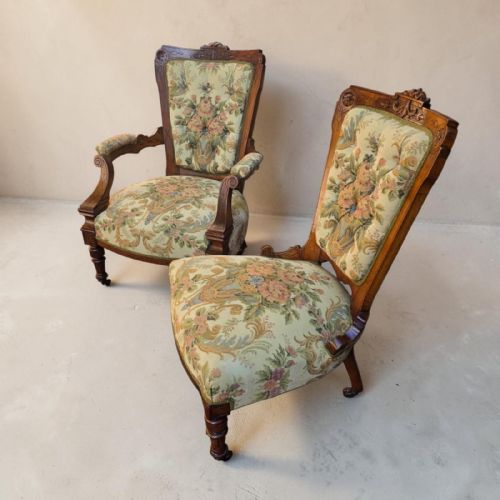
When you search for antique floral needlepoint, you encounter a variety of functional household objects and wall panels spanning the eighteenth, nineteenth, and early twentieth centuries. The selection encompasses seating such as armchairs, elbow chairs, side chairs, and footstools, alongside decorative items like fire screens and framed panels.
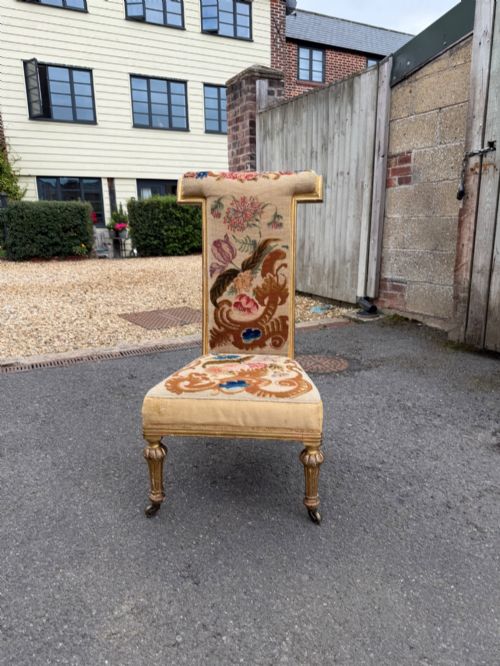
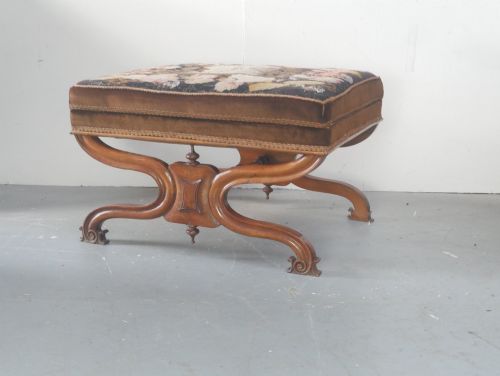
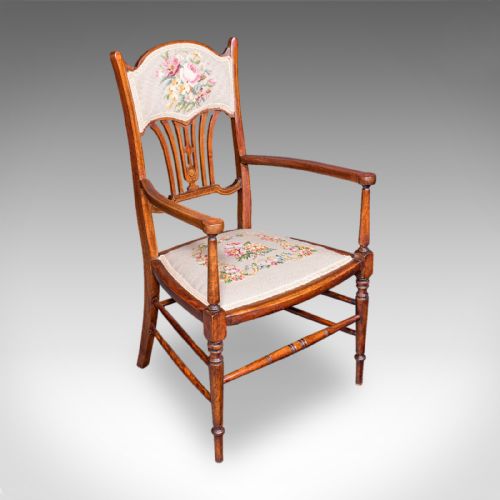
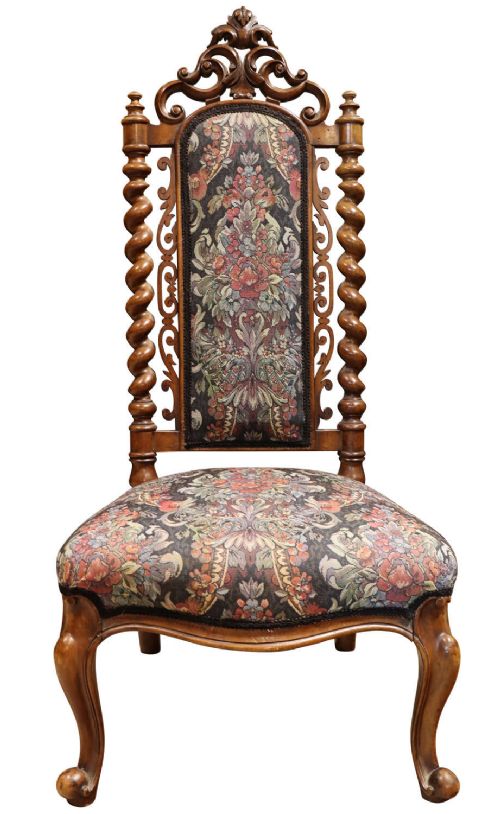
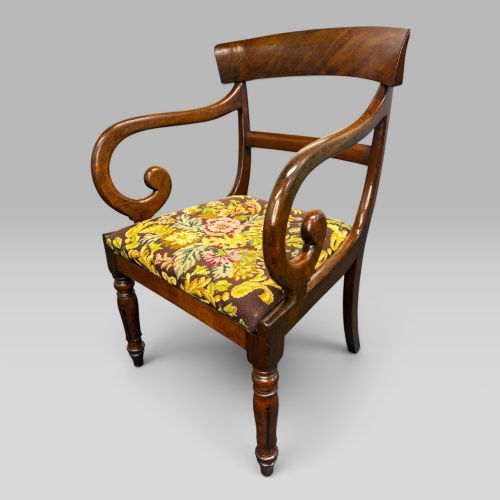
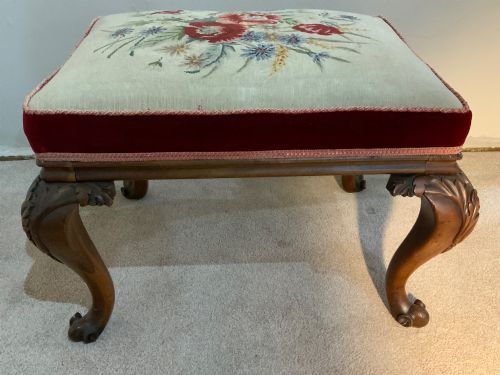
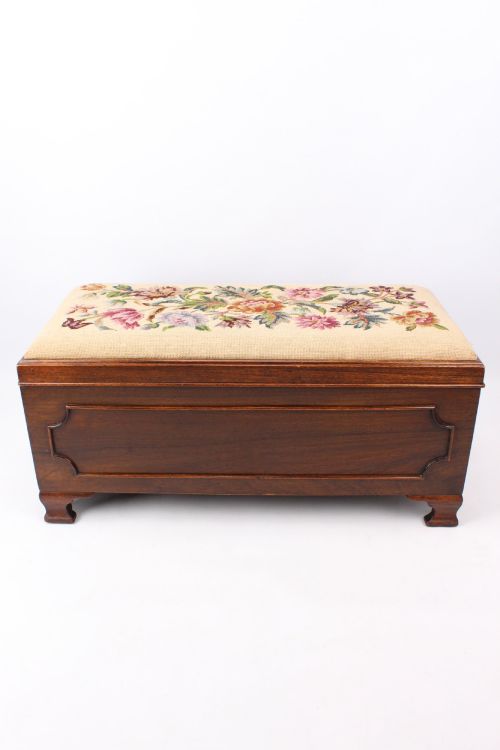
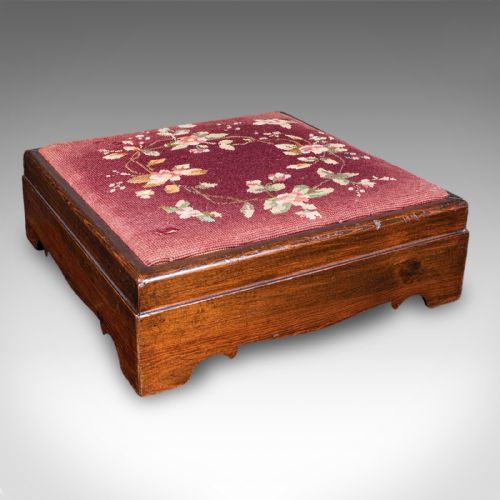
Victorian examples dominate the available forms, particularly walnut and mahogany stools and chairs upholstered in wool or silk needlework. Pieces range from small fireside footstools to large armchairs and occasional seating, often retaining their original fabric or historic textile covers.
How they were made
Maker construction relies on traditional timber frames fashioned from hardwoods such as walnut, mahogany, beech, rosewood, and pine, shaped into styles including Victorian, Regency, and Queen Anne. Joinery supports the structural forms of chairs, stools, and screens before upholstery or textile insertion takes place.
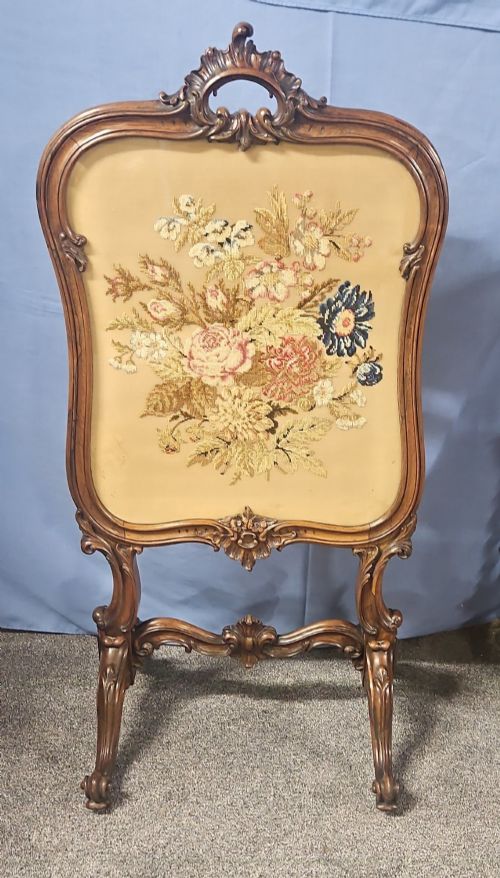
Surface ornamentation integrates wool, silk, and tapestry threads worked onto canvas backing, complemented by carved wood details, inlay, and occasional giltwood finishes. Framed panels and pole screens utilise textile embroidery housed behind glass or mounted directly within timber frames.
Listings feature eighteenth-century European tapestry panels alongside nineteenth-century Victorian walnut armchairs, footstools, and rosewood pole screens.
What varies in quality
The fineness of the needlework stitch defines the visual intricacy of the botanical motifs, where denser wool or silk thread counts produce sharper floral detail and more enduring textile surfaces. Greater precision in the hand-stitching separates standard decorative covers from exceptional artisanal execution.
Frame selection and carving depth establish the baseline standard of the underlying furniture piece, ranging from simple turned pine or beech supports to elaborate carved walnut and rosewood cabriole legs. The harmony between the original textile and the timber structure governs the overall integrity of the piece.
Waring and Gillow
The Antique Floral Needlepoint Glossary
- Needlepoint
- A type of canvas work embroidery stitched by hand using wool or silk threads to form pictorial or floral designs. This technique provides the decorative surface seen on cushions, chair seats, and fire screen panels.
- Pole screen
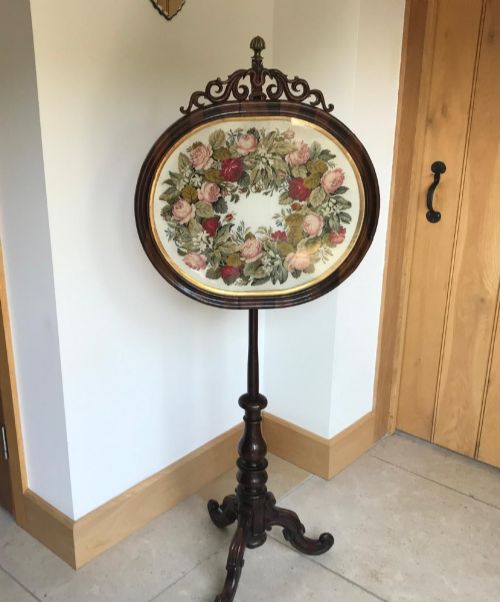
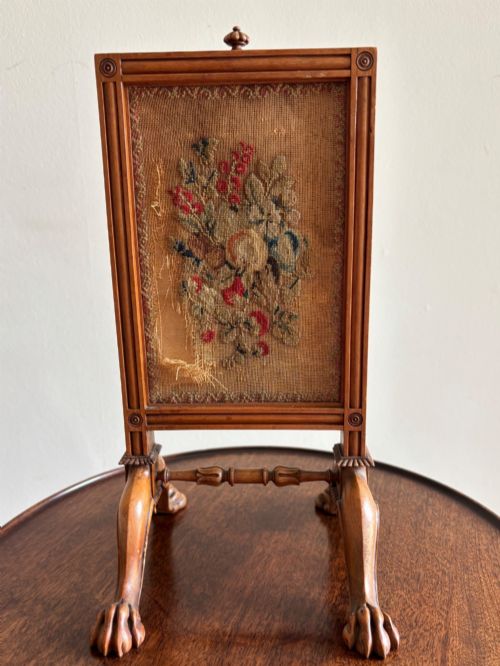
- A vertical decorative screen mounted on a slender tripod or pedestal base with an adjustable height panel. It was designed to shield a person's face from the radiant heat of an open fireplace.
- Prie Dieu
- A devotional prayer chair featuring a low seat and an upper rest designed for kneeling and leaning. They frequently feature needlepoint upholstery and nineteenth-century woodwork.
- Tapestry
- A form of textile art woven on a loom or worked by hand to depict scenic or floral patterns. In antique furniture, the term often describes heavy needlework covers on chairs and ottomans.
- Cabriole leg
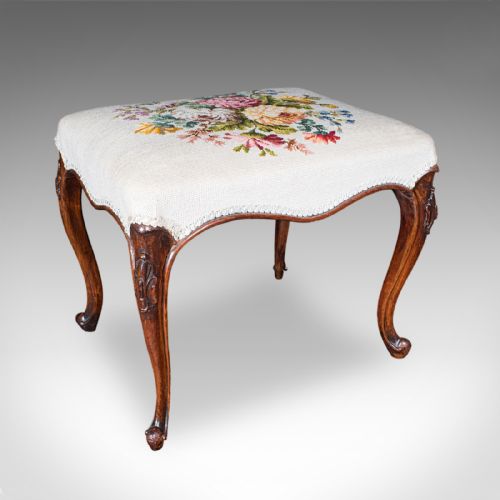
- A furniture leg that curves outward at the knee and tapers inward toward the foot in a graceful arc. This form appears frequently on Victorian and eighteenth-century style walnut stools and chairs.
Antique Floral Needlepoint: Frequently Asked Questions
What is an antique needlepoint fire screen?
A fire screen is a decorative wooden frame holding an embroidered or needlepoint panel used in historic rooms to deflect fireplace heat. They typically stand on tripod bases or feet and feature floral woolwork.
In period interiors, these screens sat near hearths when fires were unlit, doubling as decorative displays of needlework skill when the room was not in use.
How do I care for antique needlepoint upholstery?
Protect wool and silk needlepoint panels from direct sunlight to prevent the historic dyed yarns from fading over time. Gentle surface dusting with a soft brush helps maintain the integrity of the fragile textile fibres.
Avoid using liquid cleaners or heavy friction on the stitched canvas. Professional textile conservationists should handle any necessary repairs to worn stitching.
How can I tell Victorian needlepoint from later pieces?
Victorian needlepoint usually employs natural wool yarns dyed in muted historic tones, mounted on hardwood frames made of walnut, rosewood, or mahogany. The stitch tension and canvas backing show distinct signs of hand-working characteristic of the nineteenth century.
Later twentieth-century reproductions often utilise different backing materials and machine-assisted tension, lacking the specific joinery and timber patination associated with Victorian manufacturing.
Where were footstools and ottomans placed in a Victorian home?
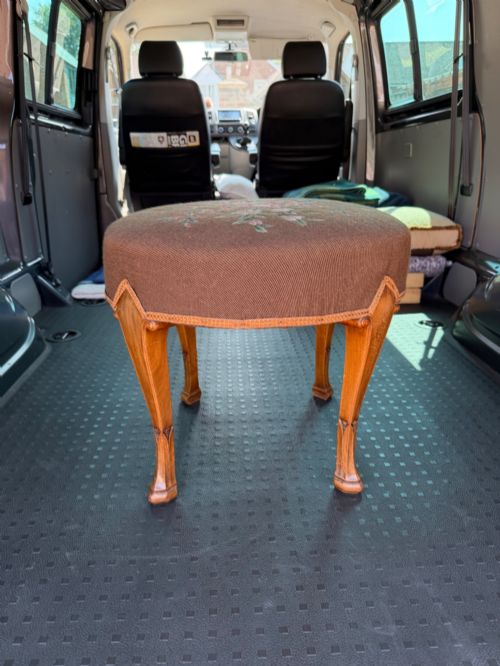
Victorian footstools and ottomans were positioned beside firesides, in morning rooms, and in dressing areas to provide comfortable leg support while seated. Smaller walnut and mahogany stools were easily moved around the room as needed.
Their floral needlepoint tops added colour and texture to domestic seating arrangements, complementing larger armchairs and salon suites.