




18th Century Floral Tapestry
An 18th century floral tapestry brings rich botanical texture to a room, offering grand wall panels and historic upholstered seating.
18th Century Floral Tapestry
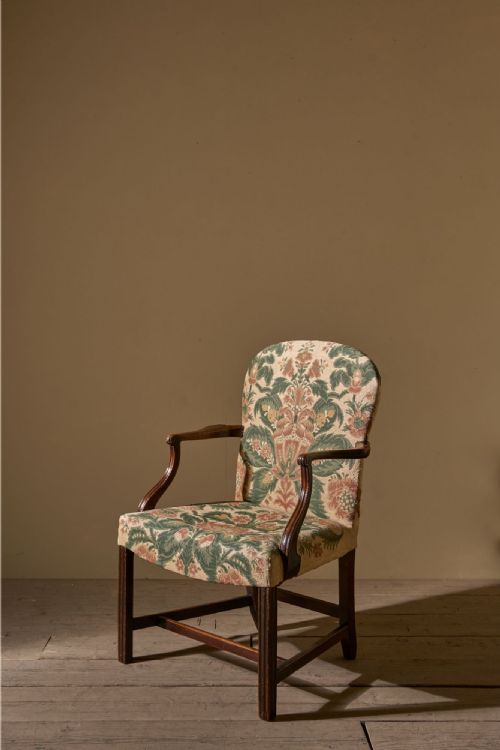
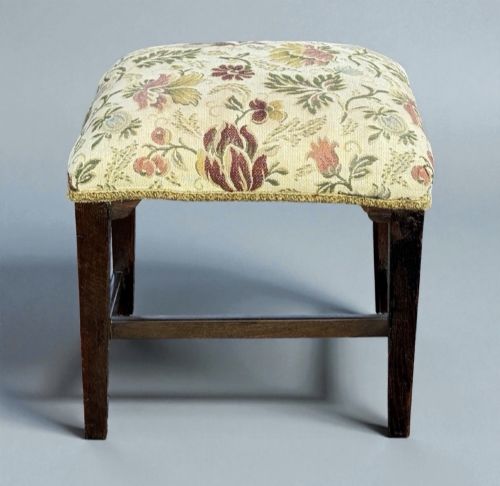
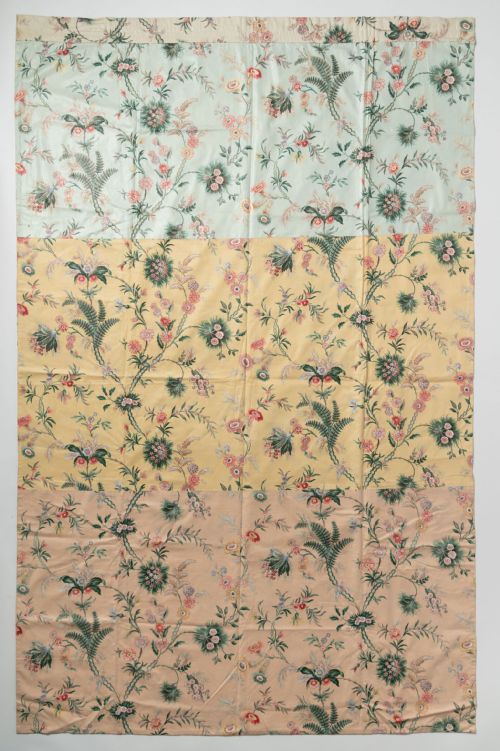
When you search for an 18th century floral tapestry, you encounter a diverse range of textiles and furniture incorporating historic needlework. The selection includes large wall hangings, framed needlework pictures, and smaller panels alongside seating such as armchairs, desk chairs, footstools, and settees.
The objects span multiple periods, with pieces originating from the 18th century and Georgian eras, supplemented by later 19th-century interpretations and early 20th-century revivals. Origin markers point to French, English, Italian, and Flemish workshops.
Wall tapestries and verdure panels dominate the large textile forms, while the seating category utilises tapestry fabric and needlework for upholstery on mahogany, walnut, oak, and painted wood frames.
How they were made
Historic weavers and embroiderers constructed these pieces using combinations of wool, silk, and linen yarns. These textiles were worked as needlework pictures, embroidered panels, or woven wall tapestries.
Wooden frames for the seating and panels were shaped from mahogany, walnut, oak, and other timber. Craftsmen joined these structures to support heavy textile upholstery and framed fabric wall art.
Listings feature 18th-century, Georgian, 19th-century, and 20th-century pieces, spanning wall tapestries, needlework pictures, footstools, and armchairs in wood and textile.
What varies in quality
The distinction between ordinary and superior pieces rests on the fineness of the needlework and the complexity of the botanical design. Verdure tapestries and detailed needlework pictures demonstrate greater artistry through nuanced colour blending in wool and silk.
The underlying woodwork on chairs and footstools influences the overall standard, where carved mahogany or walnut frames match the execution of the textile. Condition and originality of the fabric relative to the wooden frame also separate individual examples.
The 18th Century Floral Tapestry Glossary
- Verdure tapestry
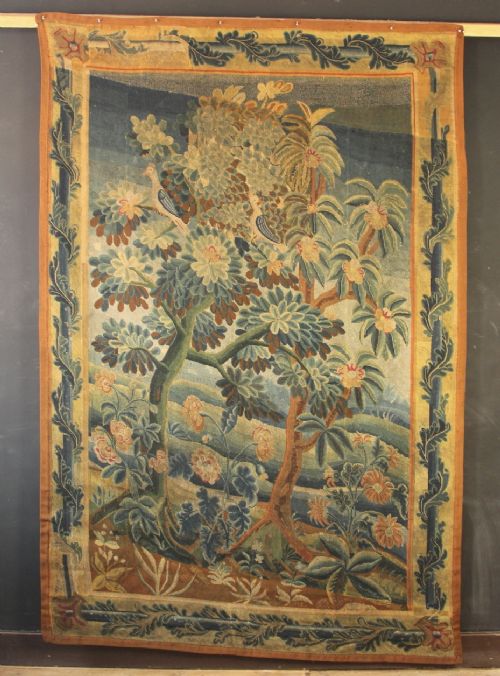
- A wall hanging featuring a stylized landscape dominated by foliage, trees, and plants, often produced in European centres such as Flanders or France. These pieces typically depict lush garden or forest scenes.
- Needlework picture
- A framed textile created by stitching wool, silk, or linen thread onto a ground fabric to form a pictorial scene. They function as wall art rather than upholstery.
- Needlework panel
- A flat section of stitched textile intended for insertion into furniture upholstery or display as an independent wall hanging. They display floral or geometric motifs.
- Georgian period
- The era spanning the reigns of the four British kings named George, characterised by distinct shifts in furniture design and interior decoration. Pieces from this time often feature mahogany or oak construction.
- Queen Anne style
- A design movement preceding the Georgian era, noted for graceful walnut frames and curved lines on seating. Stools and chairs from this period utilise distinct proportions.
18th Century Floral Tapestry: Frequently Asked Questions
How do I hang a large wall tapestry?
Large wall tapestries require even weight distribution across the upper edge to prevent distortion of the fabric. A hidden wooden batten or fabric sleeve sewn to the back is standard for wall mounting.
Keep textile hangings away from direct sunlight and damp environments to protect the historic wool, silk, and linen fibres.
Can I sit on antique tapestry chairs?
Chairs and footstools upholstered in historic needlework can support gentle sitting if the underlying wooden frame is structurally sound. Regular use places friction on aged wool and silk threads, so moderation preserves the fabric.
Examine the mahogany or walnut frame and the tension of the webbing beneath before putting historic seating into daily service.
What is a verdure tapestry?
A verdure tapestry is a woven textile depicting a garden or woodland landscape filled with leaves, trees, and occasionally birds. The palette relies heavily on greens and earthy tones to create a naturalistic scene.
These large panels served as decorative wall insulation and visual focal points in grand interiors.
How do I clean historic needlework?
Historic textiles require specialist conservation cleaning rather than standard domestic washing methods. Gentle surface dusting with a soft brush helps remove loose particles without disturbing fragile fibres.
Professional textile conservators should handle any major cleaning or structural stabilization of 18th-century needlework.