








Georgian Embroidery Artwork
Georgian embroidery artwork brings historic needlework into modern interiors, offering framed silk and wool panels that capture centuries of domestic handcraft.
Georgian Embroidery Artwork
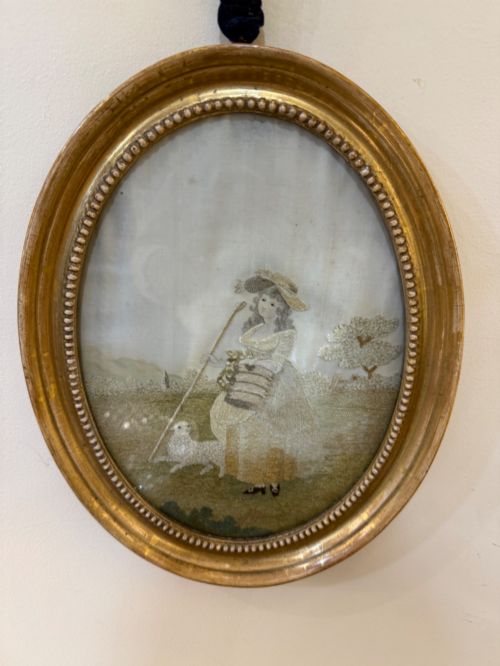
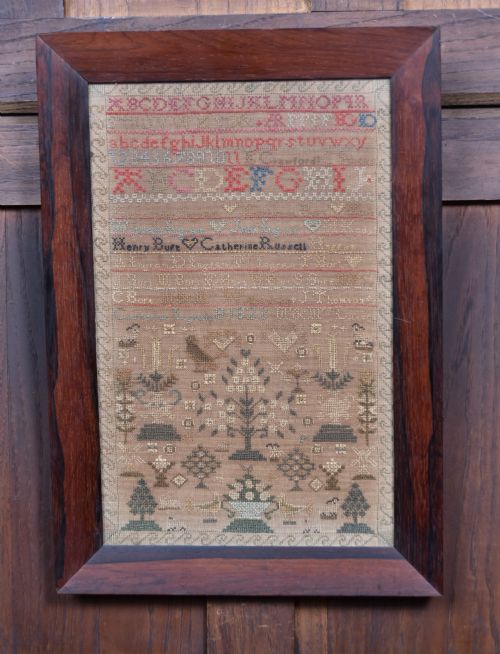
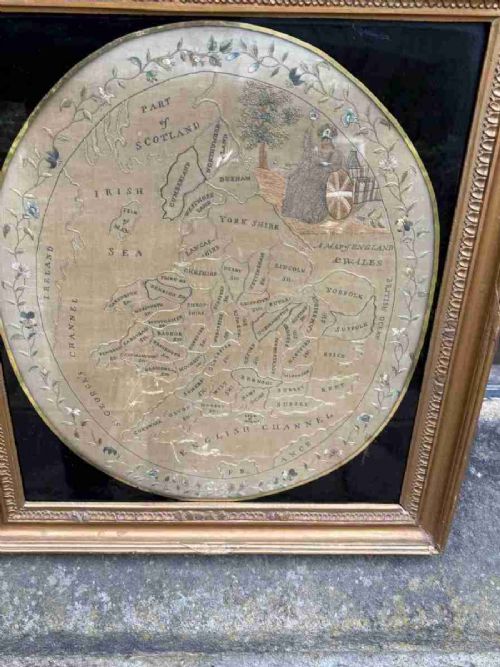
Georgian embroidery artwork comprises needlework pictures, samplers, and textile art panels created primarily during the eighteenth and nineteenth centuries. These framed works include pastoral farming scenes, religious depictions, theatrical subjects, map samplers, and woolwork pictures of figures in gardens.
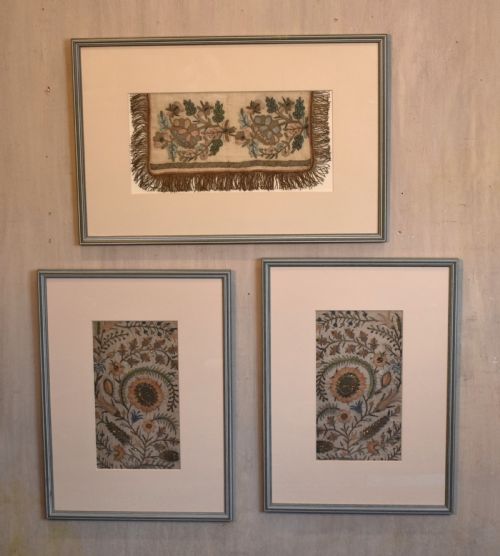
The pieces appearing on this page span the Georgian, Regency, and early nineteenth-century periods, alongside later Victorian and Rococo Revival examples. Forms range from oval woolwork panels and long stitch silk pairs to octagonal giltwood frames and crewel work embroidery.
Makers utilised linen and wool grounds worked with silk and gold thread, mounting the finished textiles into period wooden frames, some featuring verre églomisé glass. These works function as wall art, preserving domestic needlework techniques across centuries.
How they were made
Artisans worked embroidery threads of silk and wool onto woven linen grounds, employing long stitch, crewel work, and specialised needlework techniques to build pictorial depth. Metal elements such as gold leaf appear alongside thread to highlight specific details within the composition.
Framing played a significant role in the construction of these textile artworks, utilising wood, giltwood, and specialised verre églomisé glass panels decorated with reverse painting and gilding. Frames were shaped in octagonal or oval formats to suit the stitched subject matter.
Needlework formats recorded here range from map samplers and crewel work to oval woolwork pictures and framed textile art panels.
What varies in quality
The finesse of the needlework execution dictates the visual impact of each piece, distinguishing accomplished pictorial shading from simpler stitched forms. The complexity of the subject matter, such as multi-figure pastoral or theatrical scenes, demands greater technical skill than standard samplers.
The preservation of the textile surface and the integrity of the original frame influence the overall character of the work. Examples retained in contemporary giltwood or verre églomisé settings preserve the complete historical presentation.
The Georgian Embroidery Artwork Glossary
- Verre églomisé
- A method of applying gold or silver leaf to glass and engraving a design before painting the reverse side. This technique produces decorative borders on framing glasses.
- Crewel work
- Embroidery executed using wool yarn on a linen ground. This method creates textured surfaces suitable for pictorial wall art.
- Sampler
- A piece of needlework demonstrating a beginner's or maker's skill with various stitches, alphabets, or motifs. Map samplers combine geography with practical stitching practice.
- Long stitch
- An embroidery technique using parallel stitches of varying lengths to cover the canvas or linen ground. This stitch forms smooth pictorial gradations in silk pictures.
Georgian Embroidery Artwork: Frequently Asked Questions
How are antique textile artworks framed?
These pieces are typically mounted behind glass within wooden, giltwood, or verre églomisé frames designed to protect the delicate threads from environmental damage and dust.
Original frames often complement the period of the embroidery, maintaining the aesthetic balance established when the textile was first mounted.
What subjects appear in these embroideries?
Common subjects include pastoral farming landscapes, religious scenes, theatrical figures, and depictions of people within gardens. Map samplers and textual works like commandments also feature among the surviving pieces.
Each subject reflects the domestic education, artistic interests, and decorative trends of the eighteenth and nineteenth centuries.
How do I distinguish Regency pieces from earlier work?
Regency items often utilise specific stitching methods such as long stitch silk pairs and incorporate distinct framing styles like verre églomisé glass. Eighteenth-century examples tend to focus on pastoral or religious silk and wool pictures within simple wooden or gilt frames.
Stylistic shifts in costume, colour palettes, and framing materials assist in determining the approximate period of execution.
Where should I hang needlework pictures?
Display these textile artworks away from direct sunlight and high humidity to prevent the silk and wool threads from fading or degrading. Interior walls with stable environmental conditions suit framed fabric panels best.
Proper placement ensures the longevity of both the delicate stitching and the historic framing materials.