




Cream Embroidered Textile Art
Cream embroidered textile art brings historic needlework into modern interiors, offering centuries of silk and metallic thread craftsmanship.
Cream Embroidered Textile Art
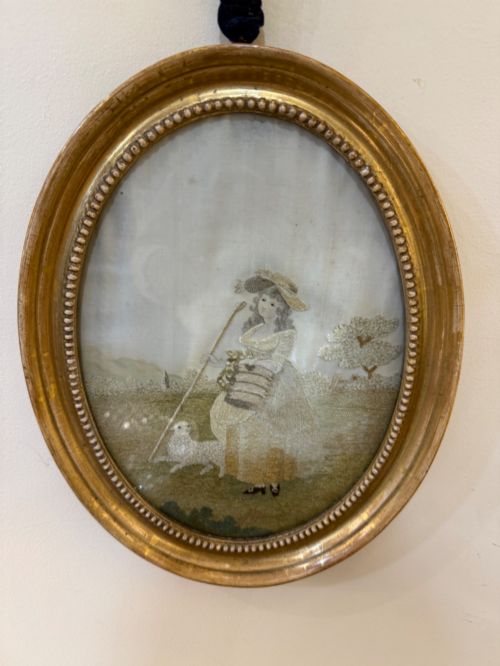
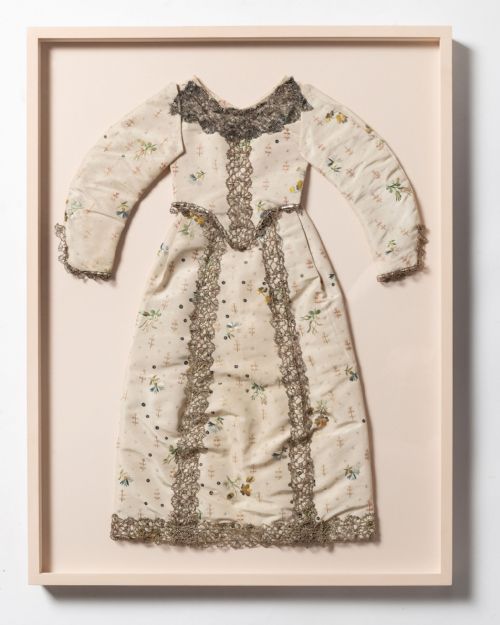
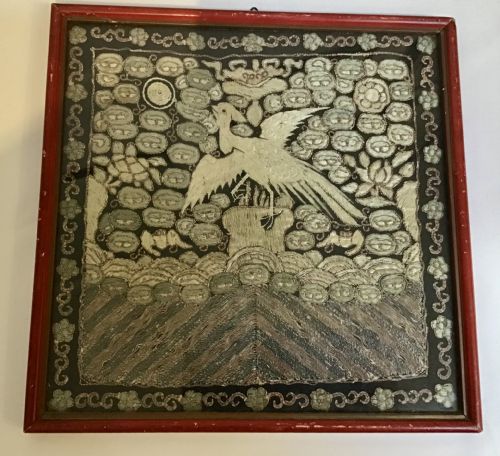
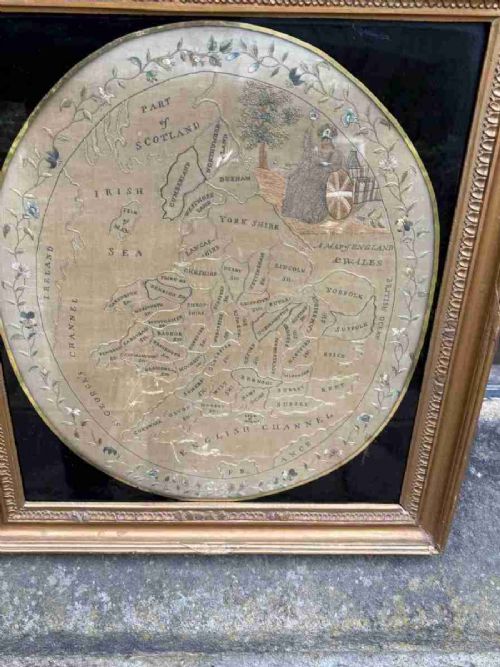
Cream embroidered textile art encompasses needlework samplers, wall hangings, framed silk panels, and traditional garments from periods ranging from the seventeenth century to the late Victorian era. Buyers searching this category frequently encounter English map samplers, Central Asian suzanis, and Chinese silk rank badges framed for display.
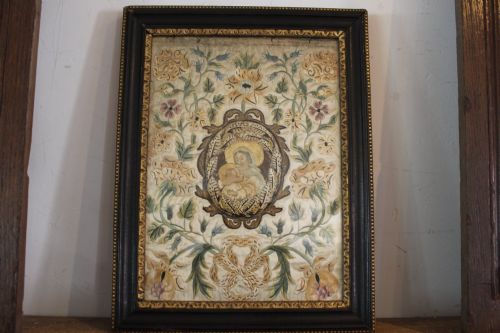
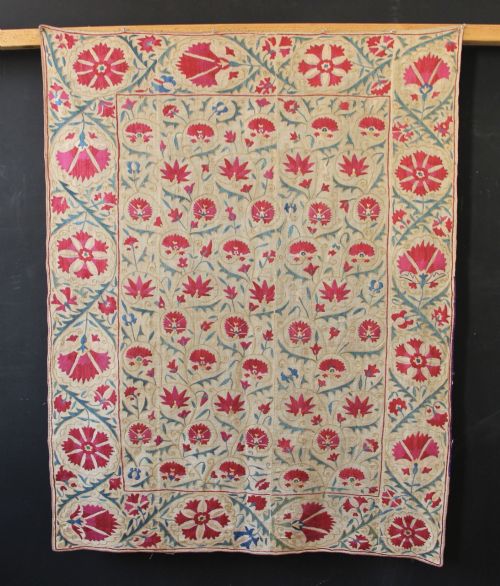
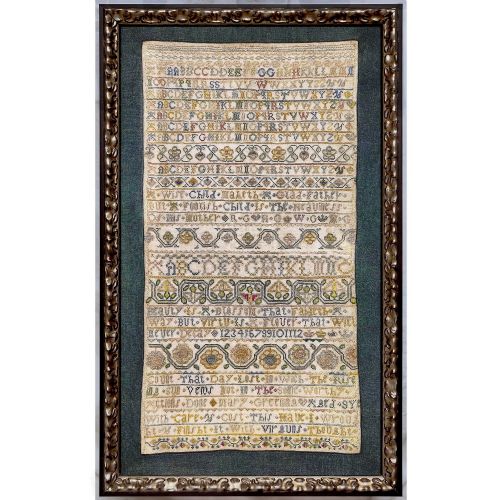
The selection on this page spans domestic band samplers worked by young girls, religious needlepoint pictures, and large tribal embroideries originating from workshops in Bokhara, Samarkand, and Nurata. Seventeenth-century panels and Georgian cartography pieces represent the earlier end of the timeline available here.
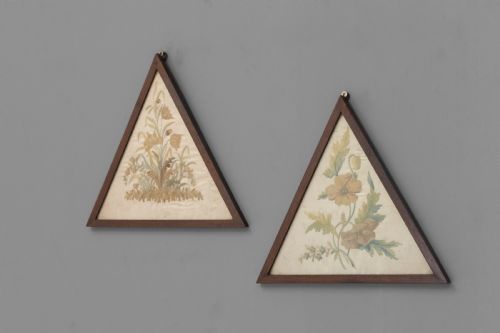
Regional variations include Greek Island embroideries from Skyros alongside Japanese textiles and Qing dynasty robes, showing how diverse cultural traditions utilised silk and cotton grounds. Most pieces are preserved behind glass within period wooden or giltwood frames to protect delicate threads.
Materials and execution
These textiles rely on natural woven grounds of linen, cotton, and silk, providing a stable foundation for intricate needlework. Makers worked complex designs using fine silk threads, wool, and metallic thread to build pictorial depth and texture.
Execution involves specialised stitches executed by hand, from the precise lettering on geographical samplers to the dense floral motifs found on Central Asian suzanis. Many works incorporate glass elements or specialised mounting techniques within wooden and giltwood frames to secure fragile fabrics.
Twelve-year-old Margaret Ann Blackow stitched her name and age into a mid-Victorian sampler, leaving her childhood permanently threaded in silk.
Assessing quality
Condition and survival of the original ground material largely dictate the stature of a piece. Works retaining vibrant silk colours and intact metallic threads without excessive ground deterioration stand at the upper end of the scale.
Iida Takashimaya Company
The Cream Embroidered Textile Art Glossary
- Sampler
- A piece of needlework produced as a demonstration or test of skill in various stitches. Early examples often feature alphabets, numerals, and religious verses before evolving into geographical maps.
- Suzani
- A type of embroidered tribal wall hanging made in Tajikistan, Uzbekistan, and other Central Asian nations. These large textiles typically feature bold floral designs worked in silk on a cotton or linen ground.
- Rank badge
- A square embroidered patch indicating the status of civil officials and military officers in imperial China. They were stitched using silk and metallic threads on a fabric base.
- Giltwood
- Wood that has been treated with a thin layer of gold leaf or gesso. Antique frames utilising this finish frequently accompany formal needlework pictures.
- Band sampler
- A long, narrow style of embroidery popular in the seventeenth century featuring horizontal rows of disparate patterns. Needleworkers used these to record and practice intricate stitch types.
Cream Embroidered Textile Art: Frequently Asked Questions
What is cream embroidered textile art?
Cream embroidered textile art refers to historical needlework mounted and displayed as wall art, utilising light-coloured linen, cotton, or silk grounds.
Items range from seventeenth-century English band samplers and Georgian map embroideries to nineteenth-century Central Asian suzanis and Chinese rank badges.
How were antique samplers used?
Historic samplers served primarily as educational exercises where young girls demonstrated their mastery of needle techniques, alphabets, and arithmetic.
Over time, completed samplers were framed and displayed in domestic interiors as testaments to household accomplishment and refined taste.
How should I live with framed textiles?
Framed needlework requires careful placement away from direct sunlight to prevent the fading of delicate silk and wool threads.
Maintaining stable indoor humidity levels protects both the historic fabrics and the original wooden or giltwood frames enclosing them.
How do I identify the period?
Dating relies on stylistic clues such as lettering fonts, cartography details, costume styles depicted, and stitching materials.
Documented dates worked directly into pieces by makers, alongside traditional regional motifs, help assign items to specific centuries like the Georgian or Victorian eras.