





Early Oak Blanket Chest
An early oak blanket chest holds centuries of utility and dense timber, offering a grounded storage piece that anchors any room with historic weight.
Early Oak Blanket Chest
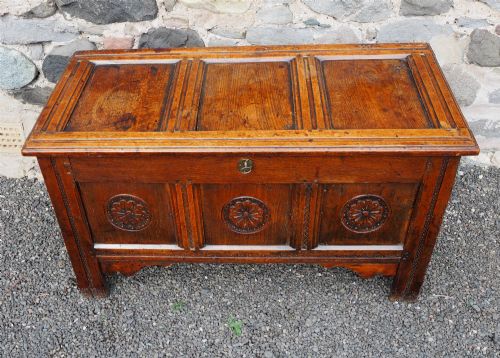
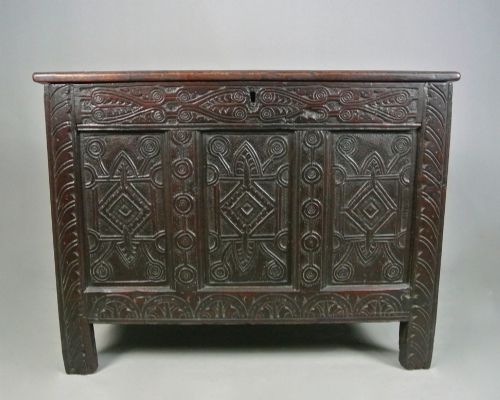
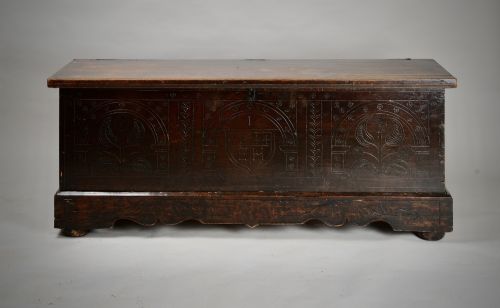
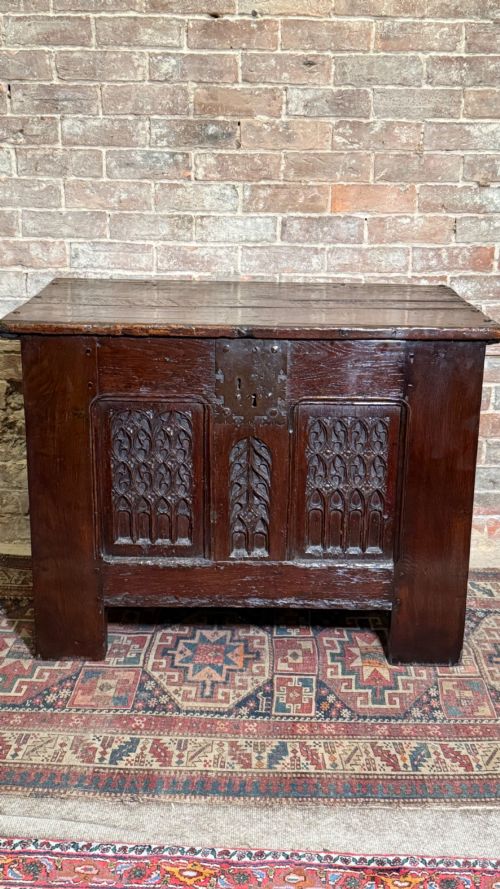
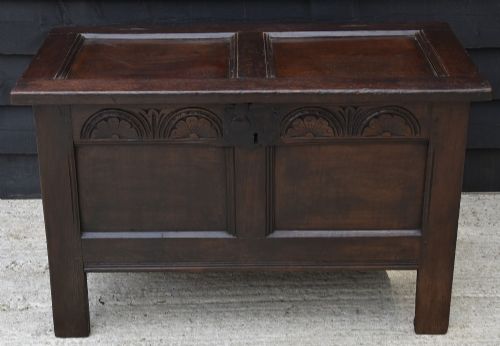
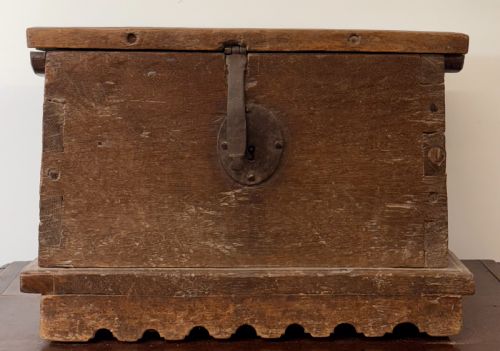
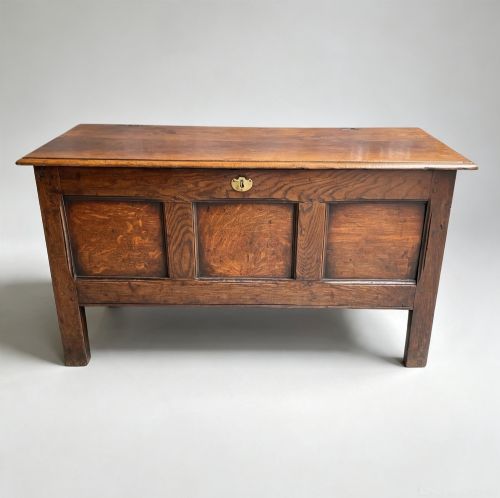
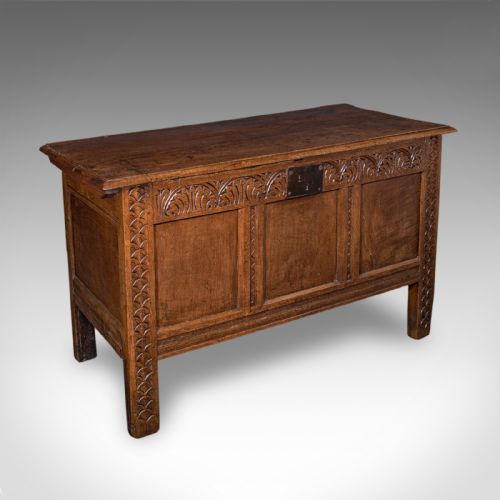
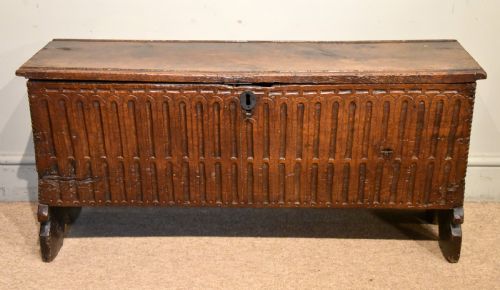
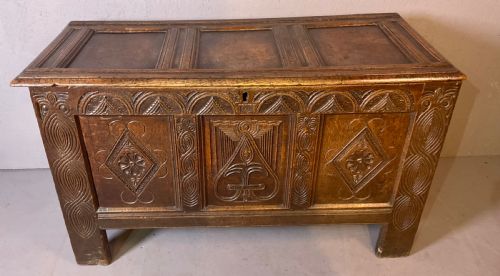
When you search for an early oak blanket chest, you encounter solid timber storage pieces spanning from the sixteenth century through the eighteenth century, including coffer forms, mule chests, and panelled boxes. These items serve as functional furniture designed originally for household textiles and valuables, often appearing in small proportions or grand dimensions.
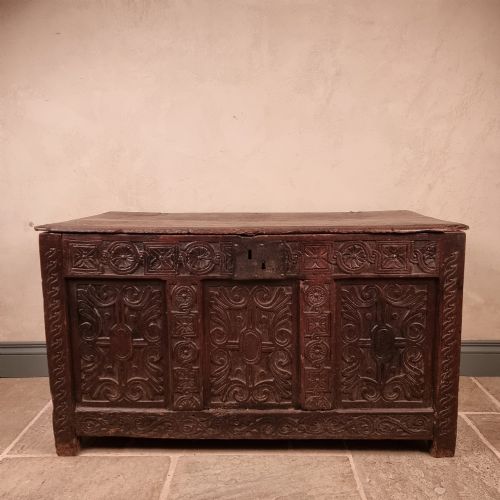
The versions most frequently met on this page date from the seventeenth century and the eighteenth century, showing construction methods typical of Jacobean, Elizabethan, and early Georgian eras. Their forms range from simple board construction to intricately carved panel designs intended for domestic use.
Materials and construction
Makers built these pieces primarily using solid oak timber, frequently augmented with iron or brass hardware such as hinges and locks, and occasionally incorporating fruitwood, walnut, or paint finishes. Structural integrity relied on heavy boards joined by pegged mortise and tenon joints or simple plank construction.
Surface decoration involved hand-carving techniques, including linenfold patterns, fluting, geometric motifs, and arcading. Blacksmiths forged the wrought iron and brass elements that secured the lids and provided structural reinforcement to the corners.
Listings feature oak material predominantly, alongside walnut, fruitwood, and iron, spanning the sixteenth to the nineteenth century.
What separates examples
The distinction between standard examples and superior pieces rests upon the depth and intricacy of the hand-carved decoration, the presence of untouched original surfaces, and the integrity of the timber. Pieces retaining early hardware and patinated boards command greater appreciation than heavily restored equivalents.
Proportion and scale also dictate distinction, as smaller scaled coffers and miniature chest forms demonstrate greater joiner skill. The survival of period details such as dated inscriptions or regional construction traits elevates the character of the item.
The Early Oak Blanket Chest Glossary
- Coffer
- A heavy wooden chest used for storing valuables, textiles, or documents. These storage boxes often feature hinged lids and robust board construction.
- Mule chest
- A storage chest featuring one or more drawers beneath the main compartment. This form bridges the traditional coffer and the later chest of drawers.
- Linenfold
- A style of wood carving that imitates folded linen cloth. It appears frequently on panels of sixteenth-century furniture.
- Six plank coffer
- A simple chest constructed from six individual boards joined at the edges. This method represents an early and straightforward style of cabinet making.
- Arcading
- A decorative row of arches supported by piers or columns carved into wood panels. This architectural motif often distinguishes seventeenth-century joinery.
Early Oak Blanket Chest: Frequently Asked Questions
What is an early oak blanket chest?
An early oak blanket chest is a heavy wooden storage box built centuries ago to hold household linens, blankets, and valuables. These items display the solid construction and joinery techniques of past eras.
Most examples use sturdy oak boards, frequently decorated with hand-carved panels, geometric mouldings, or simple iron hardware.
How were these chests used historically?
Households utilised these chests to secure precious textiles, clothing, and documents away from dampness and pests. Their heavy lids allowed the pieces to double as seating benches.
In domestic spaces, they sat in chambers or halls, serving both as secure containers and functional furniture for daily living.
How do I live with an antique chest?
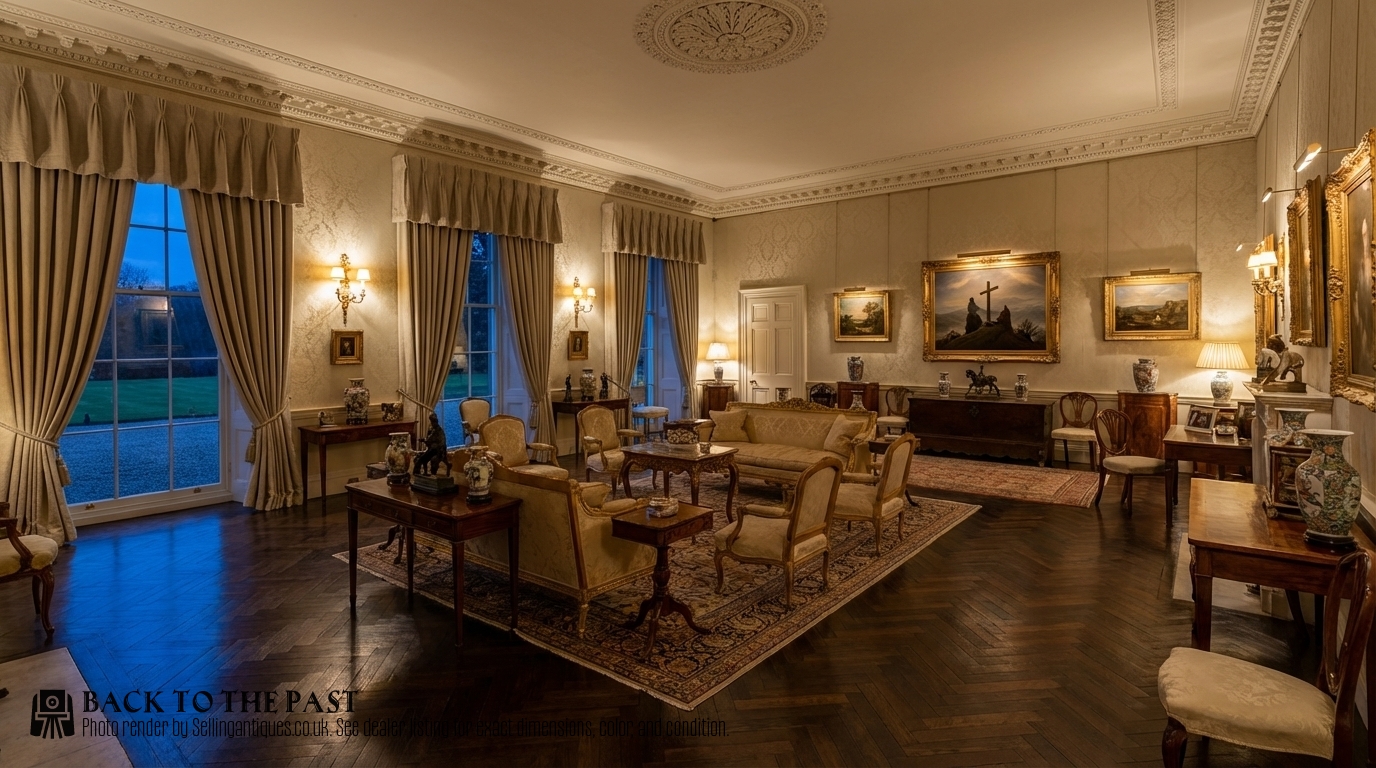
Placing an antique chest in a modern interior provides practical storage while introducing historic texture and warmth to a room. They function well as window seats, hallway storage, or coffee tables.
Keep the timber away from direct heat sources and sudden humidity changes to preserve the original wood and finish over time.
How can I tell the period?
Dating relies on observing construction methods, carving styles, and hardware types characteristic of specific centuries. Sixteenth-century pieces often feature linenfold panels, while seventeenth-century versions display geometric mouldings or arcading.
Examining the tool marks, timber grain, and joint construction helps confirm whether a piece belongs to the Tudor, Jacobean, or Georgian era.