
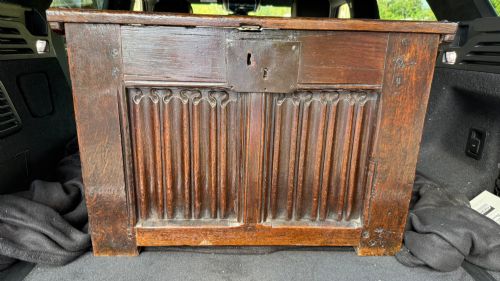
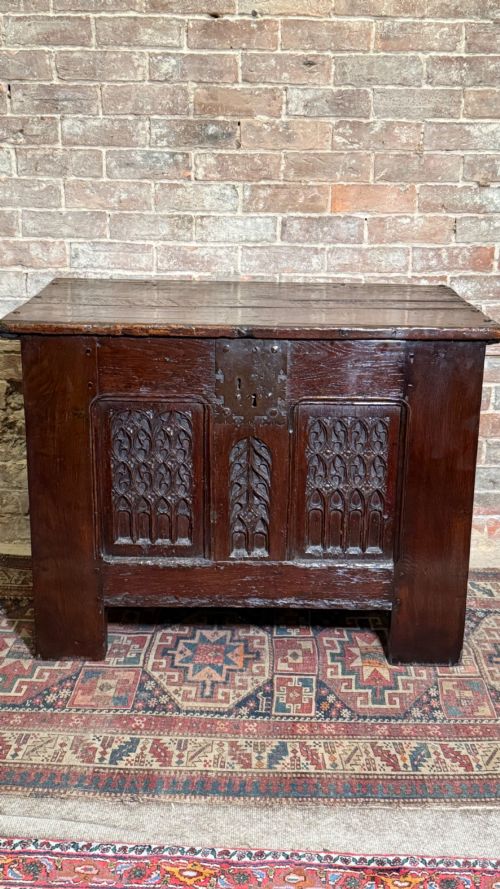
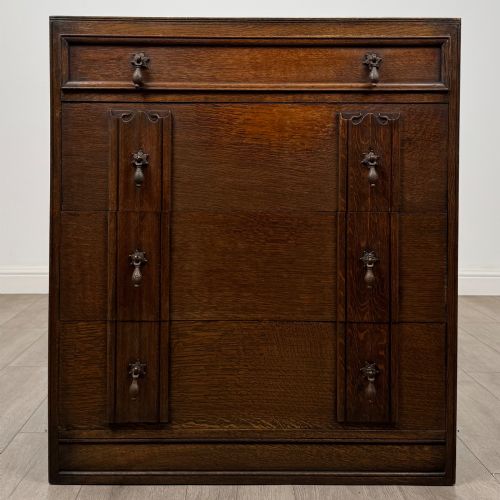
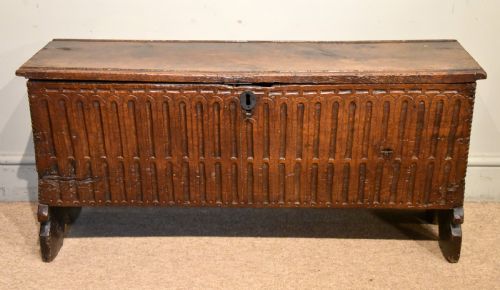
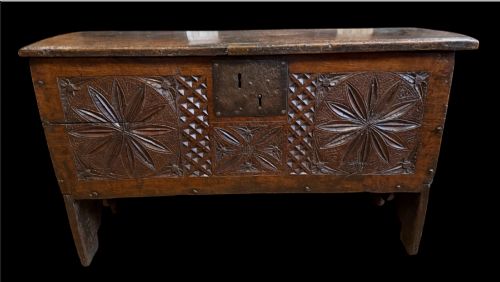


Tudor Carved Oak Chest
A tudor carved oak chest is a sturdy domestic container built to hold valuables, and these solid pieces bring rugged sixteenth-century character to any room.
Tudor Carved Oak Chest
A tudor carved oak chest takes the form of a heavy coffer or storage chest originating primarily from the sixteenth century, featuring distinct period carving. These items serve as functional storage pieces that demonstrate early carpentry methods, often utilising solid timber panels and substantial framing.
The selection on this page centres heavily on sixteenth-century examples alongside later Tudor revival interpretations from the Edwardian era. Buyers encounter plank coffers, linenfold designs, and heavily carved fronts that showcase Gothic, Elizabethan, and Renaissance influences.
Most entries originate from English and Welsh workshops, constructed primarily from oak with occasional walnut variations. These pieces range from complete coffers and storage chests to architectural salvage panels and related nineteenth- or twentieth-century revival furniture.
How they were made
Carpenters constructed these items using heavy oak timbers, shaping the wood with adzes and hand saws before joining panels with traditional pegged mortise and tenon joints. Iron and wrought iron hardware, including strap hinges and latches, reinforced the lids and corners.
Decorations were carved directly into the timber, employing techniques like fluting, linenfold relief, and geometric motifs typical of the period. Workshops selected heartwood for its durability, allowing the boards to withstand centuries of daily use.
Some sixteenth-century carpenters left stray axe marks on the hidden underside of a lid, quietly recording an honest day's work.
What varies in quality
The depth and crispness of the hand-carved ornamentation distinguish simpler plank coffers from richly decorated sixteenth-century examples. Original surface patination and the survival of early ironwork elevate the standing of a piece.
Structural integrity depends on the proportion of original timber remaining versus later replacement boards or hardware. Pieces that retain their authentic sixteenth-century boards and primary construction demonstrate superior craftsmanship compared to heavily restored or later revival items.
The Tudor Carved Oak Chest Glossary
- Coffer
- A heavy wooden chest used for storing valuables, documents, or textiles. These sturdy boxes often feature flat lids and prominent front panels.
- Linenfold
- A style of wood carving that imitates folded parchment or linen, popular on sixteenth-century panels. This vertical relief pattern creates a distinct textile-like texture across the oak surface.
- Plank coffer
- A primitive storage box constructed from thick boards joined at the edges rather than a framed panel structure. These early items rely on simple board construction.
- Renaissance
- A cultural and artistic movement influencing sixteenth-century design through classical motifs, symmetry, and architectural detailing. Carvings from this period incorporate structured geometric and figural elements.
- Revival
- A later stylistic movement, such as Edwardian Tudor Revival, that copies historical forms using contemporary manufacturing methods. These pieces imitate sixteenth-century aesthetics for twentieth-century interiors.
Tudor Carved Oak Chest: Frequently Asked Questions
What did people store in a tudor carved oak chest?
Households used these large containers primarily for securing valuable textiles, silver, documents, and clothing away from damp floors and pests. Because cupboards were uncommon in early domestic spaces, these chests acted as the main storage units.
Over time, owners also repurposed them for household provisions or legal charters. Their sturdy construction and heavy lids kept contents secure in communal halls and bedchambers.
How do I care for sixteenth-century oak furniture?
Maintain stable indoor humidity levels and keep the timber away from direct heat sources to prevent the dry oak boards from splitting. Apply a suitable microcrystalline wax occasionally to nourish the surface.
Avoid modern liquid polishes that contain silicones or harsh chemicals. Gentle dusting with a dry cloth preserves the historic patinated finish.
How can I tell a sixteenth-century chest from a later revival piece?
Examine the construction methods, tool marks, and timber shrinkage patterns visible on the interior and underside of the chest. Sixteenth-century pieces display hand-riven boards and irregular peg placements characteristic of early hand tools.
Revival items from the Edwardian period often feature uniform machine sawing and standardised joinery. The patination on early oak also develops a deep, mellow tone that modern copies struggle to replicate authentically.
Where were these chests originally placed in a home?
Early homes positioned these chests against walls in great halls, chambers, and parlours where they doubled as impromptu seating benches. Their flat tops accommodated cushions or served as low tables.
As domestic architecture evolved, they moved into bedrooms and private living spaces for personal storage. Their heavy weight meant they remained fixed in specific rooms rather than moving frequently.