


Six Plank Oak Coffer
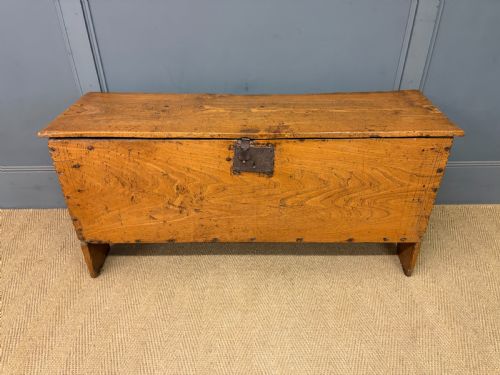
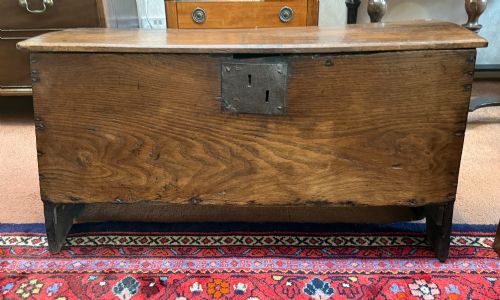
A six plank oak coffer is a utilitarian chest constructed from single vertical boards, sought after for its honest early construction and rugged domestic presence.
Six Plank Oak Coffer
A six plank oak coffer relies on a simple construction method where a single board forms each side, joined at the corners by nails, pegs, or dovetails. This design represents an ancient woodworking tradition used across domestic and ecclesiastical spaces for secure storage. Pieces matching this description appear frequently from the sixteenth and seventeenth centuries, carrying the weight of early British vernacular furniture.
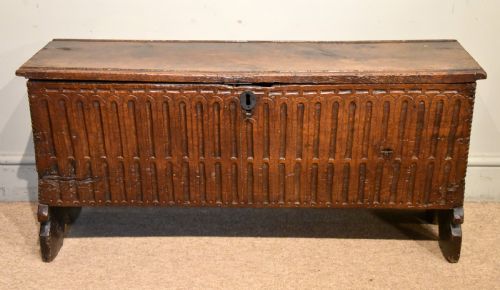
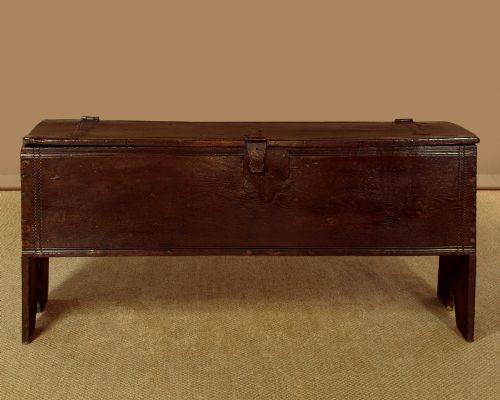
The version most commonly met on this page is the seventeenth century provincial box, often modest in scale and built for everyday household storage. Surviving examples display the plain boarded surfaces characteristic of vernacular cabinet-making, sometimes enhanced with basic chip carving or simple mouldings. Regional variations emerge from places such as Wales and the West Country, reflecting local timber supplies and carpentry habits.
How They Were Made
Makers built these chests primarily from native oak, supplemented occasionally by elm or pollard oak for specific panels. The boards were heavily split or sawn by hand, leaving authentic pit-saw marks across the interior and underside surfaces that demonstrate early conversion methods.
Wrought iron strap hinges, brackets, and iron lock plates secure the lids and corners, forged by hand with irregular surfaces. The primary joints rely on edge-joined planks connected by timber pegs or iron fastenings rather than complex internal framing.
Several chests still carry the faint aroma of centuries-old tallow candles and dried herbs stored inside by Tudor households.
What Varies in Quality
Proportions and scale determine much of the visual success of these chests, with narrow or small formats commanding particular attention from collectors. The survival of original boarded floors, high sides, and untouched surface patination elevates an example far above heavily restored counterparts.
Surface treatment ranges from completely plain boards to embellished fronts featuring carved fluting or inlaid wood details. The presence of period ironwork, including authentic strap hinges and working locks, adds significant merit to the surviving object.
Jack Grimble
The Six Plank Oak Coffer Glossary
- Six plank coffer
- A primitive chest constructed from six principal boards forming the front, back, bottom, ends, and lid. This design represents one of the oldest surviving forms of domestic chest furniture.
- Boarded chest
- An alternative term for a coffer made from vertical planks joined directly at the edges. These pieces rely on sheer board thickness for structural rigidity rather than an internal frame.
- Pollard oak
- Timber taken from trees that were pollarded, producing dense wood with distinctive clustered grain patterns. This specialised material appears on select vernacular furniture.
- Wrought iron
- Iron beaten into shape by a blacksmith, producing textured strap hinges and hardware. Original hand-forged ironwork remains a key indicator of period authenticity.
- Vernacular
- Furniture built by local country craftsmen following regional traditions rather than metropolitan high styles. These objects serve functional domestic needs with straightforward joinery.
Six Plank Oak Coffer: Frequently Asked Questions
What were six plank oak coffers used for?
These robust chests served as secure household containers for valuable textiles, documents, and personal belongings. Their heavy boarded construction and iron locks protected contents from dampness and theft in early domestic interiors.
Over subsequent centuries, they transitioned from utilitarian storage to decorative antiques prized for their primitive joinery and historic timber patination.
How do you date an early oak coffer?
Dating relies on examining the tool marks, construction methods, and the style of any carved ornament or iron hardware. Early pieces from the sixteenth and seventeenth centuries exhibit hand-riven boards, pegged joints, and blacksmith-made strap hinges.
Later vernacular examples from the eighteenth century often display machine-sawn timber elements and different proportioning while retaining the fundamental six-plank format.
Where should I place a coffer at home?
A coffer works effectively as a functional storage chest at the foot of a bed, beneath a window, or as a hallway focal point. The flat top surface also accommodates lamps, textiles, or decorative objects while keeping the internal compartment accessible.
Positioning the chest away from direct heat sources and strong sunlight preserves the historic oak boards and prevents timber movement.
Are all six plank coffers English?
While the majority of pieces found locally originate from English regional workshops, variations occur across Wales and the West Country. Distinctive regional preferences in timber selection and hardware help identify the likely area of manufacture.
Comparing the specific grain, board thickness, and ironwork styles provides insight into the geographic origins of each individual trunk.